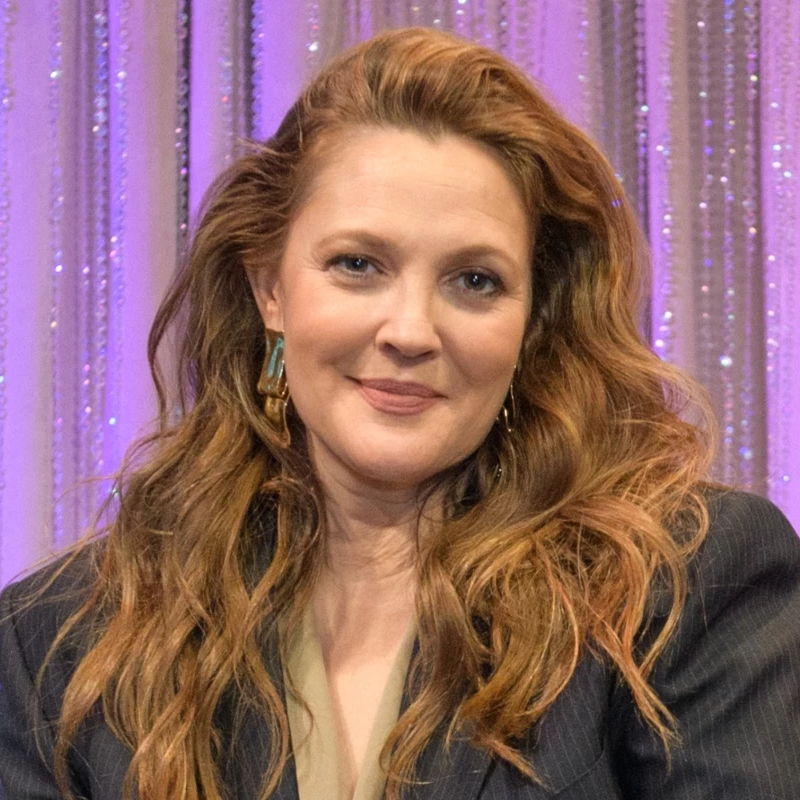
Drew Barrymore Was a Global Star at 7 and in Treatment at 13—How She Rebuilt Her Life After Hollywood Took Her Childhood
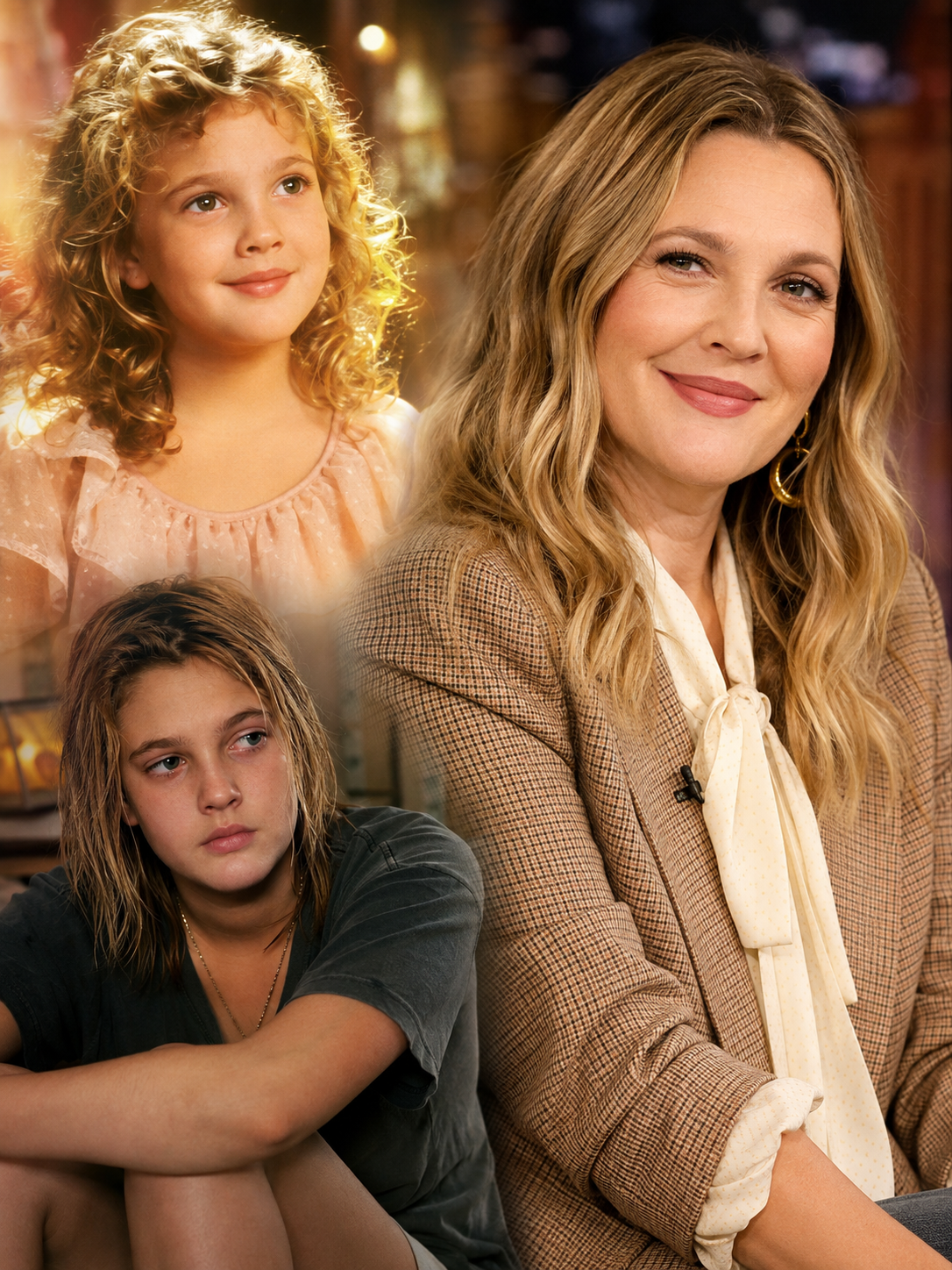
At seven years old, Drew Barrymore appeared on movie screens as Gertie, the wide-eyed little sister who helped protect a frightened alien in E.T. the Extra-Terrestrial.
Audiences saw an unusually natural child performer with a mischievous smile and impeccable comic timing. Steven Spielberg’s 1982 film became a cultural phenomenon, and Barrymore became one of the most recognizable children in the world.
Behind that image, however, her childhood was rapidly disappearing.
Within a few years, Barrymore was spending nights in adult clubs, drinking and using drugs. At 13, while many children her age were navigating middle school, she was sent to a treatment institution where she remained for approximately 18 months. At 14, she sought legal emancipation from her mother.
Her survival did not come through one dramatic rescue. It required years of discipline, rejection and rebuilding—first as an actress, then as a producer, entrepreneur, director, author and television host.
Born Into Hollywood, but Without Its Protection
Barrymore was born on February 22, 1975, into one of America’s most famous acting families. The Barrymore name carried generations of theatrical history, but it did not guarantee her a stable home.
Her parents, actor John Drew Barrymore and aspiring actress Jaid Barrymore, separated when she was young. Drew was largely raised by her mother and began working before she was old enough to understand what employment meant.
She appeared in a commercial as a baby and made her film debut in Altered States before receiving the role that transformed her life.
As Gertie in E.T., Barrymore was not merely cute. She could move naturally between suspicion, fear and affection, making the extraordinary story feel emotionally believable. The film’s success turned her into a celebrity before she had developed the boundaries needed to manage fame.
She later described an upbringing in which adult environments replaced ordinary childhood routines. Her mother took her to nightclubs, including Studio 54, and Barrymore began accompanying adults to parties instead of living according to a child’s schedule. In her own account, she was smoking cigarettes by nine, drinking at a young age and using drugs before she became a teenager.
Hollywood often celebrated her precociousness. The behavior that should have signaled danger was instead absorbed into the mythology of a rebellious young star.
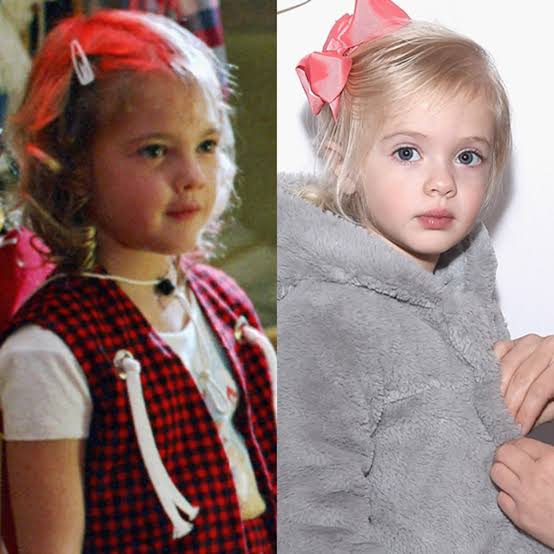
The Collapse Came Early
Barrymore continued working in movies including Firestarter, Irreconcilable Differences and Cat’s Eye. But her off-screen life became increasingly unstable.
At 13, she entered treatment for substance abuse and behavioral problems. She later recalled being angry, isolated and determined to escape the institution. The experience was harsh, but she eventually came to regard its strict structure as something she desperately needed.
In later interviews, Barrymore resisted describing herself only as a victim of what happened. She acknowledged the failures of the adults around her while also taking responsibility for the destructive behavior she developed. In 2025, she called the intervention one of the best things that happened to her because it gave her tools she continued using in adulthood.
That perspective did not make the experience painless.
She was still a child living away from home, confronting addiction and trying to understand how a life that looked glamorous from the outside had become so unmanageable. She later said the institution taught her that actions carried consequences and that trust had to be earned.
After leaving treatment, Barrymore pursued legal emancipation.
At 14, a court granted her the right to live independently from her parents. Barrymore has informally described the process as “divorcing” her mother, although emancipation was a legal declaration of independence rather than a literal divorce.
She moved into her own apartment while still in her mid-teens. She had freedom, but freedom came with adult responsibilities she had never been taught to handle.
There was no automatic Hollywood welcome waiting for her.
Starting Again Without the Child-Star Halo
Barrymore’s early troubles had become tabloid material, and the industry that had once embraced her now viewed her as unreliable.
She later recalled struggling to find ordinary work as well as acting jobs. Her famous surname and recognizable face did not make rebuilding easy. The child audiences remembered from E.T. had become associated with addiction, hospitalization and scandal.
Barrymore began reconstructing her career one role at a time.
During the early 1990s, she took provocative parts in films including Poison Ivy and Guncrazy, using her turbulent image rather than attempting to erase it. Those performances helped her transition away from child roles, but they did not yet establish the warm, comedic identity that would later define much of her career.
A small appearance in Scream became another turning point. The 1996 horror film placed Barrymore prominently in its marketing, then shocked audiences by killing her character in its opening sequence. Her participation helped sell the surprise, while the movie reminded viewers how effectively she could command the screen.
She soon found a more durable second act in romantic comedy.
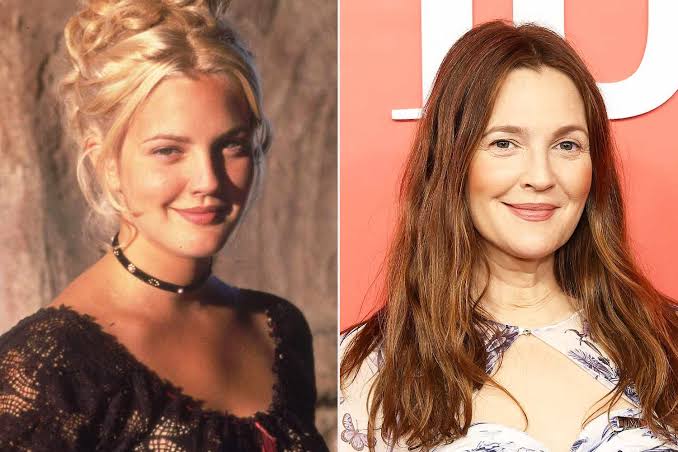
The Wedding Singer, released in 1998, paired Barrymore with Adam Sandler and allowed her gentleness, humor and emotional openness to lead the story. Roles in Ever After, Never Been Kissed and 50 First Dates followed, turning her into one of Hollywood’s most dependable and likable stars.
The child actor once dismissed as a cautionary tale had become a bankable leading woman.
Taking Control Behind the Camera
Barrymore’s reinvention was not limited to choosing better roles.
In 1995, she co-founded Flower Films with Nancy Juvonen. The production company gave her greater influence over the projects she made and helped produce titles including Never Been Kissed, the Charlie’s Angels films and Donnie Darko.
The significance was larger than a new business credit. Barrymore had spent her childhood being directed, marketed and managed by adults. Producing allowed her to help decide what stories would be told, how they would be developed and what place she would occupy within them.
The two Charlie’s Angels movies transformed her from romantic-comedy star into an action producer with commercial influence. She later directed the 2009 roller-derby film Whip It and earned major acclaim for portraying Edith “Little Edie” Bouvier Beale in HBO’s Grey Gardens, a performance that brought her a Golden Globe.
Her professional identity continued expanding. She wrote books, developed Flower Beauty and other lifestyle businesses, and became a mother to two daughters.
Motherhood forced Barrymore to confront her childhood from another direction. She has spoken about wanting to give her children consistency and protection—qualities that were largely absent from her own early life.
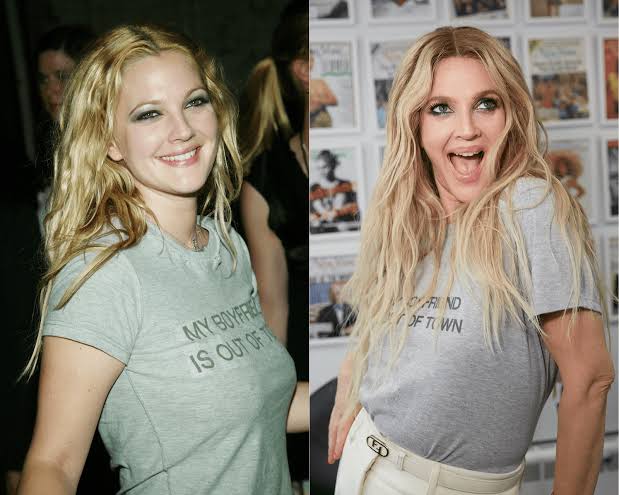
Turning Survival Into Conversation
In September 2020, Barrymore launched The Drew Barrymore Show.
Her interview style is unusually intimate. She often sits close to guests, speaks openly about her own failures and becomes emotional without attempting to hide it. That approach has sometimes attracted criticism, but it also reflects the central lesson of her adult career: she no longer presents herself as a carefully protected Hollywood product.
The show has given Barrymore a platform to discuss addiction, divorce, parenting and mental health. It also became another reinvention for a performer who had already moved from child star to romantic lead, producer and entrepreneur. The program remained active in 2026, more than five years after its debut.
Her later life has not been free of controversy or difficulty. Barrymore faced intense backlash in 2023 after announcing plans to resume her talk show during the writers’ strike. She apologized and reversed the decision before returning after the strike ended.
That episode complicated the public image of Hollywood’s endlessly resilient survivor. It also demonstrated something Barrymore has repeatedly emphasized: rebuilding a life does not make a person incapable of mistakes.
Her story is powerful precisely because it is not a clean transformation from chaos to perfection.
The little girl from E.T. did not escape Hollywood untouched. Fame exposed her to adult pressures before she could understand them, while the people responsible for protecting her often failed to provide meaningful limits.
What followed was not one comeback but many.
Barrymore rebuilt herself after treatment, after emancipation, after professional rejection and after personal upheaval. She learned to make decisions in an industry that had made decisions for her since infancy.
Hollywood gave Drew Barrymore worldwide fame before it gave her a childhood. The life she created afterward became her most difficult—and most enduring—production.