Hollywood Said Harrison Ford Had No Future—So He Built Furniture Until Han Solo Changed Everything
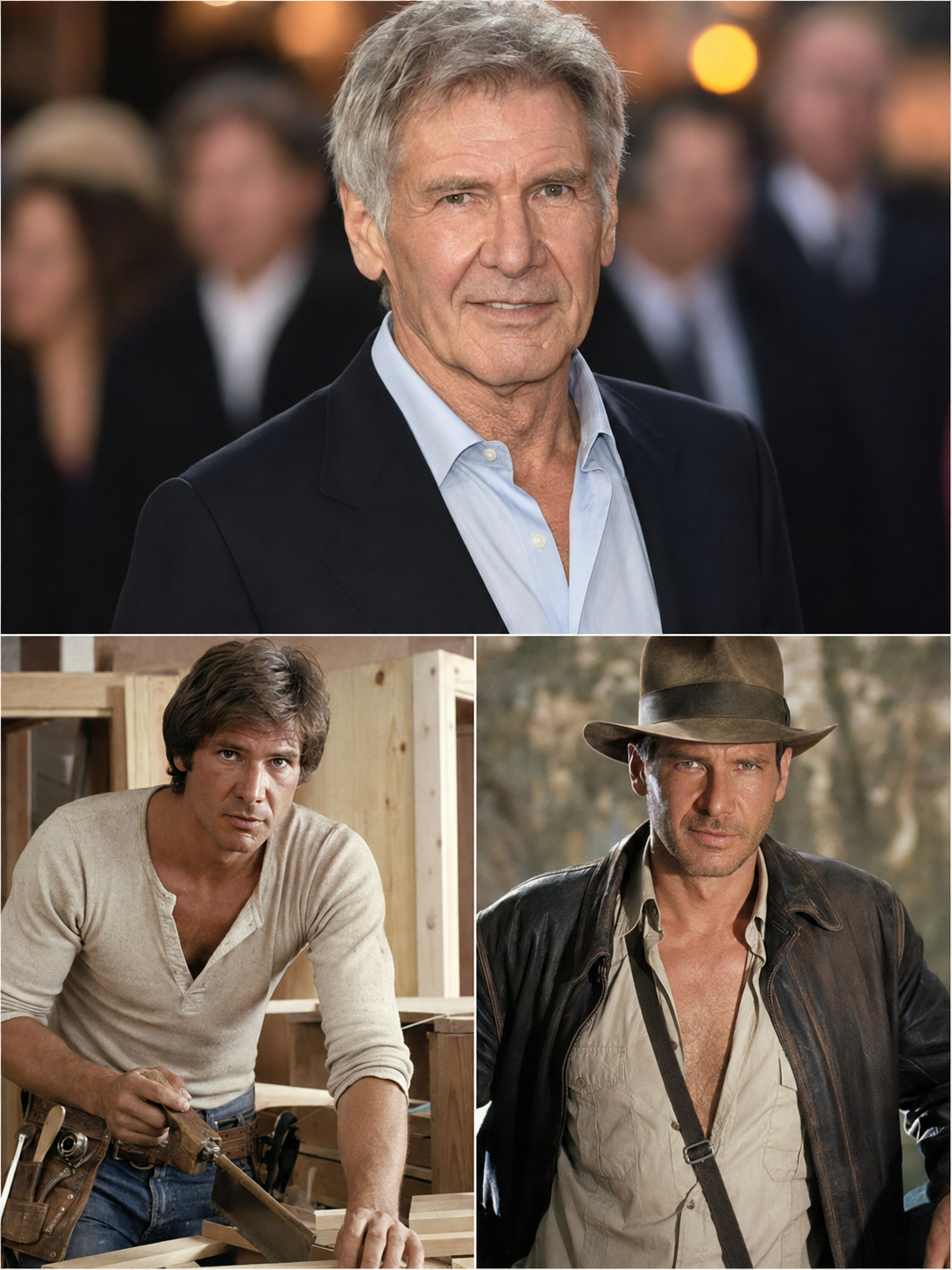
Before Harrison Ford commanded the Millennium Falcon or outran a boulder as Indiana Jones, he spent years arriving at construction jobs with tools in his hands.
The work was not an eccentric hobby adopted by an established celebrity. Carpentry paid his bills, supported his young family and gave him something Hollywood had repeatedly refused to provide: control over his own future.
Ford had come to Los Angeles hoping to act. Instead, he received tiny parts, endured long stretches without meaningful work and listened as a studio executive told him he did not have the qualities of a movie star.
He did not completely abandon acting. He simply stopped depending on it to survive.
That decision allowed Ford to reject jobs he considered worthless and wait for better opportunities. It also placed him inside the homes and offices of influential filmmakers, where a series of professional connections eventually led him to George Lucas.
Years after being judged as a man with no future in the business, Ford became the face of two of cinema’s most successful adventure franchises.
The Actor Hollywood Could Not See
Ford was born in Chicago in 1942 and grew up in the Illinois suburbs. He was not a natural classroom performer or an obvious future leading man. By his own account, he was shy as a young person and became interested in acting after taking a drama course in college.
He later worked in summer theater before moving to Los Angeles with his first wife, Mary Marquardt.
Ford signed with Columbia Pictures’ new-talent program in the 1960s, earning a modest weekly salary while being assigned small parts. His first film appearance was an uncredited role as a bellhop in the 1966 crime comedy Dead Heat on a Merry-Go-Round.
The role lasted only seconds.
A Columbia executive named Jerry Tokofsky was unimpressed. Ford later recalled being told that Tony Curtis had once demonstrated star quality simply by delivering groceries on screen, while Ford had shown no comparable presence as the bellhop.
Ford responded that a real actor would have delivered the groceries like a grocery deliveryman.
The exchange did not improve his standing.
The studio executive reportedly advised Ford to change his name and alter his appearance, then told him he had no future in the movie business. Ford resisted the attempt to reshape him into someone else’s idea of a star.
His contract did not produce the breakthrough he needed.
He moved to Universal and appeared in television series including Gunsmoke, The Virginian, Ironside and The F.B.I. He also received small film roles, often without enough screen time to establish an identity.
One director did see greater potential in him. French filmmaker Jacques Demy wanted Ford for the leading role in his 1969 film Model Shop. Columbia executives rejected the idea and insisted on a more established actor.
Once again, someone in authority had decided Ford was not leading-man material.
Carpentry Became His Way Out
By the end of the 1960s, Ford had a wife and two sons to support. The acting jobs available to him were too small and unreliable to provide financial security.
He taught himself carpentry.
Ford reportedly learned through books and practical experience, gradually becoming skilled enough to work professionally. He built cabinets, remodeled homes and completed projects for clients connected to the entertainment industry.
Among those clients were writers Joan Didion and John Gregory Dunne. He also did work associated with filmmaker Francis Ford Coppola and built a recording studio for musician Sérgio Mendes.
The image of Ford as a carpenter has sometimes been turned into a Hollywood fairy tale in which he had completely surrendered his dream and was discovered while hammering a board.
The reality was more deliberate.
Ford continued accepting occasional acting work. Carpentry gave him the freedom to be selective. Because he no longer needed every minor role to feed his family, he could turn down material he believed would lead nowhere.
He later explained that he was not waiting helplessly to be rescued from manual labor. He enjoyed working with wood and took pride in doing the job well.
Carpentry became a second craft—and a defense against desperation.

The First George Lucas Opportunity
Casting director and producer Fred Roos became an important supporter of Ford’s acting career.
Roos helped him secure an audition for George Lucas’ 1973 coming-of-age film American Graffiti. Ford was cast as Bob Falfa, a confident drag racer who challenges Paul Le Mat’s John Milner.
The role was not large, but Ford made the character memorable. Wearing a cowboy hat and projecting casual arrogance, he brought a dangerous edge to a movie otherwise filled with youthful uncertainty and nostalgia.
American Graffiti became an enormous success relative to its modest budget and helped launch several careers. For Ford, however, it did not immediately bring stardom.
He returned to carpentry while taking occasional film parts, including a role in Francis Ford Coppola’s The Conversation.
Several more years passed.
Then Lucas began casting a science-fiction adventure about a farm boy, a princess and a cynical pilot who transported them across a galaxy at war.
Ford was not initially summoned as a leading candidate.
Because Lucas had already used him in American Graffiti, Ford understood that the director wanted new faces for the upcoming project. He was asked to read opposite actors auditioning for the principal roles.
Ford thought he was helping with the casting process.
He did not realize that his own performance was becoming an audition.
Han Solo Changes the Course of His Life
As Ford read the dialogue, his dry delivery and resistance to the script’s more formal language helped define Han Solo.
Other actors were considered for the role, but Ford possessed the necessary combination of skepticism, danger and humor. Han could boast like a fearless outlaw while revealing, through small reactions, that he was improvising his way through disaster.
Lucas eventually offered him the part.
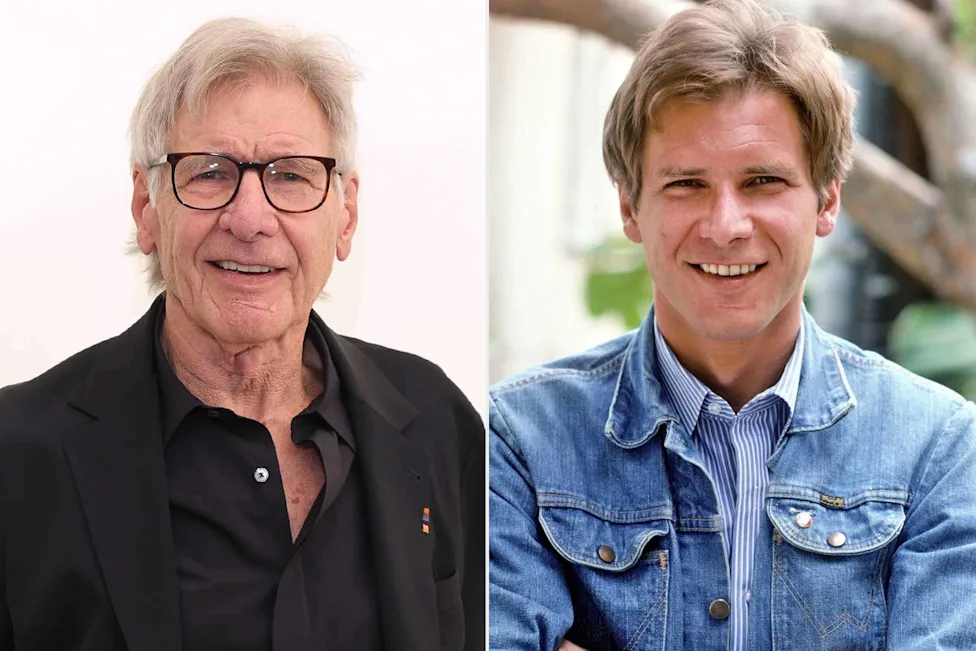
Released in 1977, Star Wars became a cultural phenomenon. Ford, then in his mid-30s, was suddenly known around the world.
His age mattered. He was not a teenager being molded by a studio publicity department. He had already experienced rejection, fatherhood, financial pressure and years of physically demanding work.
That history gave Han Solo a worn-in credibility. Ford played him not as a polished fantasy hero but as a working man trying to get paid, keep his unreliable ship running and survive one more dangerous job.
His reluctant return to help Luke Skywalker during the final battle completed the character’s transformation from self-interested smuggler to hero.
Ford returned in The Empire Strikes Back and Return of the Jedi, helping turn Han into one of popular culture’s most enduring characters.
But another defining role was approaching.
From Smuggler to Archaeologist
George Lucas and Steven Spielberg developed Indiana Jones as a modern version of the heroes from old adventure serials.
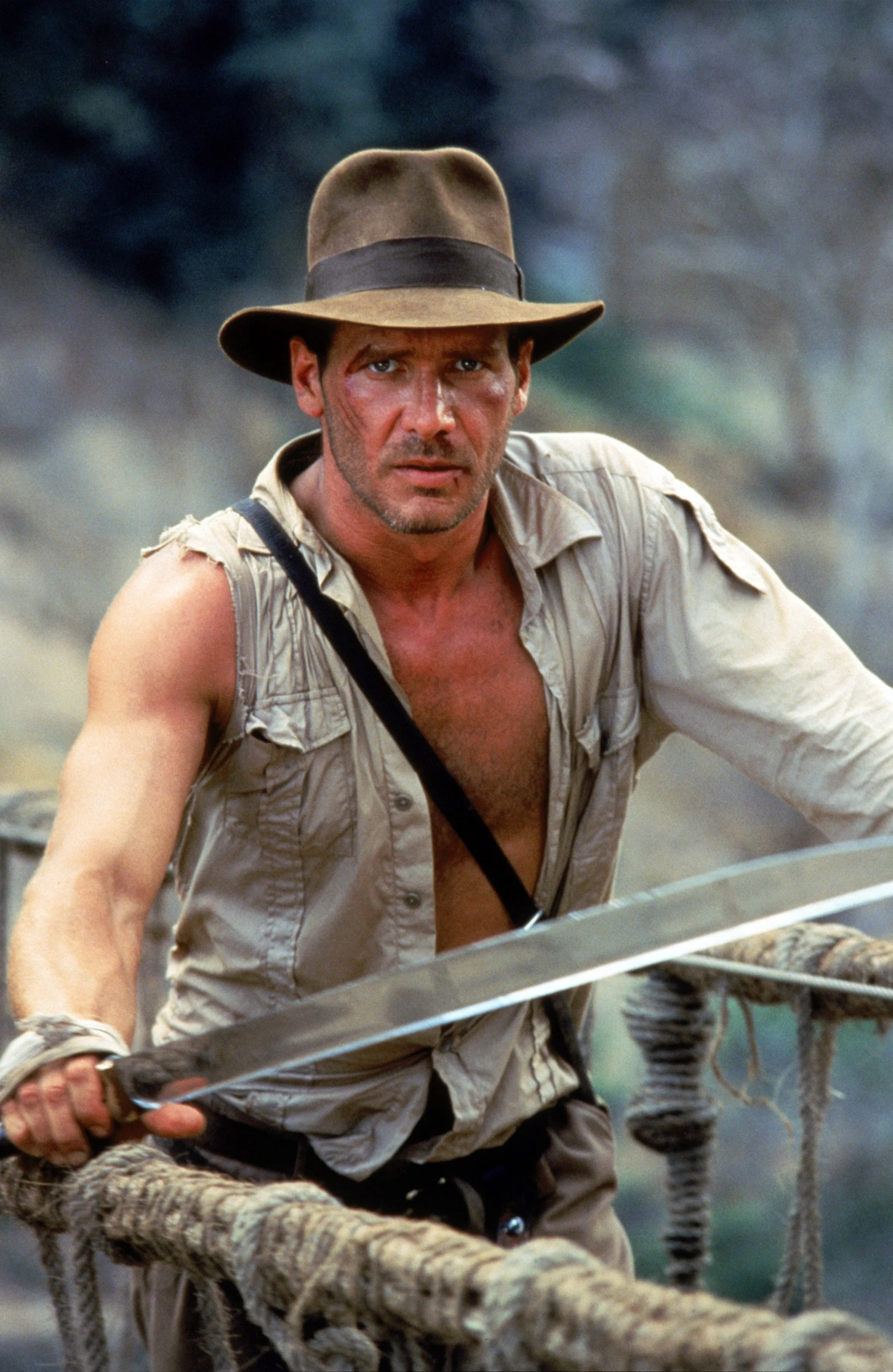
Tom Selleck was originally selected to play the archaeologist, but his television commitments prevented him from taking the role. Ford became the alternative, despite Lucas’ initial concern about relying too heavily on the same actor.
Raiders of the Lost Ark was released in 1981.
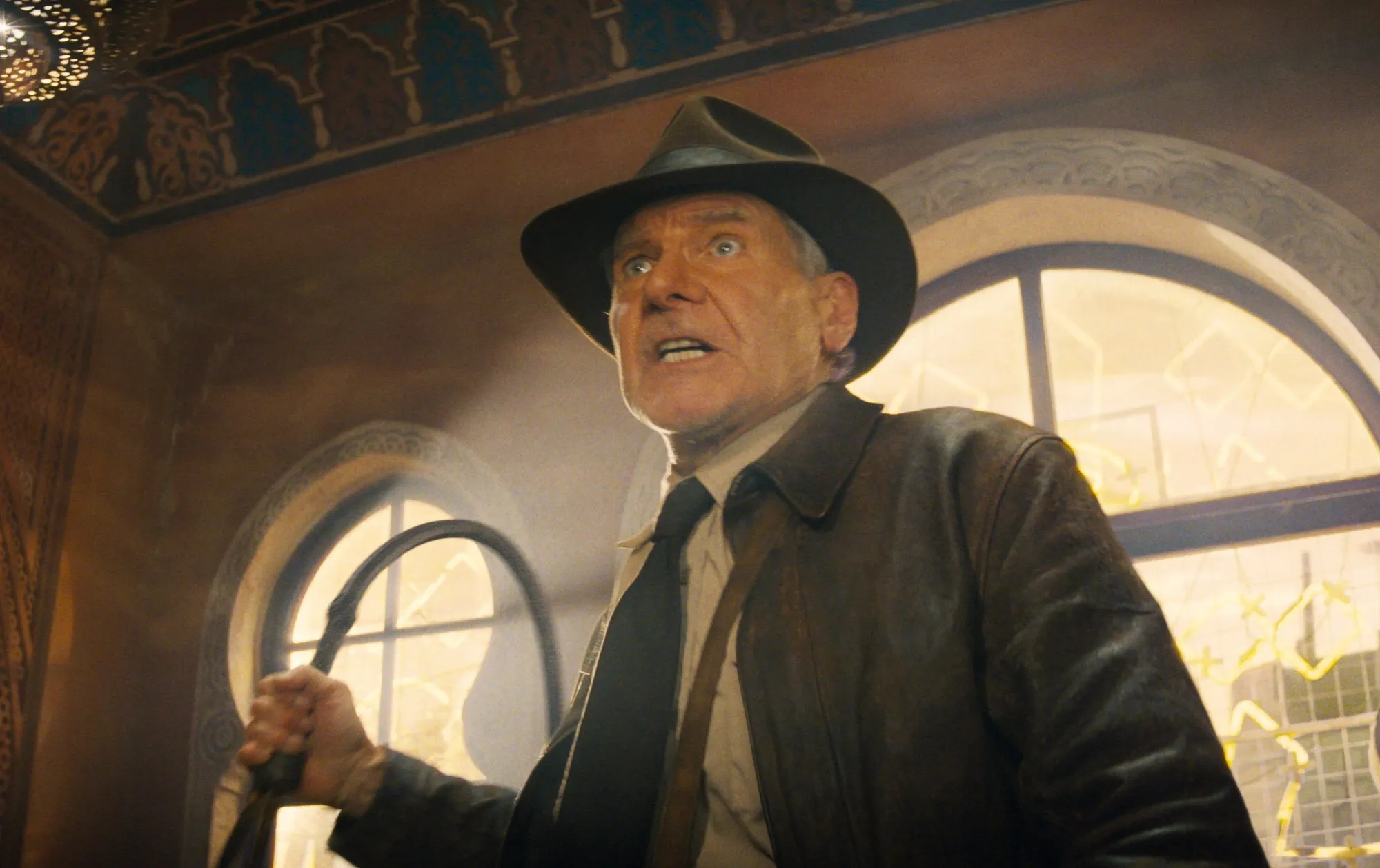
Ford gave Indiana Jones toughness without invincibility. The character could use a whip, fight soldiers and survive impossible escapes, but he was also bruised, frightened and frequently exhausted.
That physical vulnerability made the adventure more exciting. It also reflected the practical quality Ford had developed long before fame: he looked like someone who understood tools, weight and effort.
Han Solo and Indiana Jones made him an international star, but Ford continued resisting the idea that he belonged to only one kind of movie.
He earned an Academy Award nomination for Witness and took prominent roles in Blade Runner, The Fugitive, Working Girl, Presumed Innocent and Air Force One. His career extended across more than six decades, with later projects bringing him back to both the Star Wars and Indiana Jones worlds.
The Career He Built Without Permission
Ford’s rise is often described as an accidental discovery, but chance explains only part of it.
Yes, carpentry brought him near influential people. Yes, a line-reading assignment unexpectedly became his path to Han Solo. Yes, another actor’s scheduling conflict helped him become Indiana Jones.
But none of those opportunities would have mattered without the years Ford spent learning how to act while being told he lacked star quality.
He did not become a carpenter because he was too weak to withstand rejection. He became one because he refused to let rejection control every decision.
The work paid his bills, protected his dignity and allowed him to wait until a worthwhile role arrived.
Before Harrison Ford built two of cinema’s most famous heroes, he built cabinets, studios and additions for other people. Both careers demanded patience, precision and an understanding that strong work often begins where no audience can see it.
Hollywood once looked at him and saw no future.
Ford kept working anyway—until the industry finally recognized the star he had already constructed for himself.