Tom Selleck Had Already Won the Role of Indiana Jones—Then One Television Contract Changed Movie History
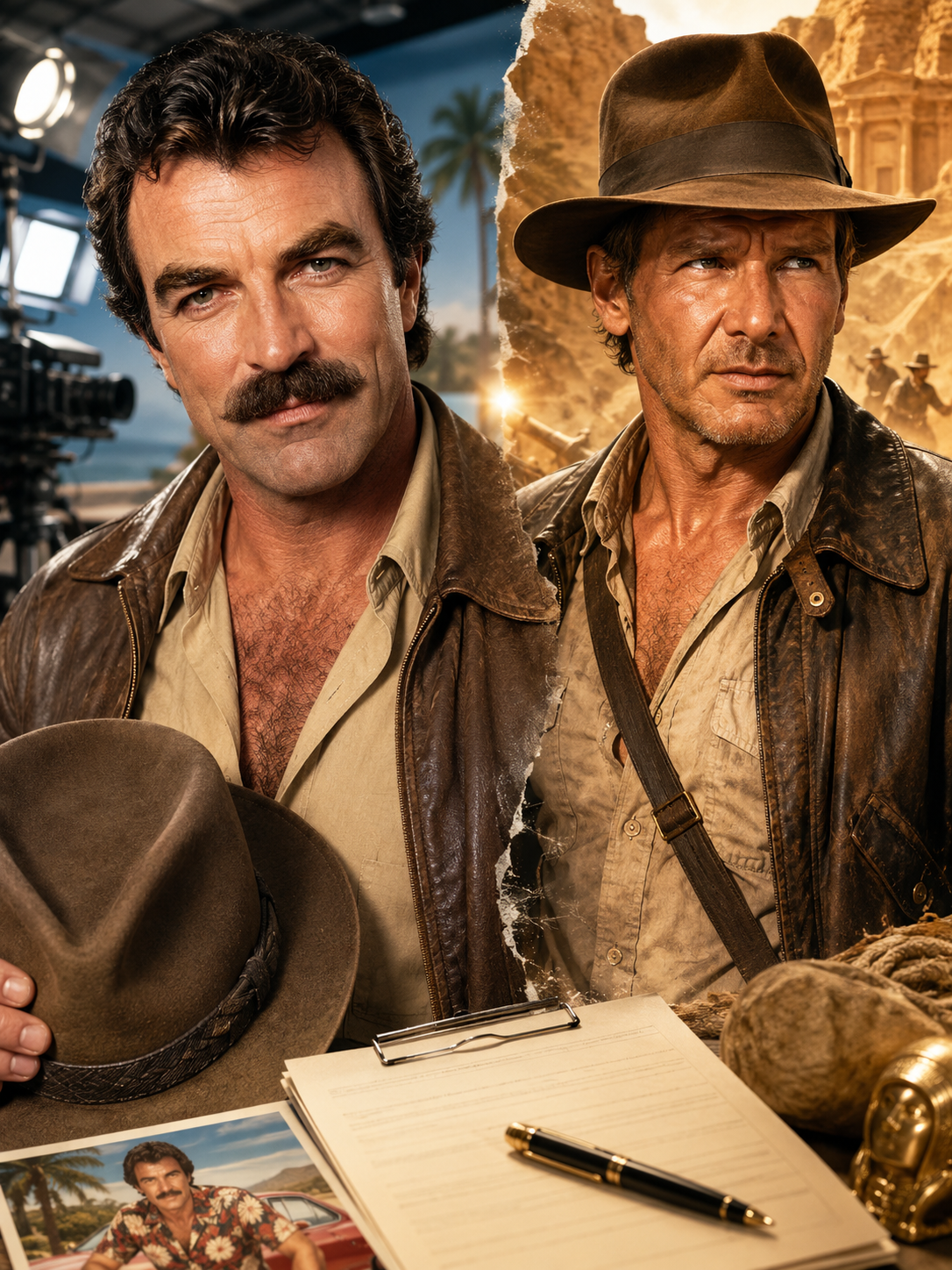
Before Harrison Ford ever cracked a whip, outran a rolling boulder or reached for the Ark of the Covenant, Indiana Jones belonged to Tom Selleck.
Not hypothetically. Not as one name on a studio wish list.
Selleck auditioned for the role, impressed Steven Spielberg and George Lucas, and was offered the part. He read the script for Raiders of the Lost Ark, wanted to make the movie and believed he was about to become its adventurous archaeologist.
Then CBS refused to release him from his television contract.
Selleck was already committed to a new series called Magnum, P.I. The program had not yet made him a star, but the agreement gave the network control over his availability. When the producers moved forward, Selleck could not accept the film that might have changed his career before it had truly begun.
The role went to Ford, creating one of the most inseparable actor-character pairings in cinema history.
The most painful twist came later. Production on Magnum, P.I. was delayed by the 1980 actors’ strike, leaving Selleck with enough free time that he may have been able to make both projects after all.
By then, the decision had already been made.
Building a New Kind of Adventure Hero
George Lucas began developing Indiana Jones after creating Star Wars. Working with screenwriter Lawrence Kasdan and director Steven Spielberg, he imagined an updated version of the heroes from the movie serials they had loved as children.
The character would be an archaeology professor in the classroom and a globe-traveling adventurer outside it. He needed intelligence, physical credibility, humor and enough imperfection to survive danger without seeming invincible.
Spielberg and Lucas considered numerous actors.
Harrison Ford was an obvious possibility because he had already played Han Solo in Star Wars. But Lucas initially resisted using him again. He reportedly did not want Ford to become his automatic leading man in the way certain directors repeatedly worked with the same star.
That hesitation left the role open.
Selleck, then known mainly for commercials, television appearances and unsuccessful pilots, entered the casting process. He had spent years close to a breakthrough without reaching one.
At six feet four inches tall, he had the physical presence of an old-fashioned adventure hero. He could also deliver humor without weakening the character’s authority.
His screen test convinced Spielberg and Lucas.
Spielberg later recalled that they jointly decided Selleck should play Indiana Jones. The director considered his audition strong and wanted him for the movie.
Selleck had earned the role.
There was only one problem.
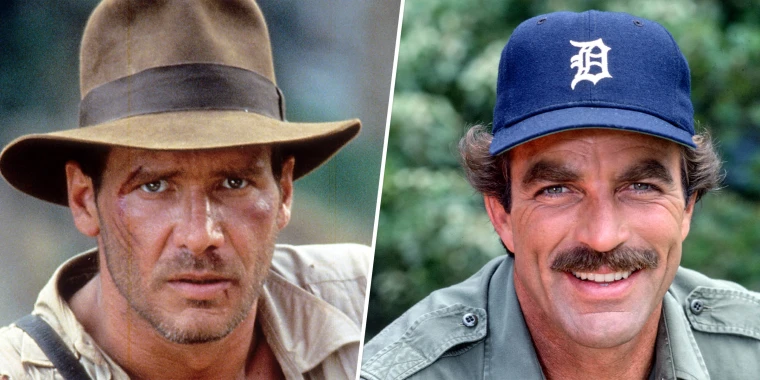
The Contract That CBS Would Not Bend
Before auditioning for Raiders, Selleck had filmed the pilot for Magnum, P.I., a television drama about a Vietnam veteran working as a private investigator in Hawaii.
The pilot had not yet become the long-running success audiences now remember. At that stage, it was simply another possible television job in a career filled with uncertain opportunities.
But Selleck remained contractually committed to CBS and Universal.
He informed Spielberg and Lucas about the possible conflict. According to Selleck’s later account, he did not reject Indiana Jones. He wanted to do it and hoped an arrangement could be reached.
CBS said no.
Spielberg has said the network accelerated Magnum, P.I. after learning that the filmmakers wanted Selleck. Whether motivated by scheduling needs or a desire to protect its investment, CBS exercised the authority granted by its contract and kept him attached to the series.
Selleck could not simply walk away.
For a working actor who had spent years waiting for a major opportunity, defying the network could have damaged his career and exposed him to legal consequences. He was not yet powerful enough to force two major productions to cooperate.
The fedora slipped away before he ever wore it on film.
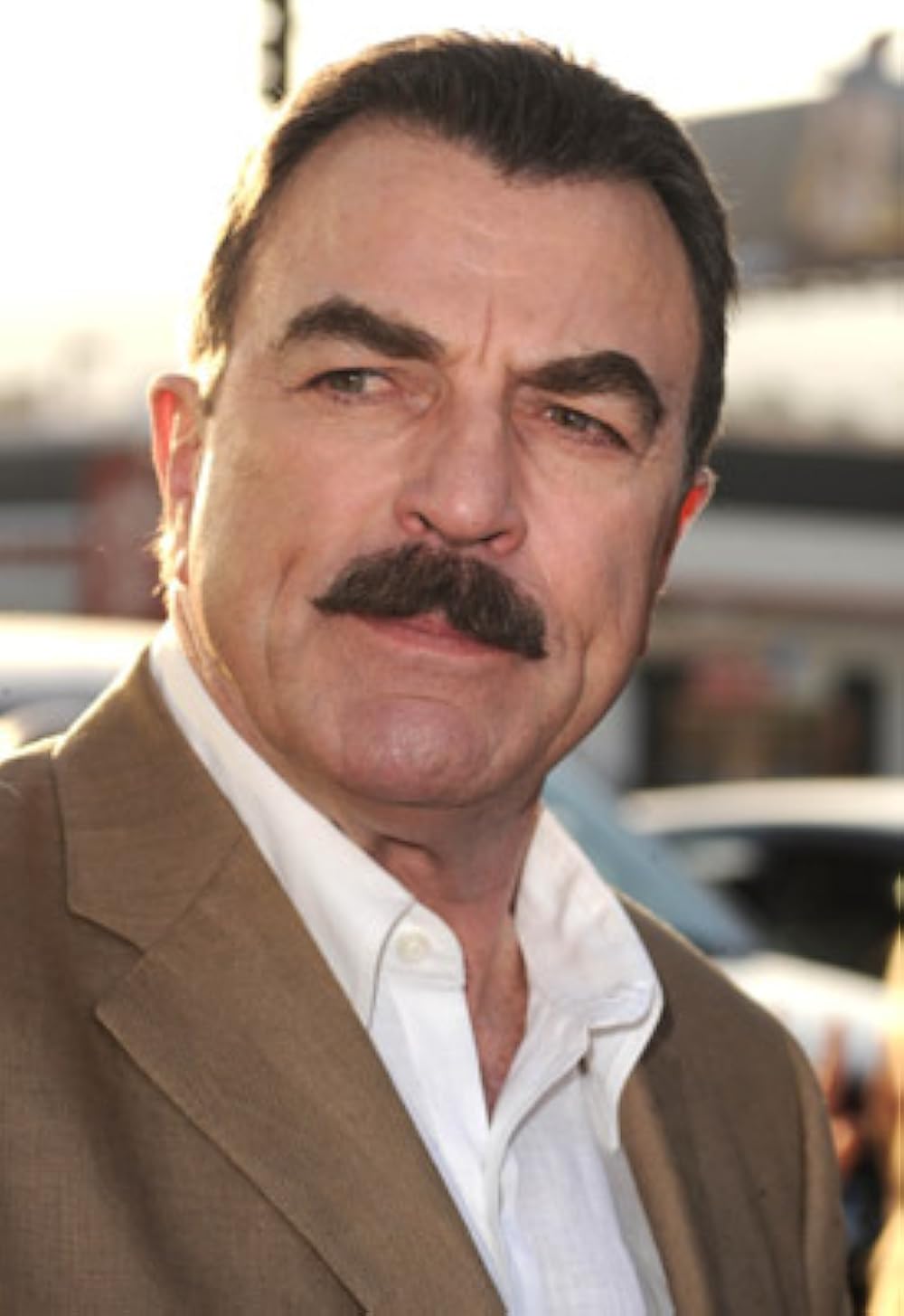
Harrison Ford Enters the Picture
Around the same period, Lucas showed Spielberg an early version of The Empire Strikes Back.
Watching Ford again as Han Solo reminded Spielberg that the actor possessed many qualities Indiana Jones required. Ford could be charming without becoming polished, courageous while still showing fear, and funny without appearing to chase a joke.
Spielberg pushed for him.
Lucas remained concerned that casting Ford would make the new movie feel too closely connected to Star Wars. Eventually, however, he agreed.
Ford accepted the role only weeks before production was scheduled to begin.
The casting changed Indiana Jones immediately.
Ford brought a weathered practicality to the character. His Jones could teach a university class, decipher an ancient clue and then lose a fistfight in the dirt. He was not a superhero. He was bruised, frustrated and frequently surviving through instinct rather than complete control.
That vulnerability became essential to the film.
Released in 1981, Raiders of the Lost Ark was a critical and commercial triumph. It earned multiple Academy Awards and introduced a hero who would become one of the defining figures of American popular culture.
Ford returned for four more films over the following four decades.
The role became so closely connected to him that imagining another actor as Indiana Jones began to feel almost impossible—even though another actor had originally been chosen.
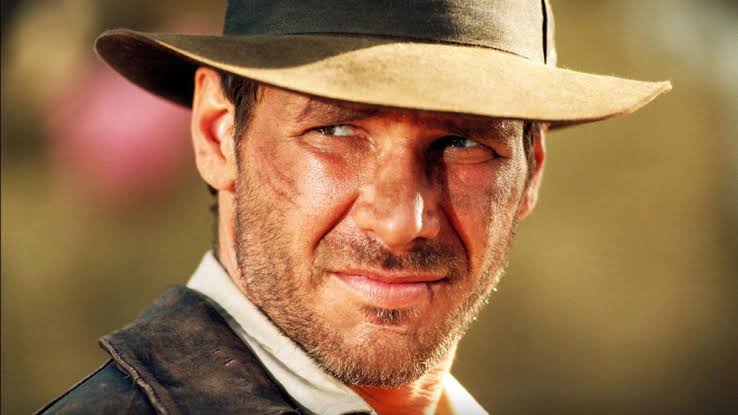
The Strike That Made the Loss More Painful
After losing Raiders, Selleck traveled to Hawaii to prepare for Magnum, P.I.
Then the production stopped before it could properly begin.
A major strike involving the Screen Actors Guild and the American Federation of Television and Radio Artists began in July 1980. The dispute halted or delayed film and television work across Hollywood as performers fought over compensation and residuals connected to emerging markets such as pay television and home video.
The delay lasted long enough to create a bitter realization.
Selleck’s television schedule had been the reason CBS would not release him. But with Magnum unable to film during the strike, he apparently would have had enough time to shoot Raiders.
Selleck later summed up the irony simply: he could have done both.
It was not a writers’ strike, as the story is sometimes retold, but the 1980 actors’ strike. The distinction did nothing to reduce the frustration.
While Selleck waited in Hawaii, parts of Raiders of the Lost Ark were eventually filmed there. The production he had lost came physically close to the place where he was waiting for his own show to resume.
Hollywood history had already moved on without him.
The Role He Kept Still Made Him a Star
Missing Indiana Jones did not destroy Selleck’s career.
Magnum, P.I. premiered in December 1980 and became one of the most popular television series of its era. Selleck shaped Thomas Magnum into something more interesting than a flawless action hero.
Magnum was confident but sometimes immature, athletic but vulnerable, and capable of shifting between comedy and serious stories about friendship, war and loss.
The series ran for eight seasons. Selleck received multiple Emmy nominations and won the award for Outstanding Lead Actor in a Drama Series in 1984.
His success led to major movie roles in films including Three Men and a Baby, the highest-grossing domestic release of 1987. He later built another long television career through projects such as the Jesse Stone films and Blue Bloods.
Selleck has generally spoken about the Indiana Jones story without bitterness toward Ford. He has acknowledged the disappointment while joking that Ford did a good job.
That understatement hides the enormous scale of the alternate history.
Had CBS released Selleck, audiences might now associate the fedora, leather jacket and whip with his height, voice and famous mustache—although Spielberg has said the mustache would have had to go.
Ford’s career might have developed differently. Selleck might never have become Thomas Magnum in the form viewers remember. Two of the 1980s’ defining screen heroes emerged from a single contractual collision.

The Decision Nobody Could Undo
The story is often simplified into a lesson about an actor turning down a famous role.
That version is wrong.
Tom Selleck did not decide that Raiders of the Lost Ark was beneath him. He did not choose television because he believed Magnum, P.I. would be more successful. He auditioned, won the role and wanted to play Indiana Jones.
A contract decided otherwise.
The irony is that no one involved truly lost.
Ford became the definitive Indiana Jones and expanded his place among Hollywood’s greatest movie stars. Selleck became Thomas Magnum, won an Emmy and sustained a career across more than five decades. Spielberg and Lucas created an adventure franchise recognized around the world.
Yet the “what if” remains powerful because the outcome depended on timing rather than talent.
Tom Selleck was good enough to be Indiana Jones. The filmmakers chose him, and he accepted.
Then a network enforced a contract, an actors’ strike arrived too late to help, and movie history turned toward Harrison Ford.