The 15-Year-Old Who Turned Two Oil Drums Into a Submarine to Keep His Family Fed
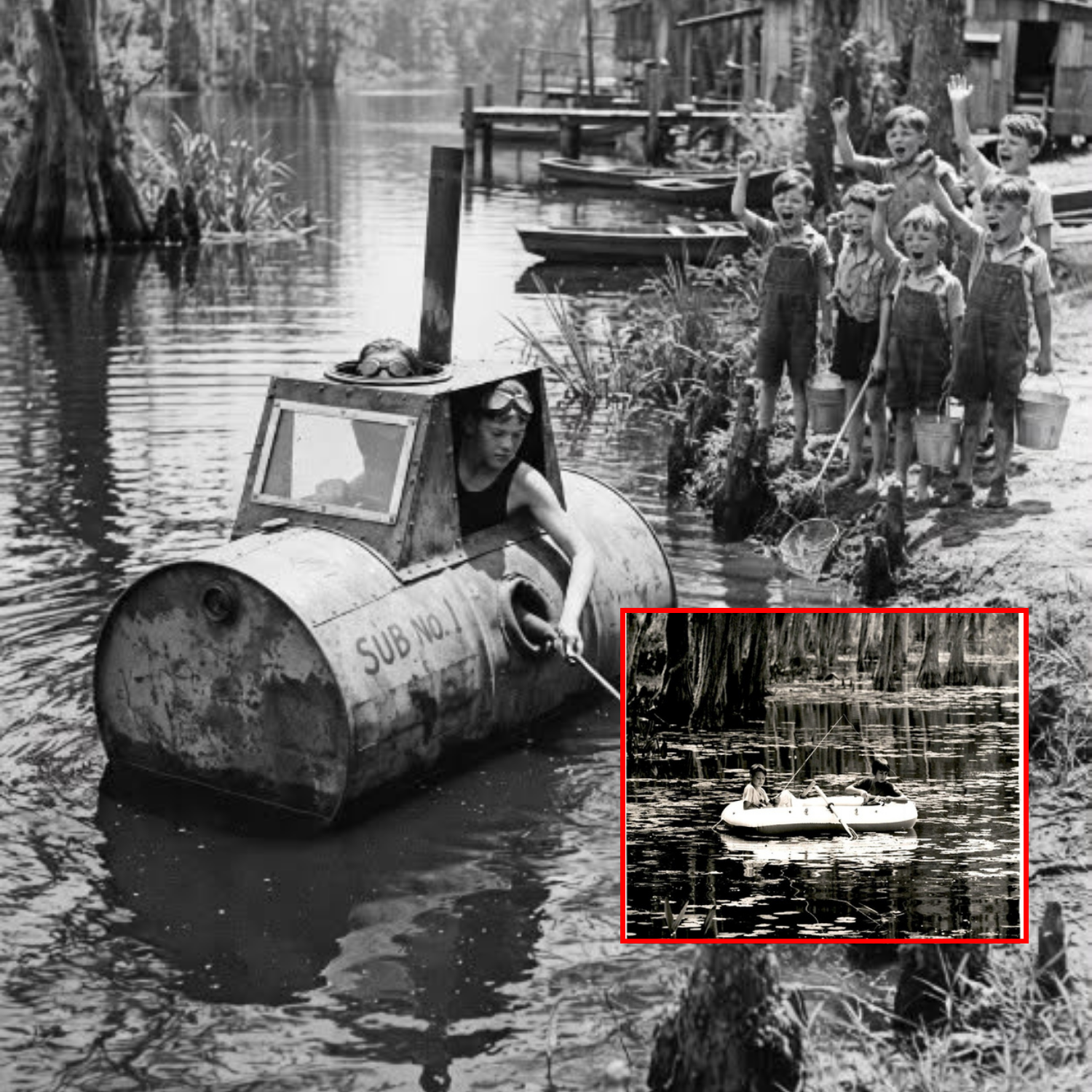
At 15 years old, Billy G. Johnson was facing a problem far bigger than anything a teenager should have been expected to solve.
His family needed food.
It was the 1930s, the Great Depression had devastated livelihoods across America, and Billy lived in the small fishing community of Bayou La Batre, Alabama. With seven younger brothers and sisters at home, an empty table was not an abstract fear. Every meal mattered.
Billy could see one possible answer stretching out in front of him: the Gulf of Mexico.
There were fish beneath those waters. The problem was reaching them.
Instead of accepting the limits of ordinary fishing, Billy came up with a remarkable plan. With help from his uncle and materials that others might have considered little more than scrap, the teenager set out to build his own underwater vessel.
His goal was not adventure or fame.
He wanted to bring dinner home.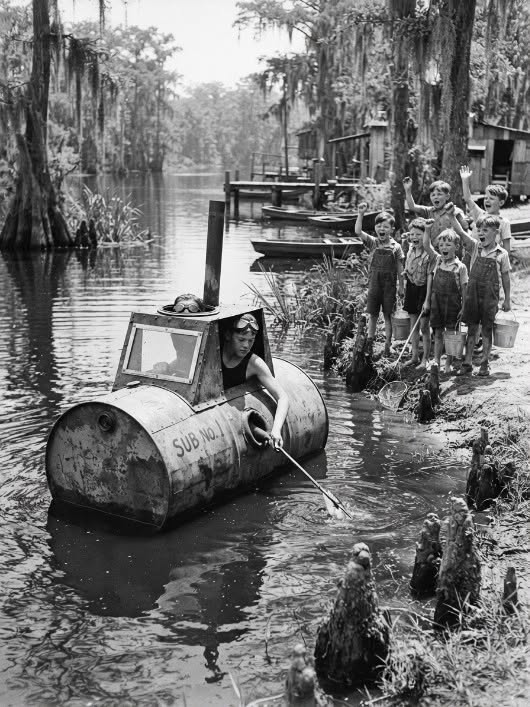
Hard Times on the Alabama Coast
By the time Billy began experimenting with his unusual idea, families across the United States had spent years struggling with the consequences of the economic collapse that followed the 1929 stock market crash.
Jobs disappeared. Businesses failed. Money became scarce, and households learned to stretch nearly everything they had.
Along the Gulf Coast, communities such as Bayou La Batre had long depended heavily on fishing and other small-scale work. The sea could provide food, but catching enough was never guaranteed.
Billy understood that reality firsthand.
Although he had no engineering education, professional workshop or expensive machinery, he possessed something equally important: the ability to look at ordinary objects and imagine what they might become.
He knew that fish could be found deeper beneath the surface, beyond what fishermen could easily reach from above.
So he began thinking differently.
What if, instead of waiting for the fish to come within reach, he could go down to them?
Two Oil Drums Became the Beginning
With his uncle’s assistance, Billy gathered the basic materials for his underwater machine.
At the center of the design were two used 55-gallon oil drums.
The drums were welded together to form a narrow cylindrical compartment with barely enough room for a single person. It bore little resemblance to the sophisticated military submarines most people would recognize.
Comfort was not the point.
Billy simply needed something capable of taking him beneath the surface.
Then came the challenge of seeing outside.
For that, an old automobile windshield was incorporated into the vessel, giving Billy a window through which he could search the underwater environment.
Breathing required another improvised solution. A stovepipe became a simple snorkel, extending upward toward the surface so fresh air could reach the craft while Billy remained submerged.
Each problem was met with another piece of practical improvisation.
But one major question remained.
How could he make the submarine move?
A Submarine Powered Like a Bicycle
A conventional engine would have added expense and complexity that Billy could hardly afford.
Instead, he turned to human power.
Inside the homemade submarine, he installed a pedal-operated mechanism resembling the workings of a bicycle. By pedaling with his legs, Billy could power the propulsion system and push the little vessel through the water.
No gasoline was necessary.
According to the account, the craft could descend to approximately 10 feet below the surface.
That depth would have been insignificant to a naval submarine, but Billy was not trying to cross an ocean or fight a war. Ten feet gave him something he had not had before: direct access to fish swimming below.
Once inside his cramped metal vessel, Billy could pedal through the water while watching through the salvaged windshield.
Then came perhaps the strangest part of the entire machine.
The submarine included a sealed opening fitted with a rubber glove. Billy could place his arm into it and operate outside the hull without opening the compartment to the surrounding water.
Using a spear, he hunted fish from inside his homemade craft.
It was an extraordinary fishing method built almost entirely from necessity.
A Catch Could Mean 50 Pounds of Food
Operating such a machine required far more than imagination.
Billy was entering the water inside a vessel constructed from salvaged materials, depending on homemade systems for air, movement and visibility.
Yet he kept using it because the potential reward was enormously important to his family.
On successful outings, Billy reportedly returned with as much as 50 pounds of fish.
For a household with eight children, including Billy and his seven younger siblings, that amount could make an enormous difference.
His invention was doing exactly what he had hoped it would do.
It was helping put food on the table.
Before long, people around Bayou La Batre began noticing the teenager and his strange underwater machine. Neighbors gathered to watch, while curious visitors tried to understand how two oil drums had become a working fishing submarine.
Not everyone was enthusiastic.
The unusual sight reportedly attracted the attention of the local sheriff, who considered stopping Billy from using the vessel because it frightened visitors and tourists unfamiliar with what they were seeing.
The community, however, understood why the submarine existed.
Local residents defended the teenager, reportedly insisting that the machine was helping feed eight children and should be left alone.
Behind the spectacle was a simple reality: a family was struggling, and a 15-year-old had found an unconventional way to help.
From a Small Fishing Town to National Attention
Billy’s creation eventually became known far beyond the Alabama coast.
In 1937, his invention received national attention when Popular Mechanics featured the story under the headline “Alabama Boy’s Oil Drum Submarine Feeds Family.”
The unusual mechanics certainly made the story memorable.
There were the two 55-gallon drums welded together. There was the automobile windshield turned into an underwater viewing port. A stovepipe supplied air. Bicycle-style pedals provided power. A rubber-glove opening helped Billy spear fish beneath the surface.
But the machinery was only part of what made the story compelling.
Billy had built the submarine during an era when Americans across the country were finding ways to survive with severely limited resources.
Old clothes were repaired rather than replaced. Equipment was reused. Families stretched food and money as far as possible. Objects that might once have been thrown away suddenly became valuable.
Billy’s submarine was an extreme example of that resourcefulness.
He did not begin with sophisticated engineering knowledge and then search for a project.
He began with hunger and searched for an answer.
An Invention Built for Family
It is easy to remember Billy Johnson’s story because the machine itself sounds almost unbelievable: a teenager pedaling beneath the Gulf Coast inside two welded oil drums while hunting fish through a homemade underwater system.
Yet focusing only on the novelty misses the reason he built it.
Billy was a boy carrying an adult-sized responsibility during one of the hardest economic periods in American history.
He saw seven younger siblings who needed to eat. He saw waters containing food that conventional methods could not always reach. And instead of deciding there was nothing he could do, he began assembling a solution from whatever was available.
His little submarine did not transform naval engineering or introduce technology that changed underwater travel.
Its achievement was far more personal.
It brought fish home.
Nearly every part of the vessel reflected limitation: discarded drums instead of a manufactured hull, an old windshield instead of specialized glass, a stovepipe instead of sophisticated breathing equipment and pedals instead of an engine.
But together, those unlikely pieces became something useful.
Billy Johnson’s story endures not simply because a 15-year-old once built a submarine from oil drums, but because of what drove him to climb inside it.
In a time defined by scarcity, he looked beneath the surface and found a way to provide for the people who depended on him.