The Last Goodbye to Sudan Became a Warning the World Could Not Ignore
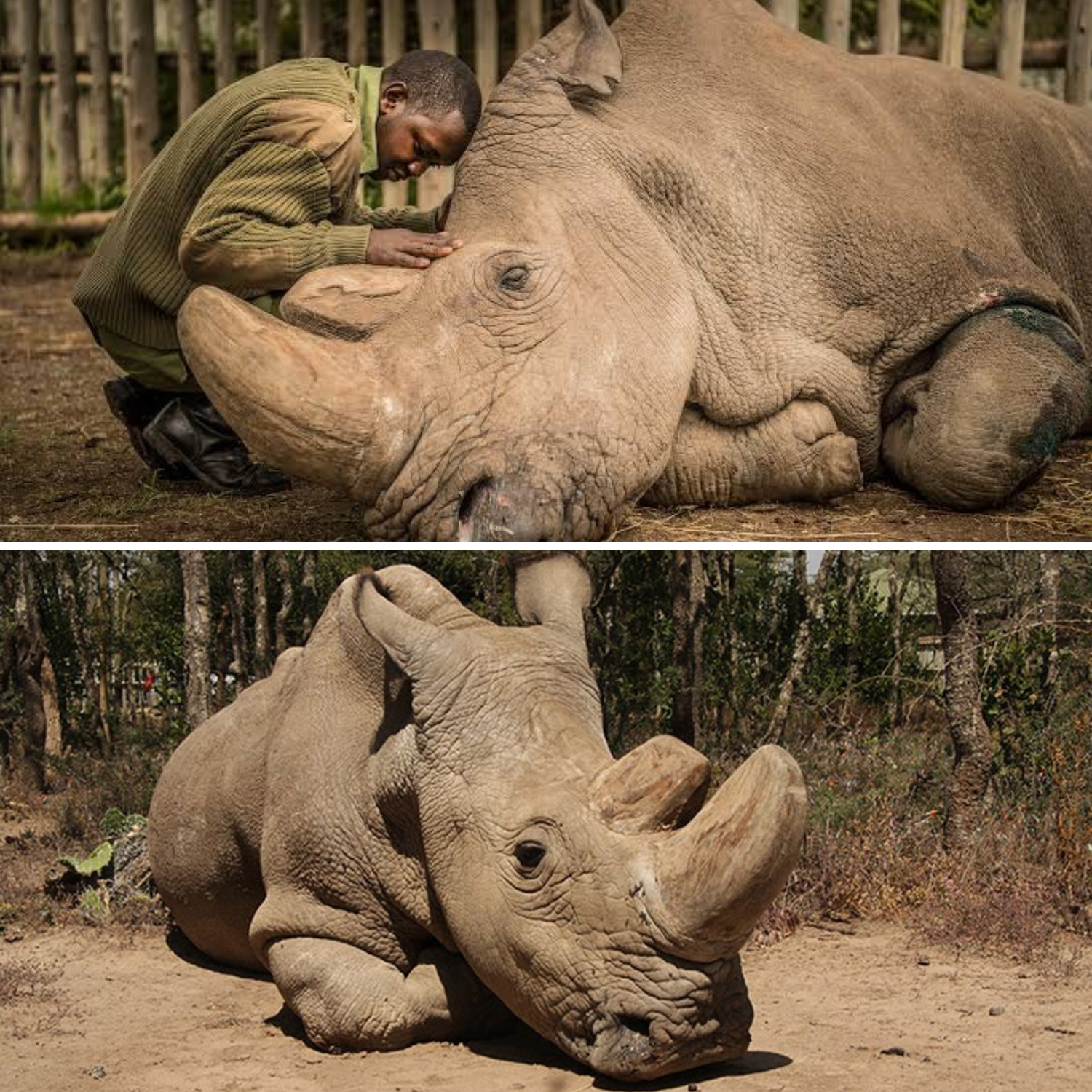
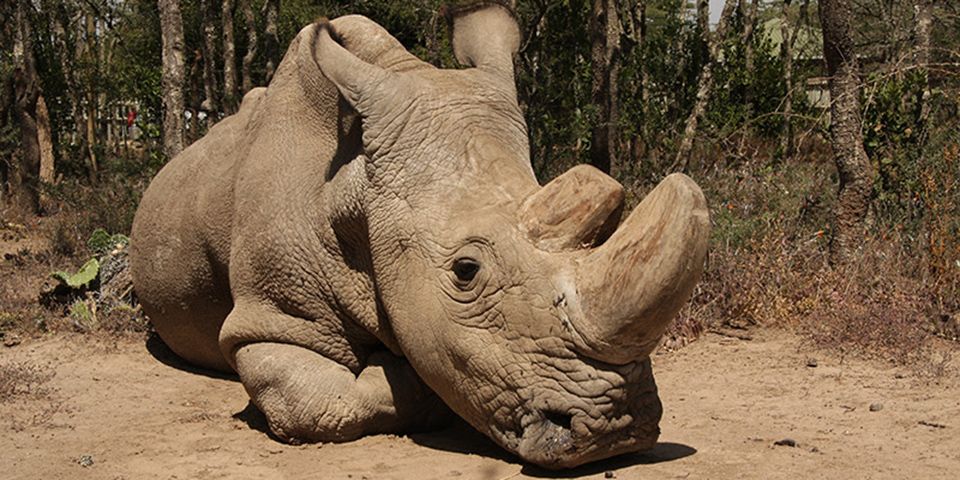
In the final photograph that would circle the world, Sudan no longer looked like the towering symbol of survival he had once been.
The elderly rhinoceros rested weakly on the ground at Ol Pejeta Conservancy in Kenya as Joseph Wachira leaned close beside him. Wachira, one of the caregivers who had protected Sudan for years, placed a gentle hand against the animal’s face.
There was no dramatic gesture and no need for words. The image captured something quieter and more powerful: a trusted friend offering comfort as the last male northern white rhino on Earth approached the end of his life.
Wildlife photographer Ami Vitale preserved that moment. What her camera recorded was more than the death of a famous animal. It was the closing chapter of a species pushed almost beyond recovery—and a painful reminder of what can happen when humanity waits too long to act.
Sudan died on March 19, 2018, at the age of 45.
For the people gathered around him, the loss was deeply personal. They had fed him, guarded him and cared for him as age gradually weakened his enormous body. For the rest of the world, his death carried an even heavier meaning.
There were no male northern white rhinos left.
A Life That Began in the Wild
Sudan was born in 1973 in the Shambe region of southern Sudan, when northern white rhinos could still be found in parts of Central Africa.
These massive animals once moved through grasslands and forests, living as part of ecosystems that had developed over countless generations. They were social, intelligent creatures whose presence helped shape the landscapes around them.
Sudan’s early life changed when he was captured as a calf and taken to the Dvůr Králové Zoo in what is now the Czech Republic. His relocation placed him at the center of an international effort to prevent the disappearance of his kind.
Conservationists hoped that managed breeding could rebuild the shrinking population. Sudan spent many years far from the continent where he had been born while scientists and animal-care teams worked to produce a new generation.
But the crisis was already severe.
Northern white rhino numbers continued to collapse, and breeding efforts could not reverse the decline quickly enough. One by one, the remaining animals died until Sudan became one of the final survivors of an ancient lineage.
Eventually, he was brought back to Africa.
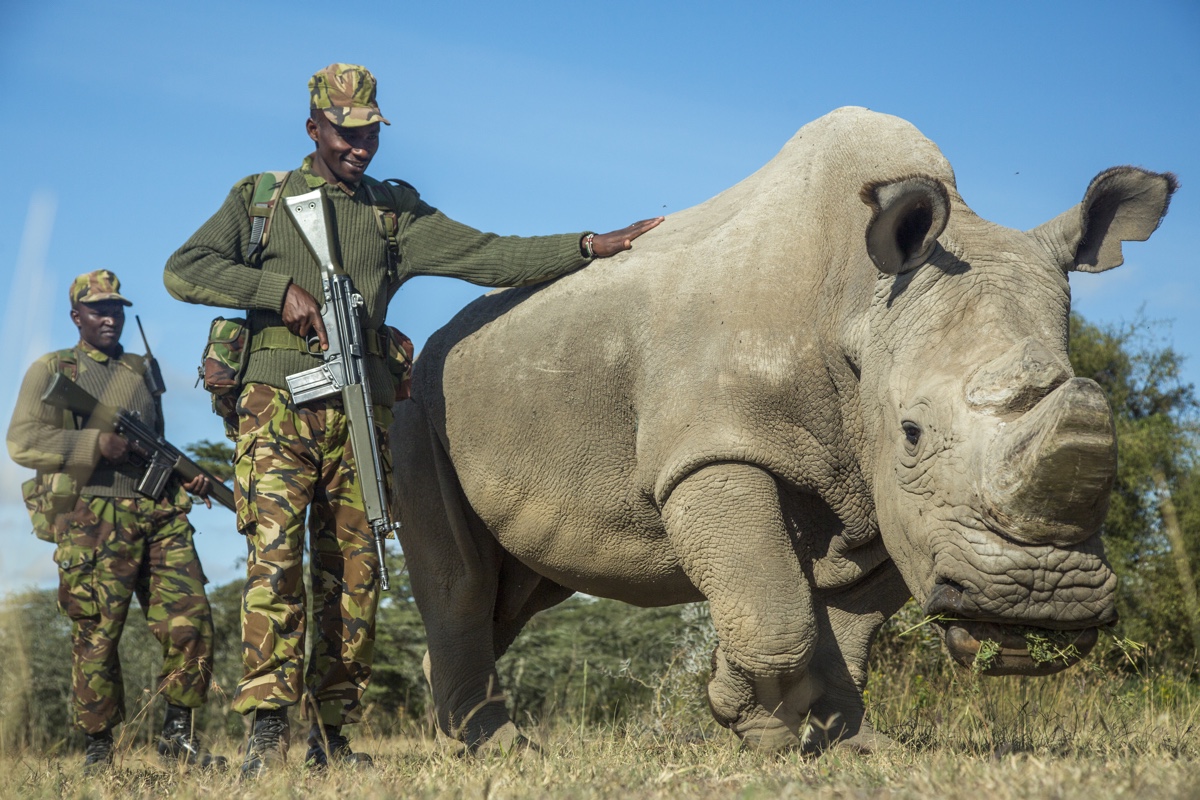
At Ol Pejeta Conservancy, Sudan lived under extraordinary protection. Armed guards watched over him day and night, not because he was dangerous, but because he remained a target in a world where rhinoceros horn could command enormous illegal profits.
His survival had become a global responsibility.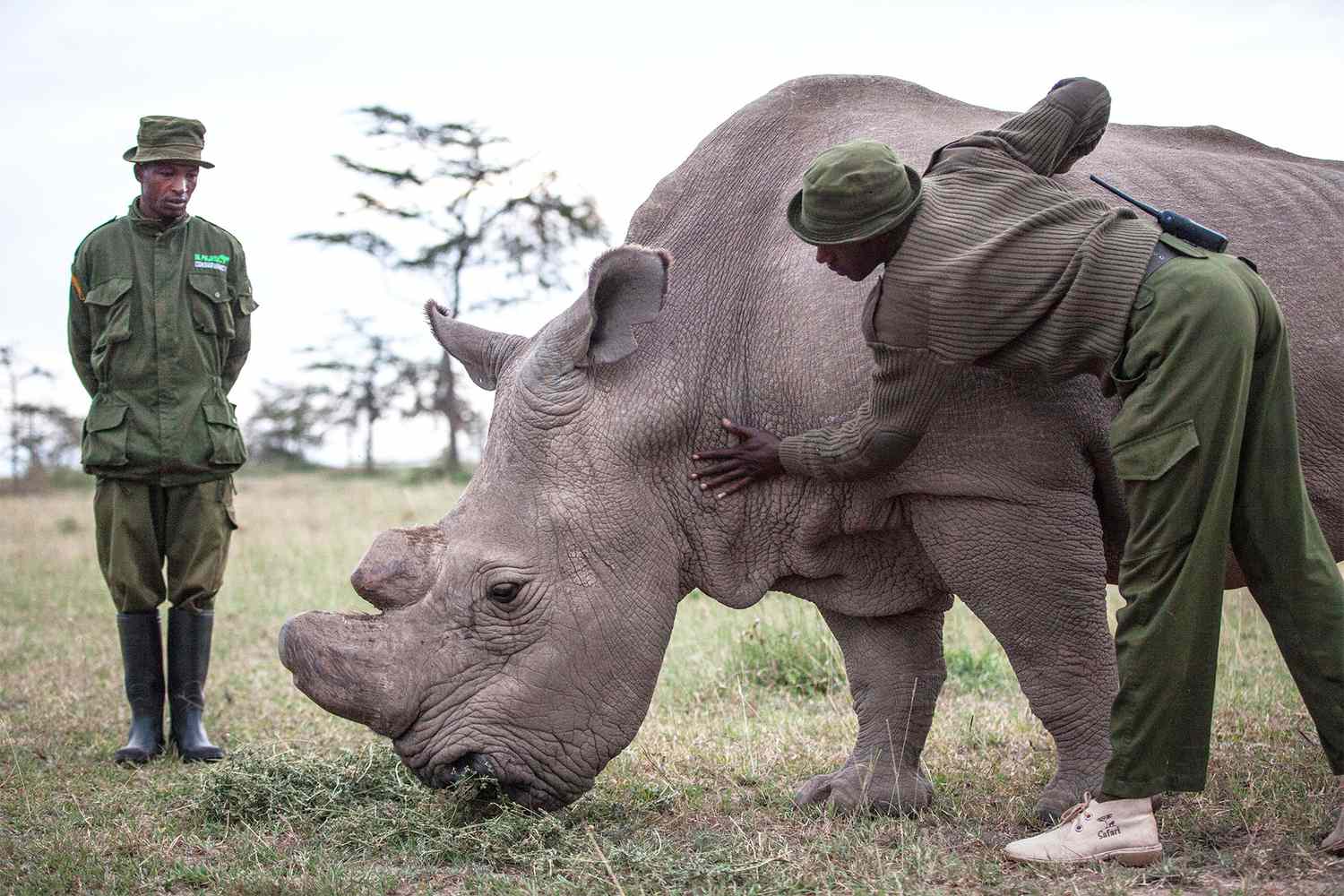
How a Species Reached the Edge
The northern white rhino’s destruction was not simply the result of age or natural environmental change.
Human activity drove the subspecies toward extinction.
Poachers killed rhinos for their horns, which were sold through illegal wildlife markets and promoted through false beliefs about status and medicinal value. Rhino horn is made of keratin, the same material found in human hair and fingernails, yet demand continued to fuel the killing.
Habitat destruction added further pressure. As the rhinos’ range shrank and their numbers fell, the survivors became increasingly vulnerable.
By the time the world fully understood the scale of the emergency, very few northern white rhinos remained.
Sudan therefore became much more than an individual animal. His body carried the hopes of conservationists, scientists and animal lovers who understood that his death would mark a historic loss.
People across the world learned his name. Children followed his story. Photographers traveled to see him. Conservation groups used his survival to draw attention to endangered wildlife and the illegal trade threatening species across the planet.
He was sometimes treated like a celebrity, but behind the public attention was a grim reality: Sudan was famous because almost every other male of his kind was already gone.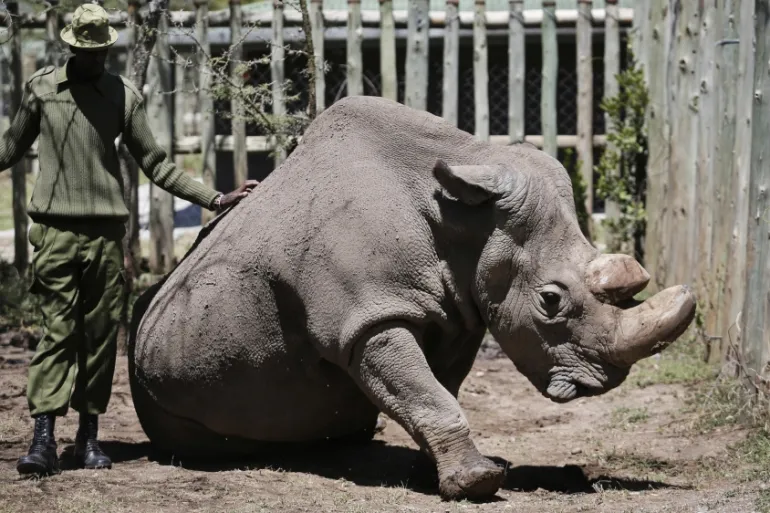
Protected Until the End
In his later years, Sudan developed serious age-related health problems. The strength that had carried him through more than four decades began to fade.
His caregivers remained close.
They could not reverse time or repair the damage that had been done to his species, but they could make certain that he did not spend his final days alone or frightened. They treated him with patience and dignity as his condition worsened.
That devotion gave Ami Vitale’s photograph its emotional force.
Wachira’s hand resting on Sudan did not resemble a routine interaction between a worker and an animal. It looked like a farewell between two beings who had developed trust over years of daily contact.
The photograph later received the People’s Choice Award in the Wildlife Photographer of the Year competition organized by the Natural History Museum. Millions saw it and recognized the sorrow within the frame.
Some saw a caregiver losing an animal he loved.
Others saw the moment humanity lost its last chance to keep a male northern white rhino alive.
The image made extinction feel immediate. It transformed an environmental term often presented through charts and population figures into something visible and intimate.
A species was not disappearing somewhere far away.
It was dying in front of one grieving man.
More Than One Animal Was Lost
Sudan’s death forced people to confront the permanence of extinction.
Scientists can preserve genetic material and explore advanced reproductive methods. They can study DNA and attempt to use technology to protect what remains. But the complete disappearance of a species erases far more than a biological sample can contain.
It removes behaviors passed through generations, relationships between animals, and a unique role within an ecosystem. It ends a natural history shaped over millions of years.
That was what made Sudan’s final days so difficult to witness. Northern white rhinos had survived enormous changes across the planet, yet they could not withstand the pressures created by modern human exploitation.
Sudan’s story was tragic because the forces behind it were not unavoidable. Poaching, trafficking and habitat destruction were choices.
His death became evidence of their consequences.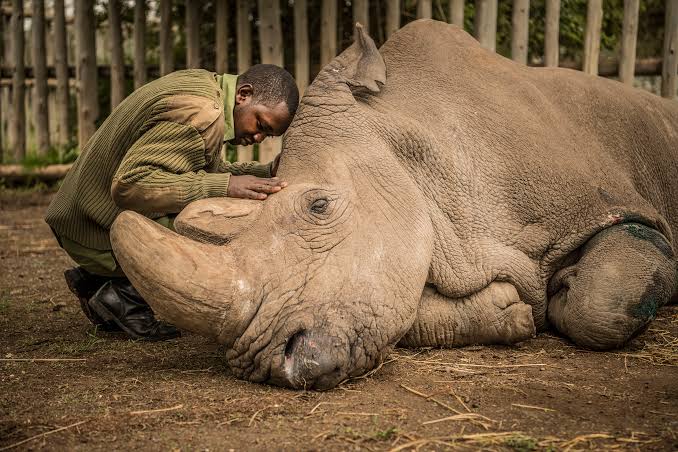
The Warning Inside the Photograph
Despite its sadness, Sudan’s story also inspired a wider commitment to conservation.
His life encouraged people to speak about endangered animals before their numbers reached the final handful. His fame helped show that protecting wildlife is not only about rescuing individual creatures. It is about preserving the systems that support life across the planet.
Forests, grasslands, oceans and wetlands are connected to the animals that inhabit them. When one species vanishes, the loss can reach far beyond a single population.
Sudan’s experience offered a lesson that could not be ignored: waiting until only one individual remains is not a conservation strategy. It is an emergency created by earlier failures.
Thousands of species continue to face threats from illegal trade, pollution, climate change and shrinking habitats. The decisions made now will determine whether future generations encounter those animals in the wild or know them only through photographs.
Sudan spent his final years surrounded by people who protected him and treated him with compassion. They could not restore everything that had already been lost, but they refused to abandon him.
That loyalty gave the world one final image of the northern white rhino—not as an anonymous statistic, but as a living creature capable of forming bonds and earning love.
In the photograph, Joseph Wachira’s hand appears small against Sudan’s enormous head. Yet the gesture carries a message larger than both of them.
Protection often begins with a simple decision to care.
Sudan’s life ended in 2018, but the warning contained in his farewell remains. When humanity allows a species to disappear, the planet loses something that cannot truly be replaced.
And in losing it, people lose part of their own connection to the living world.