A Bride Hid Her Face in a 1912 Wedding Portrait—Then Her Wealthy Husband Died
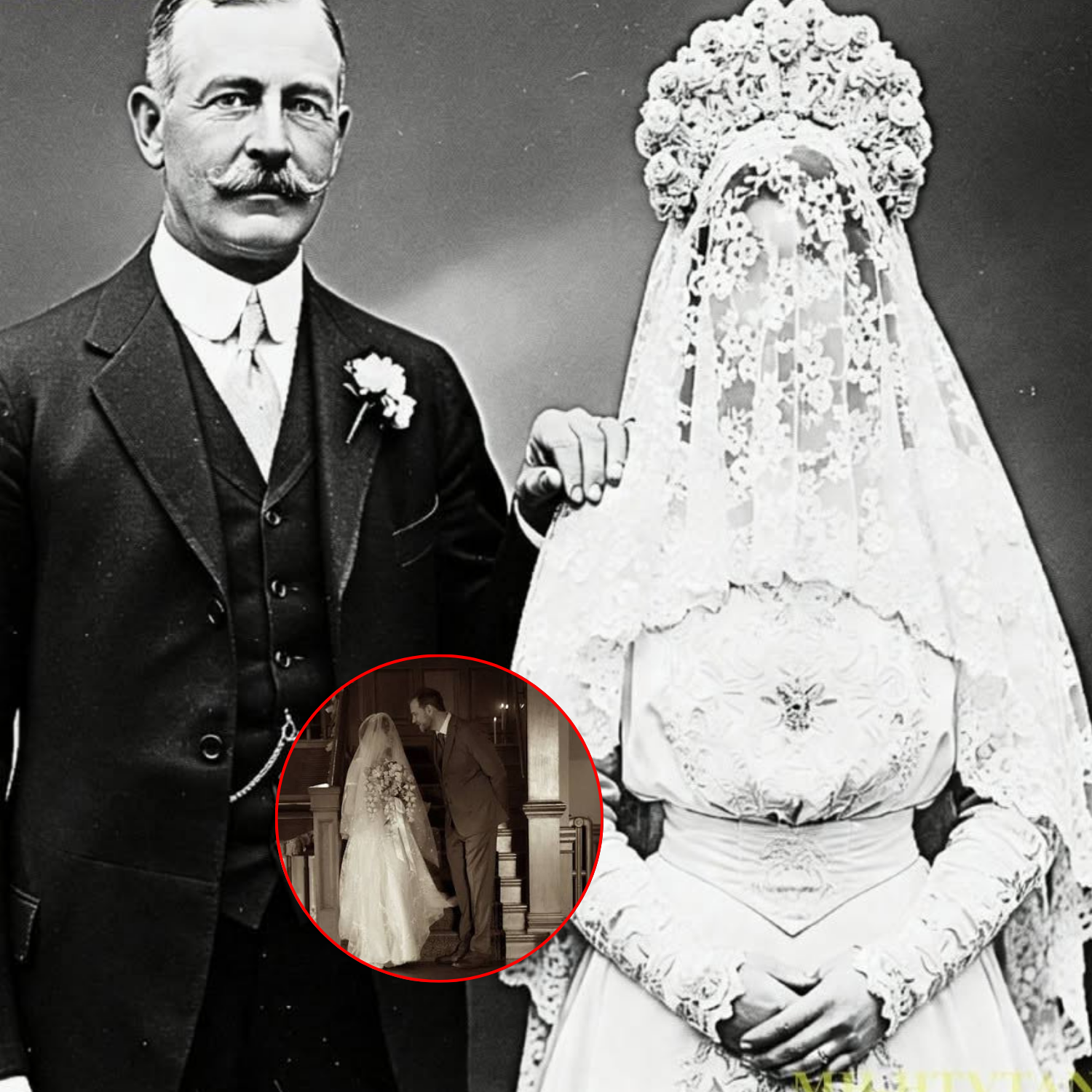
The groom looked directly into the camera, his expression calm and assured. Beside him stood a bride in an elaborate white gown, her hands folded neatly before her.
Yet the most important part of her appearance was missing.
A heavy lace veil concealed her entire face.
The unusual portrait, dated June 22, 1912, might have remained buried among countless forgotten family photographs. More than a century later, however, it caught the attention of a Chicago detective—and led her toward a brief marriage, a sudden death and a widow who seemed to disappear with a fortune.
A Photograph Found by Chance
In the summer of 2024, Detective Rebecca Walsh entered Murphy’s Antiques in downtown Chicago hoping to find a birthday present.
The shop was crowded with remnants of other people’s lives: handwritten letters, worn journals, old portraits and objects whose owners had long since vanished from public memory. Rebecca, who worked with unresolved cases, was naturally drawn to such places. Her profession had taught her that overlooked details could sometimes reveal entire stories.
As she examined a box of vintage wedding photographs, one image stopped her.
Most formal portraits from the early 20th century displayed the bride and groom clearly. Such photographs were expensive and carefully arranged, intended to preserve an important family moment for future generations.
This one did the opposite.
The groom’s face was fully visible, but the bride’s identity had been hidden behind thick lace.
The photograph showed a well-dressed man who appeared to be in his early 50s. He wore a dark suit, had a prominent mustache and carried himself with the confidence of someone accustomed to wealth and social standing. One hand rested on the woman’s shoulder.
The bride’s gown was richly decorated with embroidery and beadwork. Her posture was composed, and nothing about her clothing appeared careless or unfinished.
Only the veil seemed strange.
It did not merely soften her features or partially cover her face. It formed an opaque barrier between the woman and the camera, leaving no recognizable detail behind.
At the bottom of the photograph, Rebecca found the only surviving clue:
Harrison Photography—Chicago—June 22, 1912.
The shop owner told her the portrait had arrived as part of an estate collection. There were no names, letters or family documents connected to it.
Rebecca bought the photograph and took it to her office.
What began as curiosity soon became an investigation.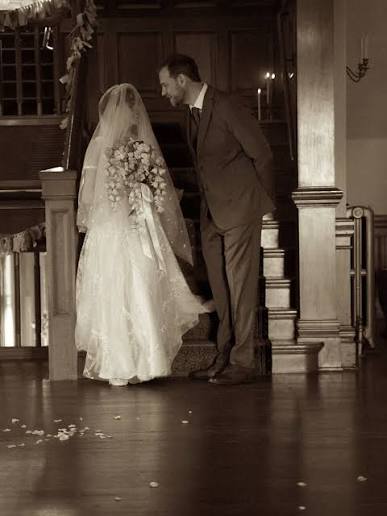
Identifying the Groom
The man was the easiest person to trace because his face was visible.
Rebecca searched archived newspapers, city documents and marriage records until she found a match. The groom was Thomas Whitmore, born in 1860 and known in Chicago as a successful businessman.
Whitmore owned Whitmore Manufacturing, a furniture company that had prospered during the city’s industrial growth. He had previously been married, but his first wife had died several years earlier. By 1912, he was wealthy, respected and well connected.
A marriage announcement confirmed that he had wed a woman named Helen Stone on June 22—the same date printed on the portrait.
Helen was described as a 35-year-old woman who had recently come to Chicago from St. Louis. Newspaper reports characterized her as elegant and mysterious, but offered almost nothing concrete about her life.
There was no meaningful account of her childhood, relatives or previous circumstances. Rebecca could find no other known photographs of her.
The articles focused almost entirely on Thomas.
Helen appeared in the records only as the woman he had married.
Then Rebecca discovered that the marriage had lasted just over three weeks.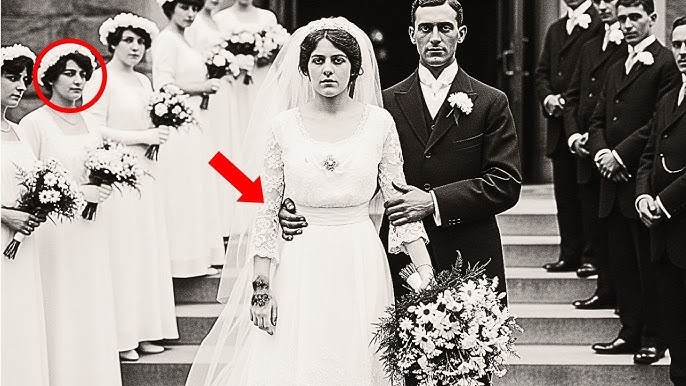
A Sudden Death
On July 15, 1912, Thomas Whitmore died.
The official cause was heart failure.
According to the surviving account, Thomas experienced chest pain during the night. Helen called for assistance, but he died before anyone could save him. The family doctor signed the death certificate, and no autopsy was performed.
There was also no formal investigation.
Private handling of medical matters was not necessarily unusual for a wealthy family during that period. Still, the sequence of events troubled Rebecca.
Thomas had married a woman with almost no documented past. Her face had been deliberately concealed in their only known wedding portrait. Twenty-three days later, he was dead.
Helen inherited his estate.
What she did next deepened the mystery.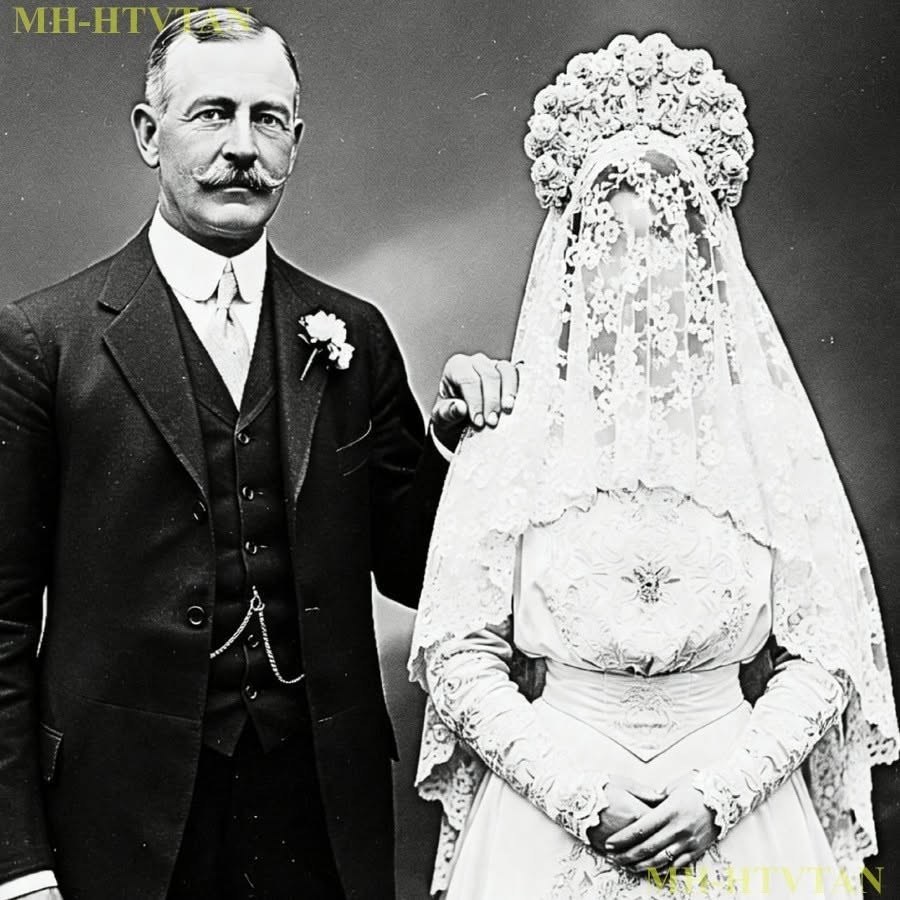
The Widow Liquidates Everything
Rebecca initially expected to find Helen living openly as a wealthy widow.
Instead, property and financial records showed a rapid dismantling of Thomas Whitmore’s life.
Helen sold the Whitmore home soon after his death. The furniture company was transferred. Bank accounts were closed, and other assets were converted into money.
Then Helen disappeared from the records.
There was no forwarding address, no public appearance and no later newspaper report explaining where she had gone. Rebecca found no clear evidence that she remained in Chicago or established a recognizable life elsewhere.
The woman whose face could not be seen in the wedding photograph had become just as difficult to locate outside it.
Rebecca returned to the original portrait and studied an enlarged version. She examined the bride’s hands, posture, clothing and position beside Thomas. She considered whether the veil might simply have reflected a personal or fashionable choice.
But its complete concealment of Helen’s face seemed increasingly deliberate.
Had she known that she did not want to be identified later?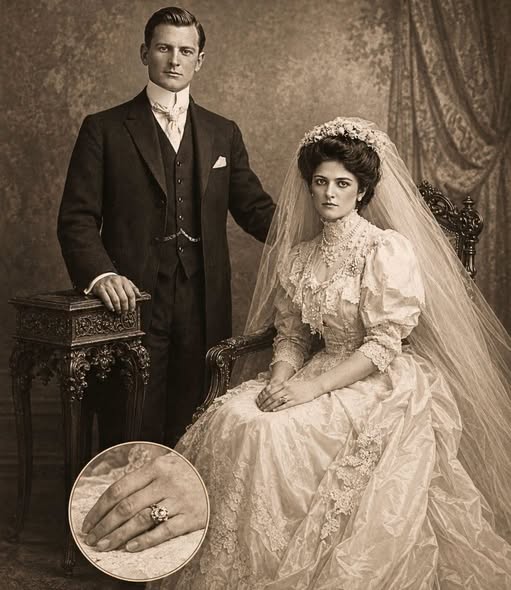
A Name That Never Fully Matched
Rebecca expanded the search to St. Louis and beyond, examining census information, passenger lists and other surviving documents.
She found scattered references to women named Helen Stone in several cities. But the details never aligned.
The records listed different ages, occupations and addresses. None provided a complete match for the woman who married Thomas Whitmore.
That inconsistency created several possibilities.
Helen Stone may not have been her real name. She may have altered parts of her identity while moving between cities. Thomas’s death may have been an unfortunate coincidence followed by a widow’s decision to begin again somewhere else.
Or the marriage, inheritance and disappearance may have been connected by a plan that had started before the wedding.
The surviving evidence offered no final answer.
What the Camera Failed to Preserve
A formal wedding portrait was meant to give a family permanence. It recorded faces, clothing and relationships so that future generations could remember the people who stood before the camera.
The Whitmore photograph preserved something more unsettling.
Thomas’s identity survived. His business, social position, first marriage and death all left traces in public records.
Helen remained hidden.
Whether she was escaping something, protecting herself or concealing darker intentions is unknown. The available fragments do not establish whether she was a victim, a survivor or a woman responsible for a carefully constructed deception.
What remains is the sequence frozen around one image: a wedding on June 22, a death on July 15, an inherited fortune quickly liquidated and a widow who vanished.
More than a century later, the heavy veil still performs the task it may have been chosen to accomplish.
It keeps the bride’s face—and perhaps the truth about her—out of sight.