Woman on Her Way to Show Kids New House Passes Horrific Crash on Road, Realizes It’s Her Husband: ‘I Knew He Was Dying’
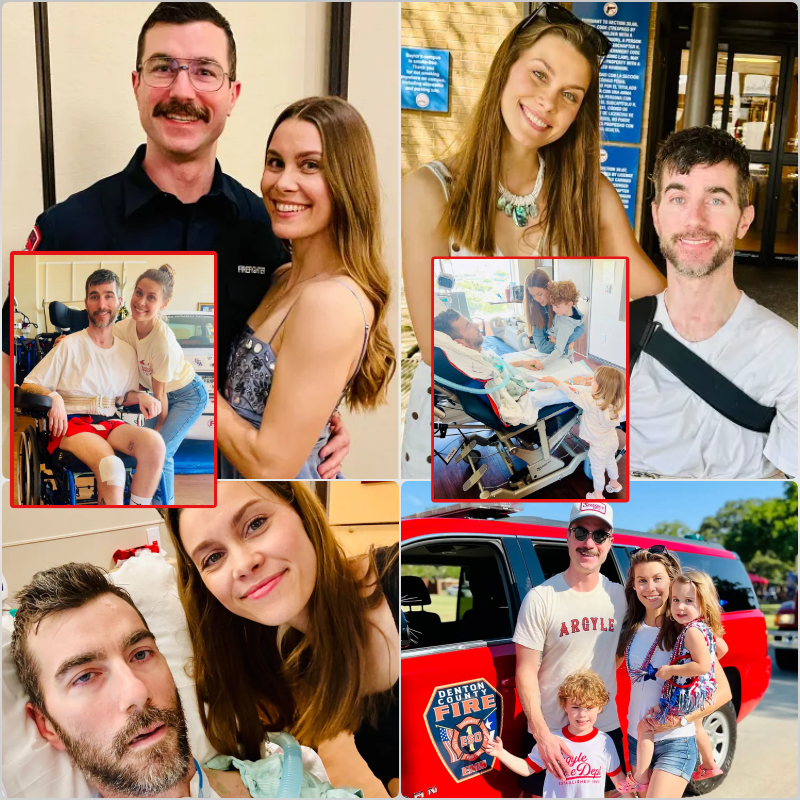
In the early months of 2024, Alicia and Corey Claytor had just found their dream home in Texas and were looking forward to what the future held for their family of four.Their new home was located just down the street from Alicia’s parents and in the school district that they wanted for their then-6-year-old son, Clyde, and then-3-year-old daughter, Alice.
On the morning of March 22, 2024, Corey had the paperwork notarized at the fire station where he served as a firefighter and paramedic, but the couple was unaware that everything they knew was going to change in a few short hours.
Corey and Alicia Claytor with their two kids.Alicia Claytor
Corey, now 37, took his motorcycle out, kissed Alicia goodbye and said he would meet her and the kids at home. In the meantime, Alicia decided to show their kids their new house.
“I drove past the new house and pointed it out to them through the window. They pressed their faces to the glass, asking me a million questions, so excited,” she tells PEOPLE. “Then we headed home. Traffic was slowing down on the highway, so I took an exit I had never taken before. And then I saw him.”
Corey was on the side of the road, a nurse at his side and his motorcycle thrown a few yards away from him.
Alicia immediately pulled over and got out of the car. When she asked if it was “as bad as it looked,” the nurse looked Alicia in the eye and said it “wasn’t good.”
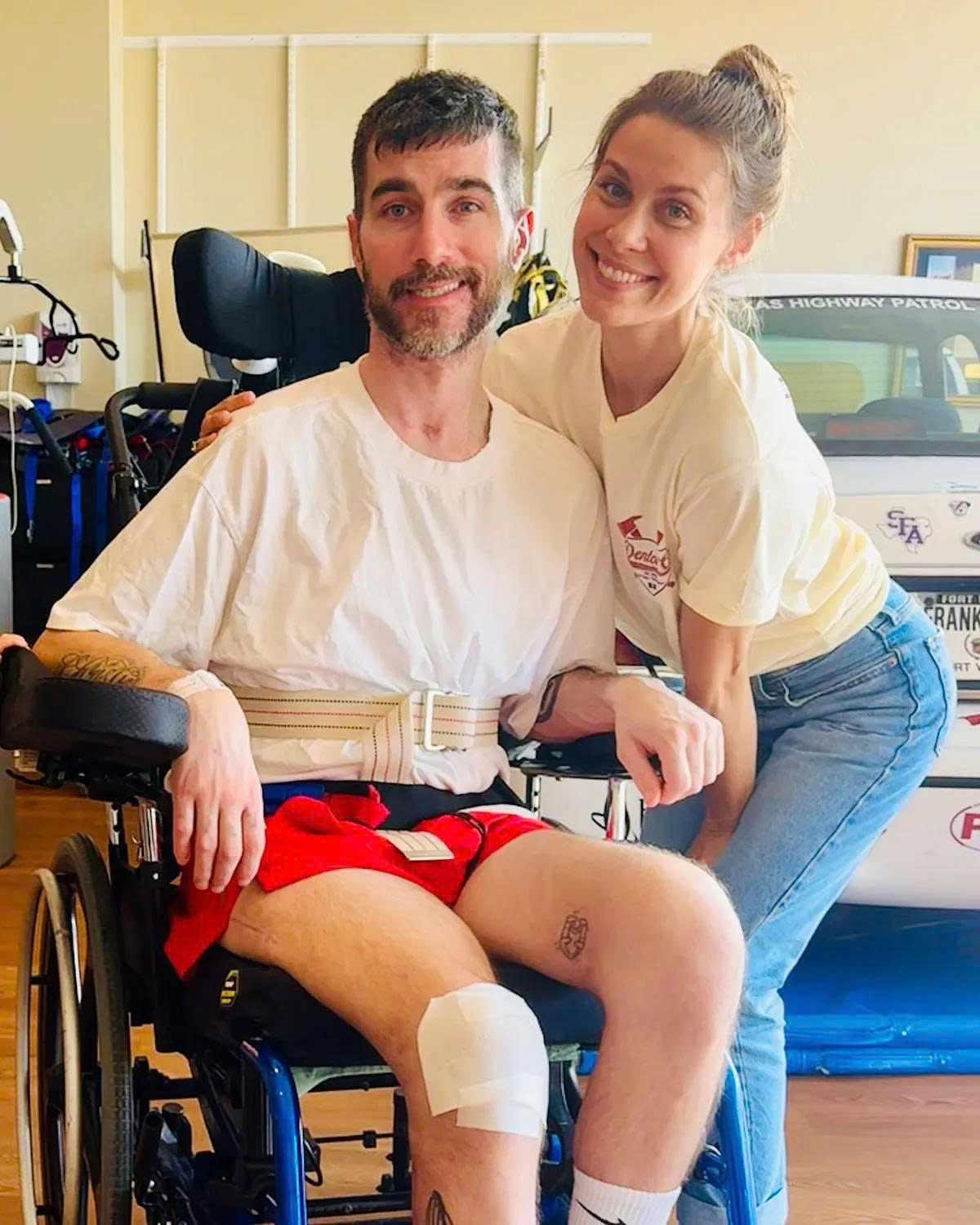
Corey and Alicia Claytor.Alicia Claytor
“The other driver had no license and no insurance. He didn’t see Corey,” Alicia shares. “A helmet saved his life, but it couldn’t save him from injuries that will be part of his story forever, including a grade 2/3 diffuse axonal injury, a severe traumatic brain injury caused by the tearing of brain fibers from a high-impact shearing force, along with a fractured femur.”
However, she didn’t know all of that at the time.
“I’m a paramedic’s wife, which means I’ve picked up enough medical knowledge over the years to understand what I was seeing, and what I was seeing terrified me,” the 35-year-old shares. “His eyes were rolled back. His tongue was swollen and protruding. There was blood.”
“I recognized the agonal breathing. I recognized the posturing. I knew he was dying,” she continues. “I stood there on the side of that road trying to decide what to do while waiting for the ambulance, and that wait felt like an eternity.”
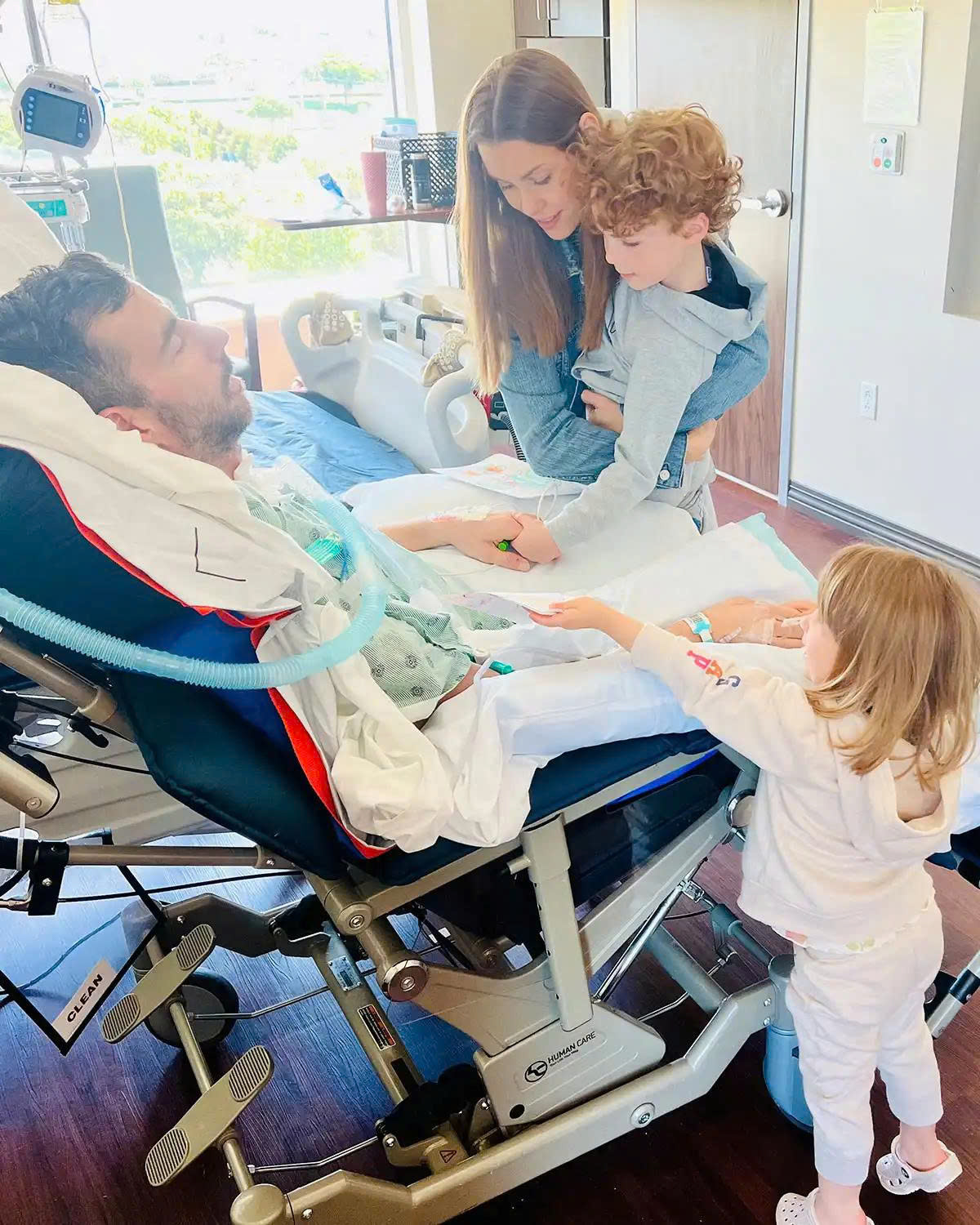
Corey Claytor with his family at the hospital.Alicia Claytor
When the fire crew arrived, Alicia told them that Corey was a fellow firefighter and paramedic. After he was intubated and put in the ambulance, she “kept bracing for them to tell me he hadn’t made it.”
“When I finally told them his name, one of the paramedics stopped and looked at me. ‘That’s Claytor?’ He hadn’t recognized him. Corey was in such bad shape,” she shares. “That moment broke something in me. He informed me that Corey’s crew would run a code and would meet us at the hospital.”
A woman nearby stopped and offered to drive her children to the hospital so she could ride in the ambulance with Corey, but she declined, determined to stay with the children.
“The man who hit Corey was still there. He waited. I could see him crying out of the corner of my eye. I never looked at him directly; I was afraid of how I might react,” she admits. “I drove slowly and controlled, dismissing every awful thought that came into my mind and focusing on the facts: He was alive in that ambulance. He was intubated and stable. His crew was meeting me there. My job was to drive myself and the kids to the hospital safely.”
When they arrived at the hospital, Alicia saw that Corey’s leg was twice the size it normally was from the fractured femur. He went into surgery for four hours.
While doctors then informed her he had to undergo a few more surgeries, Alicia says each of them gave her “educated hope.” On the seventh day of Corey’s hospital stay, the doctors went to do a tracheotomy, but during the procedure, they hit his vagus nerve, which triggered his heart rate to drop suddenly.
“They brought the crash cart out. I had seen that cart rolled into too many other rooms where the patient hadn’t made it. Corey stabilized, but the tears came and wouldn’t stop for a while,” Alicia shares.
Corey was then moved from the ICU to a long-term acute care center, where he contracted pneumonia several times before turning a corner.
Corey and Alicia Claytor.Alicia Claytor
“But somewhere in the middle of the fear, these thoughts kept surfacing, clear as day: ‘Excuse me? No. Absolutely not. We have plans and two kids who need you. You don’t get to die on me, or just be a vegetable. You’re going to get better,’ ” Alicia recalls.
Months passed, but Alicia didn’t lose hope.
“Corey didn’t speak his first words to me until three months after the accident. I sang to him. I talked to him every single day, even when he never responded. I just kept going, kept showing up, kept saying the things I always said,” she shares. “One day, I told him I loved him, the same way I had told him so many times before. ‘I love you too,’ he croaked back. And for that, I will be forever thankful.”
While Corey survived the crash, doctors were honest that a TBI prognosis “is notoriously difficult to predict.”
“There were no guarantees and no timelines,” Alicia shares. “For survivors of severe traumatic brain injuries like his, life expectancy is generally reduced by six to nine years compared to the general population.”
Never miss a story — sign up for PEOPLE’s free daily newsletter to stay up-to-date on the best of what PEOPLE has to offer, from celebrity news to compelling human interest stories.
The first year of survival with a TBI has the highest mortality risk, and those who survive it often do so with a significantly altered long-term outlook.
“What I held onto was that Corey was a firefighter and paramedic, physically strong, stubborn in the best possible way, and deeply motivated to get back to his family,” she says. “But holding onto hope didn’t mean I was without hopeless minutes, hours, days, months.”
Related Stories
Man Survived 7-Hour Wait to Be Rescued After Horrific Motorcycle Crash — It’s a ‘Miracle’ He’s Alive, Authorities Say
George Clooney Worried He Wouldn’t See Twins Again After Accident: I ‘Thought That This Was It’
Two years later, Alicia says that Corey’s recovery has been slow, nonlinear, yet “genuinely miraculous in ways that still catch me off guard.”
Alicia describes months where progress felt invisible, with a lot of effort and very little in return. Then a shift would happen, and there would be a new movement or a new word amid his journey to relearn how to walk, talk and more.
“His recovery has involved intensive rehabilitation, including physical therapy, occupational therapy and ongoing speech-language therapy for his dysarthria, a condition affecting the muscles that control speech, which is one of the lasting effects of his traumatic brain injury,” Alicia shares.
Still, she affirms that Corey is “still the person I fell in love with.”
“While personality change is common after TBI, my husband is no stranger to me. He is himself, with a new story and new obstacles to overcome,” she affirms. “I’m his biggest fan, and I believe in him. That blind hope carried us both through hell.”
Sources: https://people.com/woman-realizes-crash-victim-is-her-husband-suffers-tbi-exclusive-12027673