PRESTON DAVEY CASE: NEW SCRUTINY EMERGES AFTER CONVICTIONS IN BABY’S DEATH
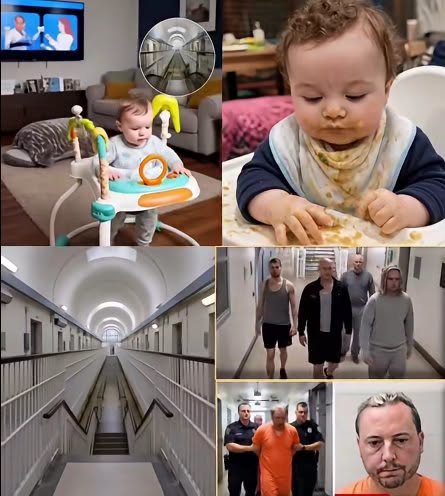
PRESTON DAVEY CASE: NEW SCRUTINY EMERGES AFTER CONVICTIONS IN BABY’S DEATH
BLACKPOOL, ENGLAND — The death of 13-month-old Preston Davey has taken a new turn—not because investigators have uncovered a mysterious new “hidden clue,” as some social media posts have suggested, but because authorities are now turning their attention to a different and equally troubling question: Could more have been done to protect the little boy before he died?
Preston’s case has already resulted in murder and child-abuse convictions. But the conclusion of the criminal proceedings has opened the door for a wider examination of the decisions, professional contacts and safeguarding measures surrounding his short life.
An independent safeguarding review is expected to examine how Preston was cared for after he was removed from his birth family and placed with prospective adoptive parents. The review had been paused while the criminal case was ongoing and is now set to continue following the convictions.
A BABY WHO WAS THRIVING IN FOSTER CARE
Preston Elijah Davey was born on June 16, 2022.
Just days later, on June 21, he was placed into emergency foster care. According to Lancashire Police, professionals described Preston during his first nine months with his foster carers as a healthy and happy child.
In March 2023, an adoption panel approved his adoption by Jamie Varley and John McGowan-Fazakerley.
Preston spent his first night with the couple on March 31, 2023. Within less than four months, he would be dead.
The contrast between those two periods of his life became one of the most disturbing elements of the case.
WHAT HAPPENED INSIDE THE HOME?
Prosecutors presented evidence that Preston suffered repeated physical and sexual abuse while living with Varley and McGowan-Fazakerley.
Medical examinations identified more than 40 traumatic injuries, including injuries that prosecutors said were inconsistent with an accident. Evidence presented during the trial also included material recovered from Varley’s phone.
Investigators found photographs and videos involving Preston, including material recorded only weeks after he entered the home.
Police said one video recovered from Varley’s phone showed bruising to Preston’s head, which investigators said indicated an earlier episode of physical cruelty.
The evidence ultimately formed part of a prosecution case describing a sustained pattern of abuse rather than a single unexplained incident.
THE FINAL HOURS
On July 27, 2023, Preston suffered a cardiac arrest and was taken to Blackpool Victoria Hospital.
Varley initially claimed that Preston had accidentally drowned in a bathtub after being left alone for several minutes.
But prosecutors challenged that account during the trial.
Medical and forensic evidence became central to the case. A post-mortem examination concluded that Preston died from acute upper airway obstruction, rather than drowning.
The prosecution argued that the medical findings were consistent with deliberate interference with Preston’s airway and contradicted the explanation that he had simply drowned.
The court also heard evidence concerning the condition of Preston’s body and the numerous injuries identified during the post-mortem examination.
 THE JURY REJECTED THE DEFENSE
After a lengthy trial at Preston Crown Court, Jamie Varley was convicted of murdering Preston.
He was also convicted of multiple offenses involving child abuse, sexual offenses, grievous bodily harm and illegal images involving the child.
His partner, John McGowan-Fazakerley, was convicted of causing or allowing Preston’s death, child cruelty offenses and sexual assault.
On June 18, 2026, Varley was sentenced to a whole-life order, meaning he will remain in prison for the rest of his life and will not be eligible for parole.
McGowan-Fazakerley was sentenced to 25 years in prison.
The judge described the circumstances as being of the most extreme gravity.
 NOW, THE QUESTIONS MOVE BEYOND THE COURTROOM
With the criminal case concluded, attention is increasingly focused on the broader safeguarding system.
Preston had contact with professionals and agencies during the months before his death. The independent review is expected to examine how information was shared, how concerns were assessed and whether warning signs were missed before the tragedy occurred.
That review is important because it addresses a different question from the criminal trial.
The jury determined whether the defendants were criminally responsible for Preston’s death and abuse.
The safeguarding review must now examine whether systems designed to protect a vulnerable child worked as they were supposed to.
WHAT ABOUT THE CLAIMED “NEW CLUE”?
Online posts have circulated claims that investigators recently discovered a previously hidden clue that could dramatically change the case.
At this time, those claims should be treated cautiously.
The major facts surrounding Preston’s death have already been tested in court, and both defendants have been convicted. There is no reliable evidence establishing that a newly discovered secret piece of evidence has overturned or fundamentally changed the case.
What is genuinely new is the continuing scrutiny of Preston’s safeguarding history and the decision-making surrounding his placement with the prospective adoptive parents.
That distinction matters.
In a case involving a child who was already known to authorities and multiple professionals, the unanswered questions are not necessarily about a sensational hidden clue.
They are about what people knew, when they knew it, what actions were taken—and whether something could have been done differently.
A CASE THAT CONTINUES TO RAISE QUESTIONS
Preston Davey was only 13 months old when his life ended.
The criminal courts have now delivered their verdicts and sentences. But the broader examination of what happened before his death is not finished.
As the safeguarding review continues, authorities will have an opportunity to reconstruct the chain of decisions surrounding Preston—from his removal from his birth family, through foster care and adoption, to the final months of his life.
For those who loved Preston, the review cannot bring him back.
But it may help answer one of the most difficult questions left behind by the case:
Were there warning signs that could have saved a child’s life—and if so, why were they not acted upon?
That is the question that now moves to the center of the Preston Davey case.
This article is based on court findings, statements from Lancashire Police and reporting on the independent safeguarding review. Claims circulating online about an undisclosed “new clue” have not been independently verified and are not presented here as established facts.