LINDSAY CLANCY TRIAL: EMOTIONAL TESTIMONY SHIFTS FOCUS TO HER MENTAL STATE
LINDSAY CLANCY TRIAL: EMOTIONAL TESTIMONY SHIFTS FOCUS TO HER MENTAL STATE
 LYMOUTH, MASSACHUSETTS — The Lindsay Clancy murder trial took an emotional turn as jurors heard testimony about both the devastating injuries Clancy suffered and the severe mental-health symptoms the defense says preceded the deaths of her three children.
The testimony brought together two very different parts of the case: the physical evidence surrounding the children’s deaths and the defense’s argument that Clancy was experiencing a serious psychiatric crisis at the time.
FORENSIC PATHOLOGIST DETAILS CLANCY’S INJURIES
Forensic pathologist Dr. Elizabeth Laposata testified about the injuries Clancy sustained after going through a second-story window at her home.
Laposata described severe injuries involving Clancy’s spine, spinal cord, ribs, neck and vocal cords. She told jurors that, in her opinion, Clancy went through the window head-first.
The doctor also reviewed the autopsies of Clancy’s three children and discussed the injuries identified during their examinations.
Her testimony became particularly difficult as jurors heard details about the children’s deaths and the physical evidence investigators documented.
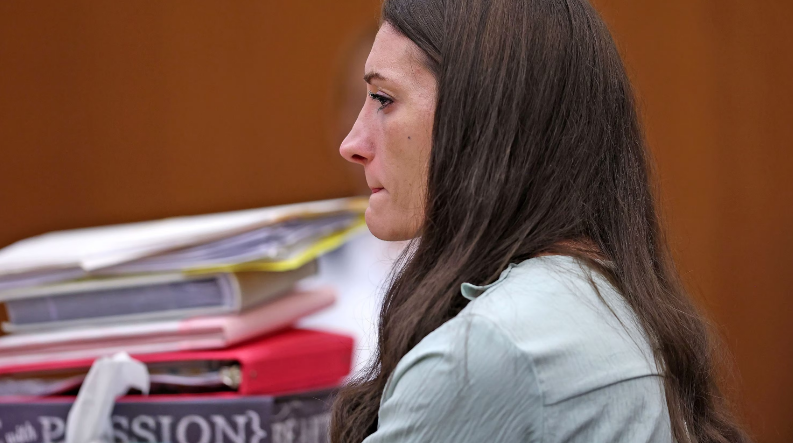
Clancy appeared visibly emotional during portions of the testimony.
 DEFENSE TURNS TO PSYCHOSIS
The courtroom then heard a dramatically different account when the defense called psychologist Paul Zeizel.
Zeizel testified that Clancy had been experiencing serious psychiatric symptoms before the deaths, including depression, dissociation and hallucinations.
According to his testimony, Clancy described experiences in which she believed other people could hear her thoughts.
Zeizel also told jurors that Clancy reported hearing a voice telling her that she had to kill her children and then take her own life.
He said that after one conversation, he allowed Clancy to contact her husband from his phone, describing the decision as an act of “human compassion.”
PSYCHOSIS CAN BE DIFFICULT TO RECOGNIZE
One of the defense’s central arguments is that someone experiencing psychosis may not appear continuously detached from reality.
Zeizel explained that psychotic symptoms can fluctuate.
A person experiencing hallucinations, he said, can sometimes carry on a normal conversation or complete ordinary activities while still experiencing serious disturbances in perception or thought.
He testified that Clancy experienced auditory hallucinations rather than visual hallucinations.
That testimony is significant because the defense is attempting to establish Clancy’s mental condition at the precise time the children died—not simply demonstrate that she had experienced psychological difficulties at some point in her life.
THE DEFENSE’S CENTRAL ARGUMENT
The defense is increasingly focusing its case on whether Clancy was suffering from psychosis when the killings occurred and whether that condition affected her ability to understand her actions.
Prosecutors, meanwhile, have presented evidence concerning the children’s deaths and Clancy’s actions before and afterward.
The jury will ultimately have to weigh the competing evidence and determine what role, if any, Clancy’s mental state played in the events.
The testimony has also highlighted the enormous human cost of the case.
Clancy was visibly emotional as witnesses described her injuries and the deaths of her children, creating tense and painful moments inside the courtroom.
As the defense continues presenting witnesses, the trial is moving toward one of its most consequential questions:
Was Lindsay Clancy experiencing a severe psychiatric break from reality when her children died, and what does that mean for her criminal responsibility?
That question now sits at the center of the defense’s case as testimony continues.