LINDSAY CLANCY TRIAL TAKES EMOTIONAL TURN AS DEFENSE ZEROES IN ON HER MENTAL STATE
LINDSAY CLANCY TRIAL TAKES EMOTIONAL TURN AS DEFENSE ZEROES IN ON HER MENTAL STATE
PLYMOUTH, MASSACHUSETTS — The Lindsay Clancy trial took another emotional turn as jurors heard testimony about the severe injuries Clancy suffered and the psychiatric symptoms the defense says she was experiencing before the deaths of her three children.
The testimony offered jurors two sharply different perspectives: the physical evidence surrounding the children’s deaths and the defense’s argument that Clancy was suffering from a severe mental-health crisis.
 FORENSIC PATHOLOGIST DESCRIBES CLANCY’S INJURIES
Forensic pathologist Dr. Elizabeth Laposata testified about the injuries Clancy sustained after she went through a second-story window.
Laposata described extensive injuries involving Clancy’s spine, spinal cord, ribs, neck and vocal cords. She told jurors she believed Clancy went through the window head-first.
The pathologist also reviewed the autopsies of Clancy’s three children and testified about the injuries documented in connection with their deaths.
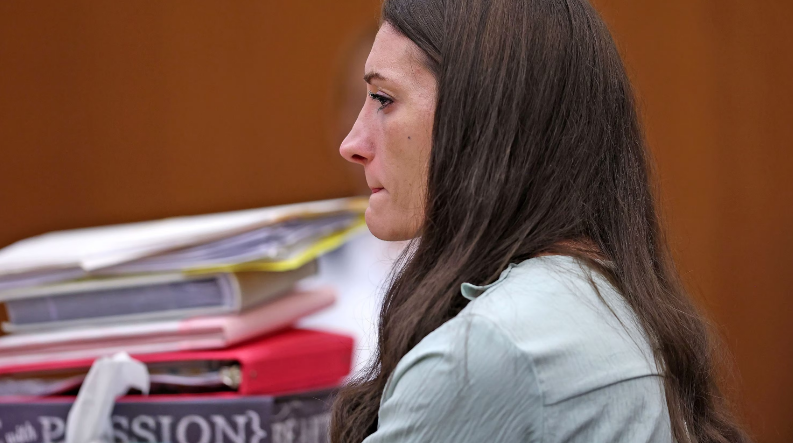
The testimony became particularly emotional inside the courtroom, with Clancy appearing to cry during portions of the proceedings.
DEFENSE EXPERT DESCRIBES HALLUCINATIONS
The focus then shifted to Clancy’s mental state.
Defense psychologist Paul Zeizel testified that Clancy had experienced serious psychiatric symptoms and had repeatedly sought help.
He described symptoms including depression, dissociation and hallucinations.
According to Zeizel’s testimony, Clancy told him she believed other people could hear her thoughts.
He also testified that Clancy reported hearing a voice telling her that she had to kill her children and then herself.
Zeizel said he allowed Clancy to call her husband from his phone afterward, explaining that he did so out of “human compassion.”
 PSYCHOSIS CAN FLUCTUATE
One of the most important parts of the defense testimony concerned the way psychosis can present.
Zeizel explained that psychotic symptoms can come and go. A person may experience hallucinations while still being capable of having a coherent conversation or carrying out routine activities.
He testified that Clancy experienced auditory hallucinations, but did not report visual hallucinations.
The testimony is significant to the defense because the question is not simply whether Clancy had mental-health problems.
The central issue is what her mental state was at the time the children died and whether she was experiencing psychosis that affected her ability to understand or control her actions.
THE DEFENSE’S STRATEGY IS NOW CLEAR
The defense is building its case around Clancy’s psychiatric history and the symptoms she allegedly experienced in the months leading up to January 2023.
Prosecutors, meanwhile, have presented evidence concerning the deaths of the children and the circumstances surrounding Clancy’s actions.
Jurors will ultimately have to weigh the medical, forensic and psychiatric testimony as they consider the competing accounts of what happened.
The courtroom has already seen several deeply emotional moments, with Clancy visibly affected as witnesses discussed her injuries and the deaths of her children.
As the defense continues calling witnesses, the trial is moving toward one of its most consequential questions:
Was Lindsay Clancy suffering from psychosis when her children died, and how should that mental state affect her criminal responsibility?
That question is now firmly at the center of the defense case.