Before Iron Man made him a global superstar and Oppenheimer brought his first Oscar, Robert Downey Jr. had to rebuild a career many believed was already over.
When Robert Downey Jr. walked onto the Academy Awards stage on March 10, 2024, the moment carried far more history than a typical career victory.
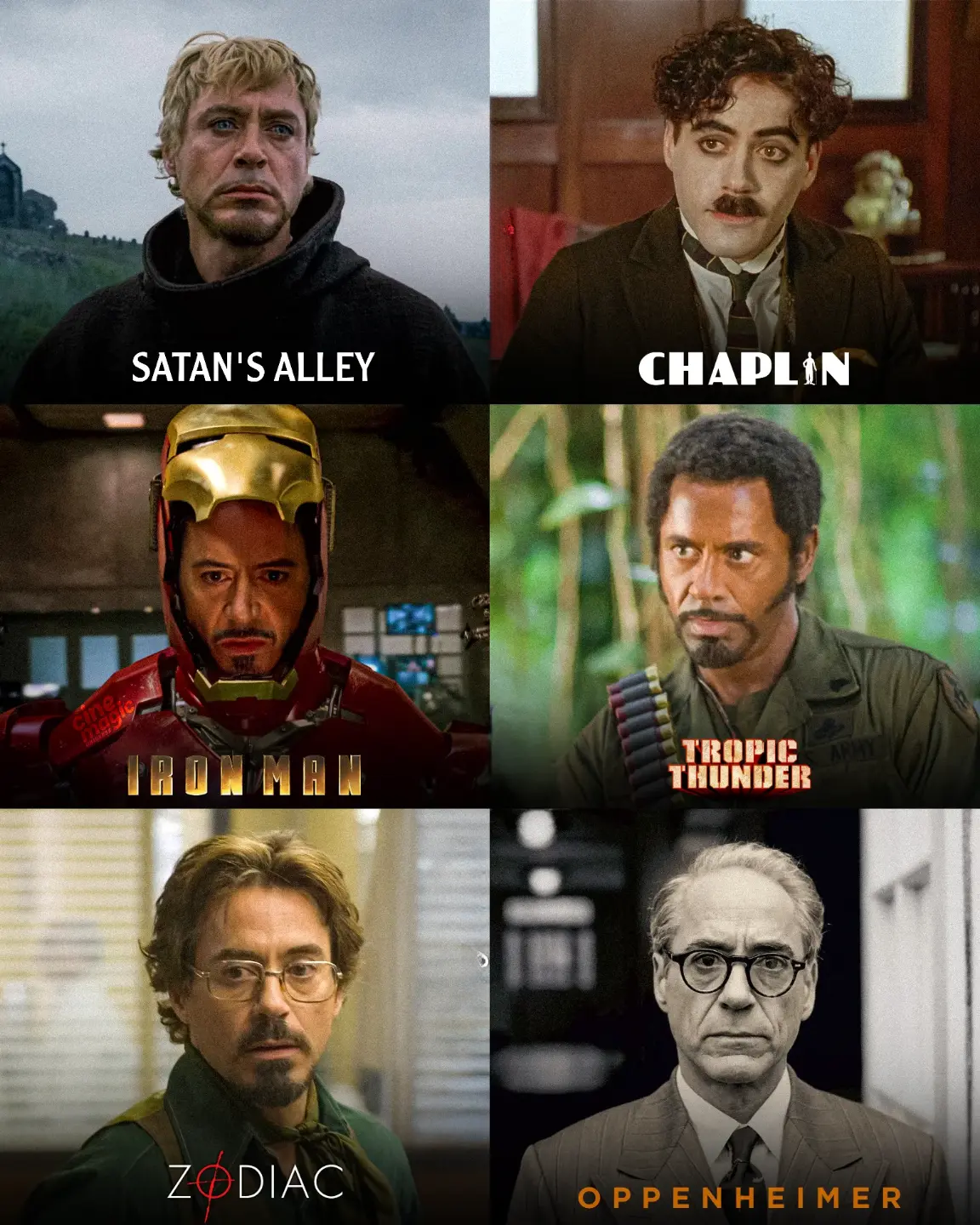
At 58, Downey had just won Best Supporting Actor for playing Lewis Strauss in Christopher Nolan’s Oppenheimer. It was his first Oscar, arriving more than three decades after his first nomination for Chaplin. During his acceptance speech, he thanked his wife, Susan Downey, for having “loved me back to life,” and even joked about the years his longtime attorney spent trying to get him insured and keep him out of jail.
The joke worked because the history behind it was real.
Long before Iron Man turned Downey into one of the most recognizable stars on the planet, there was a period when simply putting him in a movie could be considered a financial risk. His comeback was not one miraculous casting decision. It was a slow process of recovery, trust and increasingly larger professional bets made by people willing to believe that one of Hollywood’s most gifted actors could still rebuild his life.
Downey had already proved his talent years before anyone imagined him inside Tony Stark’s red-and-gold armor.

In 1992, he transformed himself into Charlie Chaplin for Richard Attenborough’s Chaplin. The performance earned Downey an Academy Award nomination for Best Actor at the 1993 Oscars. He was still in his 20s, and the nomination appeared to confirm what many in Hollywood already knew: Downey possessed an unusual combination of comic instinct, dramatic vulnerability and restless charisma.
But during the second half of the 1990s, his career became increasingly overshadowed by addiction and legal problems.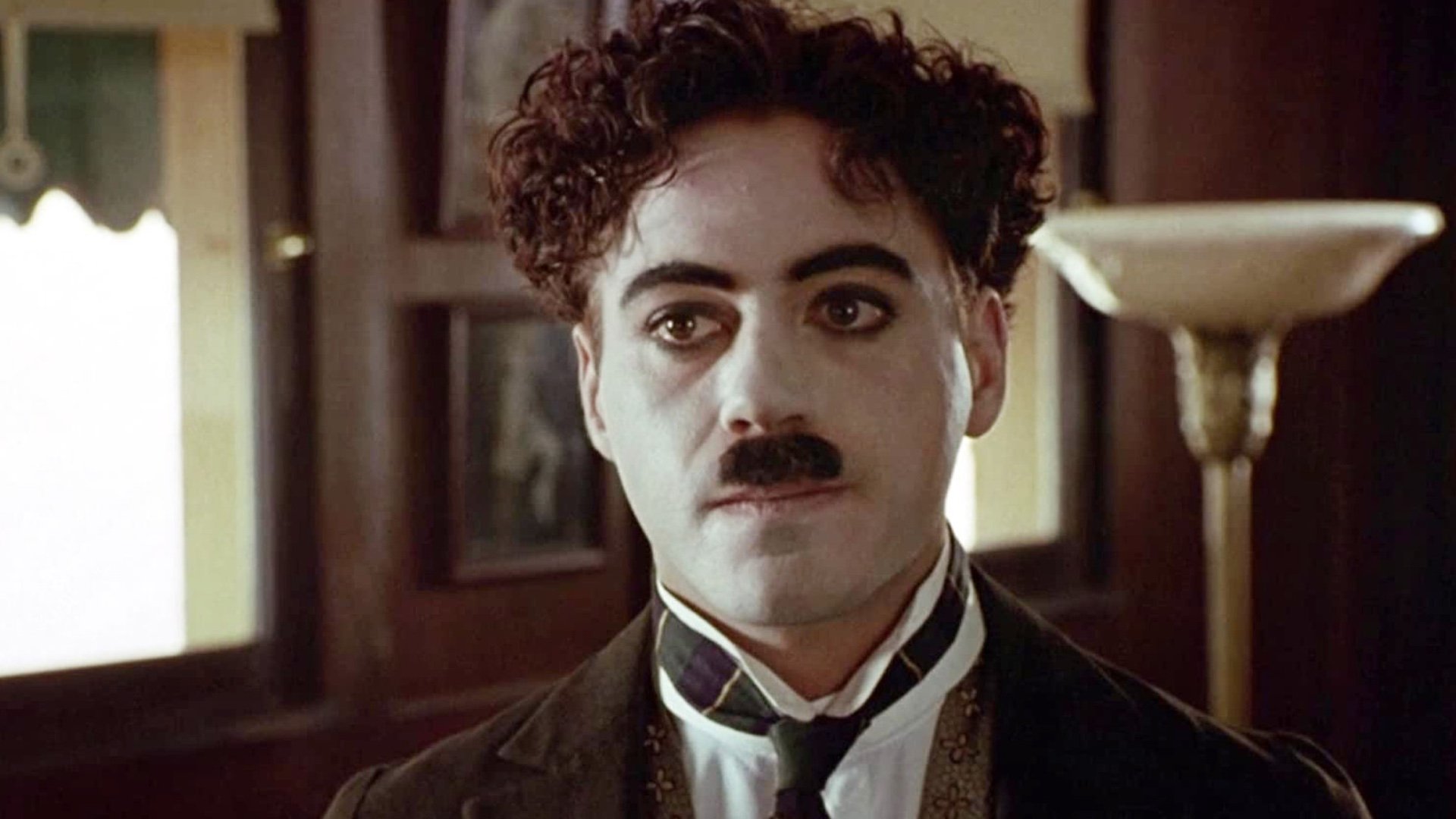
In June 1996, Downey was arrested after police found drugs and an unloaded handgun in his vehicle. Weeks later, while under the influence, he wandered into a neighbor’s Malibu home and fell asleep in a bed. Probation, rehabilitation programs and further violations followed. By August 1999, after repeated failures to meet the conditions imposed by the court, a judge sentenced him to three years in state prison.
He served roughly a year at California State Prison, Corcoran before being released in August 2000.
Almost immediately, Hollywood offered him another chance.
Downey joined Fox’s Ally McBeal as Larry Paul, a love interest for Calista Flockhart’s title character. The casting quickly became one of the show’s most talked-about developments. His work brought him critical recognition and a Golden Globe, and for a brief period it seemed as though his professional recovery might happen almost as quickly as his fall.
Then the crisis returned.
Only months after leaving prison, Downey was arrested in Palm Springs in November 2000 after police responding to an anonymous call found drugs in his hotel room. In April 2001, he was arrested again after police encountered him in Culver City while he was under the influence. The producers of Ally McBeal removed him from the series, forcing rewrites and ending what had looked like a remarkable television comeback.
The consequences were bigger than losing one television role.
For a major film production, an actor is not merely a creative choice. Expensive movies depend on insurance and completion guarantees designed to protect millions of dollars if something prevents production from being finished. Downey’s history now made that process much more difficult.

Talent had never been his central problem.
Trust was.
In July 2001, Downey pleaded no contest to drug charges arising from the Palm Springs case. Rather than returning to prison, he entered residential treatment under California’s Proposition 36, which directed qualifying nonviolent drug offenders toward treatment. He completed approximately a year in rehabilitation, and by 2002 he was again attempting to rebuild his professional life.
But Hollywood did not simply forget what had happened.
One crucial early supporter was Mel Gibson, who helped make Downey’s return to feature films possible with The Singing Detective. Gibson personally vouched for him to the production’s insurer, helping clear an obstacle that had made Downey difficult to employ in movies.
That opportunity was followed by Gothika in 2003, where producers also took financial precautions connected to Downey’s participation. On that production he met producer Susan Levin, who would later become Susan Downey. They married in 2005.
From there, the rebuilding began to look less like a fragile comeback and more like a career again.
Downey starred in Shane Black’s Kiss Kiss Bang Bang in 2005, using his speed, sarcasm and comic timing in a role that reminded audiences what had made him exciting in the first place. He later appeared in David Fincher’s Zodiac, another important step in demonstrating that he could work inside ambitious productions without his past overwhelming the work itself.
Then came the role that changed everything.
When Marvel was preparing Iron Man, director Jon Favreau and producer Kevin Feige saw Downey as Tony Stark. Some Marvel executives saw something else: risk.
Feige later recalled that Marvel’s board was nervous about building the company’s future around an actor whose legal troubles were so well known. Favreau faced resistance too. Downey ultimately agreed to screen-test for the role on Sept. 25, 2006, despite already being an Oscar-nominated actor with decades of experience.
Once the cameras rolled, Favreau believed the argument was essentially over.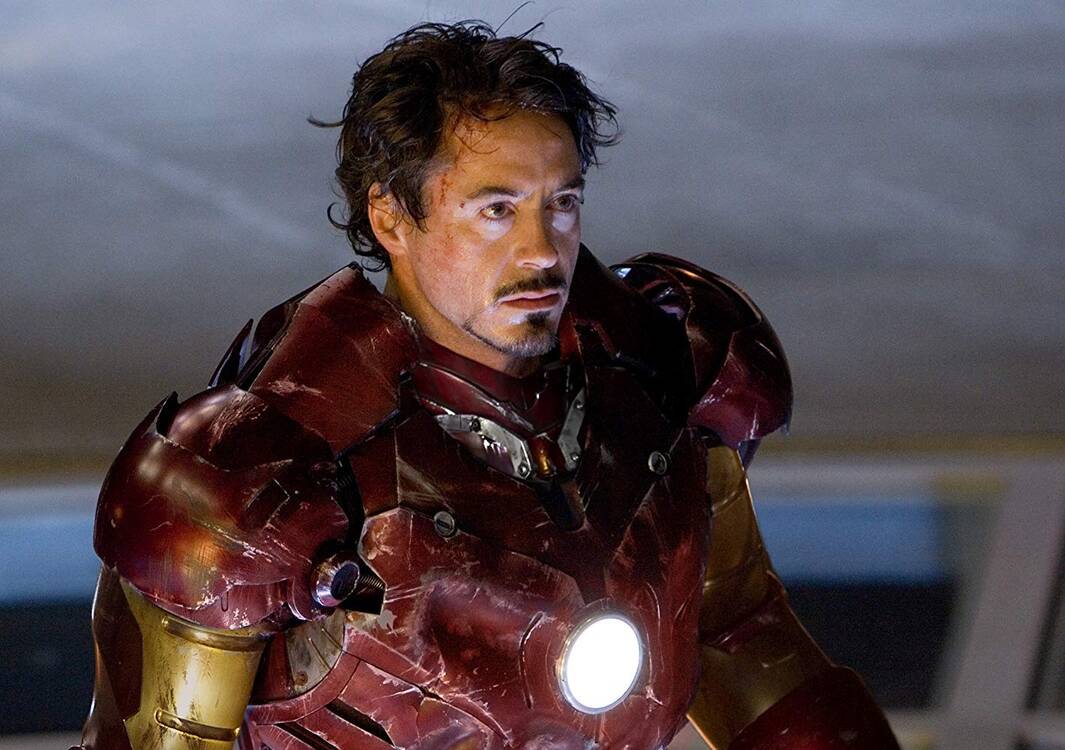
The connection between actor and character was unusually powerful. Tony Stark was brilliant, arrogant, funny and deeply flawed—a man forced to reconsider what he was doing with his life. Downey did not need to reproduce his own biography onscreen, but the lived-in quality he brought to Stark gave the superhero a vulnerability beneath all the swagger.
Iron Man opened in 2008 and became the foundation of what would grow into the Marvel Cinematic Universe. After its successful opening weekend, Feige later recalled, Marvel realized both that it could keep making these movies and that it could connect them into something larger.
Downey was suddenly no longer the actor studios feared they might not be able to insure.
He was the man at the center of Hollywood’s biggest new franchise.
He played Stark across a run of Marvel films that lasted through Avengers: Endgame in 2019, while also establishing another successful franchise as Sherlock Holmes. In the middle of that transformation, he earned a second Academy Award nomination for Tropic Thunder at the 2009 Oscars.
Yet another reinvention was still ahead.
After spending more than a decade identified with Tony Stark, Downey accepted Christopher Nolan’s offer to play Lewis Strauss in Oppenheimer. Instead of relying on the charm and rapid-fire confidence audiences associated with Iron Man, Downey played Strauss as controlled, calculating and increasingly consumed by resentment.
It reminded audiences that underneath the movie-star persona was the actor who had once disappeared into Charlie Chaplin.
The performance brought Downey back to the Oscars for the third time.
This time, he won.
Accepting the award, Downey told the audience, “I needed this job more than it needed me.”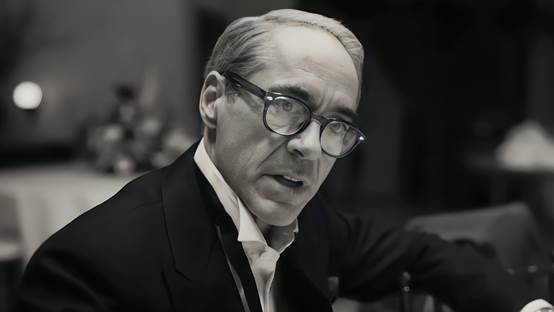
That line could have applied to more than Oppenheimer.
His career had been built, nearly destroyed and then reconstructed through a series of chances that kept getting larger: rehabilitation, a television role, an insured film, smaller movies, a superhero screen test, a franchise, and finally a serious dramatic performance that brought him the industry’s highest acting honor.
Iron Man made Robert Downey Jr. a global superstar.
Oppenheimer made him an Oscar winner.
But the defining part of the story happened between those two identities—and before either of them—when being talented was no longer enough. Downey had to become someone filmmakers could trust with a production again.
Hollywood eventually bet on him.
First cautiously.
Then with everything.