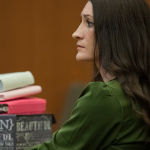
DAY 16 OF LINDSAY CLANCY TRIAL: DEFENSE EXPERT FACES TOUGH CROSS-EXAMINATION OVER PSYCHOSIS CLAIMS
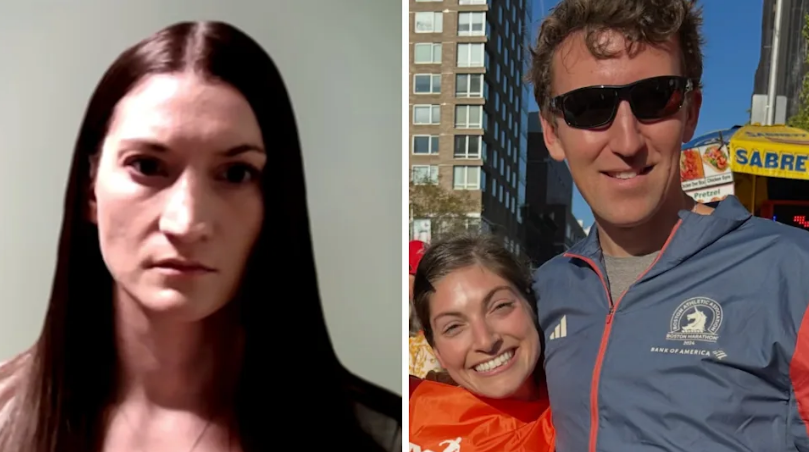
DAY 16 OF LINDSAY CLANCY TRIAL: DEFENSE EXPERT FACES TOUGH CROSS-EXAMINATION OVER PSYCHOSIS CLAIMS
 PLYMOUTH, MASSACHUSETTS — Day 16 of the Lindsay Clancy trial brought some of the most emotional testimony yet as the defense continued arguing that severe mental illness played a central role in the deaths of her three children.
Psychologist Paul Zeizel remained on the witness stand for much of the day, describing his assessment of Clancy and the psychiatric symptoms he believes she was experiencing before the January 2023 killings.
But prosecutors aggressively challenged his conclusions, pointing jurors toward evidence they said showed Clancy remained capable of functioning and interacting with others shortly before the deaths.
“SHE REALLY LOVES AND MISSES HER CHILDREN”
One of the most emotional moments came when Clancy’s defense attorney asked Zeizel whether she still talks about her children.
Zeizel testified that she does.
He said Clancy tells him that she loves and misses her children and thinks about them “almost every moment of the day.”
He also described her as extremely well-liked by other patients and staff at the hospital, while acknowledging that she has experienced what he characterized as “bad days and worse days.”
The testimony offered jurors a glimpse into Clancy’s life since the deaths of her children and reinforced the defense’s effort to portray her as someone suffering from profound psychiatric illness.
 EXPERT SAYS CLANCY SUFFERED FROM BIPOLAR DISORDER AND PSYCHOSIS
Zeizel testified that, in his assessment, Clancy was suffering from bipolar disorder and postpartum psychosis before the killings.
He described symptoms including intrusive thoughts, paranoia, depression and auditory hallucinations.
According to his testimony, Clancy believed that her brain had been damaged and feared that her children would be taken away from her.
Zeizel also testified that she had contacted a suicide hotline twice in December 2022.
Most significantly, he repeated his account that Clancy told him she heard a male voice instructing her to kill her children and then herself.
The defense argues that these symptoms are critical to understanding Clancy’s mental state at the time of the killings.
PROSECUTORS ATTACK THE EXPERT’S CONCLUSIONS
During cross-examination, prosecutors presented a sharply different picture.
They pointed to medical records documenting Clancy eating, socializing, using her phone and interacting with family members while hospitalized.
They also highlighted activities from the day the children died.
Prosecutors noted that Clancy had built a snowman with her children that day and later searched for directions to a restaurant.
The prosecution repeatedly questioned whether those actions were consistent with Zeizel’s assessment of severe psychosis.
They also challenged him over potential confirmation bias, questioning whether he had thoroughly reviewed all of the evidence before reaching his conclusions.
The exchange placed the competing interpretations of Clancy’s behavior directly before the jury.
DEFENSE WITNESS BLOCKED FROM TESTIFYING
The defense also attempted to call Emily Thorndike, a former McLean Hospital employee.
Thorndike had criticized aspects of staffing and treatment at McLean after watching testimony from Patrick Clancy concerning Lindsay’s care.
She told the court that staffing levels were limited during weekends and holidays and challenged some descriptions of how treatment was provided.
Judge Sullivan ultimately ruled that Thorndike could not testify before the jury.
However, he allowed the defense to introduce McLean staffing records, giving jurors access to documentary evidence concerning staffing conditions without allowing Thorndike to provide her testimony.
JURY SUDDENLY SENT HOME
The afternoon ended with an unexpected development.
Judge Sullivan suddenly excused the jury and told them he needed them to have “some more patience” because of “unforeseen circumstances.”
He did not publicly explain what those circumstances were.
The jury was sent home, and proceedings were adjourned until Thursday at 9 a.m. EDT.
THE BATTLE OVER CLANCY’S STATE OF MIND
Day 16 once again exposed the central conflict in the defense strategy.
The defense is asking jurors to view Clancy’s behavior through the lens of severe psychiatric illness, arguing that psychosis and bipolar disorder profoundly affected her perception of reality.
The prosecution, meanwhile, is emphasizing evidence showing that Clancy could communicate, make plans, interact with her children and perform ordinary activities.
Those competing interpretations could become crucial when jurors eventually consider whether Clancy’s mental state affected her responsibility for the deaths.
The testimony is no longer simply about what Clancy suffered. It is about whether her psychiatric condition can explain — or legally change how the jury understands — what happened to her children.