Sam Elliott Thought Hollywood Had Trapped Him as a Cowboy — Then One Movie Turned the Typecast Into His Superpower
For decades, Hollywood kept seeing the same things in Sam Elliott: the mustache, the unmistakably deep voice, the Western cadence and the silhouette of a man who looked as though he belonged on horseback.
For a while, Elliott wondered whether that recognition had become a trap.
He had built a steady career, but the Western image followed him so persistently that he began asking himself whether filmmakers would ever see him as anything else.
Then, while working on yet another Western, a screenplay arrived from two filmmakers he admired.
Elliott opened it expecting an escape.
Instead, he discovered something stranger.
The writers had practically written Sam Elliott onto the page.
The Cowboy Image Started Early
Elliott’s connection to the Western began almost as soon as his movie career did.
After early television appearances in the late 1960s, he made his feature-film debut in 1969’s Butch Cassidy and the Sundance Kid, appearing briefly as a card player. Elliott later described himself as little more than a “glorified extra,” but the opportunity put him on a set with Paul Newman, Robert Redford and cinematographer Conrad Hall. Turner Classic Movies also identifies the film as Elliott’s feature debut.
It turned out to be an appropriate beginning.
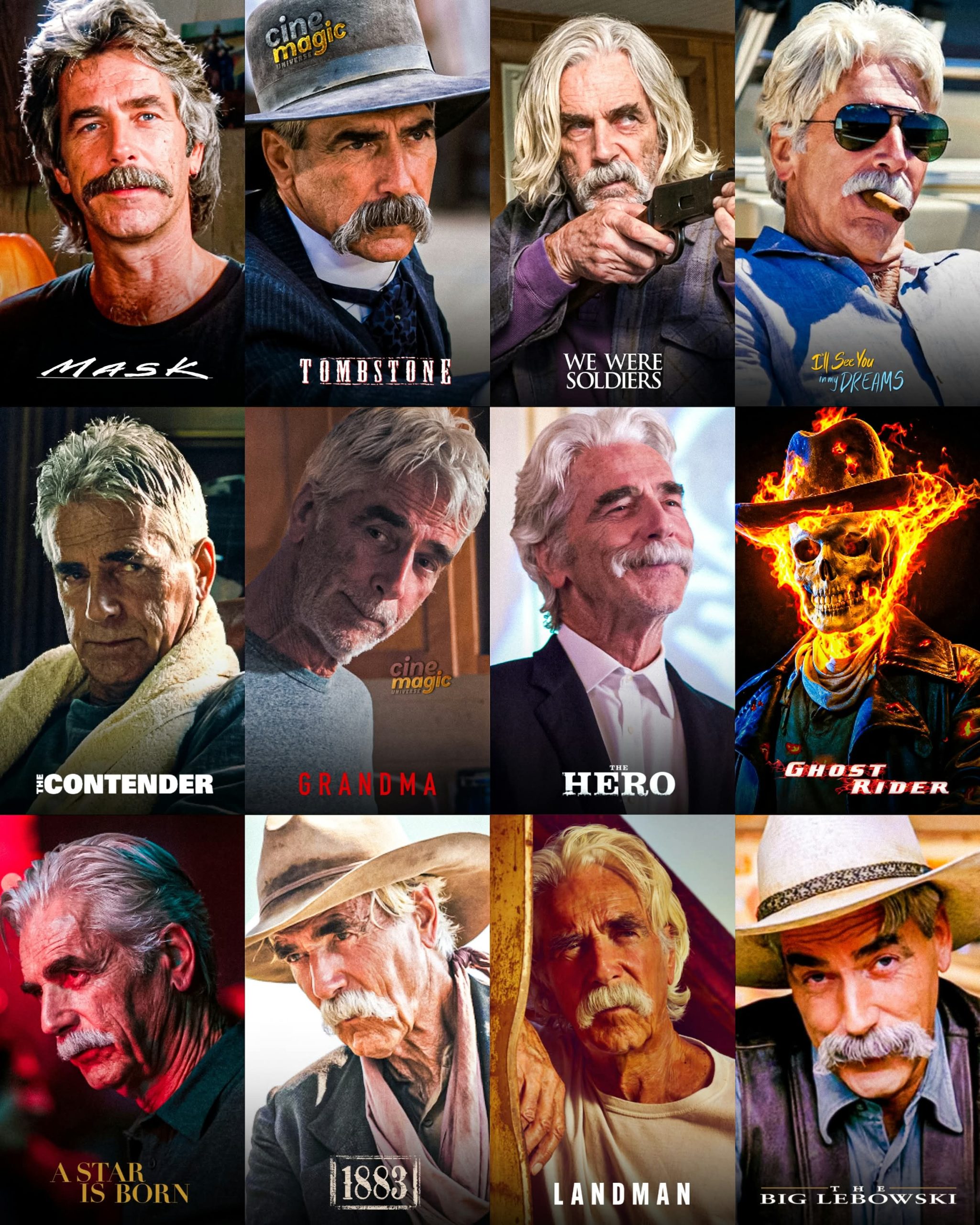
Over the following decades, Elliott increasingly became associated with Westerns and rugged American characters. He appeared in projects including The Shadow Riders, The Quick and the Dead and Conagher, and in 1993 he played Virgil Earp in Tombstone.
The look helped: the mustache became almost inseparable from his public image. So did the voice, a low, measured rumble that could make even a simple sentence sound as though it had traveled across several states before reaching the microphone.
But Elliott eventually recognized the downside.
He later recalled wondering whether he would ever get outside what he called the “Western box.” He wasn’t struggling to find employment. The deeper concern was whether the industry had decided what kind of actor he was before he walked into the room.
Then came the script that changed his perspective.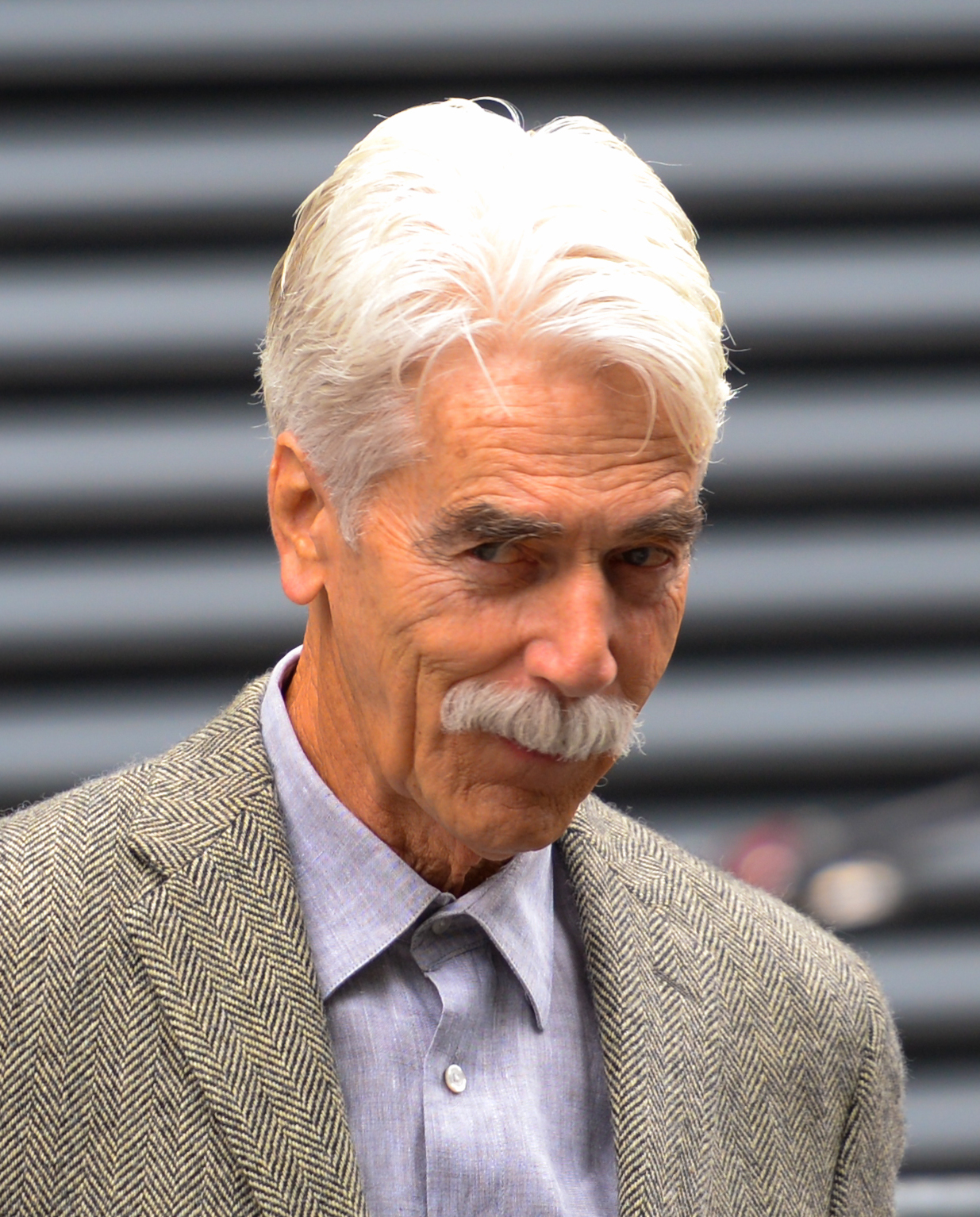
The Coen Brothers Had a Surprise Waiting for Him
In the 1990s, Elliott was in New Mexico filming the television Western Rough Riders when a production assistant delivered a package containing a screenplay from Joel and Ethan Coen.
The movie was The Big Lebowski.
Elliott was thrilled.
The Coens were known for eccentric characters and unpredictable storytelling, and Elliott remembered thinking this might finally be his chance to leave the familiar Western territory behind.
Then he started reading.
The screenplay introduced a voice with a Southwestern quality, “sounding not unlike Sam Elliott.” Later, its mysterious cowboy figure was described as looking “not unlike Sam Elliott.”
His name was essentially sitting inside the screenplay before he had even agreed to play the role.
Elliott found the irony impossible to miss. Even the Coen brothers — the filmmakers he thought might pull him out of the box — wanted precisely the image he had been trying to escape.
The difference was what happened next.
Rather than treating the typecasting as a limitation, Elliott began to see that it had become something valuable. He later said the experience helped him accept how the industry perceived him and recognize that the Western identity had helped give him the career he had.
As The Stranger in the 1998 film, Elliott did not need enormous screen time. He appeared in full cowboy mode, dispensing observations to Jeff Bridges’ Dude and helping frame the film with his narration.
It was almost a parody of the Sam Elliott persona.
It also became one of his most recognizable performances.
He Was Never Only a Cowboy
The irony of Elliott’s career is that the image became stronger even while his actual roles demonstrated considerably more range.
In Peter Bogdanovich’s Mask in 1985, he played Gar, the compassionate biker who becomes an important presence in the lives of Cher’s Rusty Dennis and her son Rocky. At the time, the Los Angeles Times noted the attention Elliott was receiving for the performance — evidence that the actor audiences associated with Western toughness could bring tenderness to a very different kind of character.
In the 2000 political drama The Contender, Elliott entered the world of Washington power rather than frontier justice. Two years later, We Were Soldiers cast him as real-life Army Command Sgt. Maj. Basil Plumley, a three-war veteran remembered for his formidable presence at the Battle of Ia Drang.
Then there was Grandma in 2015.
Elliott had only a small portion of the film, playing an ex-lover of Lily Tomlin’s character, but the encounter demanded anger, pain and decades of unresolved emotion rather than cowboy swagger. Elliott said the concentrated material immediately jumped out at him when he read it.
Those performances revealed what had gradually become clear: the familiar exterior did not necessarily dictate the character underneath it.
Sometimes the voice and presence suggested authority. Sometimes they suggested vulnerability. Sometimes they made a joke funnier simply because Sam Elliott was the one delivering it.
And eventually, one of those roles brought something he had waited almost half a century to receive.
His First Oscar Nomination Came at 74
In Bradley Cooper’s 2018 version of A Star Is Born, Elliott played Bobby Maine, the older brother of Cooper’s troubled musician Jackson Maine.
There were no horses required.
Instead, Elliott’s most memorable moments depended on the complicated love between two brothers who had accumulated years of resentment, loyalty and disappointment.
The performance earned Elliott his first Academy Award nomination, for Best Supporting Actor, when the nominations were announced in January 2019. He was 74 years old and roughly 50 years removed from his feature debut in Butch Cassidy and the Sundance Kid.
The timing seemed almost absurd for an actor who had been recognizable for generations.
But Elliott kept it in perspective. Discussing the nomination, he emphasized his gratitude for still being able to work after five decades and for receiving the opportunity to make the film with Cooper and Lady Gaga.
The recognition did not erase the cowboy from his career.
If anything, Elliott’s later work brought him right back to the West — only now the association felt less like a cage than a signature.
Returning to the West on His Own Terms
Taylor Sheridan’s 1883 placed Elliott at the center of an unmistakably Western story.
As Shea Brennan, a Civil War veteran carrying profound grief, Elliott leads a wagon train west as the Dutton family travels from Texas toward Montana. Paramount described Brennan as a hard-edged cowboy burdened by sadness and responsible for guiding the dangerous journey.
The performance ultimately earned Elliott a Screen Actors Guild Award.
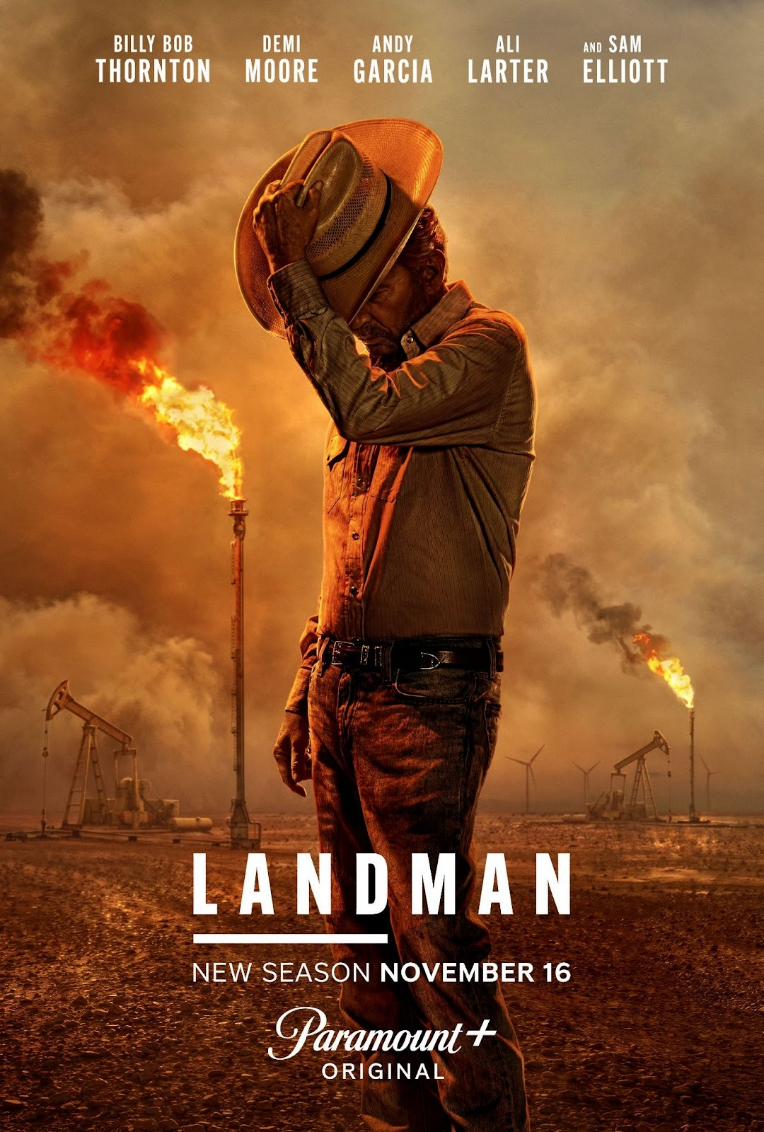
Then, in 2025, Sheridan brought him into another modern story of the American West. Paramount announced Elliott as a series regular for Season 2 of Landman, where he played T.L., the father of Billy Bob Thornton’s Tommy Norris.
It was another variation on territory Elliott had occupied for decades: weathered men, hard landscapes, difficult families and characters carrying far more emotion than they initially reveal.
Hollywood never really stopped seeing the cowboy when it looked at Sam Elliott.
He never completely escaped the image, either.
He did something harder.
He made it impossible for anyone else to own it quite like he did.