“I ONLY HAD THREE BEERS”: GRANDPA’S STATEMENT COLLIDES WITH A 0.16 BAC AFTER TWO GRANDCHILDREN’S DEATHS
“I ONLY HAD THREE BEERS”: GRANDPA’S STATEMENT COLLIDES WITH A 0.16 BAC AFTER TWO GRANDCHILDREN’S DEATHS
What began as an ordinary family dinner on New Jersey’s Barnegat Bay ended in a devastating tragedy that claimed the lives of two young siblings.
Now, newly detailed court records have placed one question at the center of the case: How much had their grandfather actually been drinking before taking the children onto his boat?
According to investigators, Stephen Schneider, 63/64, told police that he had consumed three beers during dinner.
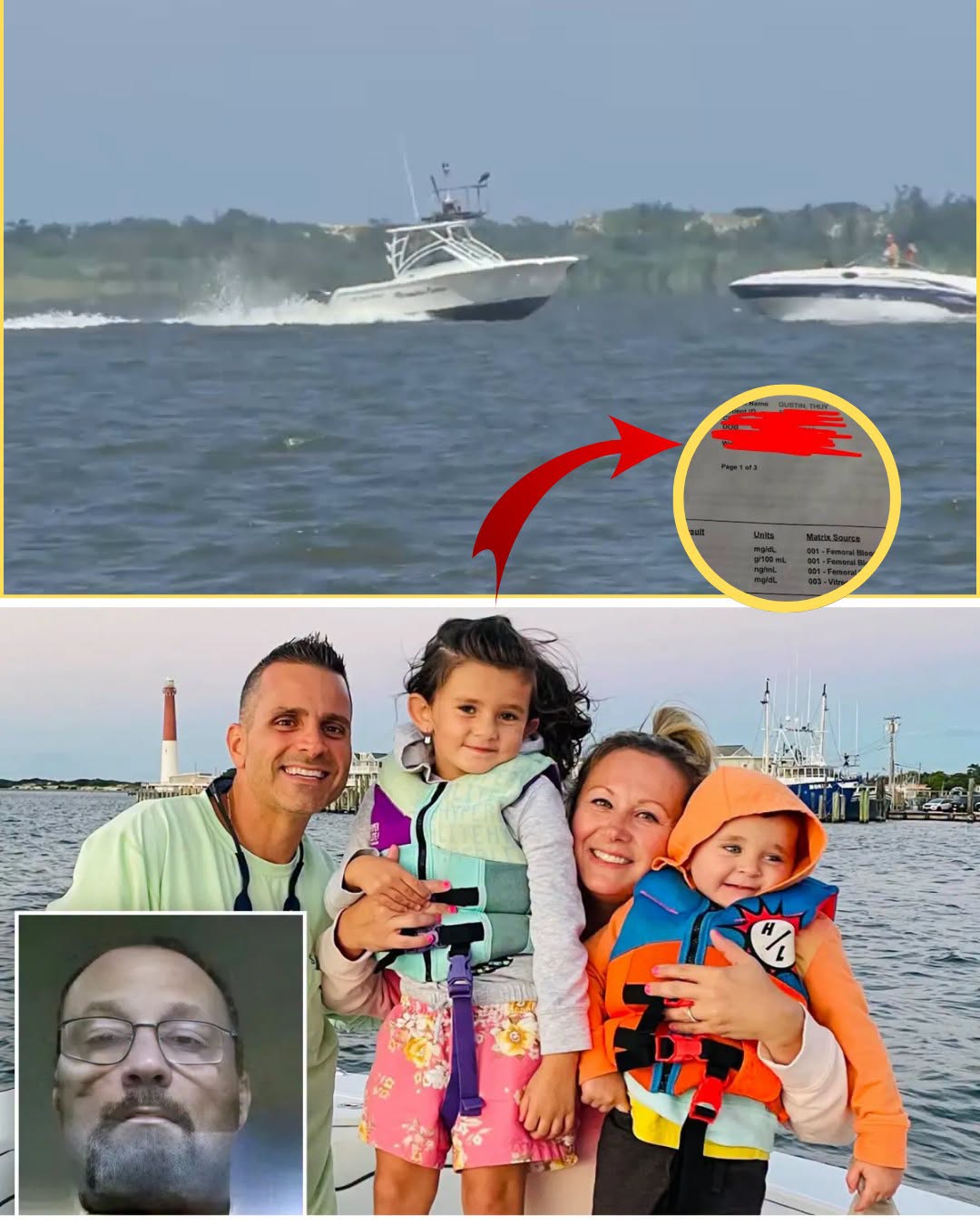
But toxicology testing later recorded his blood alcohol concentration at 0.16% — twice New Jersey’s 0.08% legal limit for operating a vessel. Investigators said the laboratory findings indicated significant alcohol-related impairment.
 A FAMILY BOAT RIDE THAT ENDED IN TRAGEDY
The incident happened on July 19, 2026, after Schneider and his family had gathered for dinner at a waterfront restaurant in Bayville.
Schneider and his wife, Laurie, were aboard their 28- to 30-foot Tidewater boat when they took their grandchildren, 9-year-old Mya Bella Golabek and 7-year-old Sigmund “Siggy” Paul Golabek, across Barnegat Bay.
According to investigators, the children were wearing life jackets.
The trip home was expected to be routine.
Instead, the boat struck Intracoastal Waterway Channel Marker No. 39.
The impact threw both children into the water.
Schneider and his wife recovered them and attempted to help before emergency responders arrived, but neither child survived.
 “THREE BEERS” — THEN THE TOXICOLOGY RESULT
Schneider reportedly told investigators that he had consumed two Guinness beers and one Miller Lite during approximately two hours at the restaurant.
The subsequent toxicology result became one of the most significant pieces of evidence in the investigation.
His reported BAC was 0.16%, approximately twice New Jersey’s legal limit for operating a vessel.
According to the toxicology findings cited in court documents, alcohol had markedly affected factors including his alertness, judgment, perception, response time and coordination.
The contrast between his reported alcohol consumption and the laboratory result has become a major focus of the prosecution’s case.
THE MOMENT EVERYTHING CHANGED
Schneider told investigators that he was traveling at roughly 20 mph and had navigational equipment operating.
He reportedly said he saw the channel marker only at the last moment.
The boat struck the marker, sending Mya and Siggy into the dark water.
The siblings were later pulled from the water, but their injuries proved fatal.
Their deaths devastated a family that had been spending what should have been an ordinary summer evening together.
TWO CHILDREN REMEMBERED AS BEST FRIENDS
Mya and Siggy were siblings, but their family described them as much more than that.
They were best friends.
Mya, 9, was remembered for her love of sports, swimming, the beach and spending time with her family.
Siggy, 7, was described as adventurous and imaginative, with a love of basketball, baseball and swimming.
Their deaths left their parents without the two children who had been at the center of their lives.
The family has continued to remember the siblings together, emphasizing the bond they shared.
GRANDPA NOW FACES SERIOUS CHARGES
Nearly one month after the crash, Schneider was arrested and charged with:
- Two counts of second-degree reckless vessel homicide
- Operating a vessel under the influence
- Reckless operation of a vessel
The homicide charges carry a potential sentence of up to 20 years in prison each if he is convicted.
The charges are allegations, and Schneider remains entitled to the presumption of innocence unless proven guilty in court.
THE 0.16 READING DOES NOT TELL THE WHOLE STORY
One important detail is that the blood sample was obtained hours after the collision, rather than immediately at the moment of impact.
That means the laboratory result must be interpreted alongside the timeline, the reported drinking history and other evidence gathered by investigators.
It would therefore be misleading to treat the 0.16 figure alone as a precise measurement of Schneider’s BAC at the exact moment the boat struck the marker.
Investigators, however, have cited the toxicology findings as evidence of significant impairment.
THE FAMILY’S PAIN IS MORE COMPLICATED THAN THE HEADLINES
The case has produced an especially painful situation because the accused is not a stranger.
He is the children’s grandfather.
That makes the tragedy extraordinarily complicated for the family, which must simultaneously mourn Mya and Siggy while confronting the criminal allegations against someone they knew and loved.
The legal process will determine whether Schneider is criminally responsible.
But no verdict can change the fact that two children who boarded a boat after a family dinner never made it home.
WHAT HAPPENED ON BARNEGAT BAY?
The investigation now centers on a series of questions:
How much alcohol had Schneider consumed?
What was his level of impairment when he took control of the boat?
Why did he fail to avoid the illuminated channel marker?
And could the tragedy have been prevented?
Those questions will ultimately be addressed through the evidence presented in court.
For now, the public record contains a stark contrast: a grandfather who reportedly told investigators he had consumed three beers, and a toxicology result showing a 0.16% BAC.
Between those two figures lies a family tragedy that cannot be undone.
Mya was 9. Siggy was 7.
They began the evening surrounded by family.
They ended it as the center of a tragedy that has left two parents without their children and a grandfather facing serious criminal charges.
The court will now determine what responsibility, if any, Stephen Schneider bears for what happened on Barnegat Bay.