Three Roads to the Same Fight: How Scott Adkins, Tony Jaa and Michael Jai White Finally Collided in Triple Threat
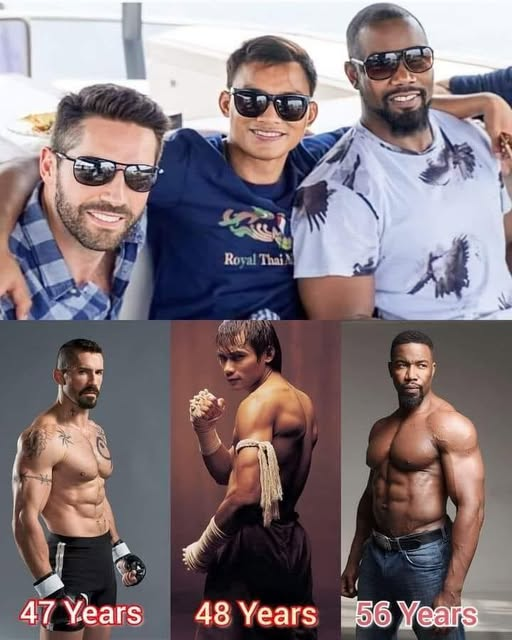
By the time Triple Threat arrived in 2019, its cast almost sounded like something martial-arts fans would invent rather than a movie that could actually happen.
Tony Jaa, the Thai action phenomenon whose knees and elbows helped turn Ong-Bak into an international sensation.
Scott Adkins, the British martial artist who transformed Yuri Boyka from a prison-fight villain into one of modern action cinema’s most recognizable characters.
Michael Jai White, a powerful multi-style martial artist who had already played Mike Tyson, a comic-book superhero and numerous screen fighters.
Then someone put all three of them in the same film.
The real appeal of Triple Threat was not simply seeing famous action stars sharing the screen. It was watching three performers who had reached martial-arts cinema through completely different paths—and whose fighting styles looked dramatically different once the cameras started rolling.
Scott Adkins: Building an Action Career One Kick at a Time
Scott Adkins did not enter the film industry as an established action star.
Born in England in 1976, he became interested in martial arts as a child, beginning with judo before moving into taekwondo and later kickboxing. He eventually became a kickboxing instructor while continuing to chase another ambition: appearing in the kind of martial-arts movies he had grown up watching.
Bruce Lee, Jackie Chan and Jean-Claude Van Damme were among the screen fighters who influenced him.
But breaking into action cinema was not immediate.
Adkins spent years taking smaller parts and working wherever opportunities appeared. His early career eventually brought him into productions connected to Hong Kong action filmmaking, where he gained valuable experience around stunt performers, choreographers and directors accustomed to building fights around real martial-arts ability.
Then came Yuri Boyka.
In Undisputed II: Last Man Standing, released in 2006, Adkins played the intimidating Russian prison fighter opposite Michael Jai White.
Boyka was technically an antagonist, but Adkins made him difficult to forget.
His physique, intensity and extraordinary kicking ability turned the character into one of the movie’s biggest attractions. Boyka later returned in Undisputed III: Redemption and Boyka: Undisputed, evolving from villain into a complicated central character with his own following.
For Adkins, the role changed everything.
His screen-fighting identity became easy to recognize: spinning kicks, rapid combinations, high-level flexibility and acrobatic techniques performed with enough control to remain clear on camera.
His style was not just about performing difficult moves.
It was about making them look spectacular.
Adkins became particularly skilled at giving fights a cinematic rhythm—using distance, movement and explosive kicks to create sequences that could feel almost impossible while still carrying physical impact.
Tony Jaa: The Man Who Made Audiences Ask, “Did He Really Do That?”
Tony Jaa came from a very different environment.
Long before Hollywood audiences knew his name, Jaa was training in martial arts and working as a stunt performer in Thailand.
Under the influence of Thai action filmmaker and choreographer Panna Rittikrai, Jaa developed a physical style rooted heavily in Muay Thai and Muay Boran while learning how to translate those techniques into screen action.
Then Ong-Bak changed his life.
Released in Thailand in 2003 before becoming an international hit, the movie introduced many global viewers to a kind of action that looked radically different from the wire-assisted martial-arts spectacles popular at the time.
Jaa jumped over obstacles, crashed through objects, launched devastating knees and elbows and performed dangerous-looking stunts with an emphasis on practical physical execution.
The film frequently replayed particularly impressive moves from different camera angles, almost as if it understood that audiences might not believe what they had just seen.
And that became part of Tony Jaa’s appeal.
His fights did not feel polished in quite the same way as Adkins’ carefully cinematic combinations.
They felt urgent.
Jaa often moved as though momentum itself were part of the attack. His knees, elbows and close-range strikes gave his scenes an aggressive intensity associated with Thai martial arts, while his stunt background allowed him to move through environments with unusual speed and confidence.
After Ong-Bak, he continued demonstrating those abilities in movies including Tom-Yum-Goong, also known internationally as The Protector.
Eventually, Hollywood came calling.
Jaa appeared in larger international productions including Furious 7, bringing the physical style that had made him famous in Thailand to a much broader mainstream audience.
But even as his career expanded, the qualities audiences associated with him remained largely unchanged.
Speed. Knees. Elbows. Athletic stunts.
And the constant feeling that what was happening on screen involved a remarkable amount of real physical risk.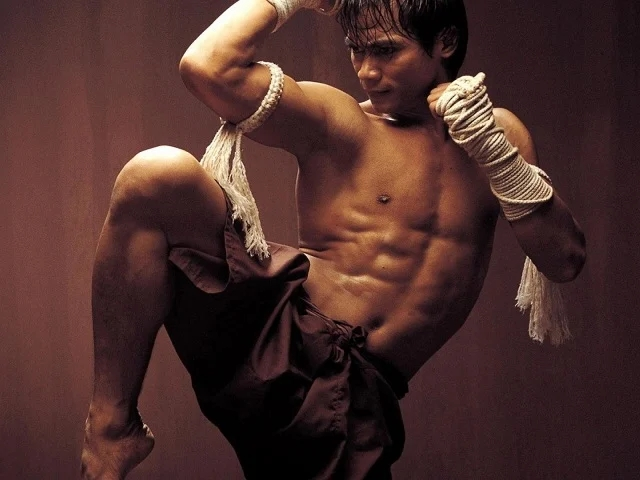
Michael Jai White: The Heavyweight Who Could Move Like a Lightweight
Michael Jai White represented a third approach.
Where Jaa built his reputation through Thai stunt cinema and Adkins through European and international martial-arts productions, White combined serious martial-arts training with traditional acting.
He began studying martial arts at a young age and eventually trained across numerous disciplines, including karate-based systems.
His early breakthrough came not from a straightforward martial-arts movie but from acting.
In the 1995 television movie Tyson, White portrayed heavyweight boxing champion Mike Tyson.
Two years later, he starred as Al Simmons in Spawn, becoming the first Black actor to portray a major comic-book superhero in a major live-action feature film.
From there, White moved between mainstream films, television, comedy and action projects.
His physical presence immediately separated him from many other martial-arts performers.
White had the muscular build of a heavyweight fighter, yet he could move with surprising speed and technical precision.
That combination became central to his action persona.
His punches could look crushing simply because of his size, while his martial-arts background allowed him to execute kicks and combinations that audiences might not expect from someone with such a powerful frame.
One of the clearest demonstrations came in Undisputed II.
White played George “Iceman” Chambers opposite Scott Adkins’ Boyka, creating a fight built around contrasting physiques and techniques.
Years before Triple Threat, Adkins and White had already shown how entertaining it could be when two highly trained martial artists with different styles were placed opposite each other.
Tony Jaa was still missing from the equation.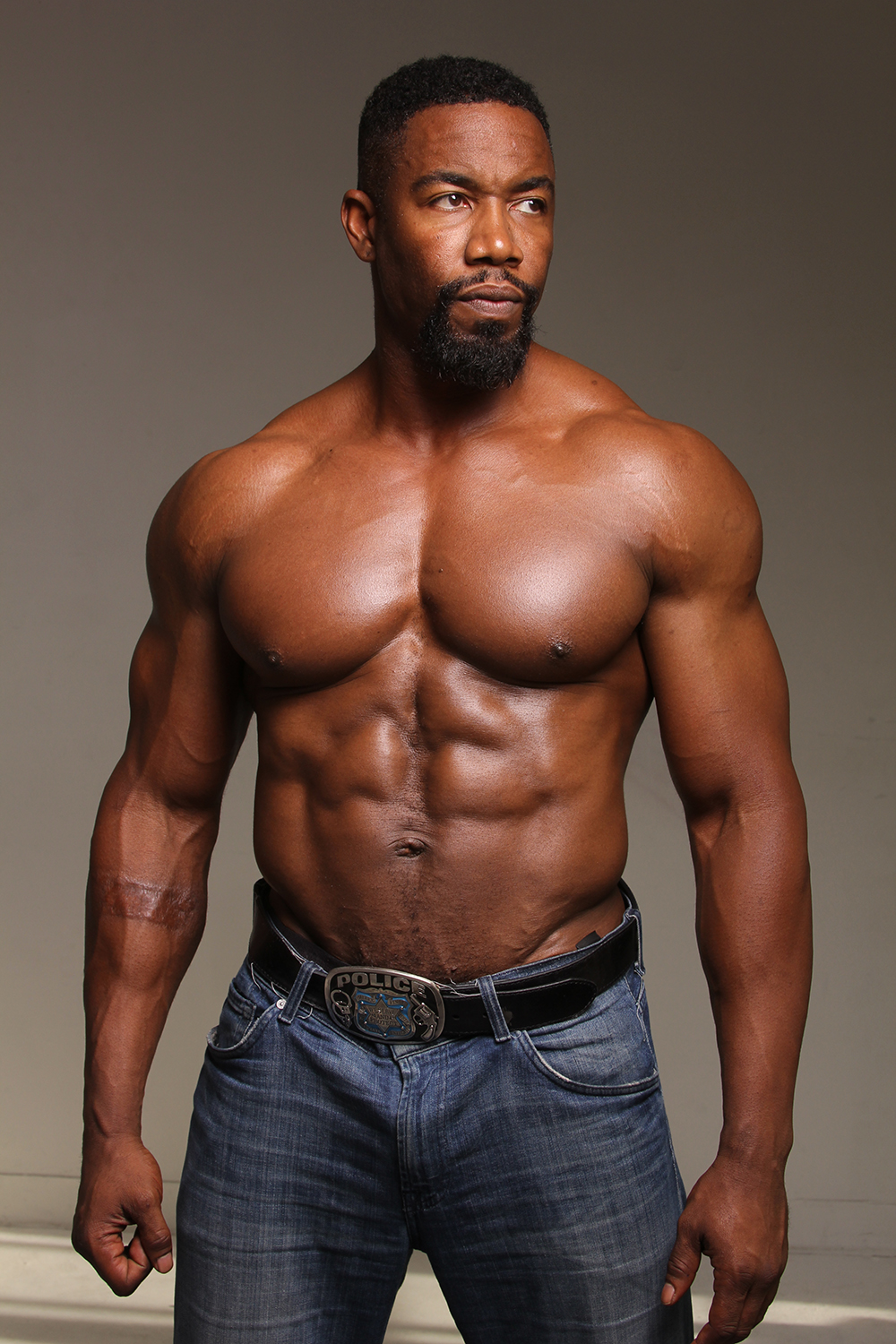
Three Careers Moving Toward the Same Movie
By the 2010s, all three men had established recognizable identities within action cinema.
Adkins had become one of the most dependable stars of modern direct-to-video and international martial-arts filmmaking, while also appearing in major productions such as Doctor Strange and The Expendables 2.
Jaa had crossed from Thai cinema into global franchises, including Furious 7 and xXx: Return of Xander Cage.
White had continued balancing acting with martial-arts projects, earning a strong following through movies including Blood and Bone, Never Back Down 2 and other action films.
Each man had fought countless opponents on screen.
But they had never all appeared in the same movie.
That finally changed with Triple Threat.
What Happened When All Three Were Put in the Same Movie?
Released in 2019 and directed by Jesse V. Johnson, Triple Threat assembled a cast that seemed designed specifically for martial-arts fans.
And Adkins, Jaa and White were only part of it.
The film also featured Iko Uwais, the Indonesian star of The Raid, alongside Tiger Chen, Jeeja Yanin and former UFC champion Michael Bisping.
Rather than focusing on one martial-arts tradition, Triple Threat brought together performers influenced by Muay Thai, silat, karate, taekwondo, kickboxing and professional combat sports.
The story follows a group caught in a violent conflict surrounding a wealthy philanthropist targeted by mercenaries.
But the plot was almost secondary to the possibility suggested by the cast.
Who would fight whom?
And what would happen when these dramatically different styles collided?
Tony Jaa played Payu, one of the fighters protecting the central target.
Scott Adkins played Collins, the ruthless leader of the mercenary team.
Michael Jai White appeared as Devereaux, another dangerous member of the opposing group.
That structure created exactly the kind of matchups fans wanted.
Most notably, Adkins and Jaa finally faced each other.
Watching them exchange techniques reveals why their careers had developed such different identities.
Adkins uses his reach, controlled combinations and spectacular kicking arsenal to create large, visually readable movements.
Jaa closes distance with speed, attacking with the knees, elbows and explosive physicality that made him famous.
Neither style completely overwhelms the other.
Instead, the contrast becomes the attraction.
White provides another dimension entirely.
His size makes every strike appear heavy, but his technique allows him to move far more quickly than a typical movie heavyweight.
When placed alongside performers such as Jaa, Adkins and Uwais, his presence helps turn the film into something resembling a showcase of modern martial-arts screen traditions.

A Movie Almost Too Packed With Talent
Ironically, Triple Threat also demonstrated the difficulty of assembling so many elite action performers in one film.
With such a large cast, no single fighter could dominate the story.
Some viewers hoped for longer fights, more elaborate one-on-one matchups or additional opportunities for the stars to demonstrate their specialties.
The movie could never fully satisfy every fantasy matchup created by its own poster.
But that does not make its existence any less fascinating.
Martial-arts cinema has always been shaped by performers who bring something uniquely physical to the screen.
Bruce Lee had his speed and intensity.
Jackie Chan transformed environments into playgrounds for elaborate stunt choreography.
Jet Li brought extraordinary precision and traditional wushu technique.
Later generations developed their own identities.
Scott Adkins made complex kicking combinations feel built for the movie camera.
Tony Jaa brought Muay Thai-inspired violence and practical stunt work into international action cinema.
Michael Jai White combined martial-arts experience with heavyweight power and traditional acting presence.
Their careers were not identical.
Their bodies moved differently.
Their fights communicated different ideas about what screen combat could look like.
That is what made Triple Threat more than simply another action movie with a crowded cast.
For years, martial-arts fans had watched Scott Adkins, Tony Jaa and Michael Jai White build separate legacies.
Then, in 2019, those three roads finally crossed.
And for one movie, three very different definitions of a martial-arts action star occupied the same battlefield.