The Staircase: The True Story Behind Kathleen Peterson’s Death and the Case That Still Divides Viewers
Few true-crime stories have produced as many competing explanations as the death of Kathleen Peterson.
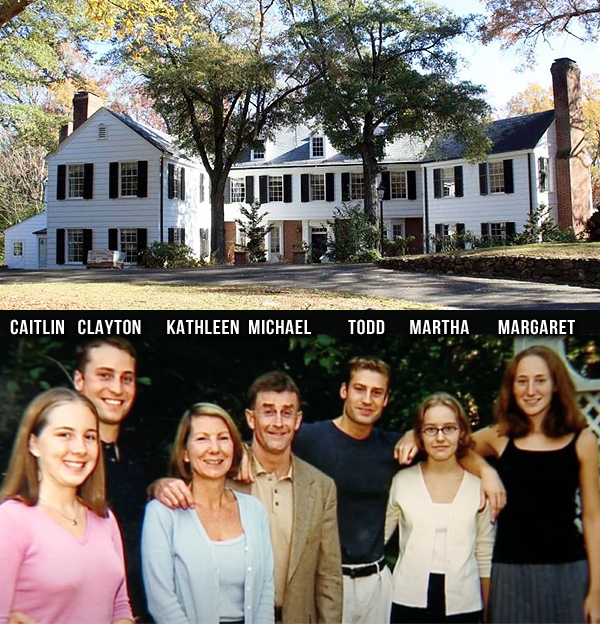
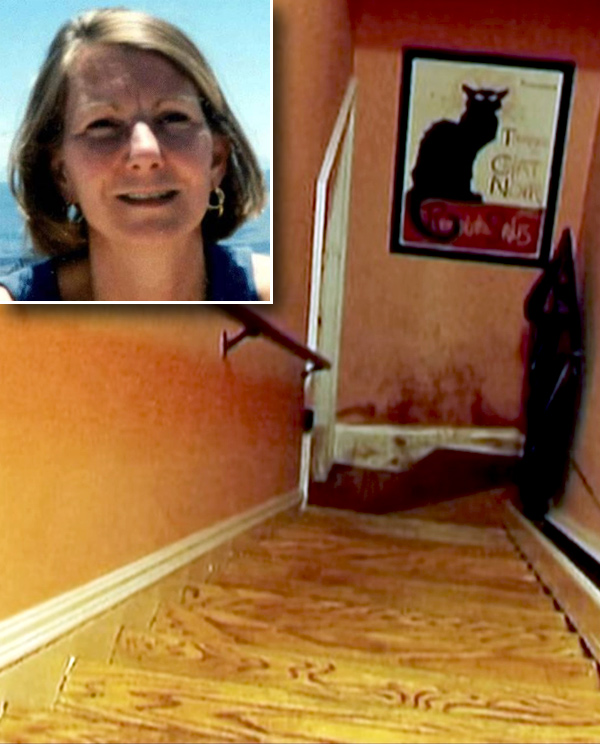
On December 9, 2001, the 48-year-old telecommunications executive was found covered in blood at the bottom of a narrow staircase inside the Durham, North Carolina, mansion she shared with her husband, novelist Michael Peterson.
Michael said his wife had fallen.
Prosecutors said he killed her.
A jury eventually agreed with the prosecution and convicted Michael of first-degree murder. Years later, however, serious problems with testimony from a state bloodstain analyst helped overturn that conviction and gave Michael another chance in court.
Then there were the other mysteries.
A second woman connected to Michael Peterson had also been discovered dead at the bottom of a staircase years earlier.
Investigators found evidence of Michael’s sexual relationships with men.
The prosecution suggested money and infidelity as possible motives.
And long after the trial, another theory emerged suggesting that Kathleen may have been attacked by an owl before she ever entered the house.
The case became the subject of Jean-Xavier de Lestrade’s acclaimed documentary The Staircase, followed decades later by HBO’s dramatized miniseries starring Colin Firth and Toni Collette.
So what actually happened, and what did television change?
How Did Michael and Kathleen Peterson Meet?
Michael Peterson and Kathleen Atwater knew each other years before they became husband and wife.
In the mid-1980s, both were living in Durham, North Carolina.
Kathleen’s daughter Caitlin knew Michael’s adopted daughters, Margaret and Martha Ratliff, and the children helped bring their parents into each other’s orbit.
At the time, Michael’s marriage to his first wife, Patricia, was deteriorating.
Michael and Patricia divorced in 1987.
Kathleen and Caitlin then moved in with Michael and his children.
The blended family eventually settled into a large home in Durham’s Forest Hills neighborhood. Michael and Kathleen purchased the property in 1992 and married in 1997.
Four years later, Kathleen would die inside it.

Was Michael Peterson Really a Successful Novelist?
Yes.
Michael was not simply an aspiring author created to make the television story more interesting.
He had served in the U.S. Marine Corps during the Vietnam era and later drew from those experiences in his fiction.
Several of his books dealt with war, including A Time of War, which attracted Hollywood attention during the 1990s.
At one point, Peterson reportedly received an advance worth more than half a million dollars for one of his books.
He also wrote newspaper columns for Durham’s Herald-Sun, sometimes criticizing local government, law enforcement and District Attorney Jim Hardin.
That would become an uncomfortable coincidence when Hardin later led the prosecution against him.
Were Michael and Kathleen Happily Married?
That depends greatly on whom you ask.
Michael consistently portrayed their relationship as loving.
He later said that they had lived together for 14 years and had been happy throughout that time.
Members of the family also acknowledged that Michael and Kathleen outwardly appeared to have an enviable marriage.
But evidence presented after Kathleen’s death complicated that picture.
Michael admitted having sexual encounters with men during the marriage.
His son Todd also later claimed that Kathleen had made comments suggesting she did not necessarily expect her marriage to Michael to last forever.
None of that proves their marriage was collapsing on the night Kathleen died.
It does show that the private reality was more complicated than the image friends and family may initially have seen.
What Did Michael Say Happened on December 9, 2001?
Michael’s story was that Kathleen fell down the stairs.
Late that night, he called 911 and told the dispatcher that his wife had suffered an accident and was still breathing after falling down a staircase.
A few minutes later, he called again.
This time, he said she was dead.
According to Michael, he and Kathleen had spent part of the evening outside beside their swimming pool after watching a movie.
He said Kathleen eventually went inside while he remained outdoors smoking his pipe.
Michael claimed he did not return to the house until around 2:40 a.m.
That was when, according to his account, he discovered Kathleen at the bottom of the back staircase.
Why Did Investigators Become Suspicious?
The scene did not look like a simple household fall.
There was a large amount of blood on the walls, floor and staircase.
Kathleen had multiple deep wounds on her scalp.
Investigators also noted that much of the blood appeared to have dried by the time authorities arrived.
Prosecutors later argued that Kathleen had been dead or dying for a substantial amount of time before Michael called for help.
District Attorney Jim Hardin said the condition of the scene suggested she had been at the bottom of the staircase for roughly two hours.
Michael’s failure to answer every question from the 911 dispatcher also became a point critics used against him.
None of those details alone proved murder, but investigators quickly began treating the house as something much more serious than an accidental-fall scene.
Did the Defense Really Blame Alcohol and Valium?
Yes.
Michael’s attorneys argued that Kathleen could have suffered a catastrophic accidental fall.
They noted that she had consumed wine and had Valium in her system.
According to the defense theory, she may have become unsteady while attempting to climb the poorly lit back staircase, fallen and struck her head repeatedly.
The prosecution challenged that explanation.
Kathleen’s blood-alcohol concentration was not extraordinarily high. History vs. Hollywood notes that it was low enough that she likely would have passed a breath test.
Investigators also questioned details of the couple’s supposed wine drinking because Kathleen’s fingerprints were reportedly not found on two wine glasses sitting near the bottle.
The dispute became central to the trial: could a stairway fall really produce the extraordinary amount of blood and the injuries found on Kathleen’s body?
What Injuries Did Kathleen Suffer?
Kathleen suffered seven significant lacerations to the top and back of her scalp.
She also had bruising elsewhere on her body, including her arms and wrists, and an injury involving cartilage in her neck.
One of the most important facts for the defense was what she did not have.
There were no major skull fractures or devastating brain injuries of the kind prosecutors might normally expect after a severe beating with a heavy object.
That became a continuing problem for both sides.
The prosecution argued that the injuries were inconsistent with an ordinary fall.
The defense countered that if Michael had bludgeoned Kathleen repeatedly with a heavy weapon, the lack of skull fractures was difficult to explain.
That disagreement remains one reason the case continues to produce competing theories.
Was a Fireplace Tool Supposed to Be the Murder Weapon?
For part of the case, yes.
Kathleen’s sister Candace Zamperini had given the Peterson family an unusual fireplace tool known as a blow poke.
The long hollow metal instrument allows someone to blow air directly into a fire.
After Kathleen’s death, the blow poke appeared to be missing.
Prosecutors suggested that Michael might have used it to attack Kathleen.
Then the defense produced what it said was the missing blow poke.
Michael’s son Clayton reportedly found it in the garage. It was covered with dust and cobwebs, suggesting it had been sitting there untouched for a long period.
The defense used that discovery to undermine the prosecution’s murder-weapon theory.
Candace later disputed whether the object displayed by the defense was actually the same blow poke she had given the family.
No definitive murder weapon was ever established.
Could Michael Have Killed Kathleen Without a Weapon?
That has been proposed, but it remains a theory rather than a proven reconstruction of what happened.
Some interpretations of the physical evidence suggest that an attacker could have grabbed Kathleen and repeatedly driven her head against part of the staircase rather than striking her with a weapon.
Supporters of that possibility point to bruising, hair found in Kathleen’s hands and the absence of the skull fractures that might accompany blows from a heavy object.
However, no witness saw such an attack occur.
Michael has consistently denied assaulting Kathleen.
Any precise description of how he supposedly killed her therefore goes beyond what has been conclusively established.

Did Michael’s Sexual Relationships With Men Become Part of the Trial?
Very much so.
Investigators discovered thousands of images of men on Michael’s computer as well as emails involving a male escort.
Michael acknowledged that he was bisexual and had sexual encounters with men.
The prosecution argued that Kathleen may have discovered the material and confronted him, triggering an argument that ended in her death.
Michael offered a very different explanation.
He said Kathleen already knew about his sexuality and understood that he had sexual encounters with men outside the marriage.
According to Michael, therefore, there was no shocking revelation capable of producing a fatal confrontation.
Members of Kathleen’s family disputed the idea that she had known and accepted the arrangement.
The truth about what Kathleen knew remains impossible to establish with certainty because she never had the opportunity to explain it herself.
Did Prosecutors Also Suggest Money as a Motive?
Yes.
Kathleen was a successful telecommunications executive and had a life-insurance policy worth approximately $1.4 million.
Michael stood to benefit financially from her death.
There were also questions about his own finances.
Although he had enjoyed substantial literary success earlier, his writing career had slowed.
Todd Peterson later claimed his father’s manuscripts were being rejected and that Michael was struggling financially around the time Kathleen died.
Prosecutors therefore presented financial pressure as another possible motive.
Again, having financial problems and being a life-insurance beneficiary does not by itself establish murder.
It became one piece of the larger circumstantial case against Michael.
Was Another Woman Connected to Michael Found Dead at the Bottom of Stairs?
Yes — and this became one of the most extraordinary elements of the case.
In 1985, Michael and his first wife Patricia were living in West Germany.
They were close friends with Elizabeth Ratliff, a widowed schoolteacher who lived nearby.
Her husband, military officer George Ratliff, had died several years earlier.
Michael and Patricia became particularly close to Elizabeth and her daughters, Margaret and Martha.
One evening, Michael had dinner at Elizabeth’s home and stayed afterward to help clean up and put the children to bed.
He said Elizabeth was alive and well when he left.
The following morning, her body was discovered at the bottom of a staircase.
The original investigation concluded that Elizabeth had suffered a cerebral hemorrhage that caused her to fall.
Her death was classified as accidental.
Why Was Elizabeth Ratliff’s Body Exhumed Years Later?
Because Kathleen Peterson had also been found dead at the bottom of a staircase.
The similarity immediately attracted attention after Michael was charged.
Elizabeth’s remains were exhumed in 2003 and reexamined.
A second autopsy performed by North Carolina authorities concluded that her death had been a homicide.
Michael’s defense strongly challenged that finding.
His lawyers argued that having North Carolina officials involved created concerns about bias and that a more independent examination should have been conducted elsewhere.
Michael has never been charged with Elizabeth’s death and continues to deny any involvement.
Following Elizabeth’s death, Michael and Patricia adopted Margaret and Martha Ratliff and raised them as part of their family.
Was Michael Peterson Convicted of Murder?
Yes.
His trial began in July 2003 and lasted for more than three months.
The proceedings became one of the longest and most closely watched criminal trials in North Carolina history.
On October 10, 2003, jurors found Michael guilty of first-degree murder.
He received a sentence of life in prison without the possibility of parole.
French filmmaker Jean-Xavier de Lestrade and his team had already begun documenting the defense case.
Their extraordinary access eventually became The Staircase, providing viewers with an intimate look at Michael, his attorneys and his family as they prepared for trial and dealt with the conviction.
Has Michael Ever Admitted Killing Kathleen?
No.
Michael Peterson has consistently maintained that he did not murder his wife.
Even after his conviction, years in prison and eventual Alford plea, he has never confessed to killing Kathleen.
That distinction becomes particularly important when discussing how the case legally ended.
Michael is no longer serving a murder sentence.
But he was also never declared factually innocent by a court.
The legal ending exists in an uncomfortable middle ground.
What Is the Famous Owl Theory?
It sounds bizarre the first time you hear it.
The theory suggests that Michael Peterson didn’t kill Kathleen — and that she didn’t simply tumble down the stairs either.
Instead, a barred owl may have attacked her outside the house.
Durham attorney T. Lawrence Pollard, who lived near the Petersons, publicly advanced the theory years after the original trial.
Barred owls live in the region and can aggressively strike people’s heads.
According to the theory, an owl became tangled in Kathleen’s hair and slashed her scalp with its talons.
In pain and possibly bleeding, Kathleen then rushed into the house, became disoriented and eventually collapsed near the staircase.
Supporters point to several unusual details.
Pine needles were reportedly found on Kathleen’s body, along with tiny feathers or feather-like material associated with hair in one of her hands. Her scalp injuries also lacked the skull fractures that might be expected from a heavy beating.
But the theory was never presented to Michael’s original jury.
It has never been proved.
Even members of his defense team expressed reluctance to risk a client’s freedom on such an unusual explanation.
Why Was Michael Eventually Released From Prison?
The biggest breakthrough had little to do with owls.
It involved bloodstain analyst Duane Deaver.
Deaver had provided important testimony for the prosecution, using blood evidence to support the argument that Kathleen had been attacked.
Years later, serious problems emerged involving his work and testimony.
In 2011, a judge concluded that Deaver had given misleading testimony during Michael’s trial and had overstated his professional experience.
The court determined that Michael had been denied a fair trial.
His murder conviction was set aside, and a new trial was ordered.
Michael was released from prison in December 2011 after spending roughly eight years behind bars.
He remained free on bail while prosecutors and defense attorneys decided what would happen next.
What Is an Alford Plea, and Why Did Michael Take One?
In February 2017, Michael Peterson avoided a second murder trial by entering an Alford plea to voluntary manslaughter.
An Alford plea is unusual.
Legally, the defendant accepts a guilty plea while still maintaining innocence.
In practical terms, the defendant acknowledges that prosecutors possess enough evidence that going to trial carries a serious risk of conviction.
Michael therefore did not stand in court and say that he had killed Kathleen.
He continued denying responsibility.
But legally, he accepted a manslaughter conviction.
The judge sentenced him to a maximum of 86 months.
Because Michael had already spent more time than that in prison following his original conviction, he did not have to return to custody.
The plea ended the criminal prosecution without definitively resolving the debate over what happened on the staircase.
Did Kathleen’s Daughter Continue to Believe Michael?
No.
Kathleen’s biological daughter, Caitlin Atwater, initially supported Michael.
That changed after she reviewed information from her mother’s autopsy.
Caitlin ultimately became convinced that Michael was responsible for Kathleen’s death.
She filed a wrongful-death lawsuit against him.
In 2007, Michael agreed to a $25 million civil settlement with Caitlin.
Kathleen’s sister Candace Zamperini also became one of Michael’s most outspoken critics.
By contrast, Margaret and Martha Ratliff remained among his strongest supporters for years.
The case therefore divided not only jurors and true-crime audiences but the Peterson family itself.
Did Michael’s Son Todd Later Turn Against Him?
Yes.
Todd Peterson initially supported his father.
Years later, his position changed dramatically.
In 2021, Todd publicly accused Michael of being responsible not only for Kathleen’s death but also for Elizabeth Ratliff’s death.
He made another allegation involving his mother, Patricia Peterson, Michael’s first wife.
Patricia died in July 2021 after suffering a heart attack.
Michael and Patricia had been living together again in the years before her death despite divorcing decades earlier.
Todd alleged that Michael failed to get medical help quickly enough when Patricia became ill and accused his father of contributing to her death.
Those are Todd’s allegations.
Michael was not charged with killing Patricia, and her reported cause of death was a heart attack.
Did Michael Really Have a Relationship With a Woman Editing The Staircase Documentary?
Yes.
This is one of the strangest intersections between documentary filmmaking and the subject being documented.
Sophie Brunet worked as an editor on Jean-Xavier de Lestrade’s The Staircase.
She and Michael later became romantically involved.
Their relationship lasted for years.
The HBO dramatization makes that relationship part of its story and raises questions about whether Brunet’s feelings could have affected how the documentary portrayed Michael.
Brunet has rejected that implication.
She has also said that the HBO series alters the timeline, making the relationship appear to begin earlier than it actually did.
She maintains that her editing decisions were not shaped by her romance with Michael.

Did the Original Documentary Filmmaker Approve of HBO’s Version?
Not entirely.
Jean-Xavier de Lestrade gave the HBO production significant access while it developed its dramatized interpretation of the case and of his documentary crew.
After the series premiered, however, he objected strongly to portions of the portrayal.
One major issue involved scenes suggesting that members of the documentary team shaped or omitted material in ways that could make Michael look more favorable.
Lestrade disputed those scenes and said he felt betrayed by director Antonio Campos after cooperating with the production.
That creates an interesting layer to The Staircase.
There is the real criminal case.
There is a documentary attempting to capture the case.
And then there is a scripted television series dramatizing both the criminal case and the making of the documentary.
Not everyone involved agrees that the final layer is accurate.
Where Is Michael Peterson Now?
After resolving the case with his 2017 Alford plea, Michael remained in Durham, North Carolina.
He wrote two independently published books about his experiences: Behind the Staircase in 2019 and Beyond the Staircase in 2020.
According to his attorney David Rudolf, Michael moved into a ground-floor apartment.
The detail immediately attracted attention because of its almost impossible-to-ignore irony.
The apartment reportedly has no stairs.
So What Really Happened to Kathleen Peterson?
More than two decades later, that question still does not have an answer everyone accepts.
One version is the prosecution’s:
Michael killed Kathleen following an argument, possibly involving his sexual life, financial problems or both.
Another is Michael’s:
Kathleen suffered an accidental fall and bled to death while he was outside.
Then there is the owl theory:
Kathleen was attacked outside, suffered scalp injuries from an owl’s talons and later collapsed inside the house.
Each explanation has attracted supporters.
Each also has problems.
The original jury believed the prosecution and convicted Michael of murder.
That conviction was later overturned because of serious problems involving forensic testimony — not because a court established that Michael was innocent.
Michael then entered an Alford plea to voluntary manslaughter rather than face another murder trial.
That means the legal case ended without producing the kind of final answer audiences usually expect from a true-crime story.
And perhaps that is why The Staircase has endured.
There is an enormous amount of evidence.
There are photographs.
Autopsy findings.
Blood patterns.
Emails.
Financial records.
911 calls.
Two staircase deaths separated by 16 years.
A controversial forensic witness.
An owl theory.
A conviction.
An overturned conviction.
And a guilty plea from a man who still insists he did not commit the crime.
Yet at the center of everything remains the same narrow staircase where Kathleen Peterson was found in December 2001.
Everyone knows where her life ended.
What nobody has ever been able to establish beyond all doubt is exactly how she got there.