“I ONLY HAD THREE BEERS”: THE 12:46 A.M. WARRANT THAT CHANGED THE CASE

“I ONLY HAD THREE BEERS”: THE 12:46 A.M. WARRANT THAT CHANGED THE CASE
For nearly a month, the investigation into the Barnegat Bay boating crash remained filled with unanswered questions.
Then investigators obtained a crucial piece of evidence — a blood test that prosecutors say dramatically contradicted the boat captain’s initial account.
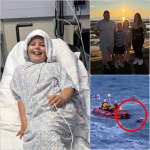
The case centers on Stephen Schneider, whose 30-foot boat collided with a channel marker in Barnegat Bay on July 19, 2026. The crash sent siblings Mya, 9, and Sigmund, 7, into the water.
Both children were later found unresponsive and could not be saved.
Schneider was not arrested that night. Instead, investigators continued gathering evidence as they worked to determine what happened in the moments before the collision.
 “THREE BEERS”
According to court documents and reporting surrounding the investigation, Schneider told authorities he had consumed three beers during a dinner lasting roughly two hours.
But investigators questioned whether that account was consistent with the physical evidence they were gathering.
The timing became critical.
By 12:46 a.m., several hours after the crash, investigators sought an emergency warrant allowing them to obtain Schneider’s blood for testing.
The warrant became a major turning point in the investigation.
THE LAB RESULT
The subsequent blood analysis reported a 0.16% blood-alcohol concentration.
That figure is twice New Jersey’s legal limit of 0.08% for operating a motor vehicle — although boating-related intoxication charges are governed by the state’s boating laws.
For prosecutors, the result provided powerful evidence supporting allegations that Schneider was operating the vessel while significantly impaired.
For the defense, however, the timing of the blood draw and the circumstances surrounding the test remain important issues.
 WHY DID INVESTIGATORS WAIT UNTIL AFTER MIDNIGHT?
That question is one of the most intriguing parts of the case.
The crash happened during the evening of July 19.
Yet investigators did not immediately obtain a blood sample through a routine procedure. Instead, they sought judicial authorization hours later.
The emergency warrant allowed investigators to obtain evidence that could otherwise have become less reliable as alcohol naturally left Schneider’s system.
The decision demonstrates how investigators were attempting to preserve evidence while the clock was working against them.
WHAT HAPPENED ON BARNEGAT BAY?
Schneider was operating a large recreational boat when it struck a channel marker.
The impact sent Mya and Sigmund overboard.
The children were recovered from the water, but the tragedy quickly became a criminal investigation.
Prosecutors have pointed to Schneider’s reported blood-alcohol level as a major factor in the case.
The defense, meanwhile, has raised questions about the visibility and lighting of the channel marker, arguing that conditions surrounding the collision could be relevant to determining what Schneider was able to see.
That means the case is not simply about alcohol.
It is also about visibility, navigation, timing, the condition of the waterway and what happened immediately before impact.
ONE PIECE OF EVIDENCE — MANY QUESTIONS
The 0.16% result may appear straightforward.
But investigators and attorneys must also consider when the sample was taken, how much alcohol Schneider may have consumed, how alcohol levels change over time and whether other evidence supports or contradicts his account.
That is why the emergency warrant has become such an important part of the timeline.
It represents the moment investigators moved to secure scientific evidence that could later become central to the prosecution.
And the resulting number was far different from the three-beer account Schneider reportedly gave.
THE CASE NOW TURNS ON THE TIMELINE
What did Schneider drink?
When did he drink it?
What time did he leave the restaurant?
How long had he been operating the boat?
What could he see on the water?
And what exactly happened in the seconds before the boat struck the marker?
Those questions could become increasingly important as the case moves forward.
The blood test provides one significant piece of the puzzle — but prosecutors and defense attorneys will ultimately have to place that evidence alongside the entire timeline.
Two children were lost in a devastating nighttime boating crash. Now, investigators are reconstructing every minute leading up to it — from the restaurant to the water, and finally to the 12:46 a.m. warrant that secured one of the case’s most consequential pieces of evidence.
The number was 0.16%. But the legal battle will be about what that number proves — and what it does not.