Woman, 35, Was Hospitalized for a Month After ‘Swallowing’ Parasite in ‘Contaminated Seawater’ During Beach Outing

A woman says she thought she was “going to die” after contracting a parasite from swallowing “contaminated” seawater.
Amid a heatwave in the U.K. in May, Katherine Hopkins, a 35-year-old former tattoo artist from Hove, East Sussex, cooled off by swimming in the sea for “three to four hours at a time” on four consecutive days at Hove Lawns in nearby Brighton, per Kennedy News and Media. She also took a quick dip at Lancing Beach in West Sussex. While she didn’t ever put her head beneath the water, she did sometimes splash her face with seawater.
About 10 days after her first beach swim, Hopkins began experiencing severe GI symptoms, including stomach cramps and watery diarrhea.
“I was going to the toilet 20 to 30 times and I was so dehydrated. When I tried to drink water, it would just come straight out,” she recalled. “I was nearly fainting, I was hot and feverish. I threw up once. I thought I had food poisoning, but I hadn’t eaten anything to cause that.”
“I genuinely thought I was going to die,” she added. “I just felt really helpless.”
As her symptoms continued to worsen, Hopkins — who was a particularly vulnerable patient after undergoing a kidney transplant in 2010 — went to the hospital and was diagnosed with cryptosporidiosis, a diarrheal disease caused by the parasite Cryptosporidium.
The parasite can live in water, food, soil or on surfaces that have been contaminated with infected poop, according to the Centers for Disease Control and Prevention (CDC). People contract the intestinal illness by swallowing the parasite, and symptoms generally begin two to 10 days after infection.
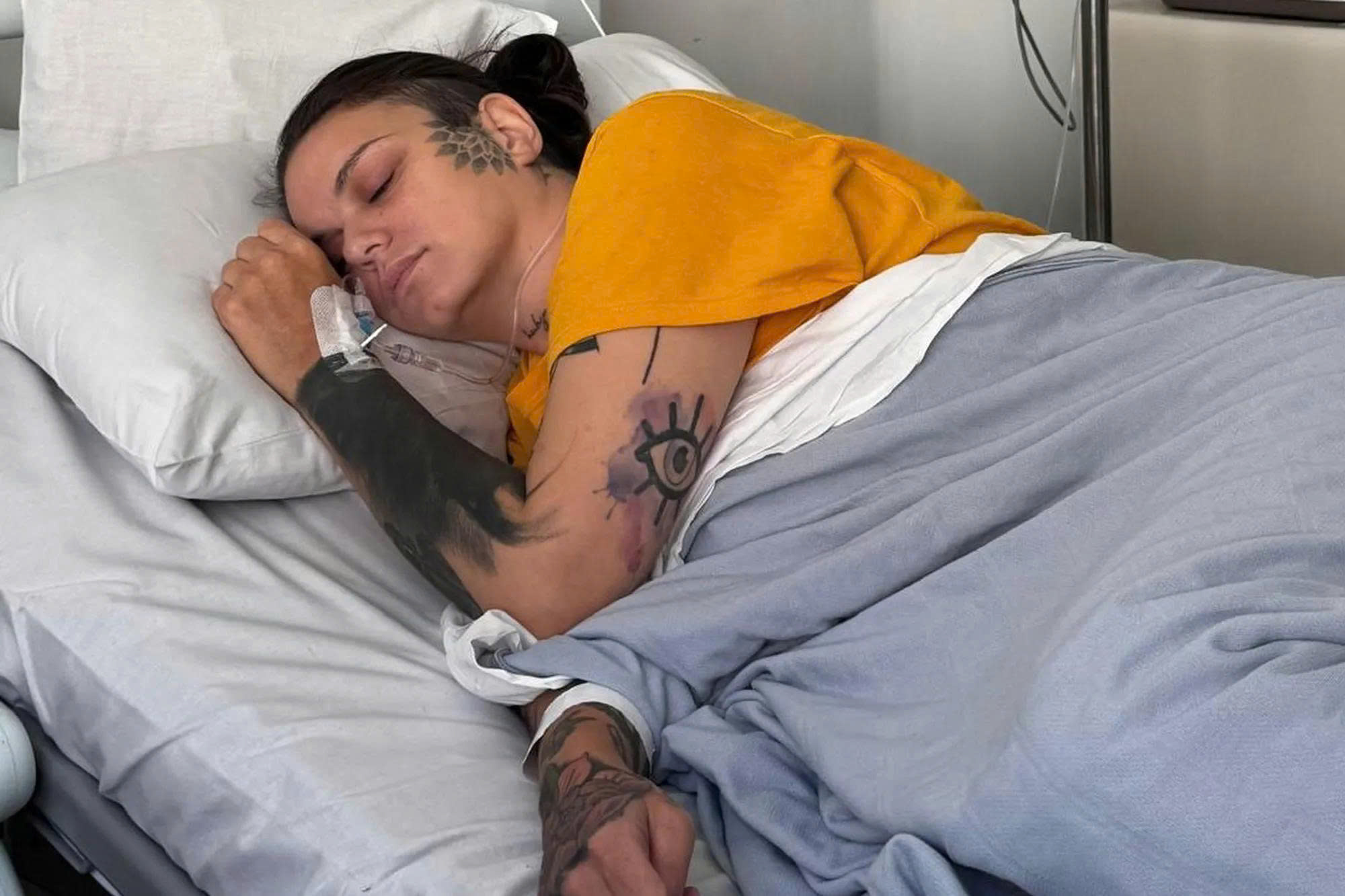
“I came in looking yellow and gray, and my kidney function was deteriorating really rapidly,” Hopkins recalled of her hospitalization. “I was becoming more and more unwell.”
The 35-year-old was eventually discharged from the hospital after a month-long stay. She lost 35 lbs. during her illness and “survived” on a liquid diet. She is still experiencing symptoms and remains on a “restricted diet.”
“It’ll take a few months for my stomach to go back to normal,” she said.
Hopkins believes she ingested the Cryptosporidium parasite by swallowing seawater that she believes could have been “contaminated.” Looking back on her Sussex beach visits, she said there was no indication that anything was amiss.
“[The seawater] didn’t look visibly dirty. Brighton sea always looks a bit murky. There were no signs saying ‘don’t swim here.’ There were kids in the water,” she said.
“I splashed my face and got water in my eye,” she continued. “I was in and out between three to four hours at a time.”