Terminally Ill Father Fulfills Final Dream by Escorting His Daughter Down a Hospital Aisle
Michael Bunce could not leave the Oklahoma City hospital where he was receiving treatment, but one deeply important promise remained within reach.
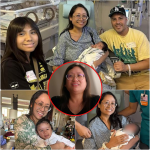
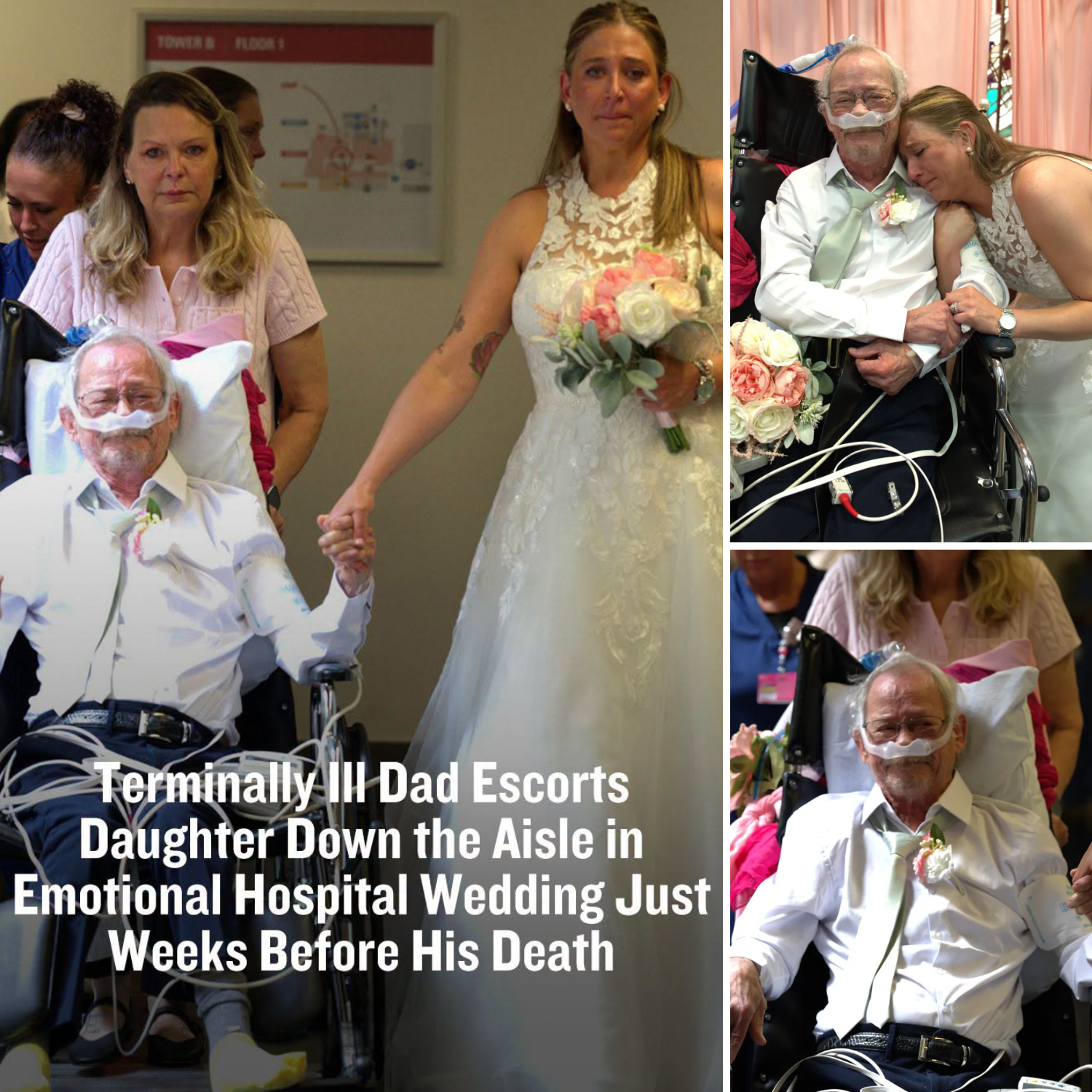
On July 2, surrounded by relatives, medical workers and the people who had cared for him through a serious illness, Michael joined hands with his daughter, Shana Bunce. Together, they moved through the hospital toward a makeshift wedding altar.
It was not the ceremony Shana and her fiancé, Justin, had originally imagined. Yet it gave Michael something he had desperately wanted: the chance to accompany his daughter down the aisle before she began her married life.
Only weeks later, Michael died.
The wedding became both a celebration and a farewell—a family milestone made possible by hospital employees who understood that caring for a patient sometimes means protecting the moments that give life its meaning.
A Father Afraid of Missing the Wedding
Michael had been hospitalized at OU Health in Oklahoma City while being treated for a respiratory illness connected to a complex pulmonary disease.
Despite the difficulty of his condition, critical care nurse Julie Price remembered him as someone who continued to smile and treat others warmly. One subject, however, repeatedly brought him to tears.
Whenever Michael spoke about Shana’s upcoming wedding, his emotions changed. He had always imagined being present and escorting her down the aisle, but his declining health made that possibility appear increasingly unlikely.
For Michael, the pain was not simply about missing an event. It was about losing the chance to fulfill a role he had carried in his heart as a father.
Price recognized how much that moment mattered to him. She also understood that his medical condition did not leave the family with the luxury of waiting for circumstances to improve.
There was only one life to live, she believed, and some memories were too important to surrender without trying.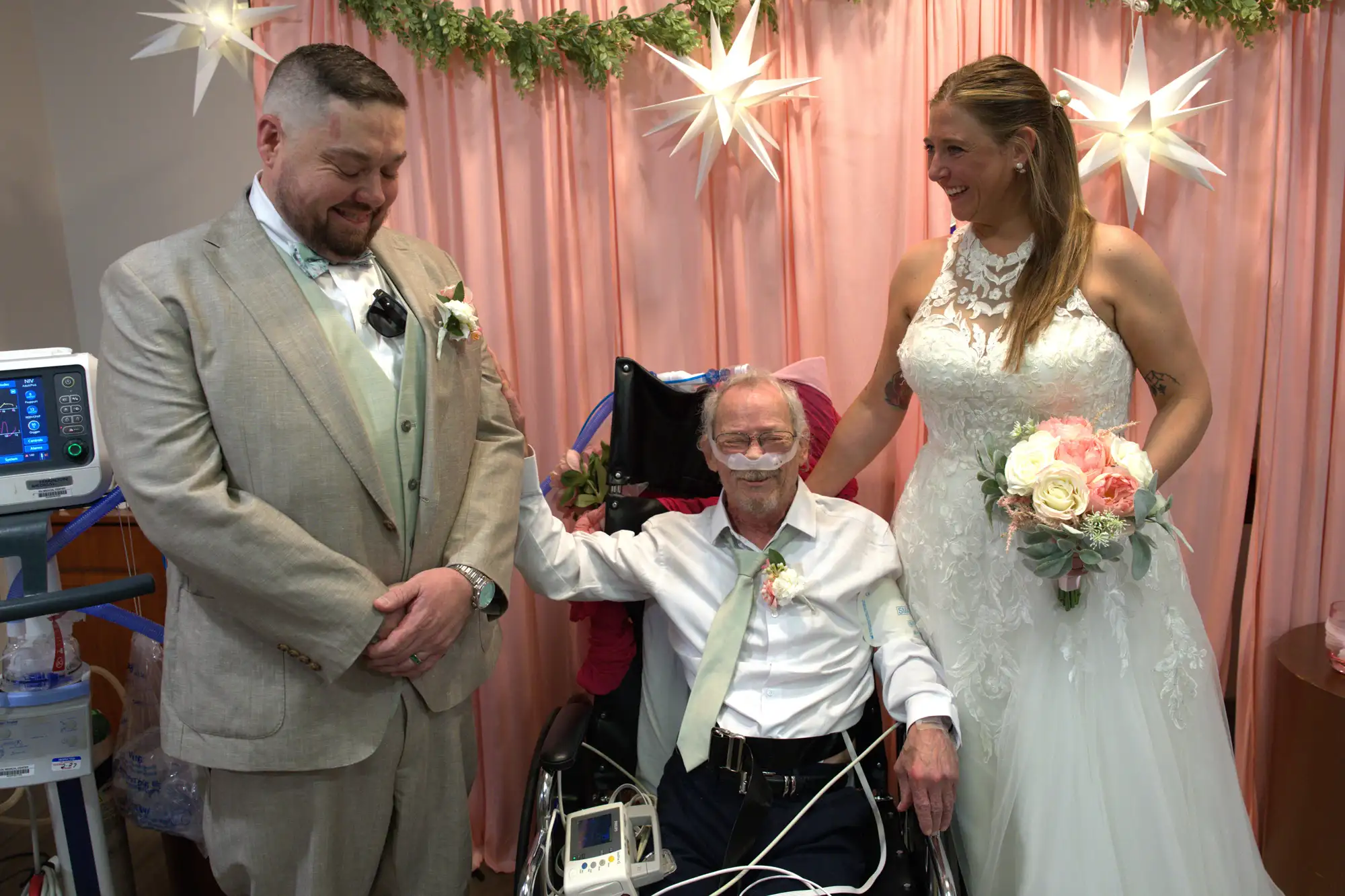
Hospital Workers Transform a Dream Into a Plan
Price began working with other OU Health employees to bring the wedding to Michael rather than asking Michael to somehow reach the wedding.
The staff converted the hospital chapel into a ceremony space. They also prepared an outdoor garden area for a reception, allowing the couple and their loved ones to experience more than a brief exchange of vows beside a hospital bed.
What began as one nurse noticing a patient’s heartbreak became a coordinated effort involving an entire care team.
The hospital corridors, normally associated with tests, treatments and anxious conversations, became part of a wedding procession. The chapel was decorated for the ceremony, while a pink curtain accented with greenery and star-shaped decorations formed the setting where Shana and Justin would exchange their vows.
The surroundings were different from those of a traditional wedding venue, but the purpose remained the same: a couple was beginning a marriage, and a father was there to witness it.
“It’s not what we planned, but we’re blessed,” Shana said of the ceremony.
Her words captured the emotional balance of the day. The family had been forced to change its expectations, but what could have felt like a painful compromise became an unexpected gift.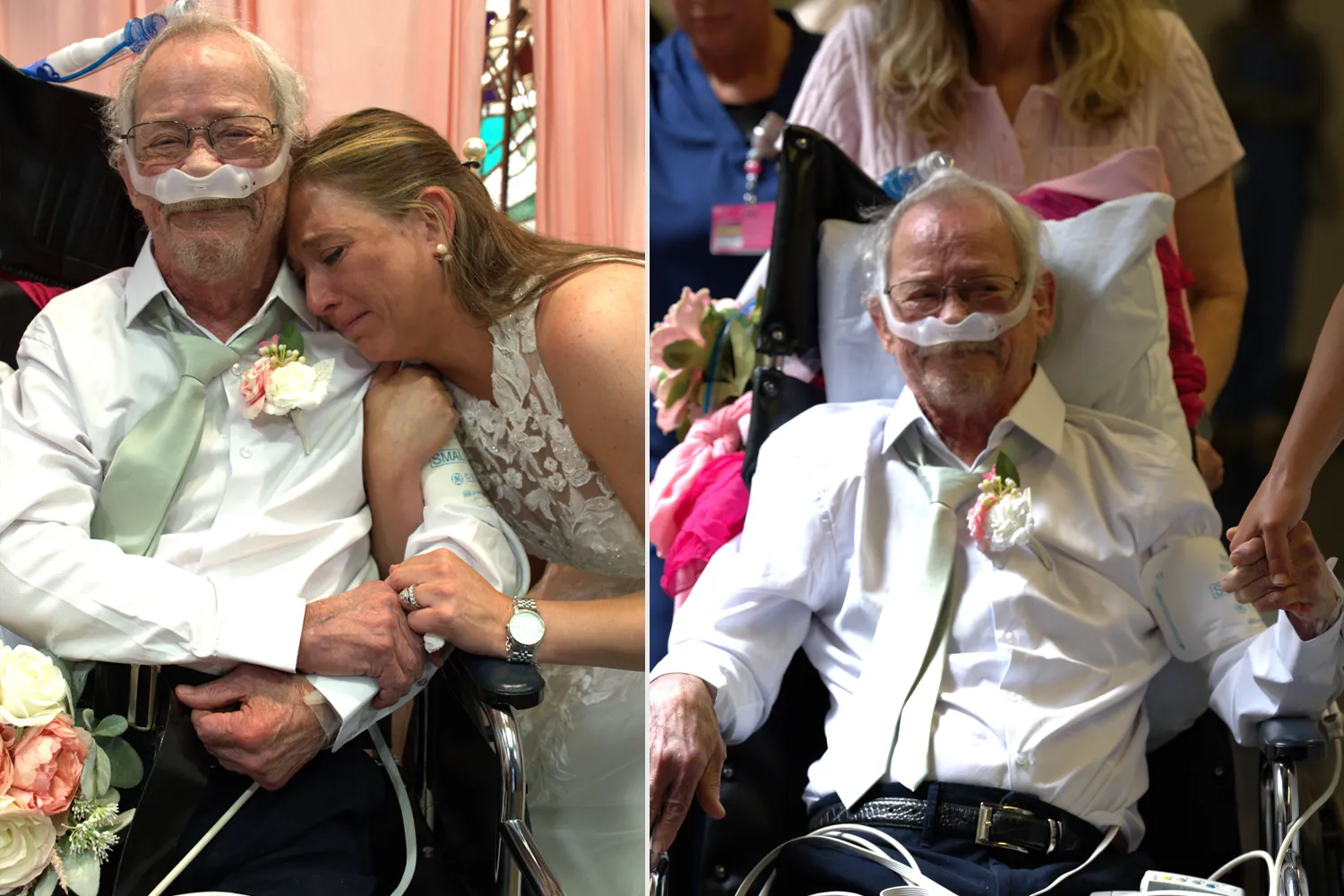
The Walk That Mattered Most
When it was time for the ceremony, Price pushed Michael through the hospital in a wheelchair.
Loved ones and hospital employees waited along the route and inside the prepared space. The same people who had helped manage Michael’s illness now watched him participate in one of the most meaningful moments of his life.
Shana took her father’s hand.
They remained linked as they traveled down the improvised aisle, with Price guiding Michael’s wheelchair. Both father and daughter cried as they approached the altar.
There was no need for a grand venue to explain what the moment meant. Michael was beside his daughter. Shana could feel his hand in hers. After fearing that illness would separate them on her wedding day, they were able to make the journey together.
Michael then remained near Shana as she and Justin exchanged vows.
For the bride, the day held several emotions at once. It marked the beginning of her marriage, the fulfillment of her father’s wish and an acknowledgment that their time together might be short.
The ceremony could not change Michael’s condition. It could not remove the uncertainty facing the family. What it offered was something medicine alone could not provide: one final shared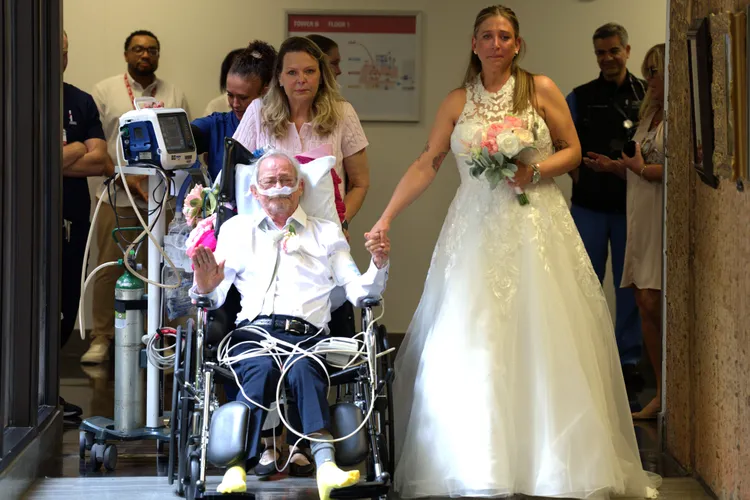 experience that illness had nearly taken from them.
Care That Extended Beyond Treatment
OU Health President and CEO Jonathan W. Curtright later described the staff’s actions as an example of care extending beyond medical procedures.
The wedding showed how nurses and other hospital workers can become witnesses to the private hopes and fears patients carry into treatment. They see not only medical charts and symptoms, but also parents, partners and children trying to preserve pieces of ordinary life during extraordinary circumstances.
Price did not have the power to cure Michael’s pulmonary disease. She did, however, have the ability to listen when he explained why his daughter’s wedding mattered.
That decision—to pay attention and then act—changed the final weeks of his life and gave his family a memory that would continue after his death.
The effort also allowed Michael to be remembered not only as a critically ill patient, but as a father carrying out one of his most cherished responsibilities.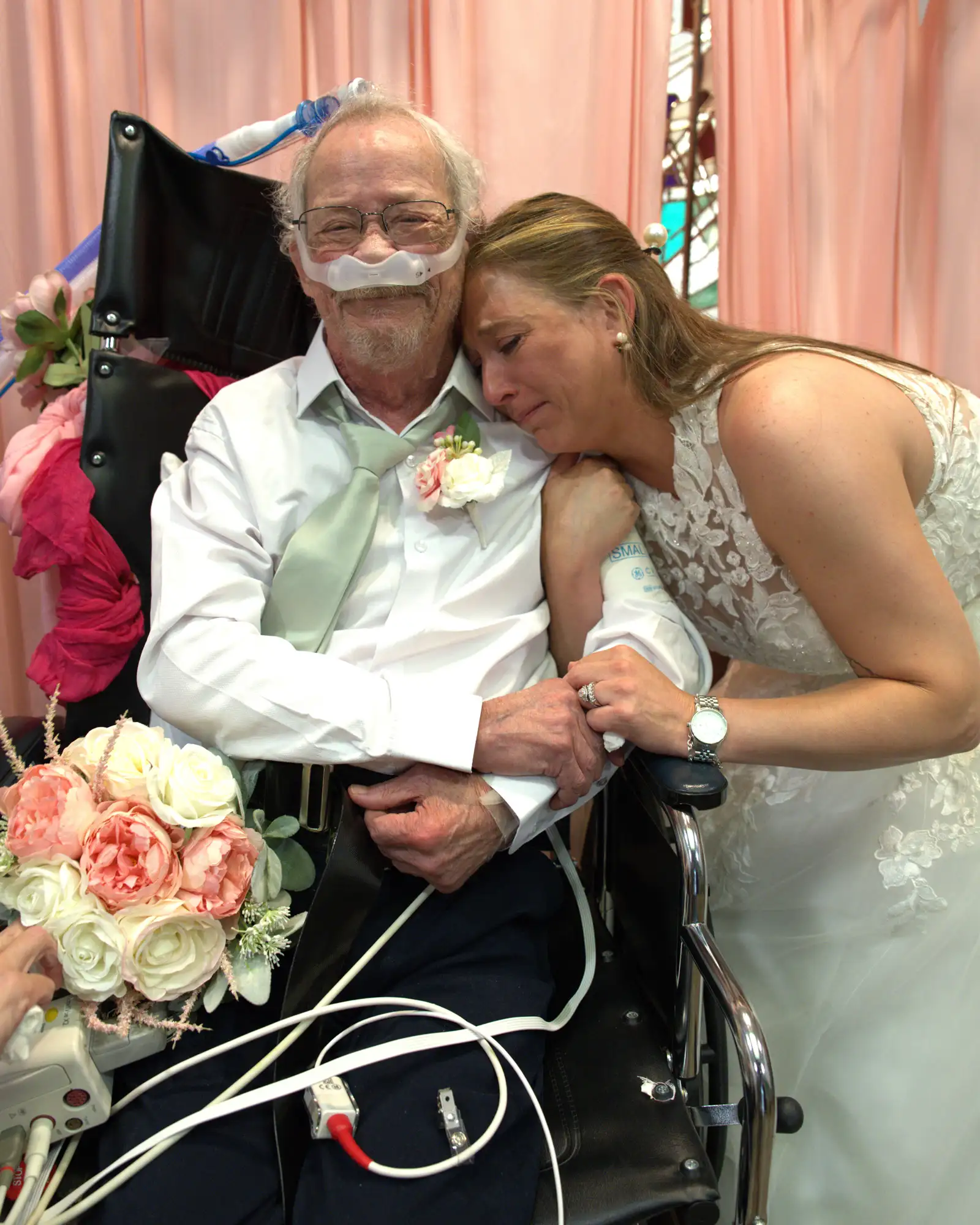
A Final Gift Before Goodbye
Michael died just weeks after the July 2 ceremony.
Shana later described him as a precious man and expressed gratitude to the hospital employees who cared for him during a period when he had repeatedly moved in and out of medical treatment.
She was especially thankful that they made his dream possible.
The timing, she said, felt serendipitous. A series of difficult circumstances had unexpectedly come together to produce a moment her family might otherwise have lost forever.
The hospital wedding did not follow the original plan, but its meaning reached far beyond decorations, photographs or the location of the reception.
Michael saw his daughter become a wife. Shana walked toward her future while holding her father’s hand. Justin exchanged vows with Michael close enough to witness the beginning of their marriage.
And when the family later faced Michael’s death, they were not left wondering what the wedding day might have been like had he been there.
He had been there.
Through the compassion of people who understood the urgency of his wish, Michael was able to complete the walk he feared he would miss—and give his daughter one final memory of being guided forward by her father.