They Entered Narnia Together as Children — Then Their Lives Took Four Very Different Paths
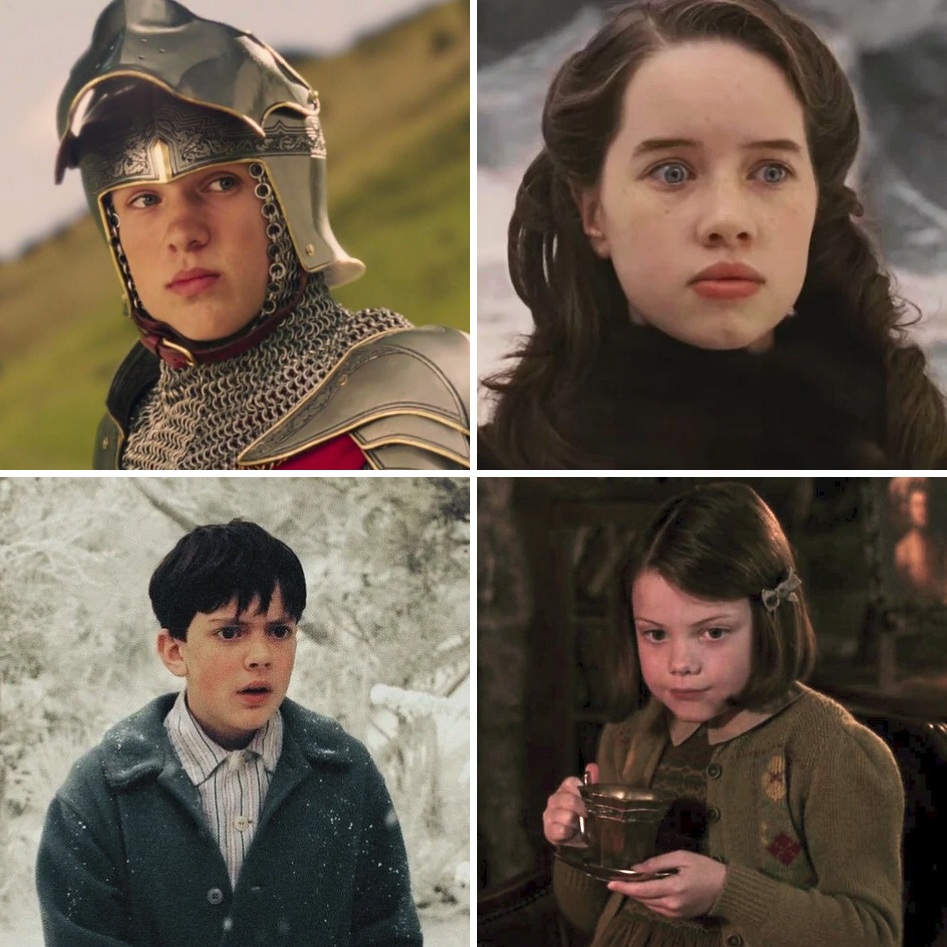
For millions of people who grew up in the 2000s, Peter, Susan, Edmund and Lucy Pevensie did not feel like four young actors playing fantasy characters.
They felt like siblings you had gone on an adventure with.
When The Chronicles of Narnia: The Lion, the Witch and the Wardrobe arrived in theaters in 2005, its four young stars were suddenly carrying one of the biggest fantasy movies of the decade.
They walked through a wardrobe, became kings and queens and helped turn C.S. Lewis’ world into a global movie phenomenon.
Then Narnia ended.
And what happened afterward was far less predictable.
The four actors who once seemed inseparable onscreen eventually followed remarkably different paths — from television and theater to university, writing and, in one surprising case, a life almost entirely outside acting.
William Moseley Had Been Chasing Peter for Years
Peter Pevensie had to feel like the older brother capable of eventually leading an army.
Finding him was not simple.
William Moseley later recalled that thousands of young actors were considered for the part. His path to Narnia had also stretched across years before he finally won the role.
Once cast, Moseley suddenly went from a young British actor to the face of a massive fantasy franchise.
Peter became High King of Narnia, but Moseley did not spend the rest of his career trying to recreate that character.
He continued acting after the franchise and later found another prominent royal role in the television series The Royals.
He has kept working in film and television rather than walking away from the industry that first made him famous.
But one of the most interesting things about Moseley’s post-Narnia career is that he never seemed particularly interested in becoming a celebrity simply for being famous.
For him, the work remained the point.
Anna Popplewell Took a More Quietly Consistent Route
Susan Pevensie was the practical one.
She was skeptical when Lucy first insisted that a magical world existed inside a wardrobe, yet she eventually became Queen Susan the Gentle.
Anna Popplewell’s life after Narnia has been similarly understated.
Rather than chase the kind of enormous franchise role that might have kept her permanently in the spotlight, she continued acting while also pursuing her education.
She later appeared in Reign, playing Lola, and returned to a very different kind of fantasy-horror world with The Nun II.
It is not the loudest post-child-star career.
That may be precisely what makes it interesting.
Popplewell managed to continue working without turning every stage of her life into a public spectacle.
Georgie Henley Had the Most Magical Beginning of All
Lucy was the first Pevensie child to discover Narnia.
That sense of wonder worked partly because Georgie Henley was extraordinarily young when she entered the project.
Years later, she recalled that the first time Lucy sees Narnia was, in a meaningful sense, also the first time Henley herself was experiencing part of that magical world.
James McAvoy, who played Mr. Tumnus, later remembered forming a particularly close bond with Henley during filming.
Director Andrew Adamson encouraged them to spend time together because so many of their scenes depended on Lucy trusting Tumnus.
McAvoy has described making the movie in New Zealand as an almost surreal experience — huge sets, remote locations and a production that felt like its own world.
Henley did not leave acting behind.
She continued into film, television and theater, eventually taking on adult roles very far removed from Lucy Pevensie.
Her career has also expanded into writing and stage work.
For audiences who remember her as the little girl holding a cordial and standing beside a lamppost in the snow, seeing that evolution can be startling.
Then There Is Skandar Keynes
Edmund had arguably the most dramatic character arc of the four siblings.
He betrayed his family.
He trusted the White Witch.
He nearly paid for it with his life.
Then he changed.
By the end, Edmund had become one of Narnia’s kings.
Offscreen, Skandar Keynes eventually made an equally unexpected turn — although in a completely different direction.
After appearing throughout the Narnia film series, Keynes stepped away from acting.
He studied at Cambridge and became involved in political and foreign-policy work.
His career included work connected with refugees and later advisory work in British politics.
For viewers who assumed the four young Narnia stars would simply continue moving through Hollywood together, Keynes’ path is probably the biggest surprise.
One of the most recognizable child actors of the 2000s essentially chose another world.
Their Casting Stories Were Almost as Unlikely as Narnia Itself
Looking back two decades later, even the way the four children found their roles sounds improbably cinematic.
Henley was still a young newcomer.
Moseley faced enormous competition.
Popplewell remembered a lengthy audition process that stretched over more than a year and even involved playing table tennis.
None of them could have known what the finished film would become.
The first movie ultimately turned into a huge international success and established the Pevensie children for an entire generation.
And unlike many child-star ensembles, their connection did not disappear the moment production stopped.
Years later, members of the cast continued to reunite.
In 2019, several of the actors met again with director Andrew Adamson, prompting the inevitable wave of nostalgia from fans who had grown up with them.
Perhaps That Is Why Narnia Still Feels Personal
There are fantasy films with larger armies.
There are franchises with more sequels.
There are cinematic universes with far more complicated mythology.
But The Lion, the Witch and the Wardrobe had something simpler at its center.
Four children.
They argued.
They doubted one another.
One betrayed the others.
They forgave him.
Then they walked into a battle none of them had expected to fight.
For younger viewers, watching the Pevensies was partly about imagining that somewhere, in some ordinary house, there might be a door into another world.
Twenty years later, the nostalgia works differently.
Now the strange part is realizing the children themselves grew up.
They entered the same wardrobe.
They left Narnia together.
But once the cameras stopped rolling, the four young actors began journeys of their own — and those journeys turned out to be every bit as different as the characters they once played.