The $1.04 Billion Powerball Ticket Came From His Store — Then the Manager Checked His Own Numbers
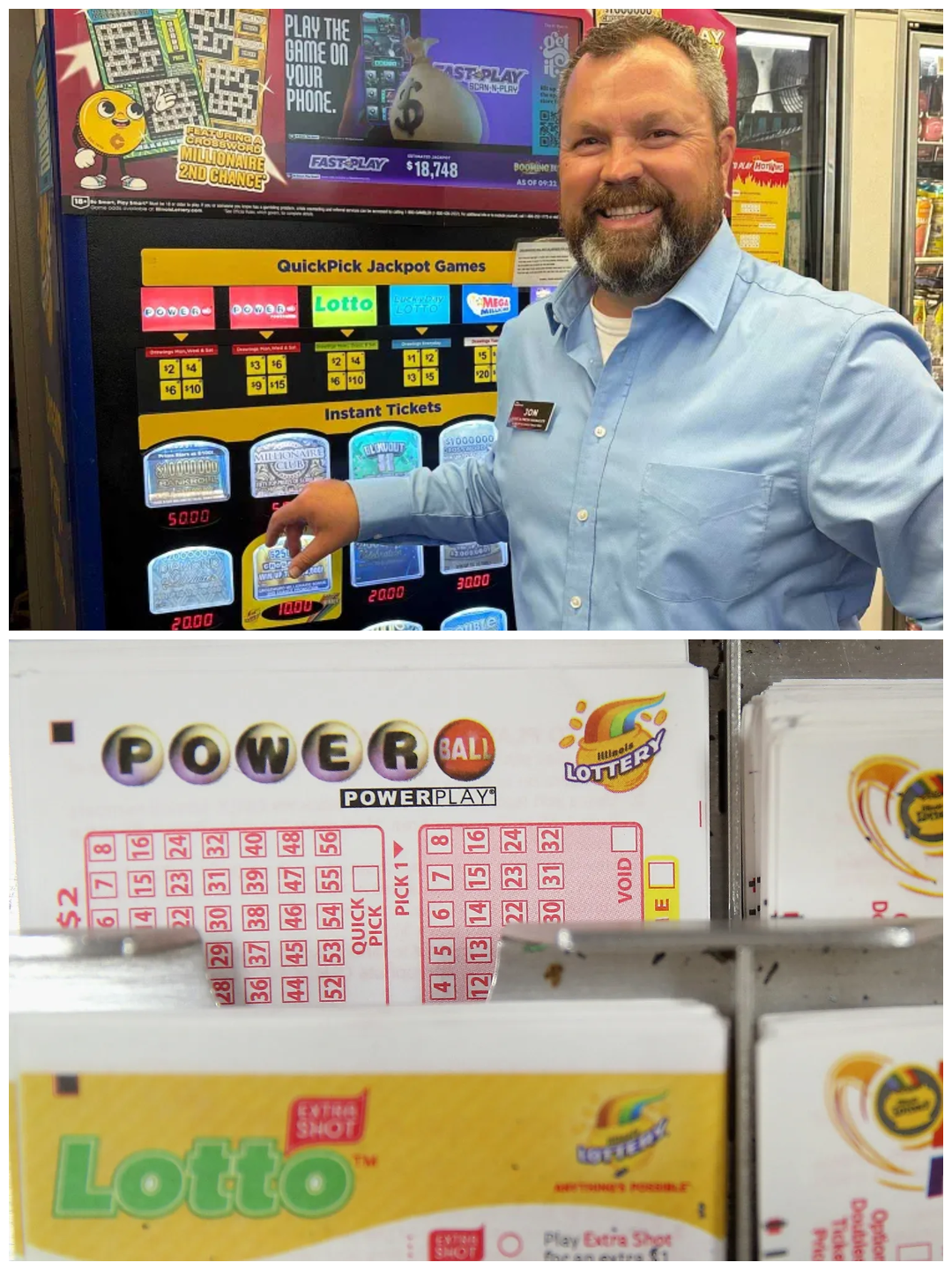
For a few extraordinary moments in the middle of the night, Jon Marshall had a reason to wonder whether his life was about to change forever.
Marshall manages the Hy-Vee Fast & Fresh on 36th Street in Quincy, Illinois, the store that sold a Powerball ticket worth an astonishing $1.04 billion. When he learned around 3 a.m. on Thursday, Aug. 13, that the winning ticket had been purchased at his location, one detail immediately made the news feel much more personal.
Marshall had bought a Powerball ticket there, too.
So he headed to the kitchen and grabbed his ticket.
The suspense did not last long.
“Sadly, it wasn’t me,” Marshall said with a laugh.
But even without becoming a billionaire himself, Marshall suddenly found his store at the center of one of the biggest lottery mysteries in the country — and a small Illinois community wondering whether someone they know may now be sitting on a fortune.
A Billion-Dollar Mystery Arrives in Quincy
The winning ticket matched all six numbers from the drawing: 4, 26, 66, 67 and 69, along with the red Powerball 9.
That combination produced a jackpot of approximately $1.04 billion, making it the eighth-largest lottery prize in history and the second-largest ever won in Illinois.
Yet after the drawing, the identity of the person holding that valuable piece of paper remained unknown.
For Marshall and the people who regularly visit his store, that uncertainty has turned into an unusual guessing game.
Customers have been coming through the doors insisting that they are not the mysterious winner.
According to Marshall, his regulars have repeatedly told him some version of the same thing: “Not me.”
That has left employees and familiar customers mentally working through the people they normally see, wondering who has not appeared since the drawing.
They are, Marshall joked, essentially narrowing the possibilities by noticing who has yet to show up.
It is an especially intriguing situation in a community like Quincy because Marshall hopes the winner is someone local.
If that is true, the person quietly holding the winning ticket has suddenly entered an entirely different financial world.
“I hope it’s someone from Quincy,” Marshall said, joking that the winner would now be the richest person in town.:max_bytes(150000):strip_icc():focal(807x349:809x351):format(webp)/Jon-Marshall-081426-91d1eb1fa6514c8cb1d530e460d6e39d.jpg)
The Store Didn’t Win the Jackpot — But It Still Gets a Huge Reward
Marshall may have checked his own ticket and discovered he was not the billionaire everyone is searching for, but his store will not walk away empty-handed.
The Hy-Vee Fast & Fresh that sold the winning ticket is set to receive a $500,000 bonus for being the retailer responsible for the jackpot-winning sale.
For a convenience store that ordinarily handles everyday purchases, the sudden connection to a billion-dollar prize has brought an entirely different kind of attention.
Marshall described the moment as exciting not only for the store but for the wider community.
He said the team was thrilled that such a life-changing ticket had been bought at their location and happy for the still-unidentified customer who purchased it.
And “life-changing” is hardly an exaggeration.
The person who eventually claims the prize will face an enormous decision about how to receive the money.
The winner can choose the full $1.04 billion jackpot through payments over time, or take a one-time cash option of $450.5 million.
Either choice would instantly transform the winner’s financial circumstances.:max_bytes(150000):strip_icc():focal(749x0:751x2):format(webp)/Powerball-tickets-Illinois-081326-819f7e1804e44cc4a89f89f8d6f8b254.jpg)
The Winner May Remain a Secret
There is another reason the guessing game in Quincy could continue for quite some time.
The winning ticket holder has one year from the date of the drawing to come forward and claim the prize. That means there is no requirement for the winner to immediately walk into a lottery office and reveal that the ticket has been found.
And even when the prize is claimed, the public may never learn who won.
Illinois law allows lottery winners collecting prizes greater than $250,000 to remain anonymous. Because this jackpot is obviously far beyond that threshold, the person behind the billion-dollar ticket could choose to keep their identity private.
That possibility adds another layer to the story unfolding around Marshall’s store.
Someone could be celebrating quietly.
Someone could still be checking an old ticket.
Someone could be getting professional advice before making a claim.
Or the winner could simply be choosing not to tell anyone.
What is known is that one ticket sold at an ordinary store in Quincy now represents more than a billion dollars in advertised jackpot value.
And for Marshall, the experience began with perhaps the most relatable reaction imaginable: hearing his store had sold the winning ticket, remembering that he had bought one himself and immediately going to see whether the impossible had happened.
It had — just not to him.
For now, Marshall can laugh about his own losing ticket while sharing in the excitement surrounding his store’s unexpected place in Powerball history.
Meanwhile, the biggest question remains unanswered.
Somewhere, one person holds the winning numbers 4, 26, 66, 67, 69 and Powerball 9.
Whether that person is a Quincy resident, one of Marshall’s customers or someone who simply passed through the store may never become public knowledge.
But inside a community where regular customers are already telling Marshall, one after another, “not me,” the mystery may be almost as captivating as the billion-dollar prize itself.