A 9/11 Victim Has Been Identified Nearly 25 Years Later. The Method Didn’t Exist in 2001
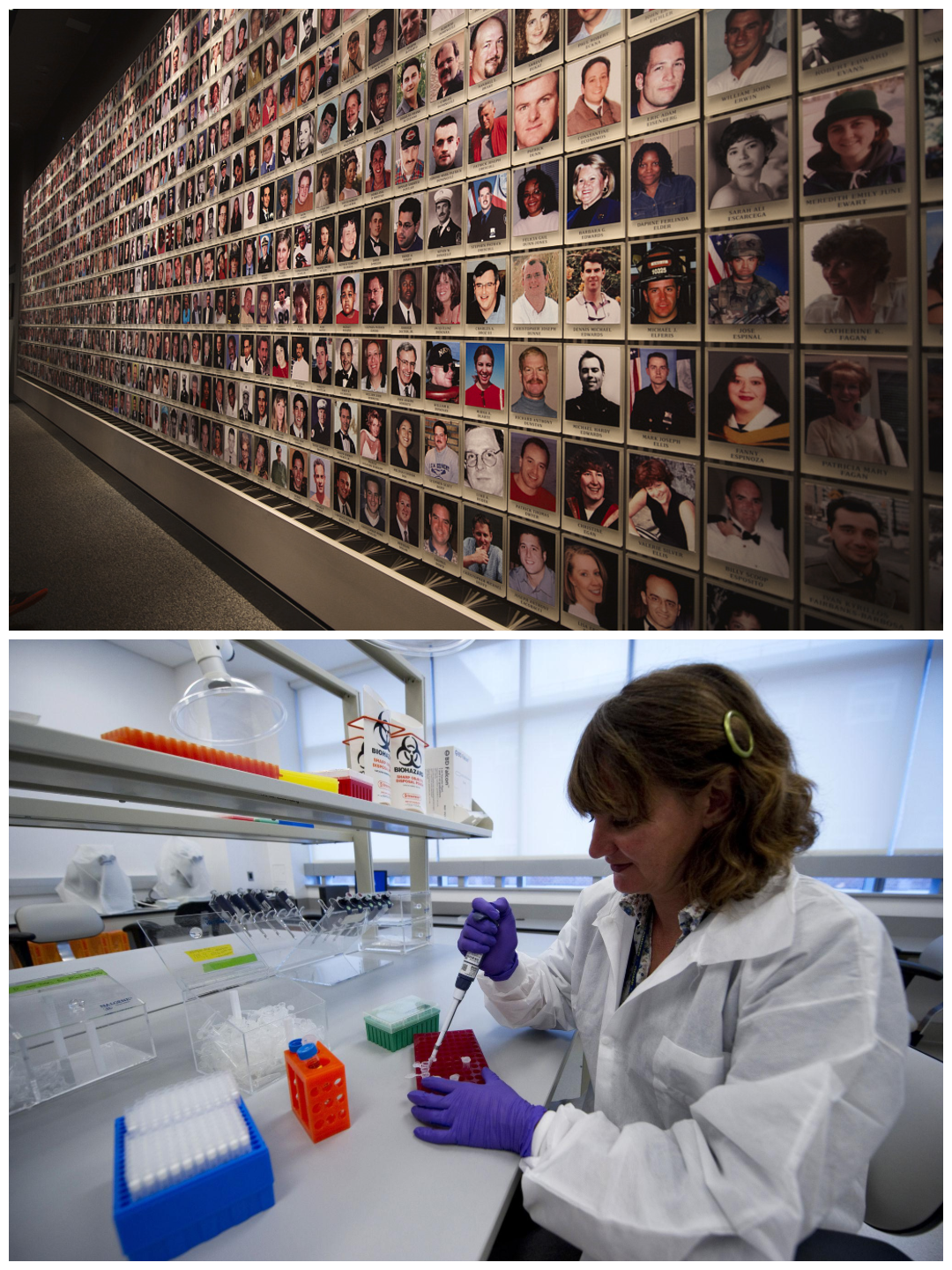
Nearly 25 years after the September 11 attacks, New York City has formally identified another person who died at the World Trade Center.
But this identification is different from every one that came before it.
For the first time in the massive forensic effort that has continued since 2001, investigators used forensic investigative genetic genealogy, or FIGG, to help establish the identity of a 9/11 victim.
The victim was an adult woman. Her family has asked that her name remain private.
She is now the 1,654th World Trade Center victim formally identified by New York City’s Office of Chief Medical Examiner.
The breakthrough does not come from investigators finally discovering a piece of evidence that had been overlooked for decades.
It comes from science catching up with a problem that technology simply could not solve in 2001.
“The technology really wasn’t there,” NYPD Detective Gregory Paduano told ABC News.
A New Tool for a 25-Year-Old Identification Effort
New York City announced the identification on Aug. 24, just weeks before the 25th anniversary of the attacks.
The Office of Chief Medical Examiner, working with the NYPD’s Investigative Genetic Genealogy Squad, used FIGG to generate a lead that could then be independently confirmed through established forensic methods.
That distinction is important.
Genetic genealogy does not simply produce a name and end the investigation.
Instead, specialized DNA analysis is combined with genealogical research — essentially using genetic relationships and family-tree information to narrow the possibilities.
Once investigators develop a potential identity, the medical examiner still has to confirm it using DNA or other accepted forensic techniques.
For this woman, that combination succeeded where previous approaches had not.

Why Couldn’t Investigators Do This in 2001?
The answer is surprisingly straightforward.
The methodology did not exist in the form required.
DNA testing was already an important forensic tool by September 2001, but the technology and genealogical databases available today are dramatically more advanced.
FIGG can sometimes work with DNA profiles that do not directly match reference samples already supplied by relatives.
Instead of requiring a simple one-to-one match, investigators can look for genetic relatives and use family relationships to develop potential identities.
ABC News reported that officials described the breakthrough as something that would have been unimaginable 25 years ago because the necessary methodology simply was not available.
That means the passage of time, ordinarily the enemy of an investigation, has also brought something valuable:
New tools.
The World Trade Center Identification Effort Has Never Stopped
The scale of the forensic challenge after September 11 is difficult to overstate.
A total of 2,753 people were killed in New York during the attacks.
The destruction of the Twin Towers exposed human remains to enormous heat, fire, impact and structural collapse, creating one of the most difficult mass-fatality identification efforts ever undertaken.
Since 2001, the medical examiner’s office has repeatedly returned to recovered remains as DNA technology improved.
The newly identified woman is the 1,654th person whose identity has been formally established.
Approximately 1,099 victims — about 40% of those killed in New York — remain unidentified.
For those families, the work is not considered closed.
The Office of Chief Medical Examiner has maintained its commitment to continue testing and retesting remains as new scientific methods become available.
Genetic Genealogy Changes What Investigators Can Search For
Forensic investigative genetic genealogy became widely known through its use in long-unsolved criminal cases.
The technique can help investigators work backward from an unknown DNA profile by identifying potential relatives and reconstructing family relationships.
Now, New York officials are applying that same underlying approach to the World Trade Center identification effort.
Dr. Jennifer Odien, a forensic anthropologist with the medical examiner’s office, told ABC News that investigators already see promise in the method.
Not every unidentified victim will be suitable for FIGG.
But officials have DNA profiles that have not matched existing family reference samples, and those cases may offer opportunities for genealogical research.
Odien said there are currently 47 profiles that may be candidates for genetic genealogy work.
That does not mean 47 additional identifications are imminent.
It does mean investigators now have another path that did not exist during the original recovery effort.
The Woman’s Name Will Remain Private
One question the new identification will not answer publicly is the victim’s name.
Officials said the woman’s identity is being withheld at the request of her family.
That privacy request is important because the significance of an identification is not necessarily public recognition.
For families, identifying remains can provide information they have waited decades to receive.
It can also allow additional remains to be associated with someone whose identity was already known or permit remains to be returned to relatives.
The medical examiner’s work therefore continues even in cases where the public will never know the individual details.
The newly identified woman represents the first completely new World Trade Center victim identification since three additional victims were announced in August 2025.
Science Has Continued Moving Forward
The history of the 9/11 identification effort is also a history of changing forensic technology.
Early testing methods were replaced or supplemented by more sensitive DNA techniques.
Previously tested remains have been examined again as laboratory methods improved.
Family members have been contacted again for additional reference samples.
Now FIGG has joined that toolkit.
New York City Chief Medical Examiner Dr. Jason Graham called the new result a “breakthrough,” emphasizing that his office is now applying methods to the World Trade Center cases that were simply unavailable during the first years of the investigation.
For an event permanently associated with one morning in 2001, the science surrounding its aftermath has never remained frozen in that year.

More Than 1,000 Families Are Still Waiting
The new identification is both an achievement and a reminder of how much work remains.
Nearly 25 years after the towers fell, about 40% of the people killed at the World Trade Center still have not been formally identified through recovered remains.
Some may ultimately remain unidentified.
The condition of the remains and limitations of available DNA can make certain cases exceptionally difficult.
But the identification announced Aug. 24 shows why investigators continue.
A case that could not be resolved with the tools of 2001 may become solvable with the tools of 2026.
And technology may continue to change again.
For one family, that scientific progress has now produced an answer after nearly a quarter-century.
The public may never know the woman’s name.
But investigators now know who she was.
And for the first time in the history of the September 11 identification effort, forensic genetic genealogy helped them get there.