LUCY LETBY CASE: NEW INSULIN REPORT PUTS KEY PROSECUTION EVIDENCE UNDER FRESH SCRUTINY
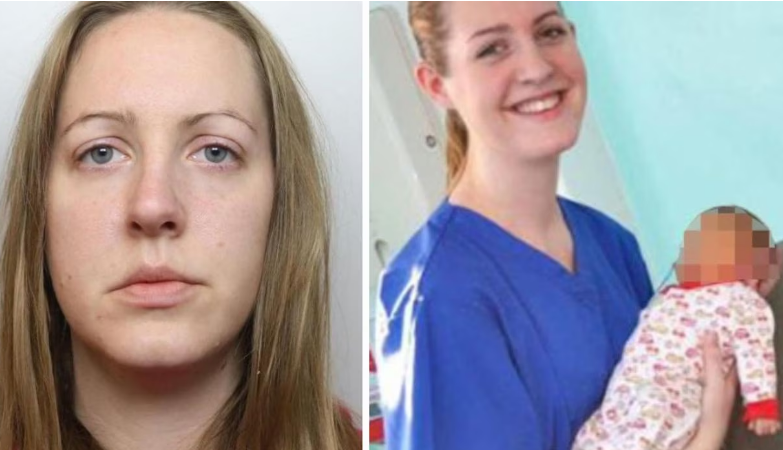
LUCY LETBY CASE: NEW INSULIN REPORT PUTS KEY PROSECUTION EVIDENCE UNDER FRESH SCRUTINY
The Lucy Letby case is facing renewed scrutiny after new expert analysis challenged aspects of the insulin evidence used at her trial — raising fresh questions about whether alternative medical explanations were adequately considered.
Letby was convicted of murdering seven babies and attempting to murder six others at the Countess of Chester Hospital. She continues to maintain her innocence, and her legal team has submitted new material to the Criminal Cases Review Commission (CCRC) seeking to have her convictions reconsidered.
But there is an important distinction:
The new evidence does not establish that Letby is innocent.
It challenges whether some of the scientific evidence presented to the jury was as conclusive as prosecutors claimed.
 THE INSULIN EVIDENCE AT THE CENTER OF THE STORM
Two of the cases involved babies identified at trial as Baby F and Baby L.
Prosecutors argued that unusually high insulin levels combined with low C-peptide levels demonstrated that the babies had been deliberately given synthetic insulin.
That evidence became particularly important because, unlike many of the other allegations, these cases involved laboratory test results that prosecutors presented as evidence of deliberate poisoning.
Now, experts instructed by Letby’s legal team have challenged that interpretation.
A July 2026 report submitted to the CCRC reportedly examined the insulin evidence and alleged that important alternative explanations and potential errors in the original expert interpretation should have been considered. The report was prepared by neonatologist Neil Aiton and statistician Hilde Wilkinson-Herbots.
The full report itself has not been publicly released, meaning claims about its precise contents should be treated cautiously.
 COULD NATURAL MEDICAL CONDITIONS EXPLAIN THE RESULTS?
That is one of the most important questions now being debated.
Recent scientific work has raised the possibility that certain insulin readings in premature or critically ill infants may be affected by biological mechanisms that can complicate interpretation.
A 2026 peer-reviewed publication has also been cited in the renewed debate over whether the laboratory results necessarily prove that synthetic insulin was administered.
The significance is not that experts have definitively proven a natural cause.
Rather, the argument is that the laboratory findings may not have been as uniquely diagnostic of deliberate insulin administration as the prosecution suggested.
That distinction could become crucial if the CCRC determines that the new evidence creates a real possibility that the convictions would not be upheld.
ANOTHER BOMBSHELL: THE PROSECUTION EXPERT
The insulin evidence has also come under scrutiny because of revelations concerning Professor Peter Hindmarsh, a key prosecution expert.
The Guardian reported in March 2026 that Hindmarsh was subject to a professional investigation concerning his medical work while he was involved in the Letby proceedings.
The jury was not told about that investigation.
The Crown Prosecution Service said it was unaware of the investigation when Hindmarsh first gave evidence, while the investigation itself did not result in a formal finding against him.
That does not mean his testimony was false or that the convictions were therefore unsafe.
But it gives Letby’s lawyers another issue to argue:
Should the jury have known about the investigation when assessing the credibility and weight of his evidence?
AND THEN CAME THE CCRC
The legal development that may ultimately matter most is happening behind the scenes.
Letby’s lawyers submitted an application to the Criminal Cases Review Commission in February 2025.
Since then, the CCRC has received multiple expert reports and further submissions.
Its own official timeline confirms that additional expert reports were received in March and April 2025, another report arrived in August 2025, and further submissions and expert reports were received in January 2026.
The CCRC has made one thing very clear:
It does not decide whether Letby is innocent or guilty.
Its job is to determine whether new evidence or new arguments create a real possibility that a conviction would not be upheld, in which case the case can be referred back to the appellate courts.
WHY THE INSULIN QUESTION MATTERS SO MUCH
The insulin cases occupy a unique position in the prosecution narrative.
If the original interpretation is weakened, lawyers challenging the convictions can argue that the jury may have been presented with an overly certain scientific conclusion.
And that could have implications beyond two individual babies.
The prosecution’s broader case relied heavily on a pattern of unexpected collapses, medical circumstances, staffing records and Letby’s presence on the neonatal unit.
If one major piece of evidence is successfully challenged, the defense could argue that jurors should reconsider how they evaluated the wider pattern.
That does not automatically invalidate the other convictions.
But it could make the overall case substantially more complicated.
THIS IS NOT YET A “WRONGFUL CONVICTION” RULING
Despite increasingly dramatic headlines surrounding the case, there has been no court ruling declaring Lucy Letby’s convictions unsafe.
The CCRC has not announced that it will refer her case to the Court of Appeal.
And the new expert material has not yet been fully tested in court.
The commission itself has warned against public speculation while its review continues.
THE QUESTIONS NOW HANGING OVER THE CASE
The renewed scrutiny raises several major questions:
Were the insulin results capable of having alternative medical explanations?
Was the laboratory evidence sufficiently reliable for a criminal prosecution?
Did the jury receive all relevant information about the prosecution’s expert evidence?
Could new scientific analysis change how the insulin cases are understood?
And ultimately:
Will the CCRC conclude that the new evidence is strong enough to send Letby’s convictions back to the Court of Appeal?
Those questions remain unanswered.
A CASE THAT IS FAR FROM OVER
Lucy Letby remains imprisoned under whole-life sentences following her convictions.
At the same time, her legal team continues to pursue arguments that the evidence presented at trial was scientifically flawed or incomplete.
The latest developments do not prove that Letby was wrongly convicted.
But they do show that some of the scientific evidence at the heart of the case is now being examined again by experts who were not part of the original trial.
And that could make the next decision by the CCRC one of the most closely watched developments in the case.
The verdict remains in force.
The scientific debate is not over.
And the question now is whether the new evidence is strong enough to reopen the case in court.