“ARE THE CHILDREN BEING FORGOTTEN?” — LINDSAY CLANCY’S LAWYER WALKS AWAY AFTER REPORTER’S QUESTION
“ARE THE CHILDREN BEING FORGOTTEN?” — LINDSAY CLANCY’S LAWYER WALKS AWAY AFTER REPORTER’S QUESTION
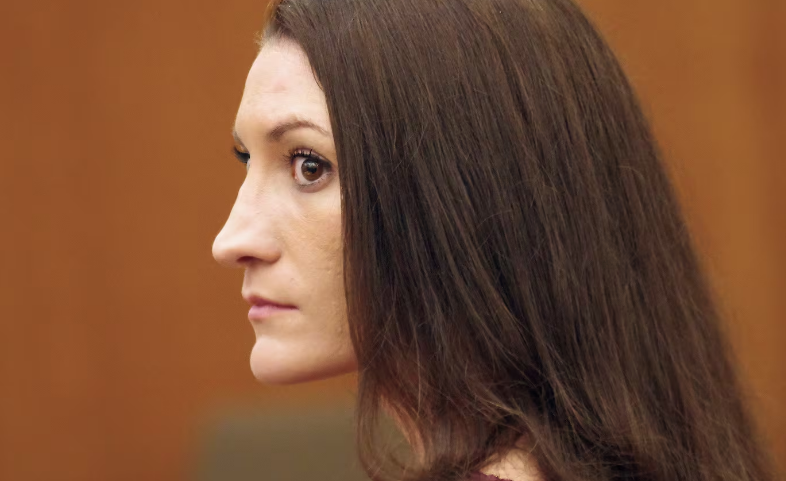
A brief exchange outside a Massachusetts courthouse has sparked fresh discussion surrounding the intensely watched Lindsay Clancy trial.
On Thursday, Aug. 20, Clancy’s defense attorney Kevin Reddington was speaking with reporters outside Plymouth District Court when a Boston 25 News reporter asked him about criticism circulating online — specifically, whether the three children at the center of the case were being forgotten as attention increasingly focused on their mother’s mental state and legal defense.
Reddington did not answer the question.
Instead, he walked away.
:max_bytes(150000):strip_icc():focal(723x431:725x433):format(webp)/lindsay-clancy-plymouth-superior-court-080326-1-2b450d6d27f4449aa7db65833c9e6468.jpg) THREE CHILDREN REMAIN AT THE HEART OF THE CASE
THREE CHILDREN REMAIN AT THE HEART OF THE CASE
Clancy is charged in connection with the January 2023 deaths of her three children — 5-year-old Cora, 3-year-old Dawson and 8-month-old Callan.
She has pleaded not guilty by reason of lack of criminal responsibility.
Her defense argues that she was suffering from postpartum psychosis and other severe mental-health problems and therefore could not be held criminally responsible for her actions.
Prosecutors have presented a very different interpretation.
Their experts have acknowledged that Clancy suffered serious mental-health problems but have disputed that she was psychotic or incapable of understanding right from wrong. Psychiatrist Dr. Avram Mack, for example, testified that Clancy experienced a major depressive episode but showed no evidence of psychosis.
 THE TRIAL HAS BECOME A BATTLE OVER HER MENTAL STATE
For weeks, jurors have heard competing testimony about Clancy’s psychological condition before and after the deaths.
Defense expert Dr. Phillip Resnick testified that he believed Clancy was “frankly psychotic” and experienced command hallucinations telling her to kill her children and herself.
The prosecution’s experts have challenged that conclusion.
That disagreement has placed Clancy’s psychiatric history at the center of the trial.
But outside the courtroom, some observers have raised a different concern:
Is the intense focus on Clancy’s illness overshadowing the three children who died?
THE QUESTION THAT WENT UNANSWERED
That was essentially the issue raised by the reporter.
Reddington had been speaking to members of the media when he was asked whether the children were being forgotten amid the trial’s focus on Clancy.
He did not engage with the question and walked away.
The moment was brief.
But it touched on one of the most emotionally difficult aspects of the case.
Every legal argument about Clancy’s mental state ultimately revolves around what happened to Cora, Dawson and Callan.
THE DEFENSE IS NOT ARGUING THAT THE CHILDREN DIDN’T DIE
The defense’s position is not that the children survived or that Clancy was not responsible for the physical acts.
Instead, the central legal question is whether a severe mental illness left her criminally responsible for those actions.
That distinction is critical.
If Clancy is found criminally responsible, she faces the possibility of a life sentence.
If she is found not guilty by reason of insanity, Massachusetts law provides for psychiatric commitment rather than a conventional prison sentence.
WHY THE CASE HAS BECOME SO EMOTIONAL
The trial has attracted enormous public attention, including rallies supporting Clancy and intense debate across social media.
Hundreds of supporters have gathered outside the courthouse, with some arguing that the case highlights failures in maternal mental-health care and the devastating consequences of untreated postpartum psychiatric illness.
At the same time, online discussions have produced conspiracy theories and speculation that go far beyond what has been established in court.
That has made the distinction between evidence presented in court and internet speculation increasingly important.
THE TRIAL IS NOW NEARING ITS END
The prosecution is presenting rebuttal testimony challenging the defense’s mental-health theory.
On Aug. 24, Reddington aggressively cross-examined Dr. Mack, questioning his experience with postpartum psychosis and challenging his conclusions about Clancy’s mental state. The judge intervened several times during the tense exchange.
The next major stage will be closing arguments, followed by the jury’s deliberations.
And when jurors eventually decide the case, they will have to answer a question far more complicated than whether Clancy committed the acts alleged against her.
They must determine whether she was legally responsible for them at the time.
THREE NAMES THAT SHOULD NOT DISAPPEAR FROM THE STORY
Cora.
Dawson.
Callan.
As lawyers debate diagnoses, experts challenge one another and supporters gather outside the courthouse, the children remain the reason the case exists in the first place.
The reporter’s unanswered question therefore struck at an uncomfortable issue:
Can a trial focus on a defendant’s mental illness without losing sight of the children who died?
For now, the courtroom remains focused on the legal question of criminal responsibility.
The jury will ultimately decide what the evidence means.
And the verdict will determine what happens to Lindsay Clancy next.
Three children. One devastating case. And a trial now approaching its final chapter.