Johnny Depp Was the Star, but 19-Year-Old Leonardo DiCaprio Became Gilbert Grape’s Only Oscar Nominee
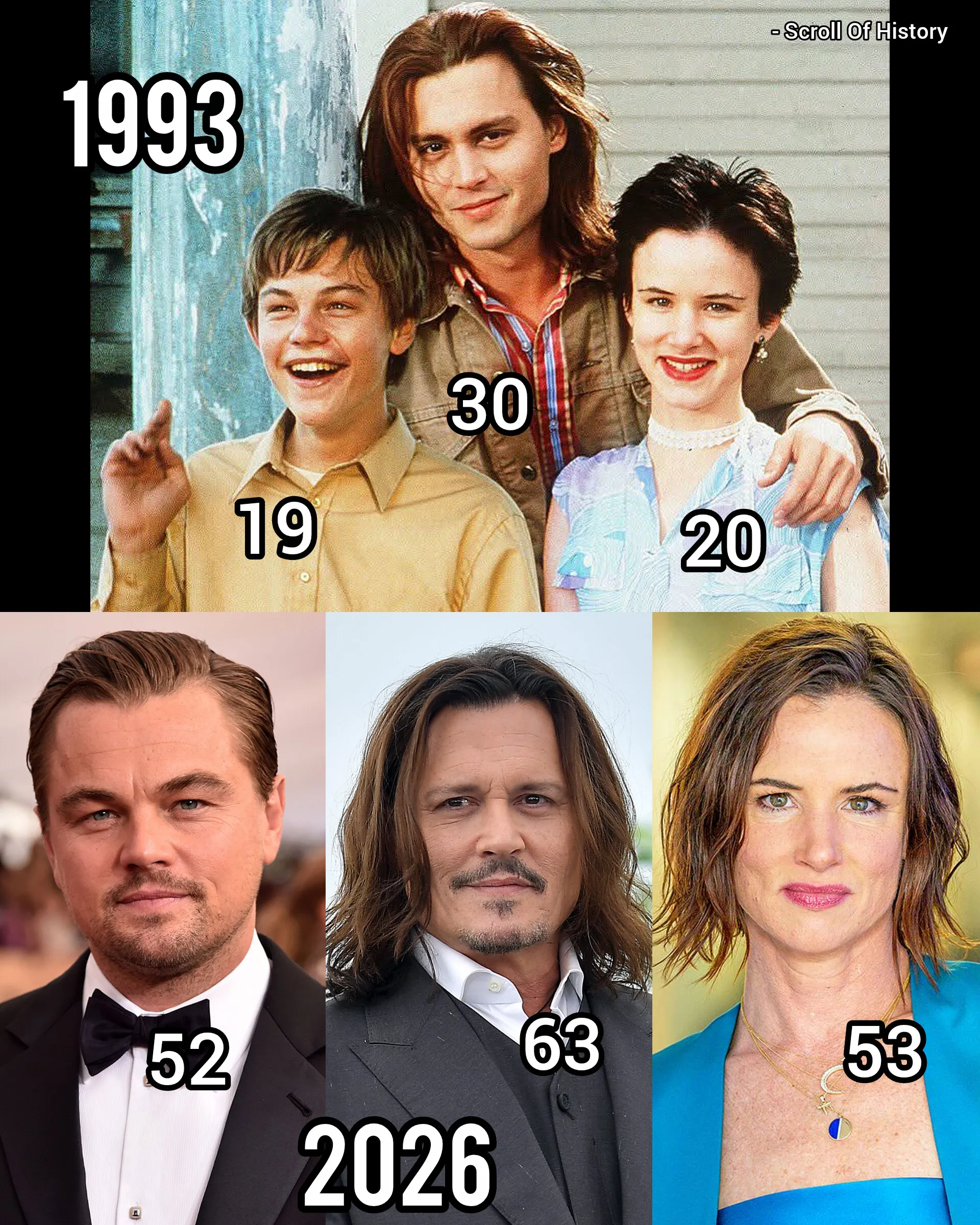
How did the youngest and least famous of three remarkable young actors become the only person from What’s Eating Gilbert Grape to receive an Academy Award nomination?
When the movie arrived in 1993, Johnny Depp was the recognizable star. He had already become a television heartthrob through 21 Jump Street before establishing himself as one of Hollywood’s most unusual young leading men in films such as Edward Scissorhands.
Juliette Lewis came into the project with even stronger awards credentials. Just two years earlier, her performance in Martin Scorsese’s Cape Fear had earned her an Oscar nomination for Best Supporting Actress.
Then there was Leonardo DiCaprio.
He had television experience and had already worked opposite Robert De Niro in This Boy’s Life, but he was still nowhere near the global star he would become. In Gilbert Grape, he wasn’t even playing the character whose name was in the title.
Yet by the time awards season arrived, DiCaprio was the movie’s sole Academy Award nominee. The Academy’s official record lists exactly one nomination for What’s Eating Gilbert Grape: Leonardo DiCaprio for Actor in a Supporting Role.
The path to that nomination began with a problem director Lasse Hallström did not expect.
DiCaprio looked too good for the part.
The Face That Almost Worked Against Him
What’s Eating Gilbert Grape, directed by Hallström from Peter Hedges’ screenplay based on his own novel, centers on Gilbert, a young man trapped by responsibility in the fictional small town of Endora, Iowa.
Gilbert works at a grocery store while helping hold together a family that has largely come to depend on him. His younger brother Arnie has a developmental disability and requires constant supervision. Their mother, Bonnie, has withdrawn from much of the outside world. Then Becky, a traveler played by Lewis, enters Gilbert’s life and gives him a glimpse of something beyond the routine he has accepted.
Finding the right Arnie was critical.
Hallström initially had reservations about DiCaprio because the young actor appeared too conventionally handsome for how he imagined the character. But the audition changed his mind.
Hallström later recalled that, among the actors considered, DiCaprio was unusually attentive to physical behavior. He wasn’t simply delivering dialogue differently. He had watched, absorbed and integrated small body movements into the performance. Hallström considered him the most observant of the contenders.
DiCaprio later explained that Hallström had provided auditioning actors with video footage to study. DiCaprio watched it repeatedly and relied on an ability he already recognized in himself: he was good at observing people and reproducing physical behavior.
It was enough to win him the role.
But landing the part was only the beginning.

Then Came the List of 300 Details
Once DiCaprio knew he would play Arnie, he went much further.
He spent time at a facility in Austin, Texas, observing young people with developmental disabilities. Rather than building Arnie around one person, he watched a range of behaviors and recorded details he thought might help create the character.
The result was extraordinary for an actor still in his teens.
DiCaprio later told CBS that he returned to Hallström with a checklist containing roughly 300 different attributes he had noticed. Together, they could consider which movements, reactions and mannerisms might belong to Arnie.
That preparation helps explain why the performance feels so physically specific.
Arnie’s movements can change suddenly. His attention shifts. His excitement seems capable of taking over his entire body. DiCaprio was not simply waiting for his next line; Arnie appears to continue existing between the scripted moments.
That quality also gave the young actor unusual freedom.
And this is where the story becomes more interesting than the simple idea that DiCaprio “outacted” Johnny Depp.
DiCaprio himself has described the opposite dynamic.

Depp Had the Job DiCaprio Didn’t
Years later, DiCaprio explained that Depp carried a different burden as Gilbert.
Gilbert has to hold the narrative together.
The audience experiences the family largely through him. He is exhausted without being allowed to completely collapse, resentful without being able to abandon everyone, and desperate for change even while feeling responsible for keeping everything exactly where it is.
DiCaprio, by contrast, remembered having considerably more freedom. Arnie’s impulsiveness meant he could experiment within scenes, reacting unexpectedly or allowing a physical idea to take over. Depp had to make sure the story itself continued to function.
That distinction is essential to understanding why the performances work so well together.
Depp does not need to compete with DiCaprio’s most noticeable moments. Gilbert’s restraint is the foundation underneath them. His weariness, affection, anger and guilt create the emotional structure that allows Arnie to be unpredictable.
Lewis serves another purpose.
Her Becky is not simply a conventional romantic interest. She arrives from outside Endora and represents movement in a story filled with people who feel stuck. Through her, Gilbert can begin imagining that his identity might extend beyond being the person who takes care of everyone else.
The three actors are therefore doing very different jobs.
Depp keeps the movie standing.
Lewis opens a door.
DiCaprio gets room to run through it.
An Oscar Nomination He Wasn’t Prepared For
The response to DiCaprio’s performance soon moved beyond reviews.
When nominations for the 66th Academy Awards were announced, What’s Eating Gilbert Grape had one Oscar contender: DiCaprio, nominated alongside Ralph Fiennes, John Malkovich, Pete Postlethwaite and eventual winner Tommy Lee Jones in the Supporting Actor category.
DiCaprio was 19.
It was his first Academy Award nomination, the beginning of an Oscar history that would eventually include multiple acting nominations and, decades later, a Best Actor victory for The Revenant.
But the teenager receiving that first nomination was not calmly thinking about the prestigious career it might predict.
He later remembered being shocked.
And then frightened.
The possibility of actually winning meant something he had barely considered: walking onto the Academy Awards stage in front of an enormous worldwide television audience and having to speak.
DiCaprio recalled worrying that he might freeze, stumble over his words or embarrass himself. At the same time, he understood that something unusual was happening. Audiences were responding to the movie — and to him — on a scale he had not fully expected.
He did not win that night.
But he didn’t need to.
The nomination had already transformed What’s Eating Gilbert Grape into one of those fascinating movies that becomes even more interesting in retrospect.
Johnny Depp would go on to become one of the biggest movie stars of his generation. Juliette Lewis would build a career around fearless, unconventional performances across film, television and music. And the teenager whose appearance initially made a director wonder whether he could possibly be Arnie would eventually become one of the defining actors of modern Hollywood.
In 1993, Johnny Depp was the star audiences recognized. Thirty-three years later, the fascinating part is realizing we were watching three very different Hollywood careers intersect before anyone knew where they would go.