A Woman Left a Company a 1-Star Google Review. Its Lawyer Says She Was Never Even a Customer
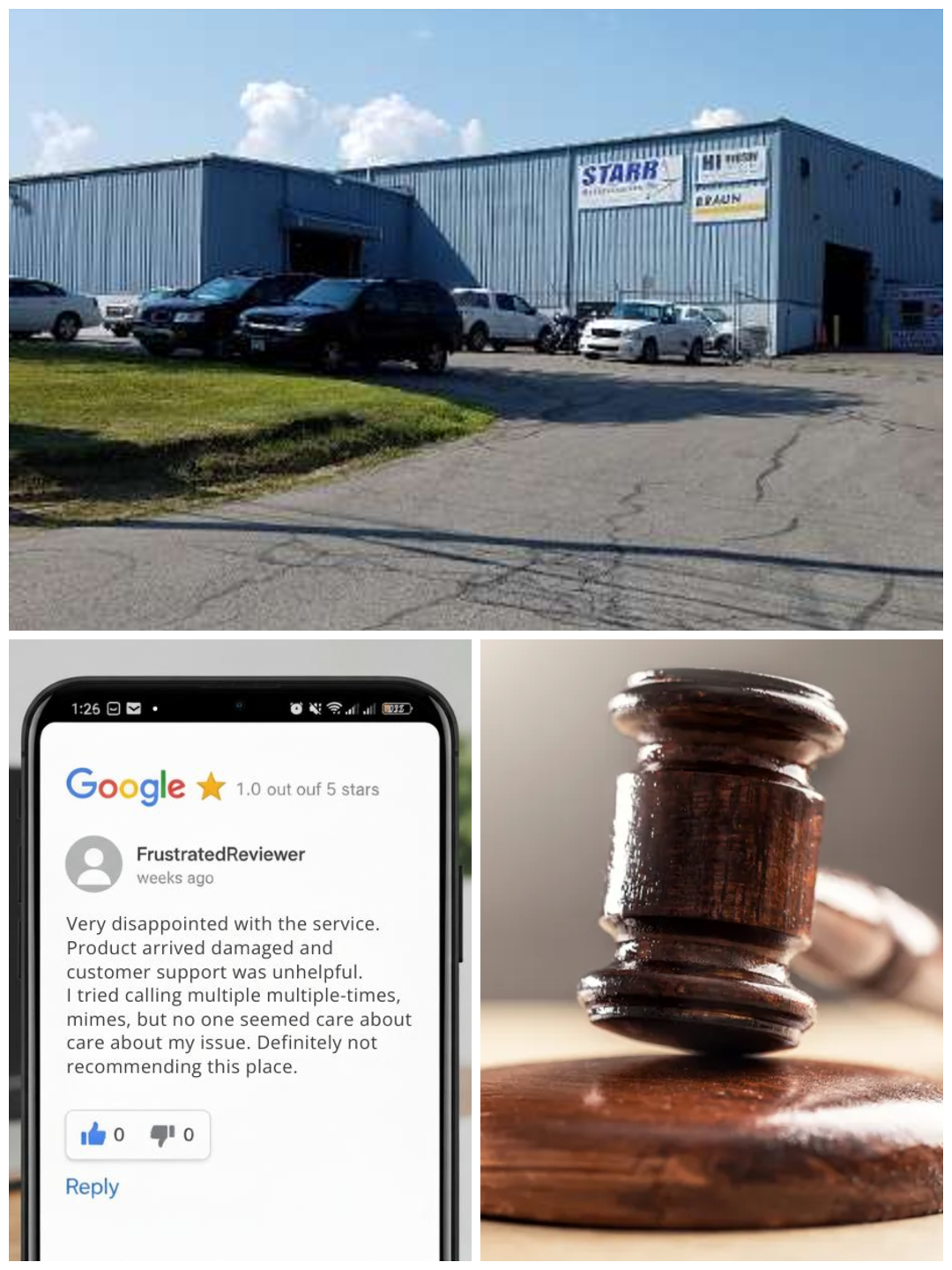
Most people think of a one-star Google review as a small act.
You have a bad experience, open your phone, type a few angry sentences, tap one star and move on.
But an Ohio company says one review posted earlier this year was not an ordinary complaint from an unhappy customer at all.
Starr Manufacturing has filed a defamation lawsuit against Julie Watson over a one-star Google review, seeking more than $25,000 in damages, along with costs and fees.
The lawsuit was filed Aug. 12 in the Trumbull County Court of Common Pleas.
At first glance, the case raises an obvious question: can a business really sue someone simply because she left a negative review?
But Starr Manufacturing says that framing misses the most important part of the dispute.
According to the company’s attorney, Watson was never a customer.
Instead, the company alleges that the review grew out of a personal conflict involving Watson and one of Starr Manufacturing’s employees.
The attorney has characterized it as a “personal vendetta.”
That turns what looks like a routine fight over online criticism into a very different legal question.

The Review Was Posted in March
According to the complaint and local reporting, Watson posted the one-star review on Google in March.
The review did more than simply say she disliked the company or had a poor impression of its service.
Starr Manufacturing alleges that Watson made specific factual claims about the company and its manufacturing practices that were false.
That distinction matters in a defamation case.
People generally have broad freedom to express opinions, including negative ones.
Saying a company was “terrible,” “unprofessional” or “not worth the money” may be treated differently from making a specific factual allegation that can be proven true or false.
Starr Manufacturing’s lawsuit argues that Watson crossed that line.
The company claims her statements were not merely harsh opinions but false assertions presented as facts.
And because they appeared publicly on Google, the business says they were capable of harming its reputation.:max_bytes(150000):strip_icc():focal(999x0:1001x2):format(webp)/judge-gavel-082126-6f37ff7b84bf4e84b4b61e45ddaa9690.jpg)
The Company Says She Never Bought Anything From Them
The most surprising part of the case is Starr Manufacturing’s claim that Watson had no customer relationship with the business at all.
The company’s attorney told local media that Watson “has never been a customer.”
That allegation changes the way the review is being framed.
If Watson had purchased a product, hired the company or directly dealt with its services, the dispute might center on whether her description of that experience was accurate.
Starr Manufacturing says that never happened.
Instead, the company alleges the review was connected to a personal dispute involving Watson and one of its employees.
The attorney described the situation as a “personal vendetta.”
For the company, that alleged motive is central.
Its argument is essentially that Watson used a public business-review platform to attack a company over a conflict unrelated to any actual transaction with that company.
Watson had not publicly responded to those allegations when the initial reports about the lawsuit were published.
The Company Wants More Than $25,000
The complaint seeks damages exceeding $25,000, plus additional costs and attorney-related expenses.
That number has attracted attention because it is so far removed from the tiny action that started the dispute.
One star.
A short online review.
Then a five-figure lawsuit.
But the company is arguing that the potential damage cannot be measured by the amount of time it took to post the review.
Online ratings can influence people who are deciding whether to contact a business, purchase a product or trust a company with a project.
That effect can be especially significant for a business with relatively few reviews.
Local reporting noted that Starr Manufacturing had only about 13 Google reviews when the lawsuit was filed.
In that context, a single one-star rating could have a larger impact on the overall average than it would for a business with thousands of ratings.
The company is alleging that the review damaged its reputation and therefore caused real harm.
Whether it can prove that harm is a separate question for the court.
A Negative Opinion Is Not Automatically Defamation
The lawsuit also highlights an important distinction that is often misunderstood online.
A company filing a defamation suit does not mean every negative review is legally dangerous.
Businesses generally cannot successfully sue someone merely because the person expressed an unfavorable opinion.
Defamation typically requires more.
A plaintiff generally has to show that the defendant made a false statement of fact, that the statement was communicated to others and that it caused legally recognizable harm, among other requirements depending on the jurisdiction and circumstances.
That means the wording of Watson’s review could become crucial.
Did she describe personal opinions?
Did she state specific things as facts?
Were those claims true or false?
And can Starr Manufacturing show that the statements caused measurable damage?
Those are the kinds of questions the lawsuit may ultimately turn on.
For now, the complaint represents the company’s allegations, not a final court finding.
The “Never a Customer” Claim Creates the Real Twist
The case would be relatively ordinary if it were simply about a dissatisfied customer accused of exaggerating a bad experience.
The allegation that Watson never did business with Starr Manufacturing is what makes it unusual.
Google reviews are designed to help people share experiences with businesses.
If the company’s version is accurate, Watson allegedly used that system despite having no customer experience to review.
That could make her statements more difficult to defend if they were written as firsthand factual claims about services she never received.
But the company still bears the burden of proving its allegations.
Watson may dispute the factual basis of the lawsuit, offer context for what she wrote or raise legal defenses.
At the time the story first received attention, her side had not been publicly detailed.
The Review Was One of Only 13
Another detail makes the dispute easier to understand from the company’s perspective.
Starr Manufacturing reportedly had just 13 Google reviews around the time the lawsuit was filed.
For a small or midsize business, online ratings can have an outsized effect.
One negative review can pull down an average quickly.
Potential customers searching the company’s name may see the review before they ever visit its website or speak to an employee.
That does not automatically make a negative review defamatory.
But it helps explain why Starr Manufacturing argues that a false one could cause meaningful damage.
The company is not simply saying its feelings were hurt.
It is claiming its public reputation was harmed in a place where prospective customers could see the allegations.
The Court Will Have to Separate Opinion From Fact
The lawsuit now creates a legal test of what Watson actually wrote and why.
If her statements were clearly framed as opinion, that could matter.
If they were specific factual accusations, Starr Manufacturing will likely try to prove they were false.
The company may also try to show that Watson’s alleged lack of any customer relationship undermines the credibility of statements suggesting firsthand knowledge.
Watson, if she contests the case, could challenge the company’s version of events and its claim of damages.
The court has not yet decided who is right.
That is an important point because the lawsuit itself proves only that Starr Manufacturing has made these allegations — not that Watson has committed defamation.
One Star Has Become a Much Bigger Fight
The case began with something millions of people do every day.
Someone opened Google and left a rating.
But Starr Manufacturing says this was not an ordinary consumer expressing frustration.
It alleges that Julie Watson had never been a customer, made false factual claims and used the review to pursue a personal grievance involving one of its employees.
Now the company wants more than $25,000 in damages.
The legal questions may eventually become complicated.
But the basic mystery is remarkably simple:
Why would someone leave a detailed one-star review of a company that says she never bought anything from it?
That is the question at the center of a lawsuit that has transformed one Google star into a five-figure court battle.