IF LINDSAY CLANCY IS FOUND “NOT GUILTY,” SHE MAY NOT WALK FREE — HERE’S WHAT WOULD HAPPEN NEXT
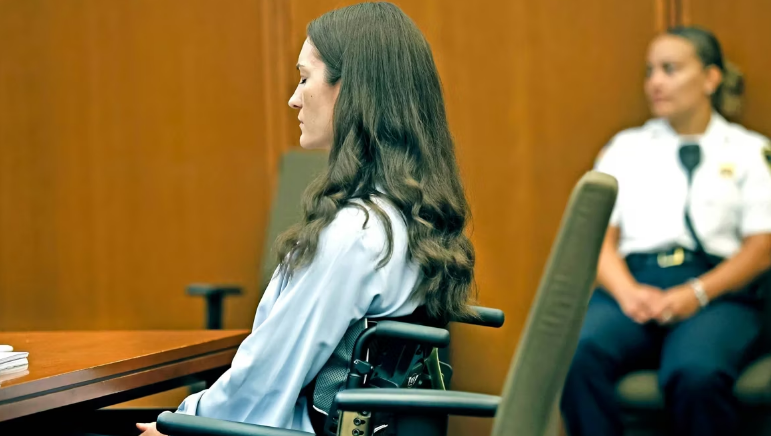
IF LINDSAY CLANCY IS FOUND “NOT GUILTY,” SHE MAY NOT WALK FREE — HERE’S WHAT WOULD HAPPEN NEXT
A verdict in Lindsay Clancy’s favor would not necessarily mean she walks out of court. Her mental-health defense could instead lead to years — or potentially a lifetime — in a secure psychiatric facility.
PLYMOUTH, Mass. — As the murder trial of Lindsay Clancy approaches its final stages, one question has become increasingly important: What happens if the jury finds her not guilty?
The answer is more complicated than many people realize.
Clancy, 36, is charged with three counts of first-degree murder in the January 2023 deaths of her children — 5-year-old Cora, 3-year-old Dawson and 8-month-old Callan.
Her defense does not dispute that she caused the children’s deaths. Instead, attorney Kevin Reddington argues that Clancy was experiencing severe postpartum psychosis and other serious mental-health problems and therefore was not criminally responsible for her actions.
That distinction could determine whether she spends the rest of her life in prison or enters a secure psychiatric system.
 “NOT GUILTY” DOESN’T NECESSARILY MEAN FREED
Under Massachusetts law, a finding that a defendant lacked criminal responsibility because of mental illness does not simply send that person home.
If Clancy receives a verdict of not guilty by reason of lack of criminal responsibility, she would likely be committed to a secure state mental-health facility rather than released into the community.
The process begins with an observation period that can last up to 40 days.
During that period, mental-health professionals would evaluate her condition and make recommendations to the court.
A judge could then order continued hospitalization.
And that commitment can potentially last for years.
 SO HOW LONG COULD SHE REMAIN THERE?
There is no simple number.
A successful insanity defense does not automatically result in a fixed psychiatric sentence.
Instead, continued confinement depends on whether authorities and courts determine that the person remains a danger to the community because of mental illness.
Periodic reviews can take place, meaning that a person found not criminally responsible may eventually seek release — but release is not guaranteed.
As legal experts have emphasized, someone who receives an insanity verdict can remain in a secure psychiatric facility for an indefinite period.
In other words:
Not guilty would not necessarily mean free.
THE JURY IS REALLY DECIDING ONE CRITICAL QUESTION
The central issue at Clancy’s trial is not whether the children died or whether Clancy caused their deaths.
Both sides largely agree on those underlying facts.
The battle is over her mental state at the time.
Her defense says postpartum psychosis, bipolar disorder, medication issues, sleep deprivation and hallucinations left her unable to understand the wrongfulness of what she was doing or control her actions.
Prosecutors argue that Clancy was criminally responsible and deliberately carried out the killings.
They have pointed to evidence they say demonstrates planning and awareness, including her actions before her husband left the house.
THE “VOICE” AT THE CENTER OF THE DEFENSE
One of the most striking elements of the defense has been Clancy’s reported claim that she heard a male voice commanding her to kill her children and herself.
Defense witnesses have testified about hallucinations and delusions that Clancy reportedly experienced.
A hospital chaplain, Sheila Cavanaugh, testified that Clancy told her about hearing a commanding voice.
Forensic psychologist Dr. Paul Zeizel has also testified regarding Clancy’s reported psychiatric symptoms.
But prosecutors have challenged aspects of those accounts and have presented testimony from medical professionals who said they did not observe psychosis in Clancy before the killings.
That disagreement could become crucial when jurors decide whether Clancy was legally responsible for her actions.
WHAT IF THE JURY FINDS HER GUILTY?
If Clancy is convicted of first-degree murder, Massachusetts law requires a sentence of life imprisonment without the possibility of parole.
That means she would remain incarcerated for the rest of her life.
There would be no ordinary parole process that could eventually put her back into the community.
So the two potential outcomes are dramatically different:
GUILTY:
Life in prison without parole.
NOT GUILTY BY REASON OF LACK OF CRIMINAL RESPONSIBILITY:
Commitment to a secure psychiatric facility, with future release dependent on court-supervised evaluations and whether she is considered safe to return to the community.
THERE IS ALSO ANOTHER POSSIBILITY
A jury could theoretically fail to reach a unanimous verdict.
That would result in a hung jury, rather than either a conviction or an acquittal.
In that situation, prosecutors could potentially seek another trial.
So even after weeks of testimony, the case may not necessarily end with a single definitive verdict.
THE TRIAL IS NOW NEARING THE END
The prosecution has already rested its case after calling more than 70 witnesses.
The defense has presented evidence supporting its claim that Clancy suffered from severe postpartum mental illness.
Closing arguments are expected shortly, after which the jury will receive instructions from Judge William Sullivan and begin deliberations.
Outside the courthouse, hundreds of supporters have gathered wearing pink, saying they want to show solidarity with Clancy and raise awareness about severe postpartum mental illness.
Inside the courtroom, however, jurors face a much narrower question.
Not whether the tragedy happened.
Not whether three children died.
But whether Lindsay Clancy was criminally responsible for what happened to them.
THE VERDICT COULD CHANGE EVERYTHING
For the families involved, there is no outcome that can undo the events of January 2023.
But legally, the difference between a guilty verdict and a finding of lack of criminal responsibility is enormous.
One could mean life behind prison walls with no possibility of parole.
The other could mean indefinite confinement in a secure psychiatric hospital, with the possibility of future court-supervised review.
Either way, a “not guilty” verdict based on insanity would not simply mean Lindsay Clancy walks out of the courthouse and goes home.
The jury’s decision will determine which system — prison or psychiatric commitment — ultimately controls the next chapter of her life.