LEGAL EXPERT MAKES STUNNING PREDICTION IN LINDSAY CLANCY TRIAL AS JURY NEARS FINAL DECISION
- ThanhThuy
- August 26, 2026
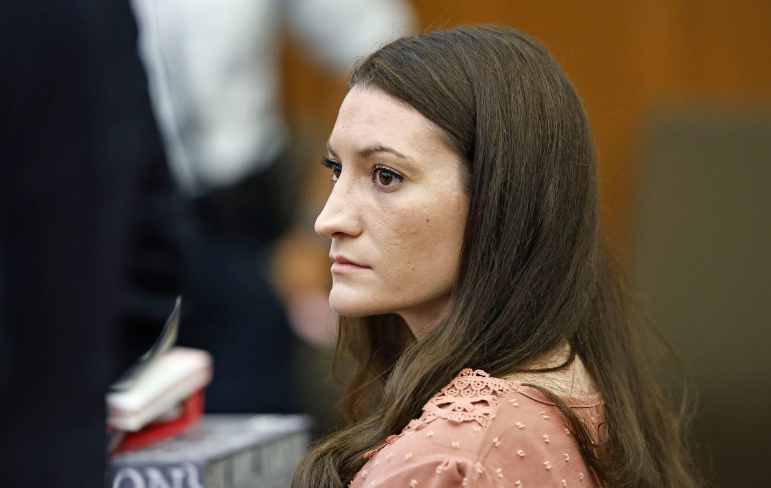
LEGAL EXPERT MAKES STUNNING PREDICTION IN LINDSAY CLANCY TRIAL AS JURY NEARS FINAL DECISION
PLYMOUTH, Mass. — The Lindsay Clancy murder trial is entering its final and potentially decisive stage, with a legal expert predicting that prosecutors could face an uphill battle securing a conviction as both sides prepare to make their final arguments.
Clancy, 36, is charged with killing her three children — 5-year-old Cora, 3-year-old Dawson and 8-month-old Callan — at the family’s Duxbury home in January 2023. She has pleaded not criminally responsible, with her defense arguing that she was suffering from severe postpartum psychosis at the time.
The prosecution maintains that Clancy knew what she was doing and should be held criminally responsible.
:max_bytes(150000):strip_icc():focal(749x0:751x2):format(webp)/lindsay-marie-clancy-012723-2-6be9d7dff9614fe98ad1395daa3bff5b.jpg) LEGAL EXPERT PREDICTS ACQUITTAL OR HUNG JURY
LEGAL EXPERT PREDICTS ACQUITTAL OR HUNG JURY
Former federal prosecutor Neama Rahmani, who is not involved in the case, gave PEOPLE a striking assessment of the trial.
Rahmani said he sees little realistic possibility of a murder conviction, pointing to Massachusetts’ insanity-defense framework and the evidence presented about Clancy’s mental state.
He believes the two most likely outcomes are an acquittal or a hung jury.
The prosecution faces the difficult task of persuading jurors beyond a reasonable doubt that Clancy was not legally insane when the killings occurred.
That makes the psychiatric evidence arguably more important than almost anything else presented during the trial.
THE DEFENSE: A SEVERE PSYCHIATRIC BREAK
Clancy’s attorneys have spent much of the trial building a case around postpartum psychosis.
Defense experts testified that Clancy experienced profound psychiatric symptoms, including delusions and auditory hallucinations.
One of the most important claims concerns a male voice that Clancy said instructed her to harm her children and then herself.
Defense psychiatrist Dr. Phillip Resnick, who has extensive experience evaluating postpartum psychosis, testified that he believed Clancy was experiencing psychosis and was not in control of her actions at the time.
The defense has also emphasized Clancy’s psychiatric history and the medications she had been taking before the January 2023 tragedy.
:max_bytes(150000):strip_icc():focal(749x0:751x2):format(webp)/lindsay-clancy-court-080426-1-0d554916be174019b004a84bdf0e8019.jpg) PROSECUTION EXPERTS ARE NOW PUSHING BACK
PROSECUTION EXPERTS ARE NOW PUSHING BACK
But prosecutors have presented a sharply different interpretation.
Their experts have acknowledged that Clancy suffered from mental-health problems while arguing that she nevertheless understood the nature and wrongfulness of her actions.
Forensic psychologist Kirk Heilbrun testified that Clancy retained awareness and control, while psychiatrist Gregory Saathoff challenged aspects of her account of hearing a voice.
Saathoff also pointed to what he described as inconsistencies in Clancy’s accounts and questioned the timing and characteristics of the alleged hallucinations.
The prosecution’s theory is that Clancy deliberately killed the children before attempting to take her own life because she did not want them to be left behind.
That interpretation directly conflicts with the defense’s claim that psychosis drove her actions.
THE 18-MINUTE WINDOW HAS BECOME A KEY BATTLE
One particularly important issue is the period immediately surrounding the children’s deaths.
Clancy has described hearing the alleged voice during the roughly 18-minute period when the killings occurred.
Prosecutors have challenged the credibility and consistency of that account.
Their experts have suggested that her behavior during that period was more consistent with deliberate decision-making than a complete break from reality.
The defense, however, argues that unusual behavior during an acute psychiatric crisis should not be interpreted as evidence of sanity.
THE SUICIDE ATTEMPT ALSO MATTERS
After the children were killed, Clancy attempted to take her own life by jumping from a second-story window.
She survived but suffered catastrophic injuries and is now paralyzed.
The defense has argued that the suicide attempt provides important evidence about her mental state and supports its claim that she was experiencing a severe psychiatric crisis.
The prosecution has offered a different interpretation, arguing that the sequence of events demonstrates planning rather than eliminating criminal responsibility.
THE TRIAL HAS REACHED ITS FINAL DAYS
Clancy’s defense rested its case on August 21 after calling 10 witnesses to testify about her mental state.
Prosecutors then began presenting rebuttal testimony designed to challenge the defense experts.
As of Tuesday, August 25, prosecutors were still questioning Dr. Saathoff.
The judge indicated that closing arguments could begin Thursday, with the jury potentially beginning deliberations shortly afterward.
That means the courtroom battle over Clancy’s mental state is rapidly approaching its conclusion.
WHAT THE JURY MUST ACTUALLY DECIDE
The case is not simply about whether Clancy caused her children’s deaths.
The defense’s position centers on criminal responsibility.
Jurors must determine whether her psychiatric condition was severe enough under Massachusetts law to relieve her of criminal responsibility.
That leaves them with two competing narratives.
Prosecutors say: Clancy was mentally ill but understood that her actions were wrong and retained control over what she was doing.
The defense says: Clancy was experiencing postpartum psychosis and was operating under delusions and hallucinations that fundamentally impaired her ability to understand or control her actions.
The psychiatric experts on both sides have reached dramatically different conclusions.
AN ACQUITTAL WOULD NOT NECESSARILY MEAN SHE WALKS FREE
One important distinction is that a finding of not guilty by reason of insanity would not necessarily mean Clancy simply walks out of court.
A successful insanity defense can lead to psychiatric commitment and continued evaluation under Massachusetts law.
A hung jury, meanwhile, would mean jurors could not reach the required unanimous decision.
That is the second outcome Rahmani believes is plausible if some jurors remain convinced that Clancy should be held responsible despite the psychiatric evidence.
A CASE THAT HAS BECOME MUCH BIGGER THAN ONE COURTROOM
The trial has generated intense national discussion about postpartum psychosis, psychiatric treatment and the difficult boundary between severe mental illness and criminal responsibility.
It has also attracted significant attention online, where competing theories about Clancy, her husband and the circumstances surrounding the tragedy have spread widely.
But inside the courtroom, jurors have been instructed to focus on the evidence presented at trial.
And now, after weeks of testimony, they are approaching the moment when they must make their decision.
THE FINAL QUESTION
For more than three years, the case has raised one central and deeply difficult question:
Was Lindsay Clancy a mother who knowingly committed three killings, or was she experiencing a psychiatric crisis so severe that she could not be held legally responsible for what she did?
The prosecution and defense have offered radically different answers.
Soon, the jury will have to choose between them.
A conviction could send Clancy to prison for life. A finding that she was not criminally responsible could lead to psychiatric commitment. And if jurors cannot agree, the case could end in a hung jury.
After years of investigation and weeks of emotionally charged testimony, the final decision is now only days away.