LEGAL EXPERT MAKES STUNNING PREDICTION IN LINDSAY CLANCY CASE: “NO REAL POSSIBILITY” OF A GUILTY VERDICT
- ThanhThuy
- August 26, 2026
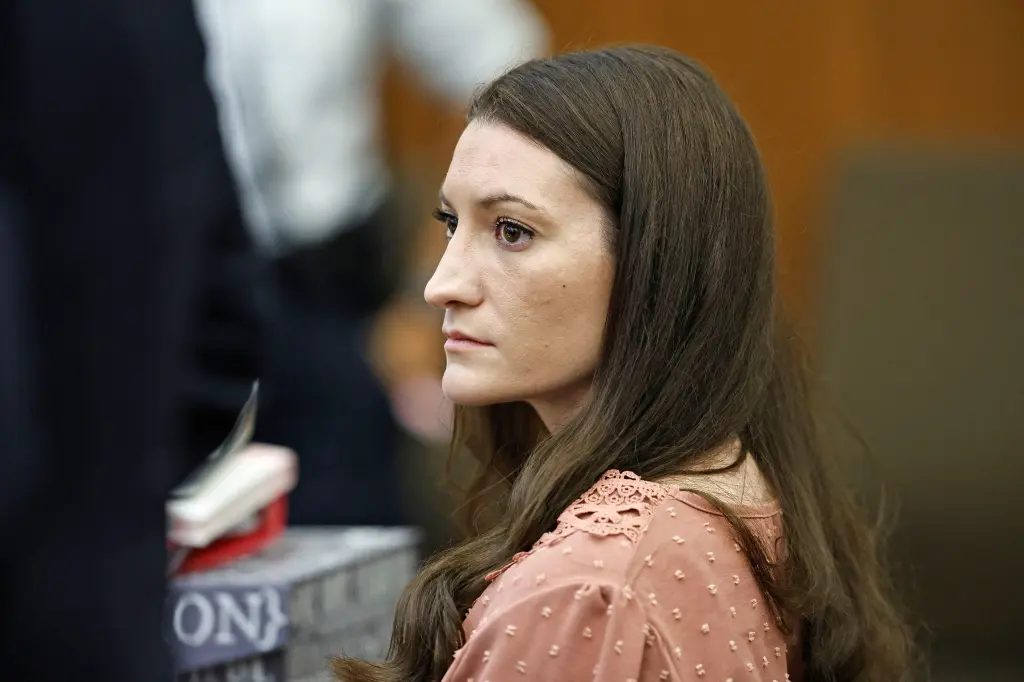
LEGAL EXPERT MAKES STUNNING PREDICTION IN LINDSAY CLANCY CASE: “NO REAL POSSIBILITY” OF A GUILTY VERDICT
PLYMOUTH, Mass. — The Lindsay Clancy trial is nearing its dramatic conclusion, and a former federal prosecutor believes the prosecution faces a major challenge in proving that the Massachusetts mother was criminally responsible for the deaths of her three children.
Clancy, 36, is charged with killing Cora, 5, Dawson, 3, and Callan, 8 months, at the family’s Duxbury home in January 2023. Prosecutors allege that she intentionally strangled the children with exercise bands before attempting to take her own life by jumping from a second-story window. She survived but was left paralyzed from the waist down.
The defense does not dispute that Clancy caused the children’s deaths. Instead, the central question at trial has been whether she was criminally responsible for her actions.
Her attorneys argue that she was experiencing severe postpartum psychosis and was affected by psychiatric medications. Prosecutors contend that she acted intentionally and knowingly and understood what she was doing.
FORMER FEDERAL PROSECUTOR PREDICTS ACQUITTAL OR HUNG JURY
Neama Rahmani, a former federal prosecutor and legal analyst who is not involved in the case, gave PEOPLE an unusually strong assessment.
Rahmani said he does not believe there is a realistic possibility that Massachusetts prosecutors will secure a guilty verdict.
He pointed to the prosecution’s burden under Massachusetts law, saying the Commonwealth must establish criminal responsibility beyond a reasonable doubt. If jurors have reasonable doubt about whether Clancy was legally responsible because of insanity, the defense could prevail.
Rahmani identified two potential outcomes: an acquittal or a hung jury.
That prediction does not mean either result is guaranteed. The jury will make its decision based on the evidence and legal instructions provided by the judge.
:max_bytes(150000):strip_icc():focal(749x0:751x2):format(webp)/lindsay-clancy-court-080426-1-0d554916be174019b004a84bdf0e8019.jpg) THE DEFENSE HAS CENTERED ITS CASE ON POSTPARTUM PSYCHOSIS
THE DEFENSE HAS CENTERED ITS CASE ON POSTPARTUM PSYCHOSIS
Clancy’s attorneys have spent weeks presenting evidence about her mental state before the January 2023 tragedy.
Defense experts have testified that she suffered from severe psychiatric symptoms, including hallucinations and delusional thinking.
One of the most significant elements has been Clancy’s reported account of hearing a male voice instructing her to harm her children and then herself.
Her attorneys have also pointed to her treatment history, changing medications and what they describe as repeated attempts to obtain help before the killings.
The defense argues that these circumstances show she was experiencing a profound psychiatric crisis rather than acting with ordinary criminal intent.
:max_bytes(150000):strip_icc():focal(749x0:751x2):format(webp)/lindsay-clancy-children-080526-99640c7509024a02aa72d8e15d099900.jpg) PROSECUTORS OFFER A COMPLETELY DIFFERENT INTERPRETATION
PROSECUTORS OFFER A COMPLETELY DIFFERENT INTERPRETATION
The prosecution has acknowledged that Clancy experienced significant mental-health problems.
But prosecutors argue that being mentally ill does not automatically eliminate criminal responsibility.
Their experts have challenged the defense’s interpretation of Clancy’s symptoms and have argued that she retained awareness and decision-making ability.
Forensic psychiatrist Dr. Gregory Saathoff recently questioned aspects of Clancy’s account of the alleged voice, including its persistence and characteristics. He also highlighted what he described as inconsistencies in her statements and behavior.
Another prosecution expert, forensic psychologist Dr. Kirk Heilbrun, testified that Clancy had a mental disorder but remained legally responsible for her actions. He also acknowledged that she experienced dissociation during the killings while maintaining that she made choices during the events.
THE FINAL 18 MINUTES HAVE BECOME A CRITICAL BATTLE
A particularly important issue is what happened during the approximately 18-minute period surrounding the killings.
Clancy has described hearing the male voice during this period.
Prosecution experts have questioned whether the reported experience was genuinely a hallucination and have pointed to inconsistencies in her descriptions.
The defense, meanwhile, argues that unusual or contradictory behavior can occur during an acute psychiatric episode and should not automatically be interpreted as evidence of consciousness of wrongdoing.
DIGITAL EVIDENCE HAS ALSO BEEN HEAVILY DEBATED
Earlier in the trial, prosecutors presented searches and digital records that they said demonstrated planning and deliberate behavior.
Among the evidence discussed were searches involving travel times, medications and other online activity.
The defense has argued that prosecutors selectively presented digital evidence while overlooking searches and notes that could support their account of Clancy’s deteriorating mental state.
One phone journal entry discussed depression, difficulty feeling connected to her children and frustration over medication. Another entry described medication as having taken away aspects of her motherhood and life.
That competing interpretation of the digital evidence has become another major fault line in the trial.
HER SUICIDE ATTEMPT COULD BE IMPORTANT
Clancy’s suicide attempt immediately after the children’s deaths is another major piece of evidence.
She reportedly cut herself and then jumped from the second floor, suffering catastrophic injuries.
Rahmani believes that fact could make the insanity defense stronger than it is in many other cases because her apparent suicide attempt happened during the same episode and was followed by extensive medical treatment.
The prosecution, however, interprets the sequence differently and argues that the events demonstrate deliberate action rather than eliminating criminal responsibility.
A HUNG JURY REMAINS A REAL POSSIBILITY
Even if some jurors believe the defense has presented compelling psychiatric evidence, others may reach a different conclusion.
That is why Rahmani considers a hung jury another realistic possibility.
A hung jury would mean the jurors could not reach the required unanimous decision.
The case would therefore end without a final guilty or not-guilty verdict at that stage.
SOCIAL MEDIA HAS CREATED ANOTHER BATTLE OUTSIDE THE COURTROOM
The trial has also generated intense online speculation.
TikTok creators and amateur investigators have circulated theories about the evidence, the medical treatment Clancy received and even allegations involving her former husband, Patrick Clancy.
There is no evidence supporting the online theory that Patrick was responsible for the children’s deaths, and both sides in the criminal case agree that Lindsay Clancy caused the children’s deaths.
Legal experts have warned that viral speculation can distract from the actual issue before the jury: Clancy’s criminal responsibility.
THE JURY NOW FACES THE CENTRAL QUESTION
After weeks of testimony, the case ultimately comes down to one extraordinarily difficult question:
Was Lindsay Clancy legally responsible for what she did?
The prosecution says she was.
The defense says severe postpartum psychosis fundamentally altered her ability to understand reality and control her actions.
The competing expert testimony has given jurors sharply different explanations for the same evidence.
And that is precisely why Rahmani believes the prosecution may struggle to secure a conviction.
THE VERDICT COULD CHANGE EVERYTHING
A conviction would mean the jury rejected Clancy’s claim that she was not criminally responsible.
A finding of not guilty by reason of insanity would have different legal consequences from an ordinary acquittal and could involve psychiatric commitment rather than simply walking out of court.
And if jurors cannot agree, the case could end in a hung jury.
For the families involved, however, no legal outcome can reverse the tragedy that occurred in January 2023.
Now, after more than three years of investigation and weeks of emotionally charged testimony, Lindsay Clancy’s fate is moving toward the jury.
The prosecution says the evidence shows deliberate action. The defense says it shows a devastating psychiatric crisis. And one former federal prosecutor believes that battle may ultimately leave Massachusetts unable to secure a guilty verdict.