Tom Hanks Helped Save Forrest Gump’s Famous Cross-Country Run — Then Decided the Story Should End There
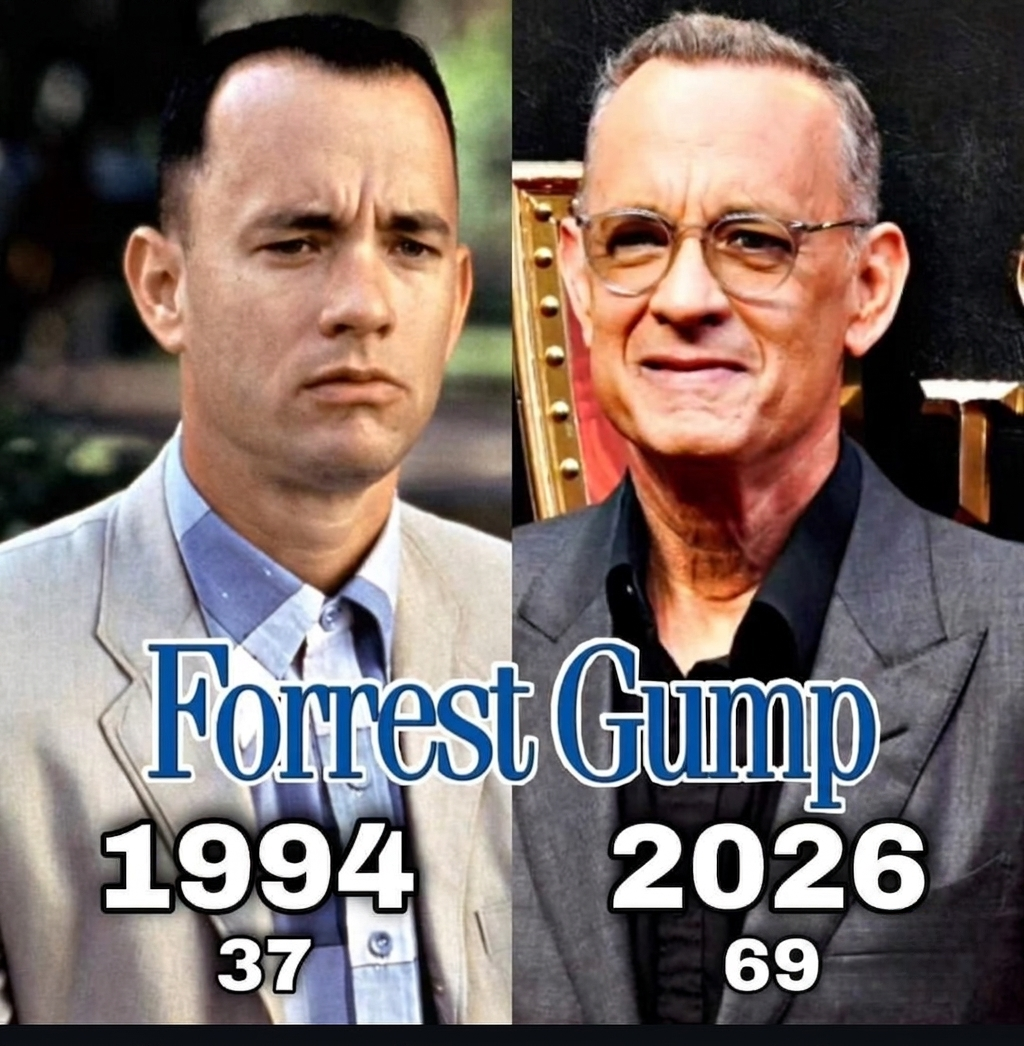
One of the most unforgettable stretches of Forrest Gump almost disappeared before audiences ever saw it.
In the 1994 film, Forrest suddenly begins running. At first, there is no grand mission. He simply runs to the end of the road, then farther, then across town. Eventually, his journey carries him back and forth across the United States, attracting reporters, followers and strangers searching for meaning in something Forrest himself cannot fully explain.
The sequence became one of the movie’s defining images.
But according to Tom Hanks, Paramount Pictures initially balked at the cost of filming it. Director Robert Zemeckis believed the material was too important to lose, so he proposed an unusual solution: he and Hanks would help pay for it themselves.
Years later, after Forrest Gump became a box-office phenomenon and one of the most decorated films of its era, Hollywood had an obvious question.
Why not do it again?
This time, Hanks ultimately chose restraint.
Paramount Didn’t Want to Pay for the Run
Making Forrest Gump was an ambitious undertaking.
The film followed Forrest through decades of American history, combining drama, comedy, romance, war scenes and sophisticated visual effects that placed Hanks’ character alongside historical figures.
Box Office Mojo lists the production budget at approximately $55 million.
Eventually, however, the filmmakers encountered financial resistance.
Hanks recalled the dispute during a 2020 interview with Graham Bensinger. Paramount considered the cross-country running sequence too expensive, while Zemeckis argued that it was essential to the movie.
When the studio would not provide the additional money, Zemeckis approached his star with a proposal.
He and Hanks would split the expense themselves.
In exchange for taking on the financial risk, they negotiated for a larger participation in the movie’s profits. Hanks remembered Zemeckis explaining that they would effectively return the needed money to Paramount but would expect a better share of the upside if the movie succeeded.
It was not the only time the pair personally assumed production risk. Hanks also recalled that when weather conditions created insurance problems for another part of the shoot, he and Zemeckis agreed to cover that risk themselves.
Those decisions look remarkably different in hindsight.

The Gamble Paid Off
Forrest Gump opened in the United States on July 6, 1994.
What followed exceeded almost any reasonable expectation.
Across its releases, the film has earned roughly $678 million worldwide, according to Box Office Mojo.
The awards were just as impressive.
At the 67th Academy Awards, Forrest Gump received 13 nominations and won six Oscars, including Best Picture. Hanks won Best Actor, Zemeckis won Best Director, and screenwriter Eric Roth received the award for adapted screenplay. The film also won for editing and visual effects.
For Hanks, the victory was particularly historic. It was his second consecutive Best Actor Oscar following his win for Philadelphia, making him the first performer since Spencer Tracy to win the category in back-to-back years.
And the running sequence that had once been considered too expensive became inseparable from the movie.
Forrest’s journey works partly because it changes scale without changing the character. What begins as one man running away from emotional pain becomes a national spectacle. People follow him. Reporters demand explanations. Strangers assume he must possess some profound secret.
Forrest keeps running.
That simplicity is exactly what would make extending his story so tempting.

A Sequel Was More Than Just a Rumor
There was material available for another movie.
Winston Groom, whose 1986 novel inspired Forrest Gump, published a sequel, Gump & Co., in 1995.
Eric Roth eventually wrote a screenplay for a second film as well. It would have carried Forrest into more recent American history, using a structure similar to the original movie.
Roth later revealed that his script placed Forrest around major events and celebrities of the 1990s. Among the ideas were an encounter connected to O.J. Simpson’s famous Bronco chase and a sequence involving Princess Diana.
More importantly, the screenplay incorporated the 1995 Oklahoma City bombing into its emotional climax.
Then came an extraordinary coincidence.
Roth completed and submitted his draft on September 10, 2001.
The next morning, the United States changed.

September 11 Changed the Conversation
After the September 11 attacks, Roth, Hanks and Zemeckis met.
Suddenly, a movie built around playfully inserting Forrest into recent American history no longer felt like the same proposition.
Roth later recalled that the three men looked at one another and concluded that the planned movie no longer carried the meaning it had possessed only a day earlier.
“The world had changed,” Roth said when discussing why the project stopped moving forward.
The sequel was shelved.
That history also makes Hanks’ later description of sequel discussions particularly revealing.
Speaking on the Happy Sad Confused podcast in 2022, he said an attempt to seriously discuss another Forrest Gump lasted only about 40 minutes before those involved effectively decided not to continue.
Hanks explained that he had deliberately avoided contracts forcing him to return for sequels. His position was simple: if there was a genuine creative reason to continue a story, he would consider it. Commercial success alone was not enough.
That philosophy mattered with Forrest Gump, because commercially, almost every incentive pointed toward another movie.
Creatively, Hanks remained unconvinced.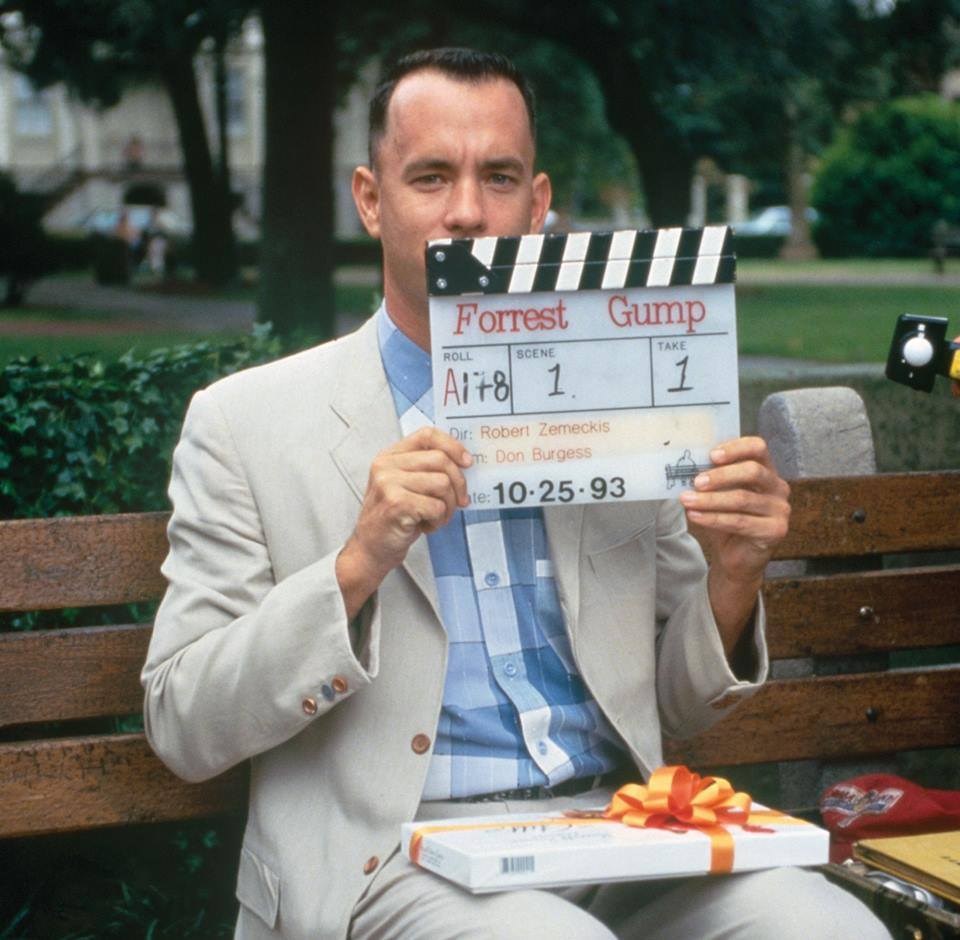
Hanks Eventually Became Grateful There Was Only One
By 2024, Hanks sounded not merely comfortable with the decision but thankful.
Discussing the film decades after its release, he described Forrest Gump as something that could stand completely on its own.
His explanation was characteristically simple: “Why put a hat on a hat?”
He also said he continued receiving messages from families who had made watching Forrest Gump a tradition, sometimes returning to it year after year.
That longevity helps explain why the unfinished sequel feels less like a missing chapter today.
The first movie already gave Forrest an enormous life. He survived war, lost people he loved, built an unexpected fortune, traveled across America and became a father. More importantly, the story found an ending that brought his extraordinary journey back to something intimate and ordinary.
There is an intriguing symmetry in Hanks’ relationship with the film.
During production, he was willing to risk his own money because he and Zemeckis believed something important was missing without that running sequence.
After the movie became a phenomenon, he resisted the far easier decision: making more simply because audiences would probably watch it.
One choice helped give Forrest Gump one of its most famous sequences.
The other helped make sure there would only ever be one Forrest Gump.