LINDSEY CLANCY’S LAWYER CALLS HER A “DARN GOOD MOTHER” AS JURY WEIGHS FATE OVER DEATHS OF 3 CHILDREN
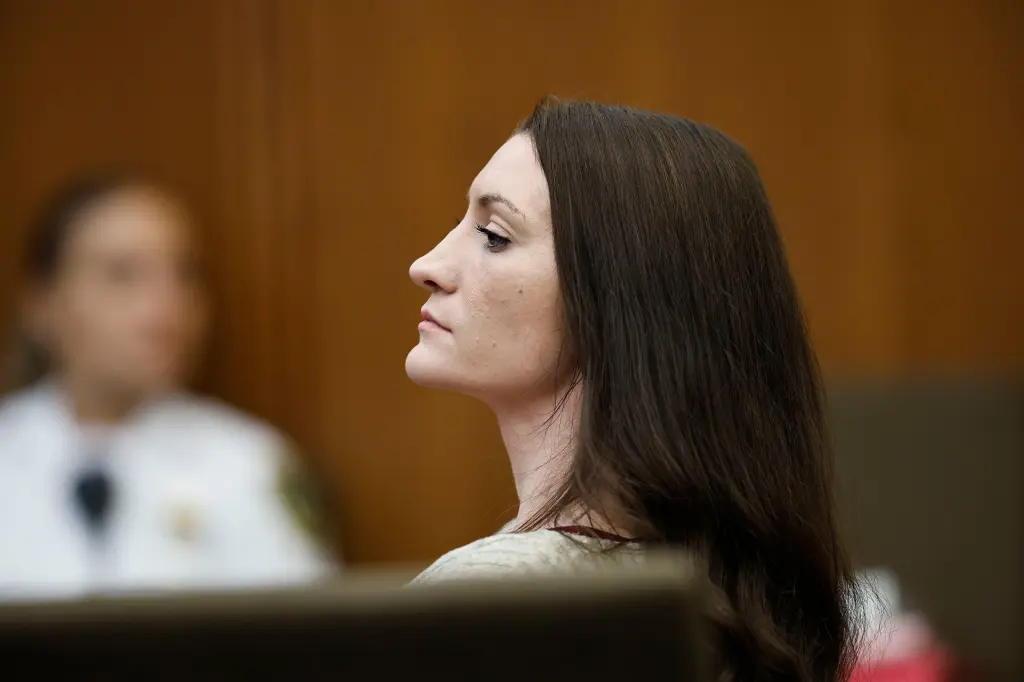
LINDSEY CLANCY’S LAWYER CALLS HER A “DARN GOOD MOTHER” AS JURY WEIGHS FATE OVER DEATHS OF 3 CHILDREN
PLYMOUTH, Mass. — After more than four weeks of emotionally charged testimony, the fate of Lindsay Clancy is now in the hands of a Massachusetts jury.
Clancy’s defense attorney, Kevin Reddington, used his closing argument Thursday to portray his client as a loving mother whose mental health deteriorated into a devastating psychiatric crisis — insisting that she was suffering from severe postpartum psychosis when she killed her three young children.
Prosecutors offered the jury a dramatically different explanation.
They argued that Clancy was depressed and struggling, but remained capable of understanding that what she was doing was wrong — and that her actions before the killings demonstrated planning and deliberate decision-making.
 “SHE WAS A DARN GOOD MOTHER”
Reddington opened his final appeal by reminding jurors of the woman Clancy had been before the tragedy.
He presented images of Clancy with her family alongside photographs showing her severely injured after her suicide attempt.
The defense attorney repeatedly emphasized Clancy’s relationship with her children, arguing that she had spent years devoted to them and had repeatedly sought help as her mental health deteriorated.
At one point, he described her as a “darn good mother” and argued that the prosecution was unfairly reducing a complex psychiatric crisis to a calculated murder case.
Reddington also pointed to Clancy’s suicide attempt after the killings.
She cut herself and jumped from a second-story window, suffering injuries that left her paralyzed from the waist down.
The defense argued that the severity of that attempt demonstrated that Clancy genuinely intended to die rather than staging an attempt to avoid responsibility.
 THE DEFENSE BLAMES A FAILING MEDICAL SYSTEM
Throughout the trial, Clancy’s attorneys have argued that her psychiatric condition was worsened by medication and inadequate medical care.
Reddington told jurors that Clancy had repeatedly tried to get help.
She researched postpartum depression, contacted a suicide hotline, saw multiple medical providers and voluntarily entered a psychiatric hospital.
His central question to jurors was essentially this:
If Clancy was deliberately planning to kill her children, why was she repeatedly reaching out for help?
The defense argues that those efforts are evidence of a woman desperately struggling with an illness rather than someone calmly planning a crime.
PROSECUTORS SAY IT WAS A CHOICE
Assistant District Attorney Jennifer Sprague presented a starkly different picture.
She acknowledged that Clancy was experiencing serious mental-health problems but argued that mental illness does not automatically eliminate criminal responsibility.
According to prosecutors, Clancy’s behavior showed that she understood her actions and was capable of making decisions.
Sprague pointed to events before the killings, including Clancy sending her husband, Patrick Clancy, out of the house to pick up food and medication.
Prosecutors argued that Clancy even calculated how long the trip would take, giving her enough time to carry out the killings without interruption.
The prosecution also argued that Clancy had previously concealed troubling thoughts about harming her children from mental-health providers because she feared being separated from them.
To prosecutors, that demonstrated that she understood those thoughts were wrong.
THREE CHILDREN AT THE CENTER OF THE CASE
Clancy is accused of killing her children at the family’s home in Duxbury, Massachusetts, on Jan. 24, 2023.
The children were:
- Cora Clancy, 5
- Dawson Clancy, 3
- Callan Clancy, 8 months
Clancy does not deny that she killed the children.
Instead, her defense is based on lack of criminal responsibility, arguing that severe mental illness prevented her from understanding the wrongfulness of her actions.
That distinction is now at the heart of the case.
WHAT THE JURY MUST DECIDE
Jurors are not simply being asked whether Clancy killed her children.
They must determine whether she was criminally responsible when the killings occurred.
Under Massachusetts law, a defendant may be found not criminally responsible if a mental disease or defect left them unable to appreciate the criminality or wrongfulness of their conduct or unable to conform their behavior to the law.
The jury can also consider lesser charges, including second-degree murder and manslaughter.
If convicted of murder, Clancy faces life in prison without parole.
If found not criminally responsible, she could instead be committed to a state mental-health facility.
THE JURY HAS BEGUN DELIBERATING
After the closing arguments, Judge William Sullivan instructed the jury before sending them to deliberate.
The panel consists of nine women and three men.
The jurors deliberated for several hours Thursday but did not reach a verdict. They were dismissed for the evening and are expected to resume deliberations Friday.
Clancy did not testify during the trial.
Her attorney told reporters afterward that she was “nervous” and “scared” as she waited for the jury’s decision.
A CASE THAT HAS DIVIDED THE PUBLIC
The trial has become much larger than one family’s tragedy.
It has triggered a national conversation about postpartum psychosis, maternal mental health, psychiatric treatment and the limits of criminal responsibility.
The prosecution insists the case is not a referendum on America’s mental-health system.
The defense insists that the system failed a mother who repeatedly asked for help.
Now, after weeks of testimony and deeply conflicting expert opinions, twelve jurors must decide which account is supported by the evidence.
Was Lindsay Clancy a mother experiencing a catastrophic psychiatric break that robbed her of criminal responsibility — or a woman who, despite her mental-health struggles, understood exactly what she was doing?
That question is now in the jury’s hands.
And for the families of Cora, Dawson and Callan, the decision will mark another painful chapter in a tragedy that began more than three years ago.