People Have Watched the Opening of ‘Grease’ Since 1978. Stockard Channing Says One Detail Is Her ‘Nightmare Vision’
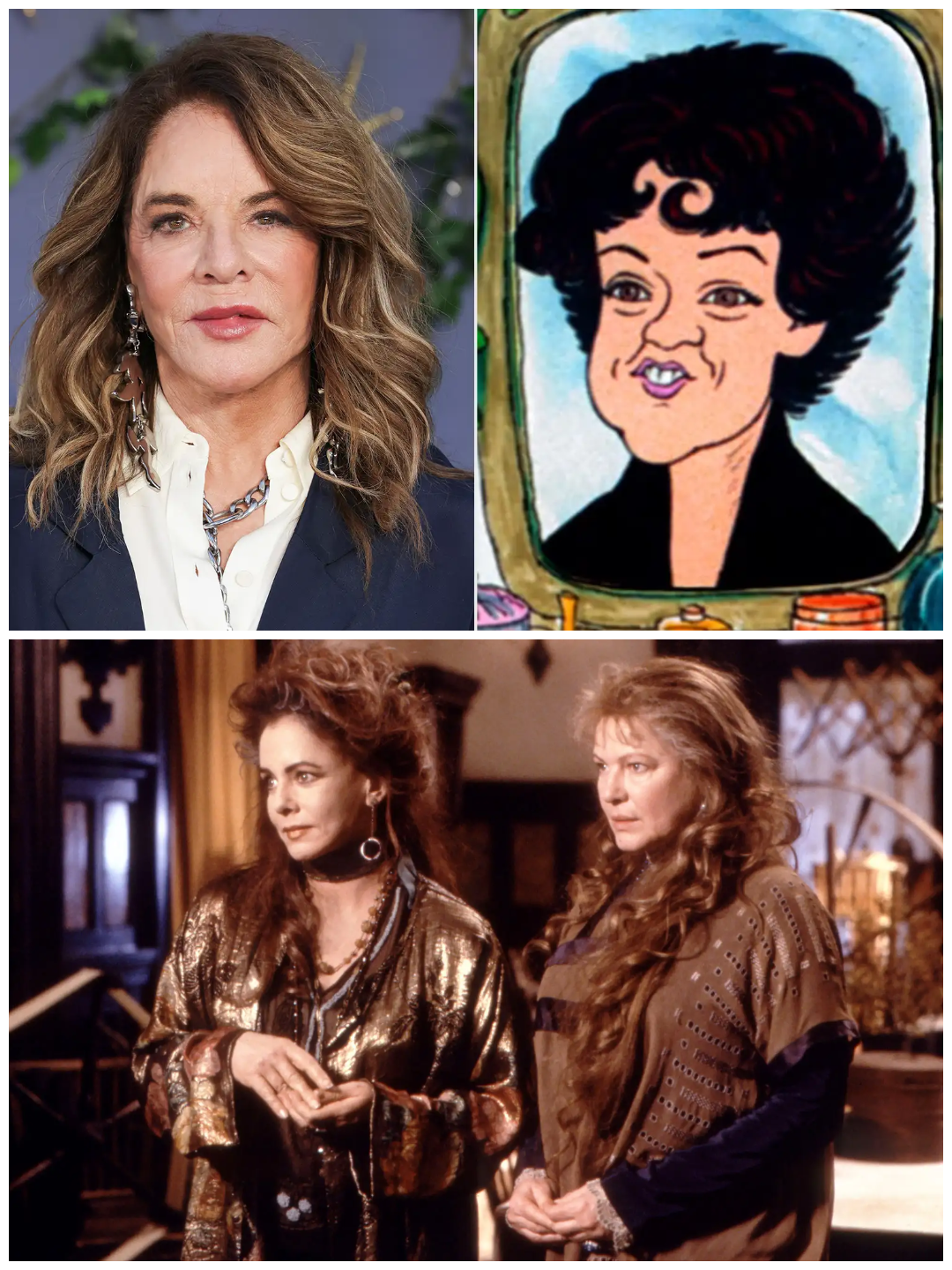
For nearly half a century, the opening minutes of Grease have been instantly recognizable.
Before John Travolta’s Danny Zuko and Olivia Newton-John’s Sandy Olsson arrive at Rydell High, the 1978 musical introduces its world through a colorful animated credit sequence. Familiar faces from the movie appear as exaggerated cartoon versions of themselves, setting up the playful, larger-than-life tone that continues once the live-action story begins.
Millions of viewers have watched those drawings without giving them much thought.
Stockard Channing has.
And there is one particular detail in the cartoon version of Betty Rizzo that has apparently bothered her for decades.
During a recent interview while promoting Practical Magic 2, Channing was confronted with the old image again. Her reaction was immediate.
The actress specifically pointed to her cheeks.
Then, after getting another good look at the caricature, she decided it was actually worse than she remembered.
The moment turned a familiar piece of Grease history into something surprisingly personal: an image audiences have been seeing since 1978 looks very different through the eyes of the woman it was supposed to represent.
Channing Thought the Cartoon Had Done Her No Favors
Channing played Betty Rizzo, the sharp-tongued leader of the Pink Ladies and one of the most memorable characters in Grease.
Rizzo was sarcastic, confident and considerably more complicated than the tough persona she presented to the students around her. While Danny and Sandy were the movie’s central romance, Channing’s performance helped give Grease some of its most emotionally grounded moments.
But the animated Rizzo who appears during the opening credits has never inspired the same affection from the actress.
During an Entertainment Tonight interview, Channing was asked about viewers who felt the cartoon had not exactly treated her kindly.
She agreed.
Before the image was even placed in front of her, Channing knew the feature that bothered her: “my cheeks.”
Then she looked at the drawing again.
Her verdict became even harsher.
“That’s even worse than I remember,” she said.
It is easy to understand why the moment caught attention.
Caricatures are supposed to exaggerate recognizable features. That is part of the joke. Every major character in the animated opening receives an intentionally heightened cartoon treatment.
But seeing an exaggerated version of yourself is different from seeing somebody else’s.
And Channing has had almost 50 years to remember hers.:max_bytes(150000):strip_icc():format(webp)/stockard-channing-2026-grease-cartoon-credits-082626-bbf56f0fdb9940ecb7d8cb652a870c9b.jpg)
She Called It Her ‘Nightmare Vision of Self’
Channing’s dislike of the image becomes even funnier — and perhaps more understandable — when considering how rarely she has actually watched Grease.
Despite appearing in one of the most replayed movie musicals ever made, Channing said she has only watched the complete film about twice.
The first time came at the movie’s original opening at Grauman’s Chinese Theatre in Hollywood.
That meant one of Channing’s earliest experiences watching the finished film also included seeing that animated version of herself projected on a theater screen.
Her description of the cartoon all these decades later was unforgettable.
She called it her “nightmare vision of self.”
Channing said the second time she watched Grease came roughly 20 years later, again at Grauman’s Chinese Theatre — the famous Hollywood venue now known as TCL Chinese Theatre.
For a movie that has remained part of popular culture since the late 1970s, twice is an astonishingly small number.
Many devoted Grease fans have probably watched the movie more times in a single year than one of its biggest stars has watched it in her entire life.
That Doesn’t Mean She Regrets ‘Grease’
Channing’s refusal to regularly revisit the movie should not be confused with embarrassment over having made it.
She has been clear that she remains proud of Grease.
She simply does not particularly enjoy sitting down and watching herself in it.
When the movie appears on television, Channing generally leaves it alone.
“I’m very proud of it, but I don’t watch it,” she explained.
That distinction matters.
For viewers, Grease can be pure nostalgia — songs, costumes, summer romance and characters they have known for decades.
For an actor, watching the movie can mean something completely different.
Instead of simply seeing Rizzo, Channing may see herself at another point in her career, choices she made in individual scenes, memories from production and, apparently, one especially unfortunate cartoon.:max_bytes(150000):strip_icc():format(webp)/grease-cast-1-062326-10af967950104b7798a67b1e96b013a5.jpg)
Dianne Wiest Couldn’t Believe the Drawing Either
Channing was not alone during the recent interview.
Dianne Wiest, her Practical Magic 2 costar, was also there when the Rizzo caricature came up.
Wiest’s reaction made the moment even better.
After seeing the cartoon, she questioned how anyone could have drawn Channing that way and jokingly suggested that her costar use a little Practical Magic on whoever was responsible.
Channing played along, pretending to cast a quick spell.
The exchange connected two completely different chapters of her career.
Nearly five decades after Grease, Channing is back in the spotlight because of another film with a powerful nostalgia following.
She and Wiest are returning as Franny and Jet Owens in Practical Magic 2, alongside Sandra Bullock and Nicole Kidman. Channing also appeared at the sequel’s European premiere in London on August 26, marking her first red carpet appearance in two years.:max_bytes(150000):strip_icc():format(webp)/practical-magic-Dianne-Wiest-Stockard-Channing-071125-fc852d1b28864686871c5b1e3c287506.jpg)
Once You Notice It, the Opening Looks Different
That may be why Channing’s comment about the Grease cartoon works so well as a piece of movie trivia.
It is not some forgotten deleted scene or complicated production secret.
The evidence has been sitting right there at the beginning of the movie since 1978.
Anyone who owns Grease, streams it or catches it on television can look at the animated Rizzo for themselves.
Now they also know exactly where to look.
Those exaggerated cheeks might have seemed like just another part of the opening’s cartoon style for decades.
To Stockard Channing, they were something else entirely.
Millions of people saw Rizzo.
She saw her “nightmare vision of self.”
And after nearly 50 years, looking at it again did not make her feel any better.