Jamie Foxx Secretly Added 4 Inches to His Boots for ‘Django Unchained.’ He Just Explained Why
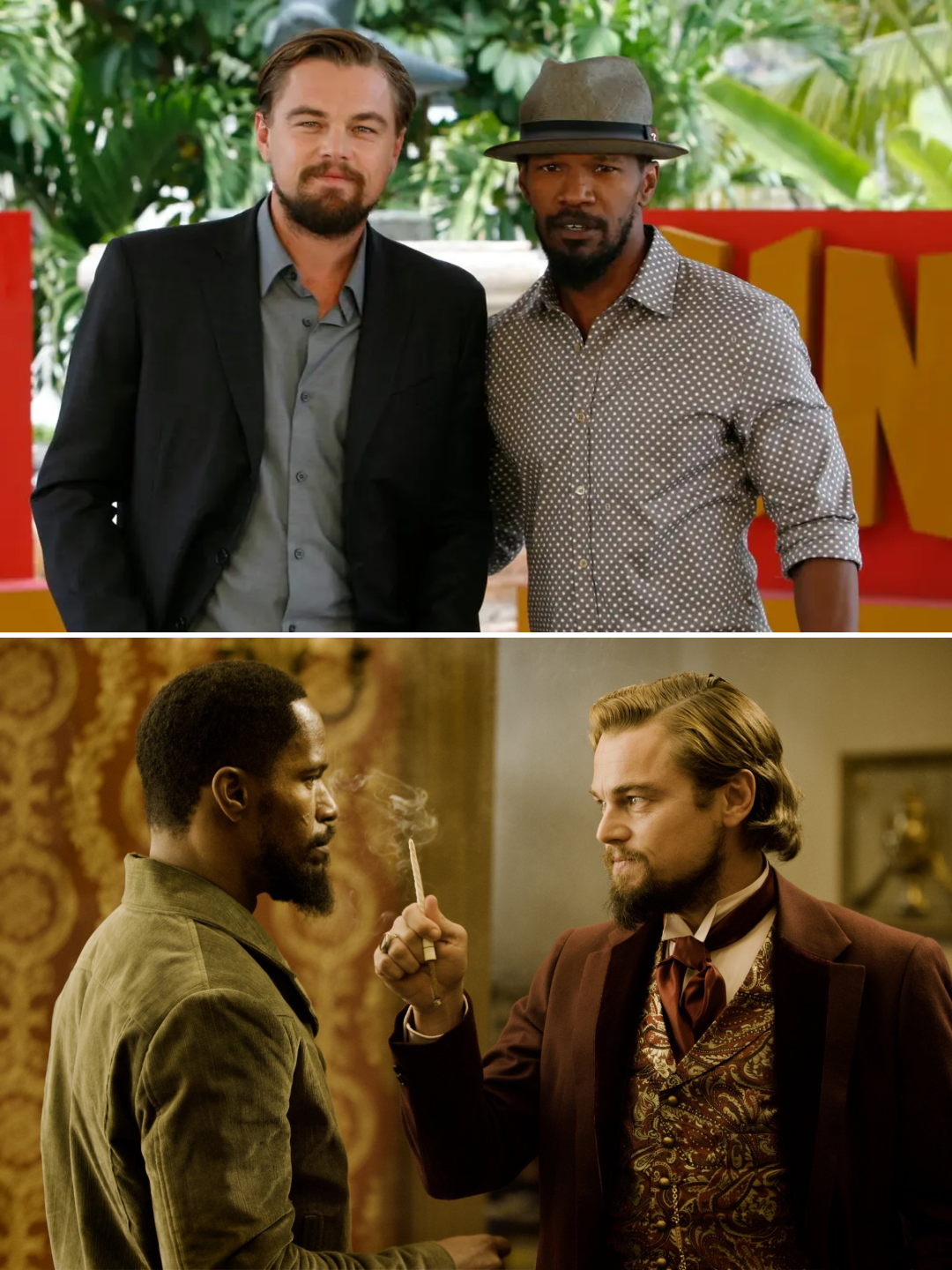
Jamie Foxx had already spent weeks making Django Unchained when Leonardo DiCaprio arrived and changed the physical equation of the movie.
Foxx was playing Django, a formerly enslaved man who gradually transforms into a confident bounty hunter determined to rescue his wife.
DiCaprio was playing Calvin Candie, the wealthy, sadistic plantation owner standing in his way.
On the page, their confrontation was about power.
During rehearsal, Foxx realized it was going to look like power too.
DiCaprio was taller. He was physically intense. He would move close to Foxx during confrontational scenes, sometimes with smoke hanging between their faces as Candie challenged Django.
Foxx looked at the situation and decided something had to change.
So he went to the wardrobe department with a very specific request.
He wanted approximately four extra inches added to his boots.
The audience was never supposed to notice.
The point was simply to make sure that when Django finally stood opposite Calvin Candie, Foxx did not look physically overwhelmed by the man in front of him.
More than a decade after the movie’s release, Foxx has now explained the hidden costume trick himself.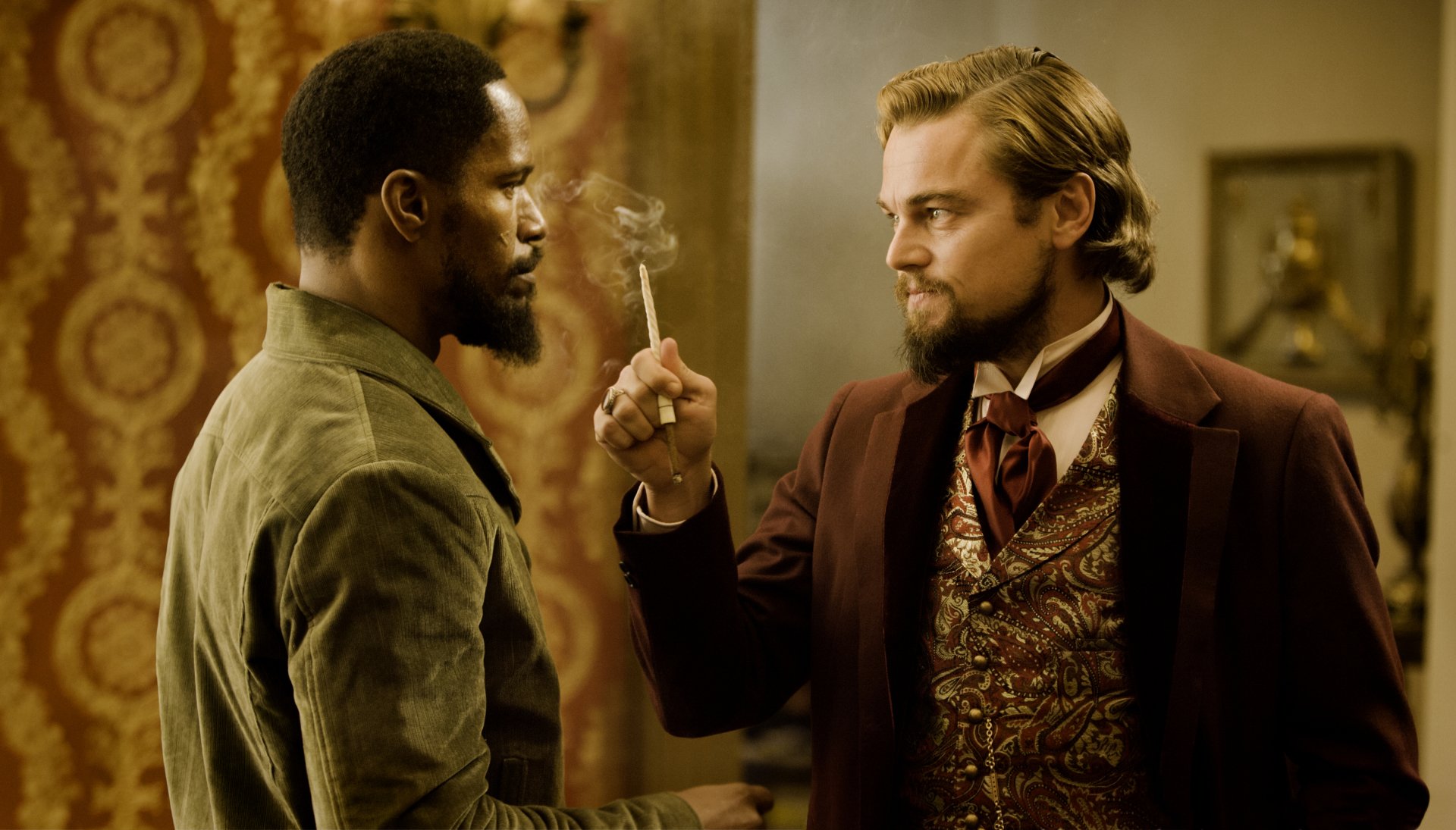
DiCaprio’s Arrival Changed the Atmosphere
Foxx discussed the experience on the Aug. 25 episode of Baby, This Is Keke Palmer, looking back at what happened when DiCaprio joined the production.
Before their major scenes together, Foxx had spent much of his time working with Christoph Waltz.
Waltz played Dr. King Schultz, the German bounty hunter who frees Django and eventually helps him search for his wife, Broomhilda.
Their relationship drives much of the movie’s first half.
Schultz teaches Django how to become a bounty hunter, while Django gradually develops the confidence and skills that will carry him into the dangerous world of Candyland.
Then DiCaprio entered the story.
Foxx remembered being immediately struck by the actor’s presence.
Calvin Candie was not supposed to feel like just another villain.
He owned the world Django was entering.
He had wealth, servants, armed men and complete confidence in his ability to control everyone around him.
DiCaprio brought that dominance into the physical performance.
During rehearsals, Foxx noticed how close he would get.
Candie could be right in Django’s face.
DiCaprio’s height made the effect even stronger.
Foxx realized that, visually, he was giving away more ground than he wanted.
Foxx Didn’t Want Django Looking Up at Candie
That concern went beyond ordinary actor vanity.
Foxx was thinking about what the audience would see.
A confrontation can change depending on where two actors stand in relation to one another.
If one person towers over the other, the image itself can communicate dominance before either character says a word.
Django had already traveled too far for Foxx to let that happen casually.
By the time he reaches Candyland, Django is no longer the vulnerable man introduced at the beginning of the movie.
His clothes have changed.
His posture has changed.
His confidence has changed.
He is still entering Candie’s territory, but he is doing it with a plan.
Foxx wanted that transformation to remain visible when he stood opposite DiCaprio.
So he asked wardrobe to modify his boots.
Approximately four inches were added.
Suddenly, the physical gap between the actors became much smaller.
Django could stand closer to Candie’s eye level.
Foxx had changed the confrontation without changing a single line.
The Trick Was Hidden in Plain Sight
That is what makes the story so fun to revisit now.
Millions of people watched Django Unchained without having any reason to study Jamie Foxx’s footwear.
The boots looked like part of the costume.
That was exactly how the trick was supposed to work.
Costume departments often make adjustments audiences never consciously notice.
Clothes can alter an actor’s silhouette, posture or movement.
Shoes can change height.
Small modifications can influence how two characters look when photographed together.
Foxx’s four-inch adjustment was especially clever because it responded directly to another performer.
DiCaprio had created a powerful physical version of Candie.
Foxx found a way to make sure Django could meet that energy inside the frame.
The extra height did not need to announce itself.
Viewers only needed to feel the result.
DiCaprio Made Candie Physically Uncomfortable
DiCaprio’s Calvin Candie remains one of the most memorable villains of his career partly because the performance is so invasive.
Candie does not merely speak to people.
He presses into their space.
He leans forward.
He stares.
He uses silence and proximity as forms of intimidation.
Foxx recalled situations in which DiCaprio would be close enough during confrontations that smoke could drift between them.
That created a striking visual.
But it also made Foxx think about whether Django looked powerful enough to withstand it.
Rather than asking DiCaprio to reduce the intensity, Foxx changed himself.
The boots allowed him to keep more visual equality between the characters while DiCaprio continued playing Candie at full force.
It is a small example of how actors can quietly adjust around one another.
What works during a solo rehearsal may look completely different once two performers finally stand face-to-face.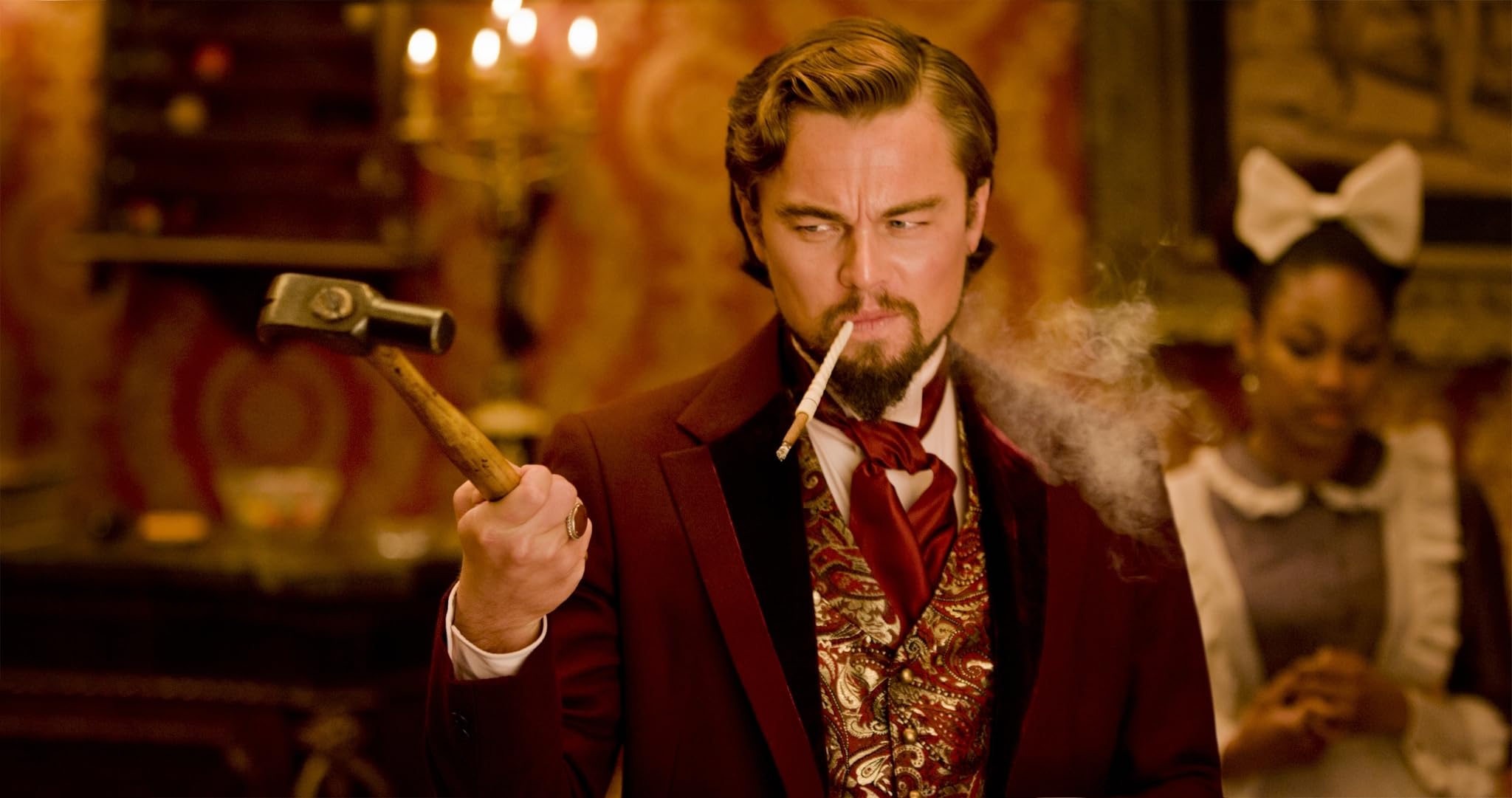
Foxx Was Open About Feeling He Couldn’t Compete With the Original Look
The most revealing part of Foxx’s story is that he did not pretend the height difference meant nothing.
He saw what DiCaprio was bringing into the room and reacted.
In the original physical arrangement, Foxx felt that he could not compete with DiCaprio’s presence in the way he wanted.
So he solved the problem practically.
Four inches.
Into the boots.
That kind of decision is easy for audiences to miss because viewers tend to think of acting mainly in terms of dialogue and emotion.
But screen performance is also about shape.
Where is the actor standing?
Who is looking up?
Who is leaning forward?
Who controls the space between them?
Foxx recognized that all of those things mattered in a movie so obsessed with power.
Samuel L. Jackson Created a Different Kind of Threat
During the same conversation, Foxx also praised Samuel L. Jackson’s performance as Stephen.
Stephen initially appears to be an elderly servant loyal to Candie.
But he quickly reveals himself as one of the smartest and most dangerous people at Candyland.
He watches Django carefully.
He notices inconsistencies.
And he becomes suspicious long before many of the other characters understand what Django and Schultz are actually doing.
Foxx’s admiration for Jackson fits neatly with the story about the boots.
Both examples show how much Django Unchained depends on the way characters project power.
DiCaprio’s Candie uses wealth and physical dominance.
Jackson’s Stephen uses intelligence and observation.
Foxx’s Django increasingly relies on confidence, control and presence.
Even something as small as an extra few inches in a pair of boots becomes part of that battle.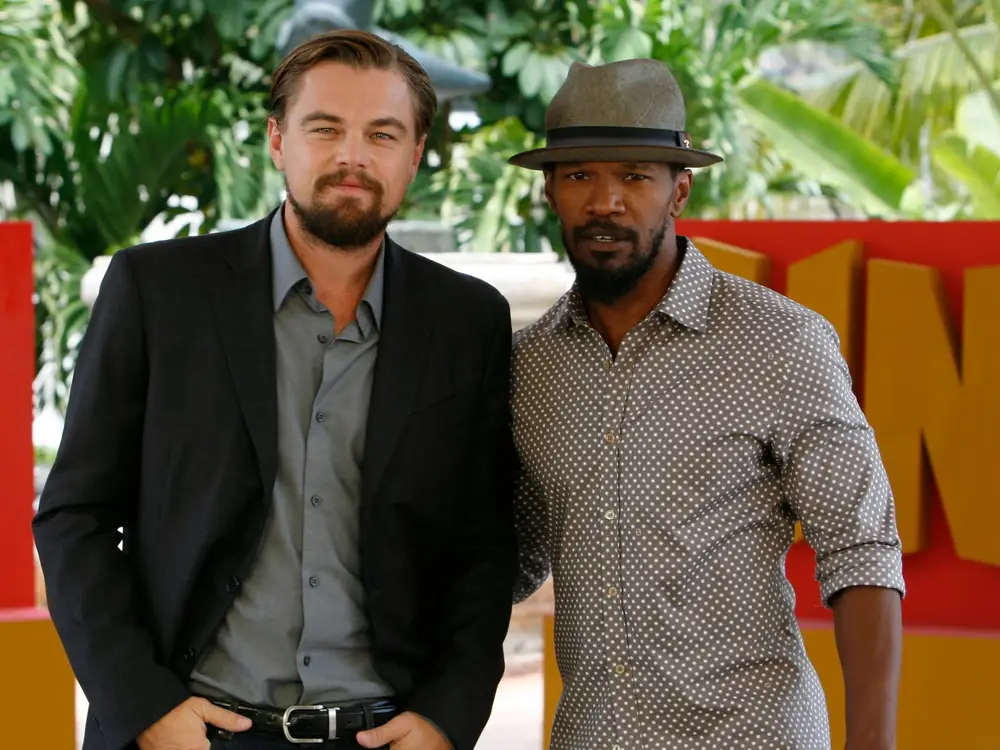
A Costume Secret Viewers Had No Reason to Catch
When Django Unchained was released in 2012, audiences focused on the performances, the violence, Tarantino’s dialogue and the explosive conflict at Candyland.
Almost nobody was asking why Jamie Foxx seemed to stand so comfortably beside Leonardo DiCaprio.
Now they know.
Before some of those confrontations were filmed, Foxx had looked at DiCaprio’s height and intensity and decided that Django needed a little help.
He went to wardrobe.
They altered the boots.
Four inches disappeared inside the costume.
Then Foxx went back in front of the camera.
The trick was invisible.
The confidence was not.