17 HOURS, NO VERDICT: LINDSAY CLANCY JURY FACES A CRITICAL DECISION — WHAT HAPPENS IF THEY CAN’T AGREE?
17 HOURS, NO VERDICT: LINDSAY CLANCY JURY FACES A CRITICAL DECISION — WHAT HAPPENS IF THEY CAN’T AGREE?
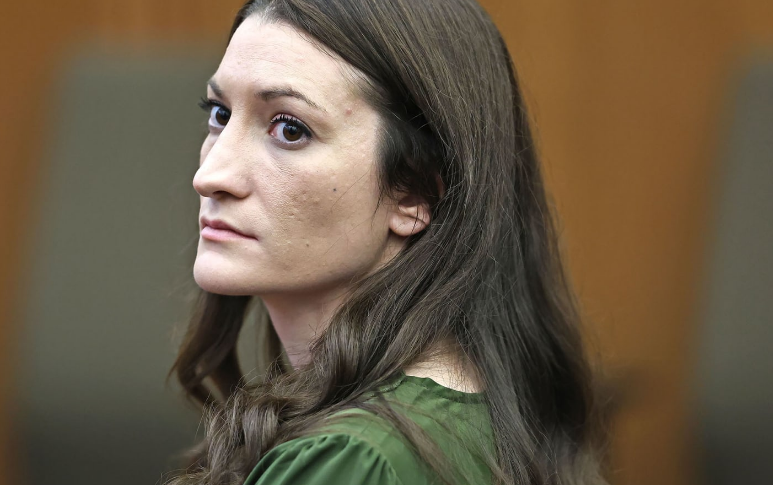
Seventeen hours. No verdict. And the biggest question in the Lindsay Clancy trial may now be whether 12 jurors can agree on what happened inside her mind.
After three days of deliberations, the jury weighing the fate of the Massachusetts mother had still not reached a decision.
The jurors are considering whether Clancy was criminally responsible for the deaths of her three young children — Cora, 5, Dawson, 3, and Callan, 8 months — in January 2023.
The case has never centered solely on whether Clancy carried out the acts.
Both sides acknowledge that she did.
The battle has been over something far more complicated:
Was she legally responsible for her actions at the time?
:max_bytes(150000):strip_icc():focal(815x337:817x339):format(webp)/lindsay-clancy-court-81826-d69320396be443bb82f6b993b7d110d3.jpg) THE DEFENSE: SHE WAS IN A PSYCHOTIC STATE
THE DEFENSE: SHE WAS IN A PSYCHOTIC STATE
Clancy’s defense has argued that she was suffering from severe postpartum psychosis and had lost her ability to understand that what she was doing was wrong.
Her attorneys pointed to months of deteriorating mental health, psychiatric treatment and medication before the tragedy.
Defense experts testified that Clancy had entered a profound break from reality and experienced hallucinations and delusional thinking.
The prosecution has offered a dramatically different explanation.
PROSECUTORS: SHE KNEW WHAT SHE WAS DOING
Prosecutors have acknowledged Clancy suffered from significant mental-health problems.
But they argue that mental illness did not eliminate her criminal responsibility.
Their case is that Clancy understood what she was doing, deliberately carried out the acts and knew they were wrong.
That leaves the jury with a difficult legal question rather than a simple factual one.
:max_bytes(150000):strip_icc():focal(749x0:751x2):format(webp)/lindsay-clancy-children-080526-99640c7509024a02aa72d8e15d099900.jpg) THE JURY HAS FIVE POSSIBLE OUTCOMES
THE JURY HAS FIVE POSSIBLE OUTCOMES
Jurors were instructed that they can consider several possible verdicts, ranging from first-degree murder to second-degree murder, manslaughter, not guilty by reason of mental illness, or not guilty.
They must reach separate decisions regarding each child.
That means the jury is not simply answering one yes-or-no question.
They are weighing the evidence, the competing psychiatric opinions and Clancy’s state of mind for each charge.
During deliberations, jurors have also requested important evidence, including the knife involved in Clancy’s suicide attempt and empty prescription bottles found after the incident.
Those requests have fueled speculation about what evidence the jury is focusing on — although there is no way to know what the requests mean about their eventual decision.
WHAT IF THE JURY CAN’T AGREE?
A lengthy deliberation does not automatically mean the jury is deadlocked.
If jurors remain divided, Judge William Sullivan could instruct them to continue deliberating.
If they ultimately cannot reach the required unanimous verdict, the judge could declare a mistrial because of a hung jury.
That would not mean Clancy had been found innocent.
It also would not necessarily end the case.
Because a mistrial caused by a genuinely deadlocked jury generally does not prevent prosecutors from pursuing a new trial, Clancy could potentially face another proceeding with a new jury. Legal analysts have said a retrial would be likely given the seriousness and national attention surrounding the case.
A VERDICT COULD STILL COME
For now, however, there is no hung jury.
There is no acquittal.
There is no conviction.
There is simply a jury still working through an enormous amount of evidence.
The 12 jurors — nine women and three men — are expected to continue deliberations.
And after weeks of testimony from family members, first responders, police officers and psychiatric experts, the final decision may come down to one question:
Did Lindsay Clancy understand that what she was doing was wrong — or had severe mental illness taken away that ability?
After 17 hours behind closed doors, America is still waiting for the answer.
The jury’s decision could change everything.