LINDSAY CLANCY JURY HAS DELIBERATED NEARLY 17 HOURS — WHAT HAPPENS IF THEY STILL CAN’T REACH A VERDICT?
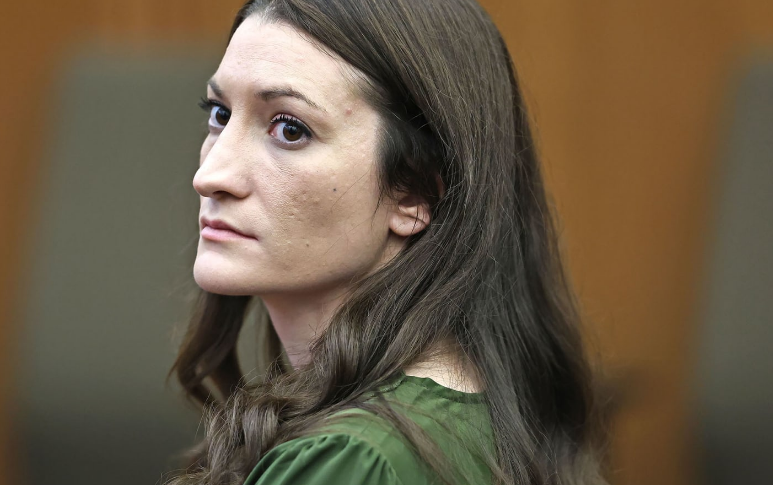
LINDSAY CLANCY JURY HAS DELIBERATED NEARLY 17 HOURS — WHAT HAPPENS IF THEY STILL CAN’T REACH A VERDICT?
Nearly 17 hours inside the jury room — and still no verdict.
The Lindsay Clancy trial has entered a tense new phase as jurors continue weighing one of the most closely watched criminal cases in Massachusetts.
Clancy, 36, is accused of taking the lives of her three young children — Cora, 5, Dawson, 3, and Callan, 8 months — at the family’s Duxbury home in January 2023.
Both sides agree that Clancy was responsible for the acts.
The central question is something far more complicated:
Was she legally responsible for what she did?
Her defense says she was suffering from severe postpartum psychosis and lacked criminal responsibility.
Prosecutors argue that she understood what she was doing and deliberately carried out the acts.
Now, that question rests with 12 jurors.
:max_bytes(150000):strip_icc():focal(815x337:817x339):format(webp)/lindsay-clancy-court-81826-d69320396be443bb82f6b993b7d110d3.jpg) THE JURY HAS ALREADY SPENT HOURS ON THE CASE
THE JURY HAS ALREADY SPENT HOURS ON THE CASE
Jurors began deliberating Thursday, August 27, following closing arguments and the judge’s instructions.
They deliberated for several hours Thursday and then continued throughout Friday.
By Monday, August 31, the jury had spent approximately 17 hours considering the evidence without reaching a verdict.
The jurors were sent home Monday afternoon and were scheduled to return Tuesday morning.
As of Tuesday, there was still no decision.
A lengthy deliberation does not automatically mean the jury is leaning toward either side.
It can simply mean jurors are carefully working through complicated evidence and attempting to reach the unanimous decision required in a criminal case.
WHAT ARE THEY DECIDING?
The jury has several possible outcomes to consider.
They could find Clancy guilty of murder.
They could find her guilty of a lesser offense such as manslaughter.
They could find that she was not criminally responsible because of mental illness.
Or they could return a not-guilty verdict.
The entire case has essentially come down to the battle between two competing explanations of Clancy’s mental state.
:max_bytes(150000):strip_icc():focal(749x0:751x2):format(webp)/lindsay-clancy-children-080526-99640c7509024a02aa72d8e15d099900.jpg) THE DEFENSE: SHE WAS IN THE GRIP OF PSYCHOSIS
THE DEFENSE: SHE WAS IN THE GRIP OF PSYCHOSIS
Clancy’s attorneys acknowledge that she carried out the acts but argue that she was experiencing a severe psychiatric episode.
Her defense has focused heavily on postpartum psychosis, psychiatric treatment and the medications she received before the tragedy.
They argue that her mental illness prevented her from understanding the nature or wrongfulness of what she was doing.
If jurors accept that argument, the outcome could be dramatically different from a traditional guilty verdict.
PROSECUTORS: SHE KNEW WHAT SHE WAS DOING
Prosecutors have presented a very different picture.
They argue that Clancy was overwhelmed by depression and parenting responsibilities but remained capable of understanding right from wrong.
The prosecution has pointed to evidence they say demonstrates planning and awareness.
Their position is that mental illness does not automatically eliminate criminal responsibility.
The jury must determine where the evidence ultimately leads.
BUT WHAT IF THEY CAN’T AGREE?
This is the question now hanging over the courthouse.
If jurors become genuinely deadlocked and cannot reach the required unanimous verdict, the judge can eventually declare a mistrial.
That would mean there is no verdict on the charges.
And the case would not necessarily be over.
Prosecutors could potentially seek a new trial with a new jury, because a mistrial caused by a genuinely deadlocked jury generally does not prevent a retrial under double-jeopardy principles.
Legal analyst Neama Rahmani has said he believes a retrial would be highly likely if the jury becomes hung, particularly given the extraordinary public attention surrounding the case.
A SECOND TRIAL COULD LOOK VERY DIFFERENT
If the case were tried again, both sides would have something they did not have the first time:
They would know exactly how the evidence was received by the first jury.
The prosecution could refine its presentation.
The defense could strengthen its arguments concerning Clancy’s psychiatric condition.
And both sides would know which witnesses and pieces of evidence created the greatest questions during the first trial.
But none of that is happening yet.
The current jury still has the opportunity to reach a verdict.
ONE CASE. TWO COMPETING STORIES.
For prosecutors, this is a case about responsibility and deliberate choices.
For the defense, it is a case about a devastating psychiatric breakdown that allegedly robbed a mother of her ability to understand the consequences of her actions.
The evidence has been presented.
The arguments have been made.
Now the jurors are alone with the decision.
And the fact that they have spent nearly 17 hours deliberating tells the public only one thing for certain:
They have not finished.
As the jury continues its fourth day of deliberations, every possibility remains on the table.
A guilty verdict.
A not-guilty verdict.
A finding of no criminal responsibility.
Or, if the jurors ultimately cannot reach an agreement, a mistrial and potentially another trial.
For the families involved, however, there is no second chance to change what happened in January 2023.
The courtroom is now waiting on twelve people to decide what comes next.