People Have Watched Airplane!’s “Stayin’ Alive” Scene for 46 Years. Robert Hays Says One Famous Gag Was Invented When Their Planned Dance Failed
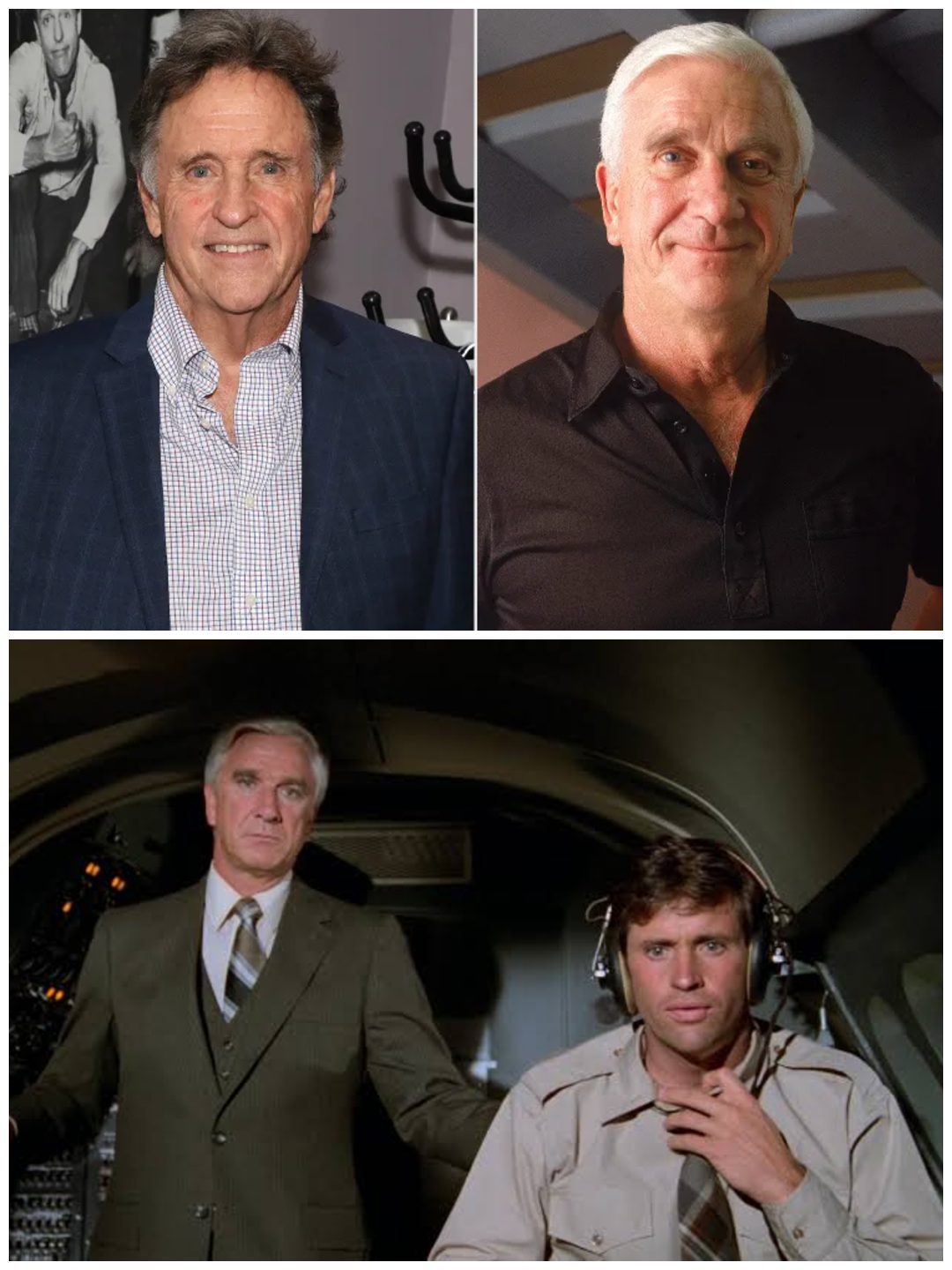
For 46 years, one of the pleasures of watching Airplane! has been the feeling that every ridiculous moment must have been meticulously planned.
The 1980 comedy fires jokes at the audience so quickly that even longtime fans can discover something new on repeat viewings. There are visual gags in the background, perfectly timed reactions, absurd dialogue delivered with total seriousness and scenes that parody familiar Hollywood movies down to the smallest detail.
That includes the unforgettable nightclub flashback featuring Robert Hays and Julie Hagerty.
Set to the Bee Gees’ “Stayin’ Alive,” Ted Striker and Elaine Dickinson launch into an elaborate disco dance clearly inspired by the Saturday Night Fever era.
At one point, Ted removes his jacket with dramatic confidence, strikes a pose — and then the jacket unexpectedly comes flying back and hits him.
It feels exactly like the kind of visual joke Airplane! would have planned from the beginning.
According to Hays, it wasn’t.
The actor now says that memorable piece of physical comedy was invented at the last minute because the dance he and Hagerty had spent roughly two weeks rehearsing suddenly could not be performed as planned once they arrived on the soundstage.
The filmmakers had a problem.
They had little time to solve it.
And Hays was asked to come up with something else.
They Had Already Spent Weeks Learning the Dance
Airplane! opened on July 2, 1980, with Hays playing former fighter pilot Ted Striker and Hagerty as flight attendant Elaine Dickinson.
Their troubled relationship provides much of the movie’s loose emotional framework, although almost every dramatic convention is turned into a joke.
The disco flashback is one of the clearest examples.
The movie temporarily leaves the airplane to show how Ted and Elaine first connected in a nightclub, transforming their romantic history into a parody of late-1970s dance movies.
Hays and Hagerty did not simply arrive and make up the entire routine.
According to Hays, they rehearsed the dance for around two weeks.
That meant learning the movements, timing the choreography and preparing to perform it in a specific orientation.
By the time shooting day arrived, they knew what they were supposed to do.
Then they walked onto the soundstage.
And discovered that the plan did not fit the physical reality of the set.
The Camera and Bar Changed Everything
The problem involved where the camera and nightclub bar had been positioned.
The choreography had been created to move in a particular direction.
But once the actors were on the actual soundstage, the arrangement meant they could not perform the routine the way they had rehearsed it.
Ordinarily, the obvious solution might have been to stop and redesign the choreography.
But productions do not always have that luxury.
Soundstages cost money.
Crew time costs money.
Schedules are tight.
And Airplane! was not being made with unlimited resources.
According to Hays, there simply was not enough time to start over because of budget considerations and the availability of the stage.
The production needed another solution.
That was when someone asked Hays whether he could devise a way to make the scene work.
What he came up with would become one of the dance sequence’s most memorable pieces of physical comedy.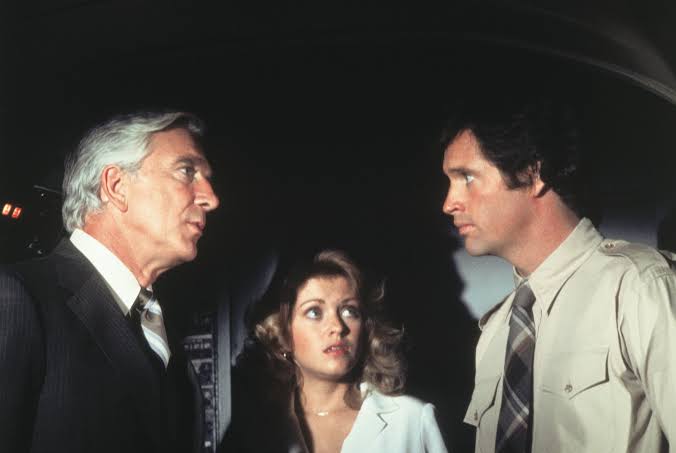
The Jacket Gag Was Really a Transition
Hays devised a new piece of movement in which Ted and Elaine circle around each other.
That circling accomplished something practical.
It repositioned the actors.
Instead of stopping the entire scene to solve the staging problem, the new movement allowed them to change orientation while keeping the dance going.
But this was Airplane!.
A purely functional transition was not enough.
So Hays added the jacket.
Ted removes it dramatically.
He tosses it away.
He pauses and strikes a confident pose.
Then, almost immediately, the jacket comes sailing back into frame and smacks him.
It is a tiny joke.
But it works because the setup is so clean.
Ted behaves for a second as though he is the impossibly cool hero of a disco movie.
Then reality — or more accurately, Airplane!’s version of reality — immediately humiliates him.
They performed the newly created bit.
The filmmakers liked it.
And the emergency solution stayed in the movie.
Most of Airplane! Wasn’t Actually Improvised
Hays’ story is especially interesting because Airplane! can feel spontaneous.
Its comic rhythm is so anarchic that viewers might assume the actors were constantly inventing jokes on set.
But that was generally not how the movie was made.
The filmmakers were highly specific about the comedy.
A major part of Airplane!’s style depends on the actors behaving as though nothing funny is happening.
The more ridiculous the dialogue becomes, the more seriously the characters tend to deliver it.
That approach is essential to jokes such as Leslie Nielsen’s famously straight-faced exchange that produced the line, “Don’t call me Shirley.”
If actors constantly winked at the audience or tried to add extra comedy, much of the movie’s strange tone could have disappeared.
That makes the jacket story an exception worth remembering.
It was not improvisation for the sake of adding another joke.
It began with a concrete production problem.
The planned choreography physically could not continue as intended.
Hays needed a transition.
His transition happened to become funny enough to survive for decades.
The Scene Works Because Nobody Can See the Problem
Perhaps the best part of the story is that the finished sequence gives viewers no reason to suspect anything went wrong.
There is no visible hesitation.
No awkward correction.
No sense that the performers have suddenly abandoned two weeks of preparation.
Ted and Elaine simply continue dancing.
That is often the difference between a production problem and a memorable movie moment.
Audiences see the solution.
They never see the emergency that caused it.
Once Hays’ explanation is known, however, the scene becomes fun to watch in a completely different way.
The circling movement no longer looks like choreography created purely for style.
It has a hidden mechanical purpose.
It is moving the actors into the position the camera needs.
The jacket gag then disguises that adjustment with comedy.
Something created because the original plan failed ends up looking as deliberate as every other joke around it.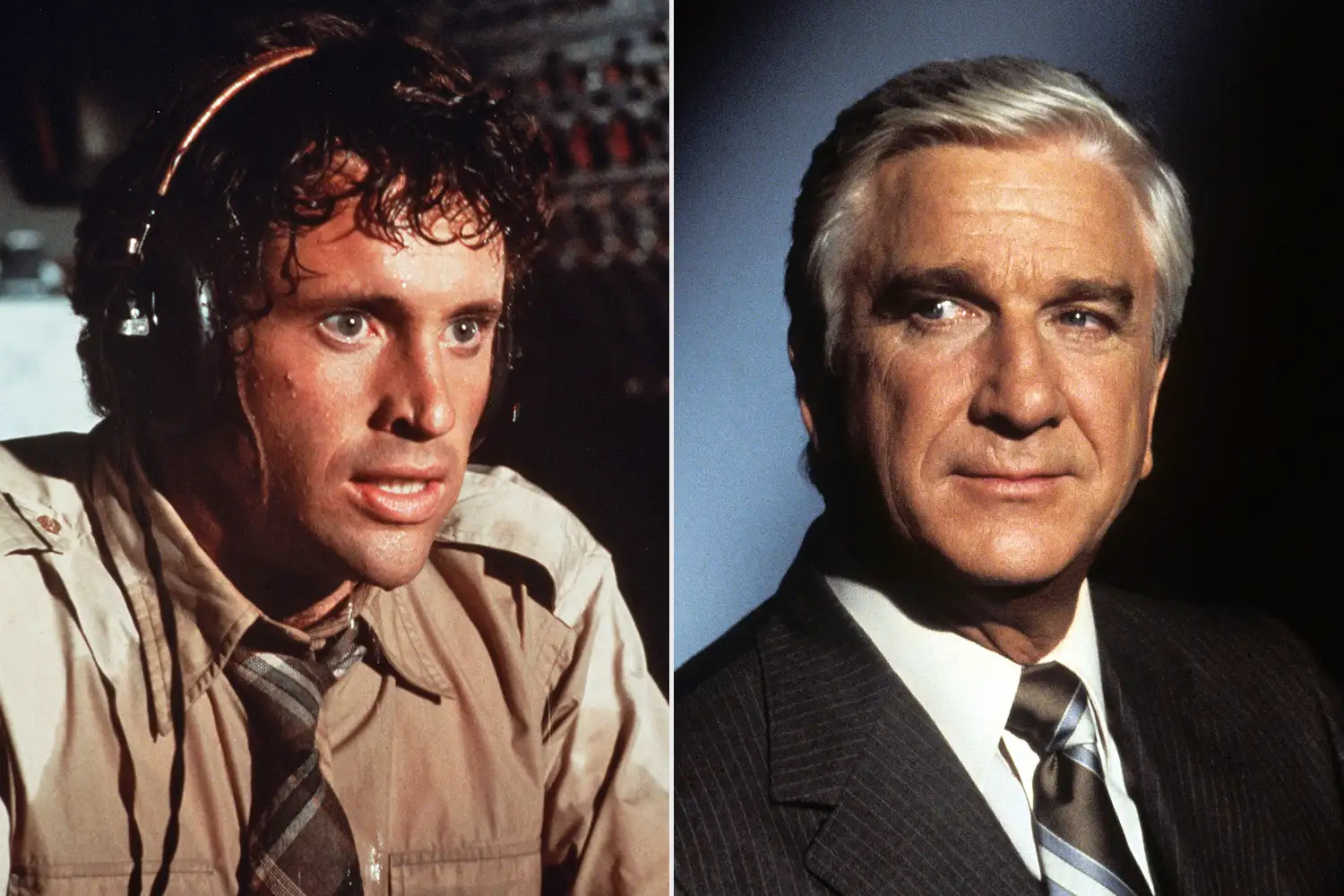
A Mistake or Limitation Can Become Part of Movie History
Some of the most enduring movie moments come from circumstances nobody planned.
A prop does not work.
A location changes.
An actor misses a mark.
Weather interferes.
A set turns out to be different from what the performers expected.
Usually, the audience never learns about those problems.
The filmmakers solve them and move on.
Occasionally, however, the solution is better than the original idea.
That appears to be what happened with Airplane!.
Had the camera and bar been positioned differently, Hays and Hagerty might simply have performed the choreography exactly as they had rehearsed it.
Ted might never have thrown away his jacket.
The jacket might never have flown back into his face.
And millions of viewers would never have known anything was missing.
Instead, a staging problem forced Hays to invent something new.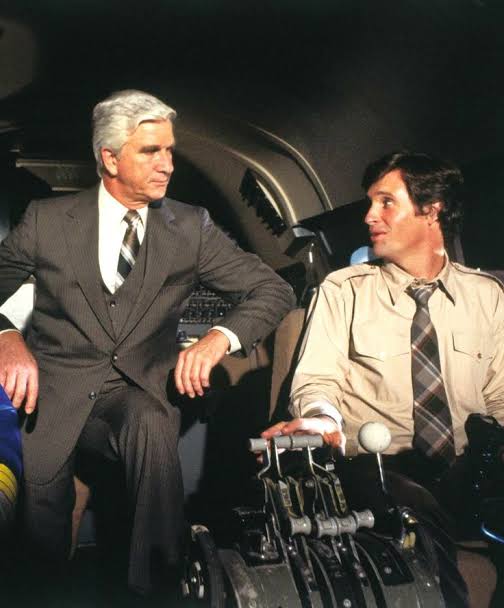
Forty-Six Years Later, the Emergency Fix Is the Part People Remember
That is what makes Hays’ new recollection such a satisfying piece of movie history.
Fans have watched the nightclub sequence for decades.
They have seen Ted and Elaine spin around each other.
They have seen Ted confidently discard his jacket.
They have watched it immediately return to ruin his pose.
For viewers, it has always simply been part of Airplane!.
But behind the joke was a very practical problem on a busy soundstage.
Two actors had rehearsed their dance for weeks.
The set made part of that choreography impossible.
There was no time to redesign everything.
So Robert Hays was asked to find another way through the scene.
He created a transition.
Then he turned that transition into a joke.
And 46 years later, audiences are still laughing at the solution — without ever realizing that it existed only because the original plan could not be filmed.