LUCY LETBY CASE: NEW MEDICAL EVIDENCE AND UNSEEN HOSPITAL RECORDS PUT CONVICTIONS UNDER FRESH SCRUTINY
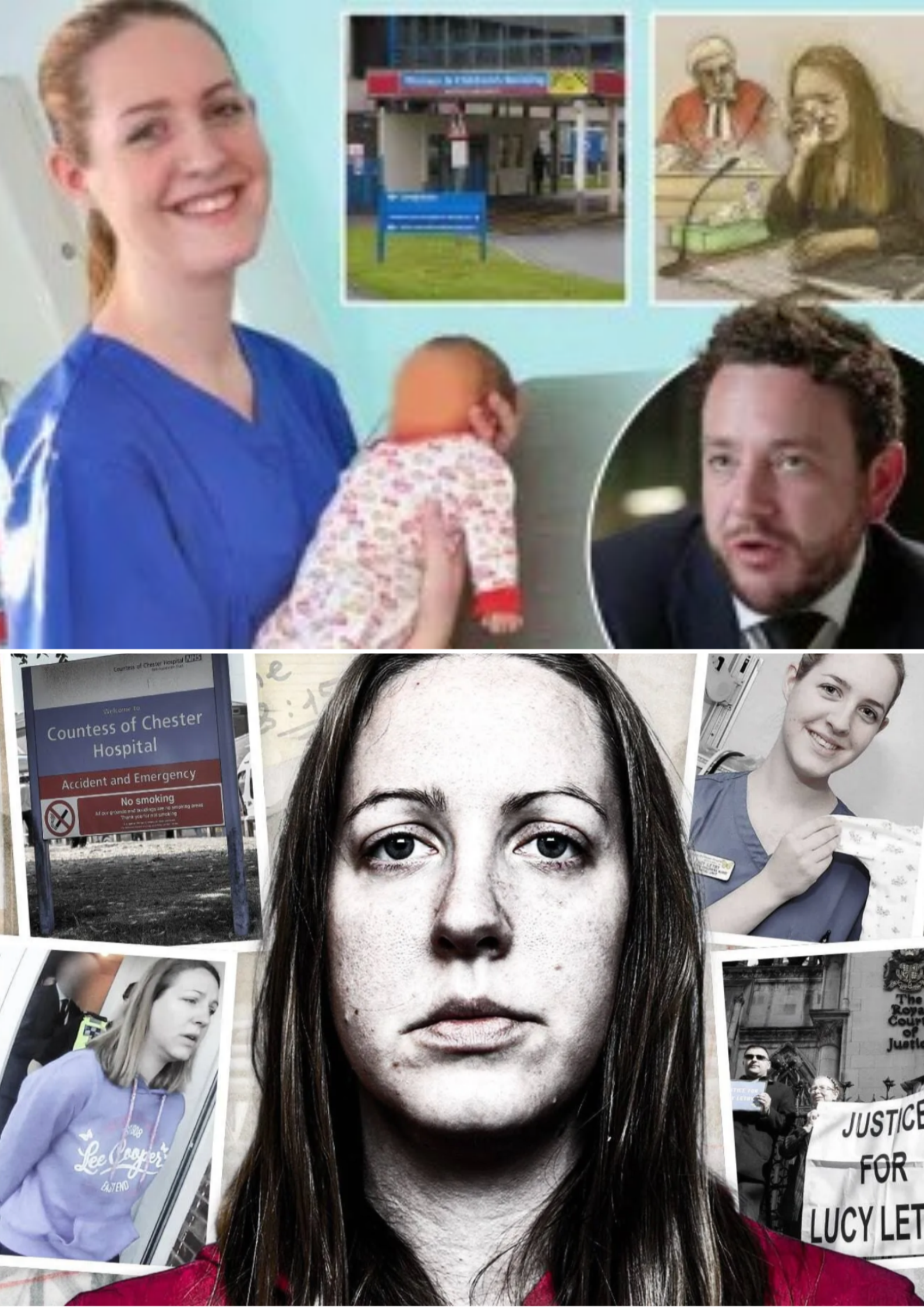
LUCY LETBY CASE: NEW MEDICAL EVIDENCE AND UNSEEN HOSPITAL RECORDS PUT CONVICTIONS UNDER FRESH SCRUTINY
A fresh wave of debate is surrounding the Lucy Letby case after new medical opinions and previously undisclosed maternity records raised further questions about some of the evidence presented at trial.
But amid the growing controversy, one important distinction remains: Lucy Letby’s convictions have not been overturned.
The former neonatal nurse remains in prison serving 15 whole-life terms after being convicted of murdering seven babies and attempting to murder seven others at the Countess of Chester Hospital.
Her legal team is now seeking to have the case reconsidered, while the Criminal Cases Review Commission examines new material submitted on her behalf.
 A NEW CHALLENGE TO THE MEDICAL EVIDENCE
One of the biggest developments has come from an international group of medical experts assembled by Canadian neonatologist Professor Shoo Lee.
The panel reviewed evidence surrounding the babies involved in Letby’s convictions and challenged several of the medical conclusions presented during the original prosecution.
Lee has argued that some deaths and collapses could have resulted from natural medical complications or problems with care rather than deliberate harm.
The panel has particularly questioned the interpretation of evidence relating to alleged air embolisms and whether certain physical signs can reliably establish that an air embolism occurred.
These arguments are now part of the material being considered in Letby’s attempt to reopen her case.
THEN CAME THE MATERNITY RECORDS DISCOVERY
Another development has attracted significant attention.
The BBC reported in July that maternity notes relating to babies involved in Letby’s convictions had been seized by Cheshire Police but were not reviewed by the prosecution’s chief medical expert or disclosed to Letby’s defence before trial.
The records contained information about pregnancy, labour and delivery — details that some medical experts say can be important when trying to understand why a newborn suddenly deteriorated.
The prosecution’s chief medical witness, Dr Dewi Evans, has disputed their significance and said he had not seen the full obstetric records.
Professor Phil Bennett, however, told the BBC that maternity and neonatal records should normally be assessed together when investigating the death or collapse of a baby.
That disagreement has become one of the issues attracting renewed attention.
 BABY O: TWO VERY DIFFERENT MEDICAL INTERPRETATIONS
One particularly disputed case involves Baby O, a triplet whose death was attributed by prosecutors to deliberate harm.
Professor Bennett, who reviewed the case for Letby’s new defence, offered a different medical interpretation.
He suggested the baby may have suffered a liver injury during a difficult Caesarean delivery and subsequently deteriorated from that injury.
The prosecution’s medical expert, Dr Evans, disagreed and maintained that Baby O had been born in good condition.
The conflicting opinions illustrate why the medical evidence remains central to the current review.
It is not, however, the same as a court ruling that the original conviction was wrong.
THE CCRC IS NOW EXAMINING THE CASE
The Criminal Cases Review Commission confirmed in February that its review of Letby’s convictions is underway.
The commission has received multiple expert reports and submissions, including additional material submitted as recently as January 2026.
Its role is not to decide whether Letby is innocent or guilty.
Instead, the CCRC must determine whether new evidence or arguments create a “real possibility” that a conviction would not be upheld by an appeal court.
If it reaches that threshold, the case could be referred back to the courts.
BUT NOT EVERY NEW CLAIM SUPPORTS LETBY
The controversy surrounding the case has also become more complicated.
In September, two experts who had been involved with Letby’s defence, Helen Shannon and Geoff Chase, withdrew from the team over concerns about the scientific credibility of some arguments being advanced.
They continued to stand by certain criticisms of the original case — including their view that two insulin-poisoning convictions were very unlikely to involve deliberate poisoning — but said they did not want to be associated with broader claims they considered scientifically problematic.
That development is important because it shows the current debate is not simply a unanimous scientific rejection of the prosecution case.
There remain significant disagreements among experts.
WHAT ABOUT THE CLAIM OF A “HIDDEN” DOCUMENT?
Claims circulating online about a secret whistleblower document or a statistical error that was deliberately concealed from the jury should be treated cautiously.
There is evidence of disputes surrounding the prosecution’s statistical and medical evidence, including academic criticism of the use of roster data. But that is not the same as proof that a critical document was deliberately buried or that the Crown Prosecution Service is currently hiding evidence from the public.
Similarly, the discovery that maternity records were not disclosed to the defence has raised legitimate questions, but it does not by itself establish that the prosecution intentionally suppressed evidence or that the convictions are unsafe.
Those are matters that would ultimately need to be determined through the appropriate legal process.
THE THIRLWALL INQUIRY IS A SEPARATE ISSUE
The recently published Thirlwall Inquiry report has added another layer to the discussion.
The inquiry found serious failures in management, governance and safeguarding at the Countess of Chester Hospital, including failures to act appropriately after concerns about babies’ deaths and collapses emerged.
However, the inquiry was established to examine what happened at the hospital and how its systems failed.
It was not an appeal hearing and did not overturn or determine the validity of Letby’s criminal convictions.
HER CONVICTIONS STILL STAND
For now, Lucy Letby remains convicted.
The Court of Appeal previously rejected her attempts to challenge her convictions, and the CPS has also confirmed that its separate review of whether she should face additional charges resulted in no further prosecutions.
At the same time, the CCRC continues to examine the new material submitted by Letby’s legal team.
That means the story is not yet at an endpoint.
There are now competing medical interpretations, questions over records that were not disclosed before trial, criticism of some expert evidence and an ongoing legal review.
But there is no court ruling at present declaring Lucy Letby innocent or overturning her convictions.
The next significant development may come from the CCRC — and until then, many of the most dramatic claims circulating online remain allegations, interpretations or disputed expert opinions rather than established facts.
The evidence is being challenged. The convictions remain in place. And the legal review continues.