FAMILY JOKED THAT SHE DIDN’T LOOK LIKE HER SIBLINGS — THEN A DNA TEST REVEALED A LIFE-CHANGING SECRET
FAMILY JOKED THAT SHE DIDN’T LOOK LIKE HER SIBLINGS — THEN A DNA TEST REVEALED A LIFE-CHANGING SECRET
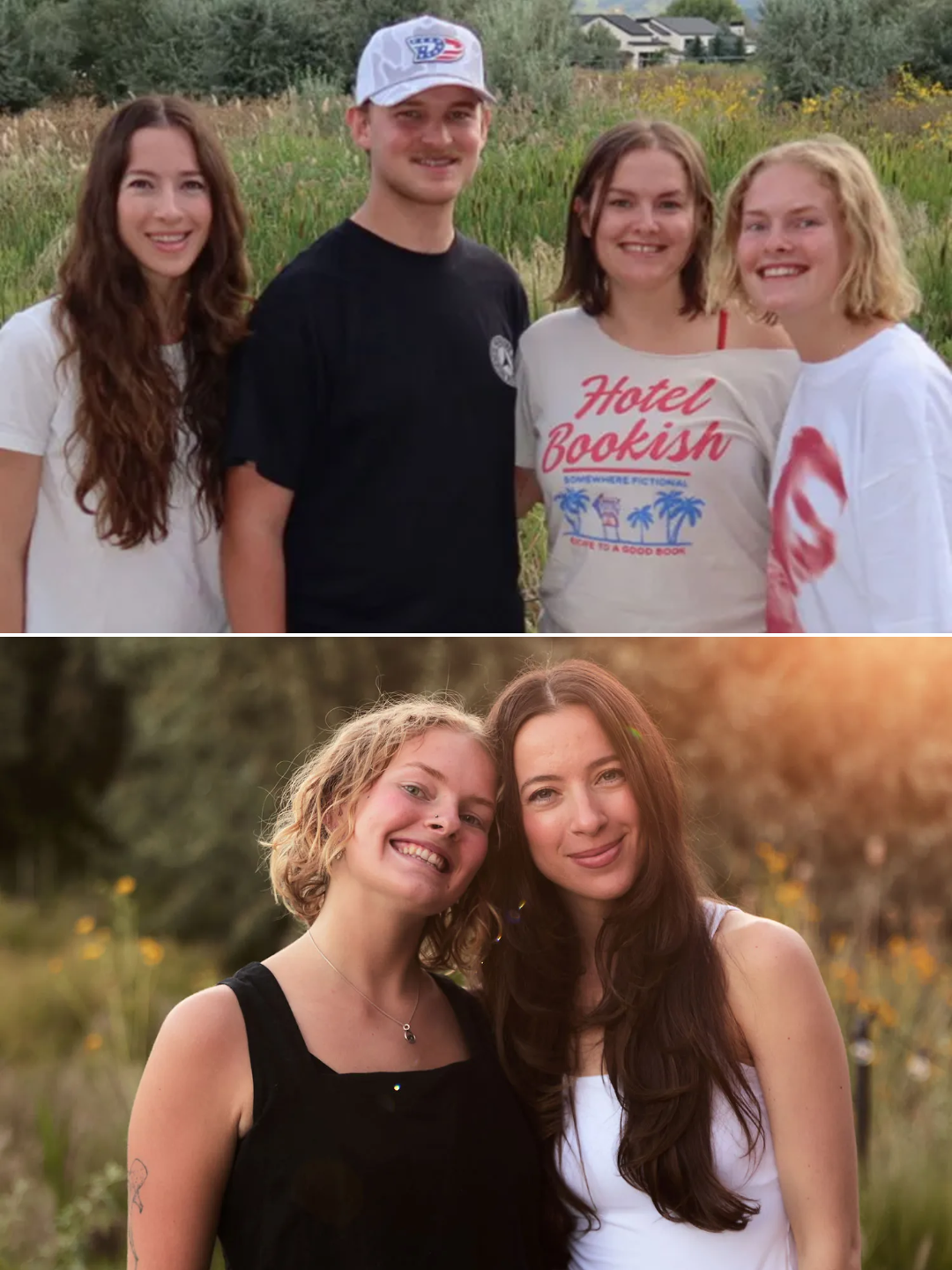
For 29 years, Payton Lee believed she was simply the odd one out in her family.
She was the oldest of five siblings, and for years, her brothers and sisters joked about how little she looked like them.
It was harmless family teasing.
Until one day, a DNA test suggested the joke might have been closer to the truth than anyone imagined.
What Payton discovered would change everything she thought she knew about her biological family.
:max_bytes(150000):strip_icc():focal(688x481:690x483):format(webp)/Payton-lee-sibblings-090226-5-0cd8e501cbfd46c9a59d967584476adf.jpg) “I JUST THOUGHT NONE OF US LOOKED ALIKE”
“I JUST THOUGHT NONE OF US LOOKED ALIKE”
The realization began after Payton returned to her hometown.
Her brother mentioned that her younger siblings had been talking about how different she looked from them.
Payton initially laughed it off.
The idea that she might have a different biological father had never seriously crossed her mind.
“I had always just thought none of us looked alike,” she told PEOPLE.
But then she started looking at old family photographs.
Something suddenly stood out.
Her younger siblings resembled one another.
Even her nephew looked strikingly similar to them.
Payton, meanwhile, appeared noticeably different.
For the first time, the family joke didn’t feel quite so funny.
Still, she says she probably would have left the thought alone if her mother-in-law hadn’t unexpectedly purchased DNA testing kits for Payton and her youngest sister.
:max_bytes(150000):strip_icc():focal(798x458:800x460):format(webp)/Payton-lee-sibblings-090226-3-6fd2a7fda17144ca82c1b821184ed319.jpg) THE TEST THAT CHANGED EVERYTHING
THE TEST THAT CHANGED EVERYTHING
Payton hadn’t planned on taking the test herself.
In fact, one of the hardest parts of the experience was knowing that she hadn’t really made the decision to investigate her biological background.
She simply went along with the test.
Then the results arrived.
Payton was away from home when her siblings gathered together to look at their results.
They opened them while connected through FaceTime.
Payton saw the result first.
The sister she had believed was her full biological sister was identified as a half-sister.
For a moment, Payton thought there had to be a mistake.
Then her siblings responded with a line that was both shocking and painfully ironic:
“We knew it.”
The family joke had suddenly become something much more serious.
THEN SHE SAW ANOTHER NAME
Payton continued examining the results.
That’s when the discovery became even more complicated.
Another woman appeared as a half-sister — someone Payton had never heard of before.
The biological relatives appearing on Payton’s paternal side belonged to a completely different family.
The implications were unmistakable.
The man Payton had called Dad for 29 years was not her biological father.
What had begun as curiosity about family resemblance had turned into a discovery about her own identity.
“It really hit me that the people on my father’s side were a completely different family,” Payton recalled.
SHE HAD ONE PERSON SHE NEEDED TO CALL
Payton immediately contacted her husband.
But there was another conversation she knew she couldn’t avoid.
She needed to tell the man who had raised her.
When Payton and her husband eventually FaceTimed her father, he initially didn’t believe the result.
But once they explained what the DNA test had revealed, his response gave Payton the reassurance she desperately needed.
He made one thing clear:
The result didn’t change their relationship.
Payton said her father told her that she was still his daughter.
And for her, that mattered more than any genetic result.
“THIS DOESN’T CHANGE ANYTHING”
Payton described her father as the “fun parent” while she was growing up.
He was the one who took the children on outings and family trips and helped create the memories she associated with her childhood.
The DNA test had changed one part of her story.
But it could not erase 29 years of memories.
Payton also began thinking about the discovery from her father’s perspective.
She learned that her mother had been around six months pregnant with her when her parents married.
That realization made Payton feel particularly emotional.
She said she felt sorry knowing that her father had entered the marriage believing she was biologically his child.
Yet, according to Payton, he didn’t respond with anger or resentment.
Instead, he continued supporting her as she tried to understand what had happened.
“He has had such a great attitude about everything,” Payton said.
NOW SHE IS SEARCHING FOR ANSWERS
The DNA results answered one enormous question.
But they also created many more.
Payton suddenly had biological relatives she had never known existed.
She had a paternal family she had never grown up with.
And she had to process the reality that the biological relationship she had assumed existed between her and her father was not there.
At the same time, another relationship had become even clearer.
Biology had not been what created the bond between Payton and the man who raised her.
Years of parenting, memories, support and love had done that.
A WARNING ABOUT AT-HOME DNA TESTS
The experience has also completely changed Payton’s view of consumer DNA testing.
For many people, these kits are purchased as a fun way to explore ancestry, discover family history or learn more about their genetic background.
Payton’s experience was very different.
She never expected a test to challenge something as fundamental as who her biological father was.
Now she believes people should think carefully before taking one.
The emotional consequences can be much bigger than expected.
“DNA tests should never be taken lightly,” Payton said.
THE DNA CHANGED THE STORY — NOT THE FAMILY
Payton’s discovery is a reminder that biology and family are not always the same thing.
One test changed what she knew about her genetic background in a matter of minutes.
But it didn’t erase the childhood she experienced.
It didn’t erase the memories she shared with her father.
And, most importantly, it didn’t erase the relationship between them.
The family joke that once seemed completely harmless had unexpectedly opened the door to a truth Payton never imagined finding.
At 29, she learned that the man who raised her wasn’t her biological father.
But she also learned something else:
Sometimes, being a dad has far more to do with the years someone spends loving you than the DNA they gave you.