SHE WAS ONLY TWO: ISABELLE WELSH’S DEATH EXPOSES A CHAIN OF MISSED CHANCES THAT MAY HAVE SAVED HER
SHE WAS ONLY TWO: ISABELLE WELSH’S DEATH EXPOSES A CHAIN OF MISSED CHANCES THAT MAY HAVE SAVED HER
A little girl was already showing signs that something was terribly wrong. Doctors had raised concerns. Authorities had been involved. And the man who would later be convicted of her murder had already been the subject of an arrest warrant.
But Isabelle Welsh still went home.
Months later, the two-year-old would never come home again.
Isabelle’s case has now become more than a story of a horrific crime. It has also raised painful questions about what happened in the weeks and months before her death — and whether multiple warning signs were missed along the way.
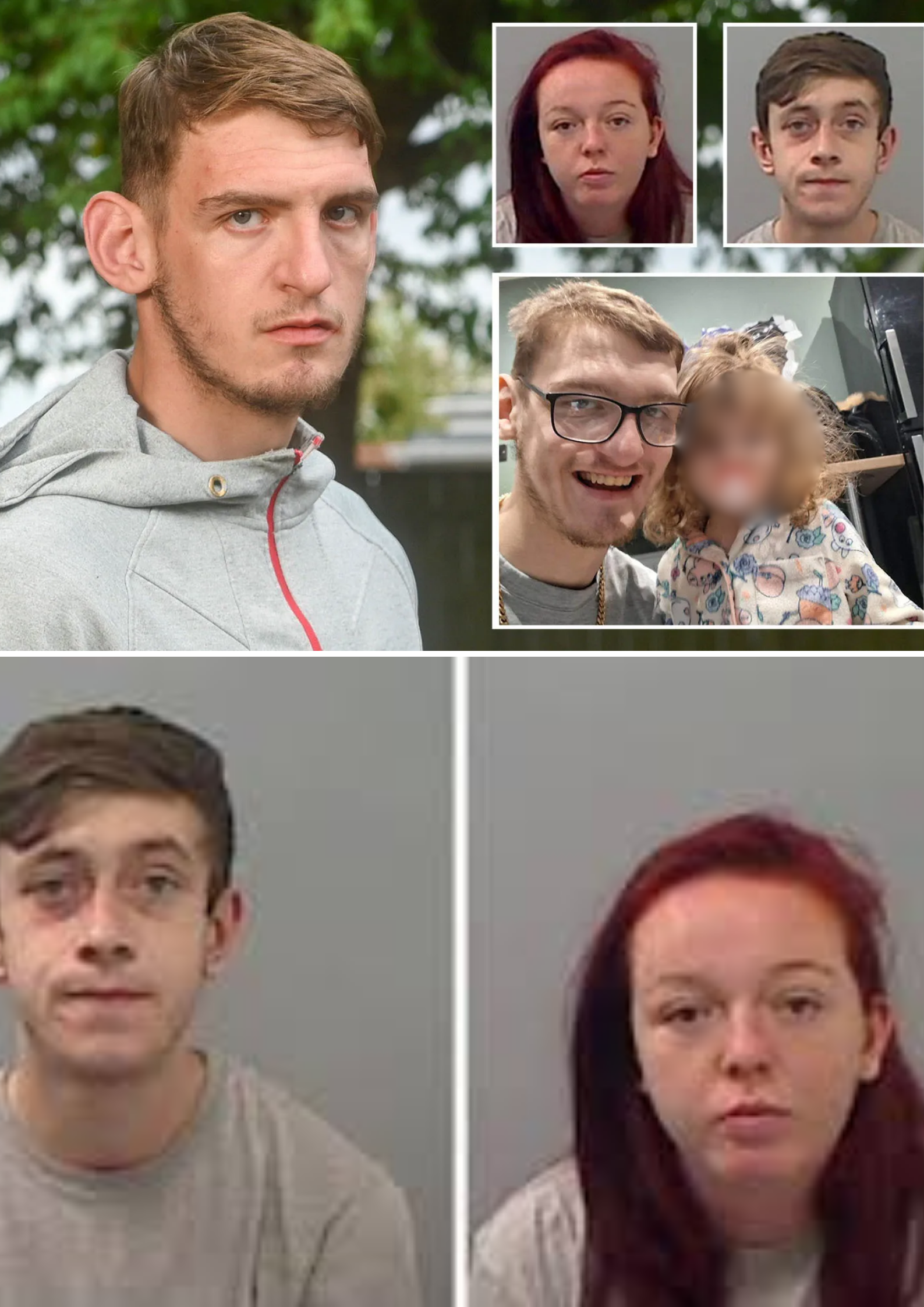
In July 2026, Isabelle’s mother, Alexandra Walker, 26, and Walker’s boyfriend, Harrison Simpson, 22, were convicted of murdering the toddler and sentenced to life in prison.
Simpson was also convicted of sexually assaulting Isabelle. Walker was cleared of that charge.
The court heard that Isabelle had suffered a prolonged campaign of violence before her final collapse in September 2025. A postmortem examination found fractures to 21 bones, along with extensive bruising. She ultimately died from a catastrophic head injury.
Simpson received a life sentence with a minimum term of 27 years and 231 days. Walker was sentenced to life with a minimum term of 21 years and 48 days.
But after the verdicts, another revelation emerged.
Police had already been trying to locate Simpson — or, at least, should have been.
 THE WARRANT THAT REMAINED OUTSTANDING
In March 2024, Simpson was charged with breaching a non-molestation order, a court order designed to protect a person from harassment or abuse.
He failed to attend court.
A warrant was then issued for his arrest.
According to Cleveland Police, multiple inquiries and attempts were made to locate him, but those efforts did not result in his arrest.
The warrant remained outstanding for approximately 18 months.
Then, in September 2025, Isabelle died.
Cleveland Police later acknowledged that the length of time Simpson remained wanted was “far from adequate.” The force said an internal review was launched after Simpson was arrested in connection with Isabelle’s murder.
The force has since introduced changes to its system for managing outstanding warrants, including improved visibility of warrants, a comprehensive tracking system, stronger oversight and daily reviews of high-risk cases.
For Isabelle’s father, Joshua Welsh, the revelation was devastating.
He said he only learned about the outstanding warrant after the trial verdicts, rather than directly from police.
And that raised a question he may never be able to escape:
What if Simpson had been arrested when the warrant was first issued?
There is no way to know whether that would have prevented Isabelle’s death. But for her grieving family, the possibility represents one of the most painful “what ifs” imaginable.
ISABELLE HAD ALREADY BEEN HURT
The warning signs did not begin on the day Isabelle collapsed.
According to evidence presented at Teesside Crown Court, the toddler had suffered serious injuries in the weeks before her death.
Eleven days before her fatal collapse, Walker took Isabelle to a doctor and then to hospital after the child suffered a fractured leg.
Walker said the injury had happened accidentally.
But some medical staff were concerned enough to raise safeguarding issues.
The court heard that those concerns were ultimately overruled by doctors who accepted Walker’s explanation, allowing Isabelle to return home.
The judge later described that decision as tragic.
It was one of several moments that would later become impossible for investigators and the public to ignore.
A tiny child had already suffered a serious fracture.
There were concerns.
And yet she returned to the same environment.
THE FINAL WEEKS
Prosecutors argued that Isabelle’s injuries were not isolated incidents but part of an escalating pattern.
She had bruises across different parts of her body, and the postmortem examination identified fractures involving 21 bones.
Prosecutor Richard Wright KC told jurors that the fatal head injury was the final point in what prosecutors described as a prolonged “campaign of violence.”
The prosecution alleged that both Walker and Simpson had ample opportunities to harm Isabelle and that the abuse could not realistically have gone unnoticed inside the small home.
Simpson had also spent time alone caring for Isabelle, including during the period leading up to her death.
The couple had met on Facebook Dating and Simpson became increasingly involved in Walker and Isabelle’s lives.
That relationship would eventually become central to the prosecution case.
A MOTHER WHO HAD ALREADY BEEN SUSPICIOUS
Perhaps one of the most disturbing details from the trial was that Walker herself had reportedly become suspicious of Simpson.
Jurors heard that she searched the sex offenders’ register after becoming concerned about his behavior.
She had reportedly questioned his interest in Isabelle and was uncomfortable with some of the things he did around the child.
Yet she continued the relationship.
The prosecution also presented CCTV footage from cameras inside Walker’s home, giving investigators an unusual window into the household during the months before Isabelle’s death.
The footage and messages became part of a wider picture presented to jurors about the couple’s lifestyle, their relationship and the deteriorating circumstances surrounding Isabelle.
THEN CAME THE DAY ISABELLE COLLAPSED
On September 13, 2025, emergency services were called to the family home in Thornaby, Teesside.
Isabelle was found gravely ill.
She was taken to hospital, but doctors could not save her.
She died the following day.
The injuries discovered on her body shocked investigators.
The court heard that Isabelle had suffered a catastrophic head injury close to the time of her final collapse, against a background of repeated injuries.
But prosecutors also focused on what happened after Isabelle became critically ill.
Walker had searched online for information about why her toddler was bleeding.
Yet she did not immediately call emergency services.
Instead, according to evidence presented at trial, she went into the kitchen and smoked a cigarette.
She eventually contacted her stepfather.
He arrived and told her to call 999.
Only then was emergency help summoned.
By then, Isabelle was critically ill.
A LITTLE GIRL WHO SHOULD HAVE BEEN SAFE
At sentencing, Justice Norton described Isabelle’s treatment as a “sadistic” campaign of abuse.
The judge emphasized the particular horror of a very young child being harmed by the adults who were supposed to protect her.
Cleveland Police Detective Chief Inspector Steve Chatterton described the case as one of the worst his team had handled.
But the most painful words came from Isabelle’s family.
Her father, Joshua Welsh, has spoken publicly about the enormous sense of loss — and about what he believes were missed opportunities by authorities.
He has said that he believed Isabelle was being properly cared for by her mother and did not know the full extent of what was happening inside the home.
After the relationship between Joshua and Walker ended in August 2024, he said his contact with Isabelle became more limited.
He had no idea that Simpson had become part of her life.
He did not know that Simpson had an outstanding arrest warrant.
And he could not have known what would happen less than a year later.
“SEVERAL CHANCES TO SAVE HER”
In the aftermath of the convictions, Joshua has argued that Isabelle was failed by more than the two people convicted of harming her.
He has pointed to the medical concerns surrounding her fractured leg.
He has pointed to safeguarding contacts before her death.
And he has pointed to the police warrant that remained outstanding for 18 months.
Those failures do not establish that Isabelle’s death could definitely have been prevented.
But they have created a haunting question:
How many opportunities does a child have to be protected before someone finally realizes she is in danger?
The safeguarding history is particularly troubling.
The court heard that safeguarding services had contact with Isabelle and her mother in the weeks before her death. One health visitor reportedly spoke to the family by telephone just days before Isabelle died but did not enter the home. The safeguarding partnership later concluded that the earlier decisions not to progress the contacts were appropriate with hindsight.
That conclusion has not stopped questions about whether more could have been done.
THE SENTENCES CANNOT BRING HER BACK
Walker and Simpson will both spend decades behind bars.
But for Isabelle’s father, the prison terms are not the end of the story.
He has criticized the minimum sentences and said he wants those responsible to remain imprisoned for life.
His grief is not measured in years.
It is measured in birthdays Isabelle will never have.
Christmas mornings she will never see.
First days of school that will never happen.
And all the ordinary moments that a two-year-old should have been allowed to experience.
Isabelle should have grown up.
She should have argued with her siblings, laughed with her family, made friends, gone to school and discovered who she would become.
Instead, her short life ended inside the place where she should have been safest.
THE QUESTION THAT WILL NOT GO AWAY
Cleveland Police has acknowledged its failure to execute the warrant against Simpson within a reasonable timeframe and says changes have now been introduced.
The medical and safeguarding decisions surrounding Isabelle have also drawn scrutiny.
And her father is determined that her story should not disappear once the courtroom headlines fade.
Because Isabelle was not simply a case file.
She was a little girl remembered by her family for her smile, her personality and the happy child she was before her final months.
Her father has said he wants people to remember Isabelle herself, rather than allowing the people who harmed her to define her memory.
That may ultimately be the most important part of her story.
The questions surrounding the missed warnings will continue.
So will the debate over whether institutions did enough.
But behind every investigation, every warrant, every safeguarding decision and every courtroom argument was one simple fact:
Isabelle Welsh was only two years old.
She depended entirely on the adults around her to keep her safe.
And now, after her life was taken, everyone is left asking whether someone should have stepped in sooner.