Gloria Steinem Recorded a Confidential Interview Knowing It Would Air Only After Her Death. It Has Just Been Released
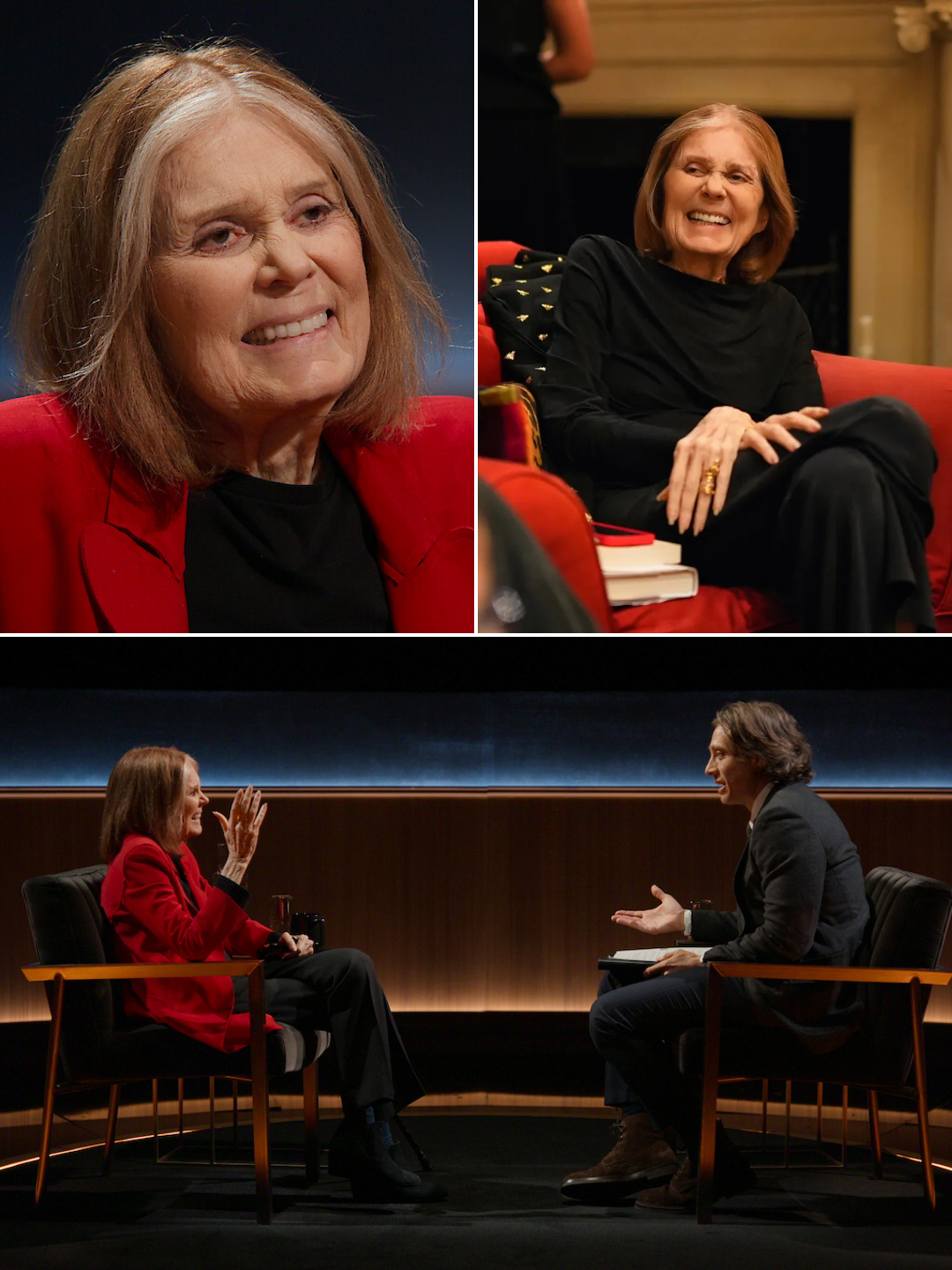
More than a year before her death, Gloria Steinem sat down for an interview with one unusual condition.
The public could not see it while she was alive.
Filmed confidentially in February 2025, the conversation was created for Netflix’s Famous Last Words, a series built around interviews with notable figures who understand that their episodes will remain unreleased until after their deaths.
Steinem knew exactly what that meant.
She knew the cameras were recording something that might sit unseen for months or years.
She knew she would never experience the public reaction.
And she knew that when people finally watched it, she would no longer be there to clarify, expand or answer questions.
After Steinem died at her New York home on Sept. 2, 2026, at age 92, Netflix released the 46-minute conversation the following day.
What emerged was not simply a retrospective on a famous life.
Steinem talked about her family, Ms. magazine, feminism, disagreements within the movement and the work she believed remained unfinished.
But perhaps the most striking moment came after interviewer Brad Falchuk left the stage.
Steinem was allowed to look directly into the camera and speak to the people she knew would be watching only after she was gone.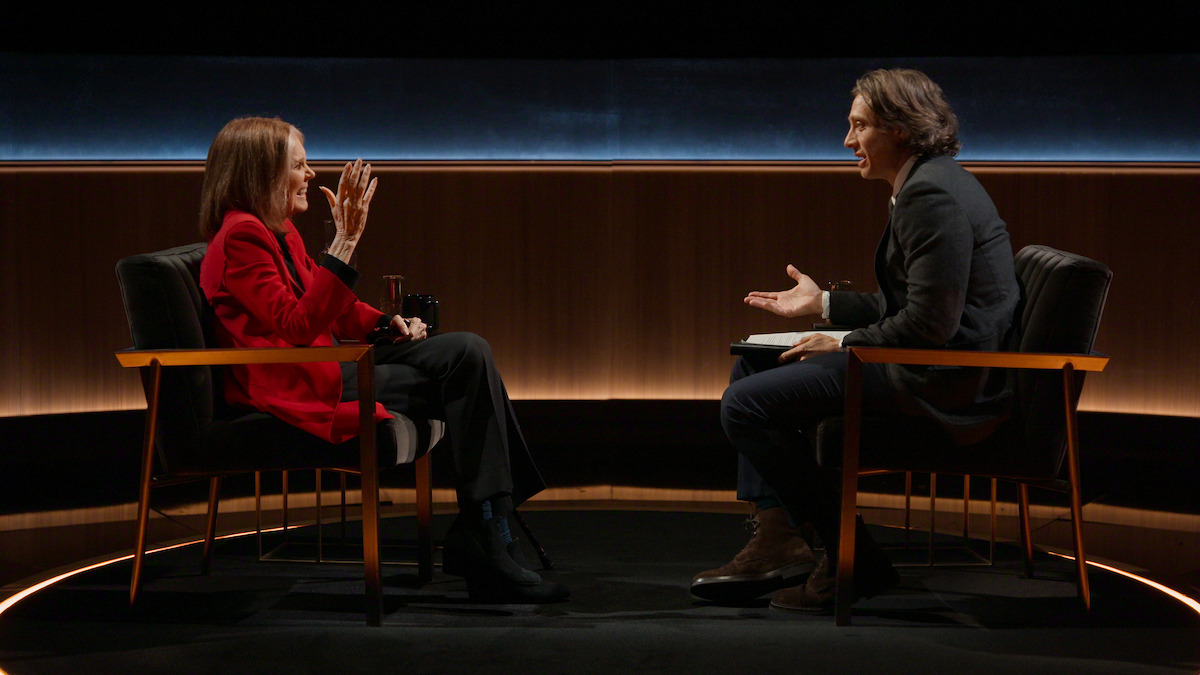
She Agreed to an Interview With an Unusual Rule
Most celebrity interviews are designed for immediate consumption.
A person talks.
The interview is edited.
The audience watches days, weeks or months later.
Then the subject responds to the reaction.
Famous Last Words reverses that relationship.
The participant agrees to speak without knowing when the conversation will become public.
In Steinem’s case, the interview was recorded in February 2025, approximately a year and a half before her death.
Netflix kept the material confidential.
That gave the conversation a very different emotional weight from an ordinary career retrospective.
Steinem was not being asked to promote a book, celebrate an anniversary or respond to that week’s political news.
She was being asked to consider what she wanted to leave behind.
And importantly, she knew the audience would hear her answers in a world where she could no longer participate.
She Refused to Make Feminism About Herself
One of the central themes of the conversation was Steinem’s discomfort with being treated as though she personally represented the entire feminist movement.
For decades, Steinem had been one of the most recognizable faces associated with American feminism.
Her image appeared on magazine covers.
Her speeches were widely reported.
She co-founded Ms. magazine and became a frequent public voice on questions involving women’s rights, equality and political participation.
That visibility made her a symbol.
But in the interview, she pushed back against the idea that feminism could ever be reduced to one person.
Steinem emphasized that movements are collective.
They are built by people whose names become famous and by many more whose names never do.
That distinction mattered to her.
Even in a documentary centered entirely on her own reflections, she resisted turning the history of feminism into a story about Gloria Steinem.
It was consistent with something she had argued throughout her life: lasting social change does not belong to a single leader.
The Conversation Was Not Simply Celebratory
Steinem also discussed disagreements within feminism.
That gave the interview more depth than a traditional tribute might have allowed.
Movements are rarely as unified as they appear when history summarizes them later.
People disagree about strategy.
Generations argue over priorities.
Activists who share broad goals can still clash over methods, language and politics.
Steinem lived through several decades of those debates.
Rather than pretending feminism had moved forward in one smooth line, she acknowledged its internal tensions.
She also talked about unfinished work.
That may be one of the most important elements of the interview because the format could easily have encouraged nostalgia.
Steinem had an enormous history to look back on.
But she did not present equality as a project her generation had completed.
The interview repeatedly turns toward what still remains to be done.
Ms. Magazine Was Part of a Much Larger Story
The discussion naturally returned to Ms., the magazine Steinem helped launch in the early 1970s.
For many American women, Ms. became much more than another publication.
It created a national space for conversations about issues that mainstream media often treated as private, trivial or controversial.
Work.
Marriage.
Child care.
Reproductive rights.
Domestic life.
Politics.
Economic independence.
The magazine gave those subjects a different kind of visibility.
Steinem became inseparable from its public identity, but again, she resisted presenting it as an individual accomplishment.
The interview situates Ms. within a broader network of women organizing, writing and challenging assumptions about what belonged in public debate.
That wider framing seems important to the legacy Steinem wanted to leave.
She had spent decades becoming an icon.
In her final recorded interview, she repeatedly redirected attention toward the movement around her.
Then Brad Falchuk Left the Stage
The structure of the interview changes near the end.
Falchuk leaves.
There is no longer an interviewer asking questions.
No conversation to respond to.
No one else onstage.
Steinem is left alone with the camera.
That moment is central to the concept of Famous Last Words.
It removes the normal rhythm of an interview and gives the subject an opportunity to address viewers directly.
For Steinem, those viewers were necessarily future viewers.
She knew the message would remain locked away until after her death.
That makes the final section fundamentally different from a typical television monologue.
She was not speaking to an audience watching live.
She was speaking across time.
When she looked into the camera, the people receiving the message were people she knew she would never meet afterward.
Netflix held that footage until the condition attached to the project had been met.
Only after Steinem died was the final conversation made public.
The Timing Changes How Every Answer Feels
Knowing when the interview was recorded changes the way it is watched.
If it had been released in February 2025, viewers might have treated it as another extensive interview with a famous activist.
After Sept. 2, 2026, every answer carries another layer.
Steinem knew the circumstances under which the footage would eventually appear.
That does not necessarily mean every sentence should be treated as a literal final statement.
She lived for many months after filming it.
She continued having conversations, relationships and thoughts outside the documentary.
But the project was deliberately constructed as a message intended for publication after her life ended.
That makes her choices significant.
She knew she had limited time in the interview.
She knew what subjects she wanted to discuss.
And she knew there would be no second interview afterward.
Her Legacy Was Never Just About Being Remembered
One of the more interesting tensions in the film concerns the word “legacy.”
Famous people are often asked how they want to be remembered.
The question can encourage a person to summarize themselves.
Steinem had spent much of her public life resisting that kind of individual hero story.
Her work repeatedly emphasized collective action.
So even when asked to consider her own place in history, she returned to the idea that no movement depends on one face.
That may explain why the documentary feels less like a farewell to Steinem than an attempt to pass something forward.
The point is not simply:
Remember me.
It is closer to:
Remember the work.
The Public Can Finally Hear What She Chose to Leave Behind
Steinem’s death on Sept. 2 immediately produced the expected wave of tributes.
People revisited her activism.
They remembered Ms.
They discussed her role in the women’s movement and the enormous cultural changes she witnessed over nine decades.
But one day later, something more personal became available.
Not a speech selected by someone else.
Not an archival clip.
Not a collection of quotations assembled after her death.
A conversation Steinem had knowingly recorded for this exact moment.
She had sat in front of the cameras in February 2025 understanding that the footage would remain private while she was alive.
She had discussed her family, her work, feminism, its divisions and what remained unfinished.
Then the interviewer walked away.
And Gloria Steinem spoke directly to a future audience.
For more than a year, those words remained unseen.
Now, for the first time, the public can hear what she decided was worth saying when she knew she would not be around to hear the response.