Gloria Steinem Avoided Marriage for Decades — Then Christian Bale’s Father Changed What It Meant to Her
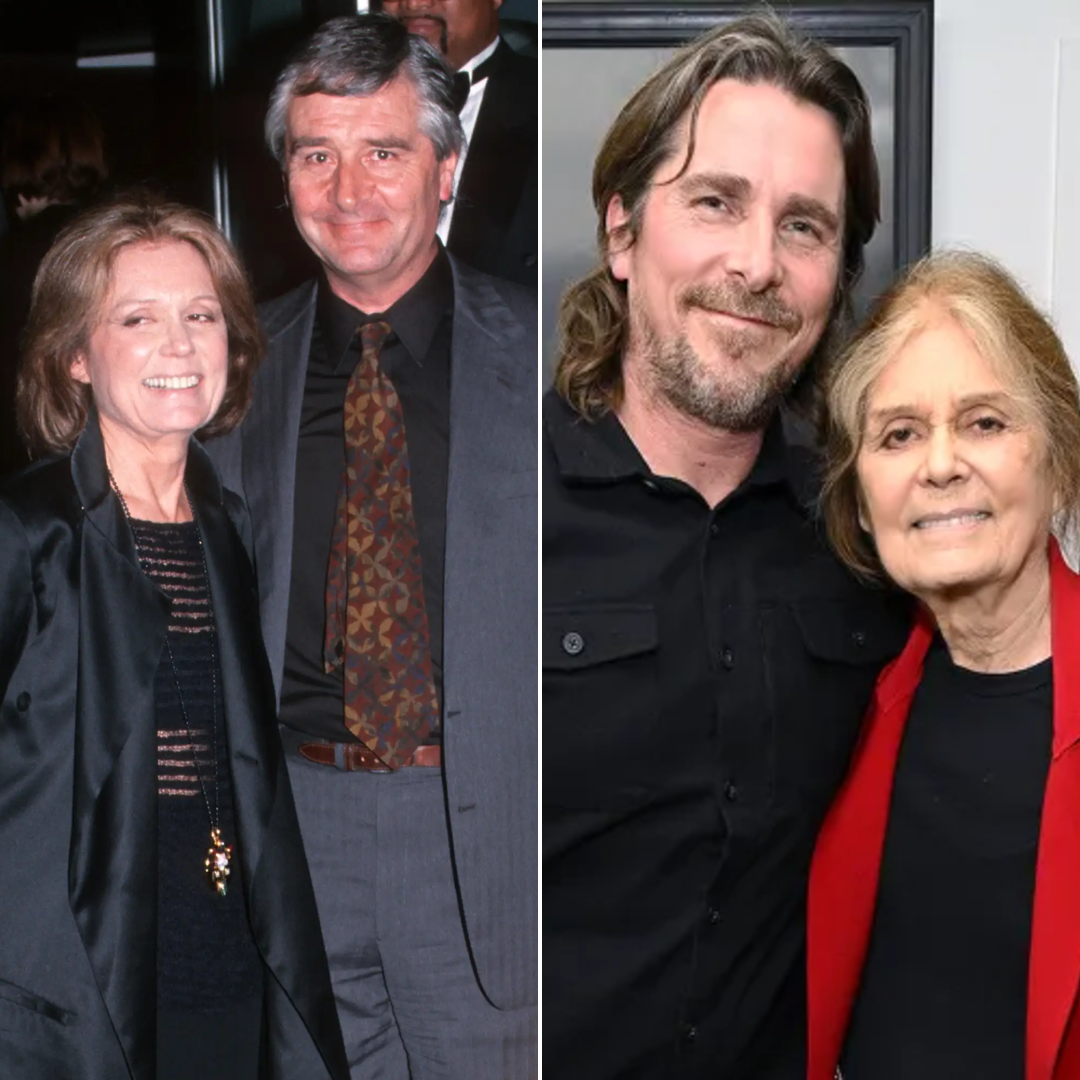
For much of Gloria Steinem’s life, marriage represented something she had deliberately chosen to avoid.
Then, at 66, one of America’s most recognizable feminist activists made a decision that surprised people who knew her public history: she married David Bale, a British businessman and environmentalist who was also the father of actor Christian Bale.
The wedding did not signal that Steinem had suddenly abandoned everything she believed about independence and equality. In her telling, something much more fundamental had changed.
“I didn’t change, marriage changed,” she would later explain.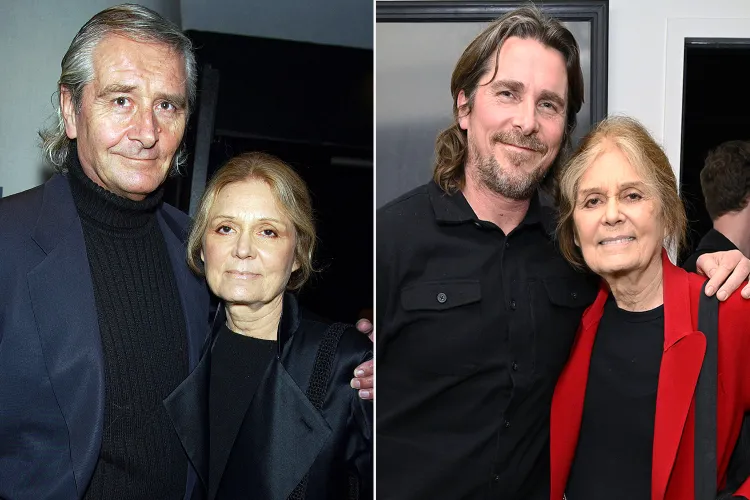
That distinction became the heart of one of the most personal chapters of Steinem’s life — a three-year marriage that began with an intimate Oklahoma ceremony and ended with David’s death in 2003.
Steinem, who died at her New York City home on Sept. 2, 2026, at age 92, spent decades as a journalist, author, political activist and leading voice in the feminist movement. She co-founded Ms. magazine in 1972 and helped establish organizations devoted to advancing women’s rights and representation. Marriage, however, was something she had resisted for most of adulthood.
Years before meeting David, Steinem had even backed away from marriage when the opportunity presented itself.
During her senior year of college, she ended an engagement because the institution seemed to her more confining than liberating. Decades later, while in her 40s, she also broke off an engagement to filmmaker Robert Benton.
Her objections were not simply about romance.
Steinem later pointed to the legal realities women once faced when entering marriage in the United States. Had she married when society expected her to, she said, she could have surrendered important elements of her independence — including rights connected to her name, residence and credit.
By the time David entered her life, however, Steinem believed decades of activism and legal change had made a different kind of partnership possible.
An equal one.
That changed the equation.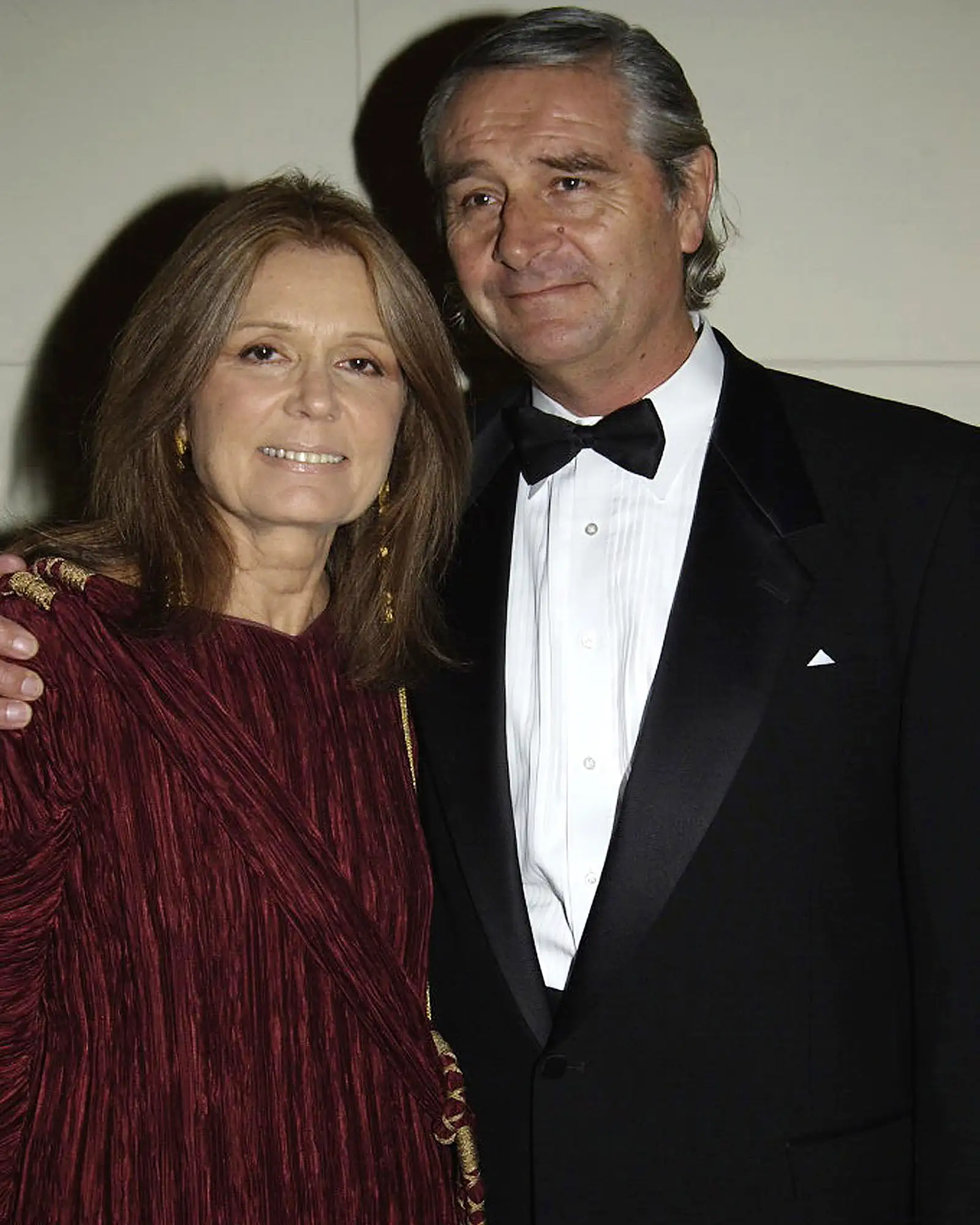
David had already lived a complicated family life before meeting Steinem. He had been married and divorced twice. He shared daughter Erin with his first wife, while his second marriage, to Jenny James, produced daughters Louise and Sharon and son Christian. David and Jenny separated in 1991.
When David fell for Steinem, his admiration went far beyond her public reputation.
He described being captivated by her intelligence, humor and warmth. Long before becoming her husband, he had enthusiastically shared her writing with others, including men he thought particularly needed to hear what she was saying.
Their relationship eventually developed while the two traveled together.
For Steinem, that experience appears to have been crucial.
She had been content with her unmarried life and initially saw little reason to change it. But being with David began to make marriage feel less like surrendering space and more like gaining a permanent ally.
Afterward, she described the experience as feeling “limitless, not limited.”
On Sept. 3, 2000, they made it official.
The ceremony in Stillwell, Oklahoma, was almost the opposite of an elaborate celebrity wedding. Only four guests attended.
Steinem’s longtime friend Wilma Mankiller, the former principal chief of the Cherokee Nation, participated in the ceremony alongside her husband, Charlie Soap. A judge was also present so the union would be legally recognized.
Even the rings reflected the couple’s unconventional approach.
Rather than expensive jewelry, they exchanged beaded rings costing just 95 cents. David also noted that the ceremony avoided traditional language defining them as husband and wife.
It was marriage, but very deliberately on their terms.
There was also a practical element behind making the relationship legal: David needed a visa allowing him to remain in the United States. But Steinem’s later reflections make clear that she saw their partnership as much more than paperwork.
David traveled with her, including to events where she spoke to large audiences. Steinem remembered young women surrounding him afterward, apparently encouraged by the sight of a man enthusiastically supporting a feminist partner.
David embraced that role.
At Smith College, Steinem recalled, he would look at the young women around campus and wonder aloud which of them might someday become president.
Their personalities also seemed to balance each other.
Steinem later said friends believed David had entered her life partly to teach her to experience emotions more deeply and remain in the present. She saw herself as someone constantly thinking ahead — toward the next cause, the next problem, the future that still needed changing.
David brought her attention back to what was happening now.
Their time together was brief.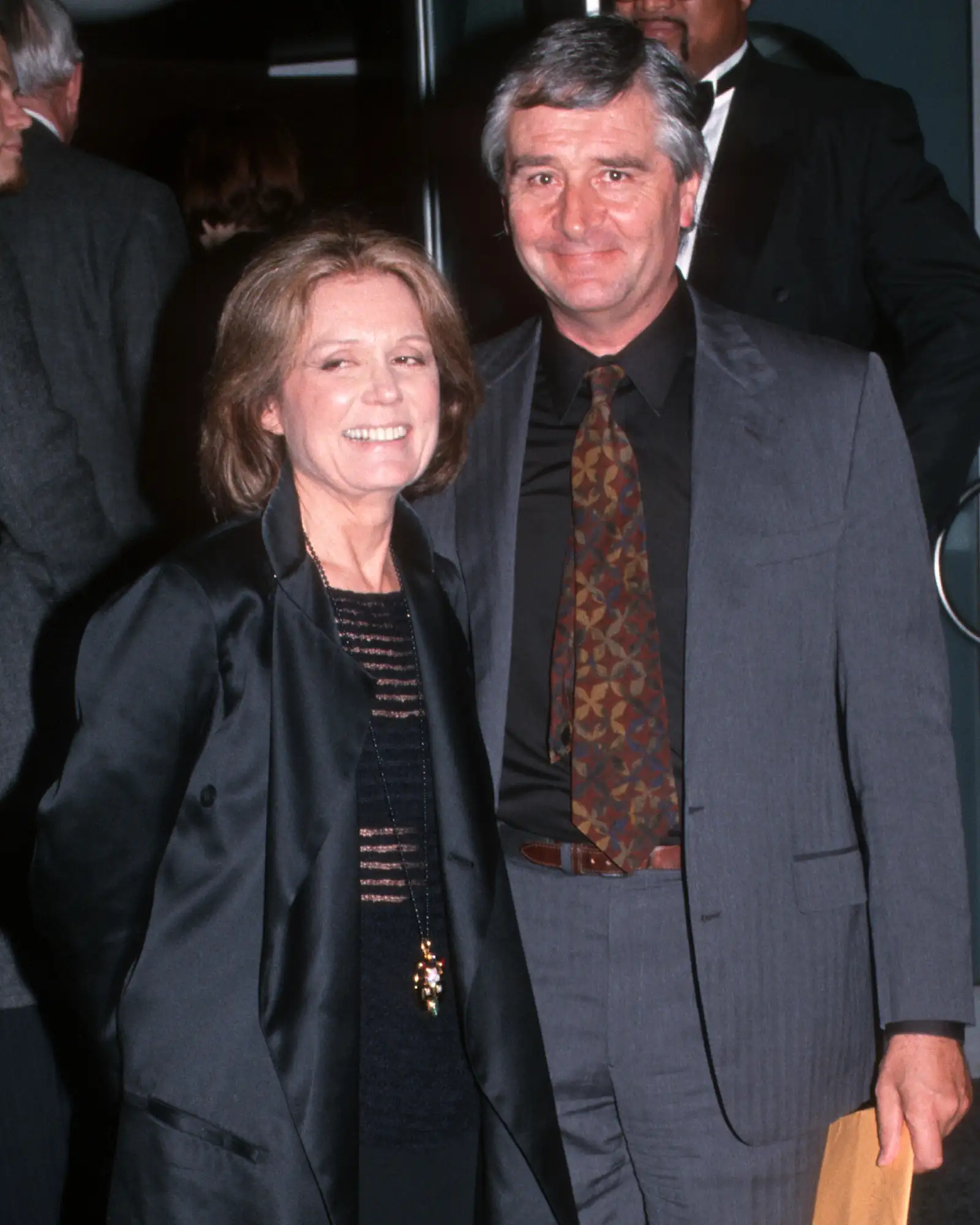
David died in 2003 at age 62, only three years after the wedding. His children were present near the end, and Steinem later spoke warmly of them. But she also described the particular experience of losing a life partner — someone of her own generation who had been beside her in a uniquely intimate way.
Looking back, she said David had taught her something not only about relationships and living in the moment, but also about dying.
That gave the marriage a significance far beyond the unexpected fact that a woman who had resisted the institution for decades eventually entered it.
Steinem did not describe the decision as a repudiation of her earlier beliefs.
Instead, she saw her own story as evidence of how much the institution itself had evolved.
The young Gloria Steinem had looked at marriage and feared what it might require a woman to give up. Decades later, she believed it was possible to build something different — a partnership between equals in which neither person had to disappear inside the other.
And for three years with David Bale, that was the version of marriage she chose.