BABY DOLPHIN PARaded AROUND A BEACH LIKE A TROPHY — SHOCKING CEUTA FOOTAGE SPARKS OUTRAGE
BABY DOLPHIN PARaded AROUND A BEACH LIKE A TROPHY — SHOCKING CEUTA FOOTAGE SPARKS OUTRAGE
A disturbing video from the Spanish enclave of Ceuta has triggered outrage after a group of people were filmed surrounding, carrying and apparently parading a young dolphin around a beach.
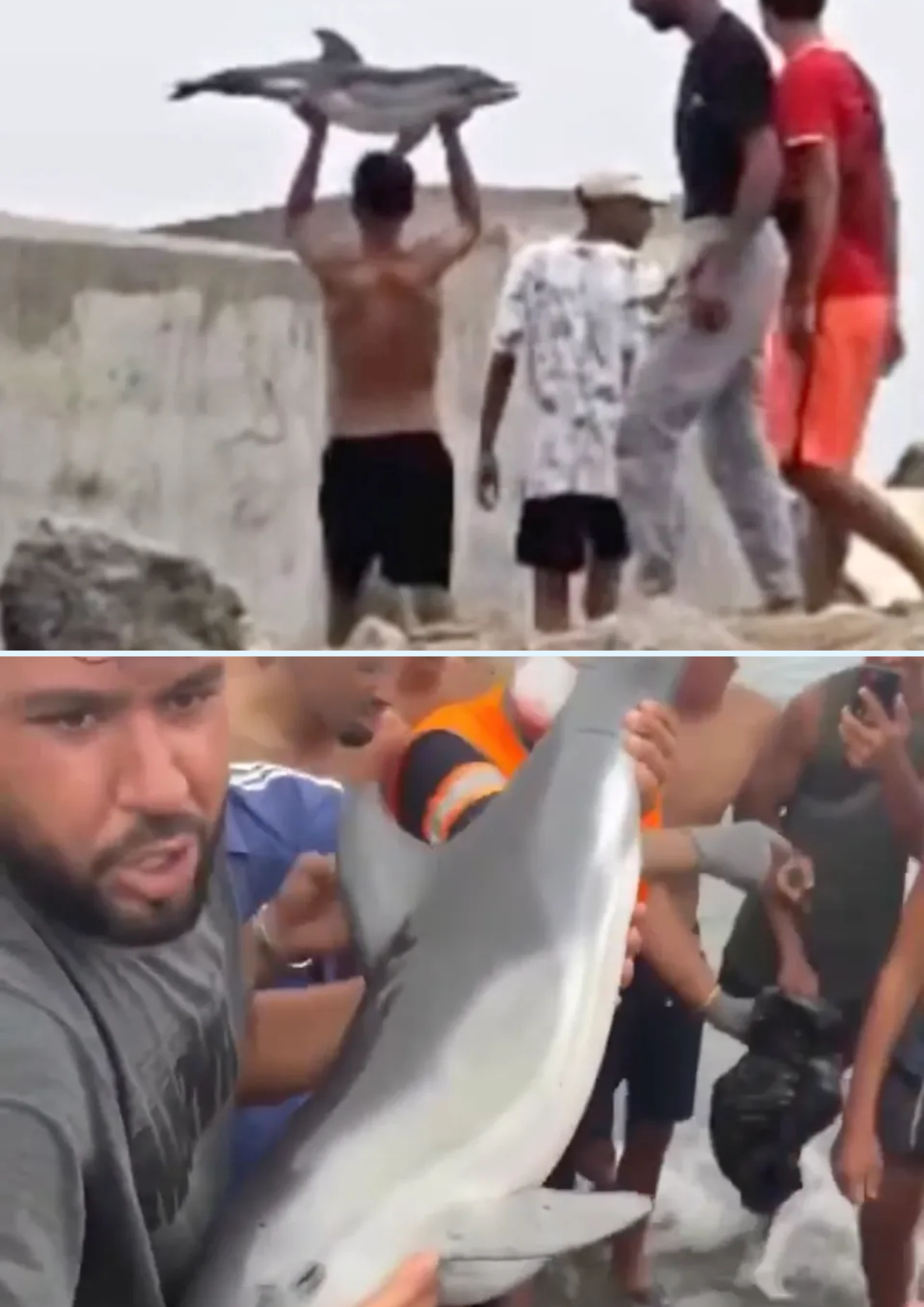
The footage, which spread rapidly across social media, shows the small marine mammal being lifted out of the water and passed around while people gather around it.
What happened next has become the subject of an official investigation.
According to local reports, the dolphin was allegedly struck on the head with a stick and later died.
But investigators still have to establish exactly what happened — and whether the actions captured on camera caused the animal’s death.
 THE DISTURBING SCENES AT TRAMPOLÍN BEACH
The incident happened on Wednesday, September 2, 2026, at Trampolín Beach in Ceuta.
The young bottlenose dolphin was reportedly swimming close to shore when a group of people pulled it from the water.
Video footage shows several men handling the animal and one person lifting it above the ground while others gather around.
The dolphin was then carried toward the rocks.
The scenes quickly attracted attention from people nearby, with some locals reportedly attempting to intervene and stop the group from handling the animal.
At one point, a worker reportedly warned those involved not to handle the dolphin and advised them to contact the appropriate wildlife authorities.
The situation, however, had already become chaotic.
 THE ALLEGED BLOW WITH A STICK
The most serious allegation surrounding the incident is that one person struck the dolphin on the head with a piece of wood.
Local media reported that the blow left the animal severely injured and that it subsequently appeared lifeless.
Some reports say the group eventually attempted to return the dolphin to the water, but by then the animal appeared to have died.
The Sun reported that the footage shows people laughing and treating the animal almost like a trophy.
However, another important detail has emerged.
The viral video alone does not establish exactly how or when the dolphin died.
Spanish fact-checking reporting said the footage is authentic and was filmed at Trampolín Beach, but the images by themselves do not prove whether the dolphin was alive when it was removed from the water or whether the people shown in the footage caused its death.
That distinction is now central to the investigation.
AN ENVIRONMENTAL GROUP FILES A FORMAL COMPLAINT
The controversy has now moved beyond social media.
DAUBMA, an environmental organization in Ceuta, filed a formal complaint with Spain’s Guardia Civil, asking authorities to investigate the animal’s death and identify those involved.
The organization says it collected photographs, videos and screenshots from social media that it believes document the sequence of events.
According to DAUBMA’s account, the dolphin arrived alive and disoriented near the shore before being removed from the water and allegedly struck.
Authorities will now have to determine whether that version is supported by the available evidence.
WHY THE CASE HAS CAUSED SUCH ANGER
Dolphins are protected marine animals under Spanish and European environmental protections, making the allegations particularly serious.
The footage has prompted widespread condemnation online, with people demanding that anyone responsible be identified and investigated.
An online petition has also circulated calling for criminal action over the alleged mistreatment of the animal.
But amid the anger, officials and fact-checkers face another challenge: separating what the footage actually shows from claims that have been added to it online.
The video clearly shows people handling the dolphin.
It does not, by itself, establish every detail of what happened before or after the recording.
CEUTA WAS ALREADY UNDER TENSION
The incident comes at a particularly tense time for Ceuta.
The Spanish enclave, located on the North African coast, has been dealing with the aftermath of a major migration crisis and large numbers of migrants arriving in the territory.
That wider situation has already generated protests, political arguments and intense public debate.
The dolphin incident has now become another flashpoint, with some online posts linking the animal case directly to the broader migration controversy.
But the actions of individuals captured in the footage should not automatically be attributed to migrants as a whole.
The specific people involved and the exact circumstances remain matters for investigators to establish.
WHAT HAPPENS NEXT?
For now, authorities are being asked to answer several basic questions.
Was the dolphin alive when it was pulled from the water?
Was it struck with a stick?
Did that alleged injury cause its death?
And who was responsible for handling the protected animal?
Those questions cannot be answered conclusively from the viral footage alone.
The formal complaint submitted to the Guardia Civil means investigators now have an opportunity to examine the videos, photographs and other evidence and establish what actually happened.
What began as a shocking scene on a Ceuta beach has therefore become a formal environmental investigation.
And as the disturbing footage continues to circulate, the biggest question remains unanswered:
Was the baby dolphin already dying — or did the treatment captured on camera cause its final moments?
That is what investigators now have to determine.