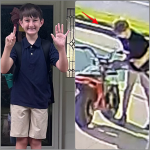
“SHE DESERVED TO BE SAFE”: AUTOPSY REVEALS NEW CLUE IN DEATH OF 5-YEAR-OLD SAYLOR HAYES AS HER PARENTS FACE CHARGES

“SHE DESERVED TO BE SAFE”: AUTOPSY REVEALS NEW CLUE IN DEATH OF 5-YEAR-OLD SAYLOR HAYES AS HER PARENTS FACE CHARGES
She was only five years old.
Saylor Hayes was a vulnerable child whose safety depended on the adults responsible for protecting her.
Now, after her body was found in South Carolina waters, a preliminary autopsy has revealed a crucial new detail — but investigators still do not have all the answers.
And the questions surrounding her final moments are only becoming more difficult.
 A CHILD WHO VANISHED
Saylor, a 5-year-old girl from Virginia, was reported missing on Aug. 30 while staying with her family at a vacation rental in Pawleys Island, South Carolina.
Authorities said Saylor was nonverbal and had a history of wandering.
An enormous search operation followed, involving law enforcement officers, firefighters, search teams, boats, drones, divers and members of the local community.
The search continued through the night.
The following morning, Saylor’s body was discovered in waters near Hagley Landing.
She was wearing a bathing suit, and investigators found a strap around her ankle that appeared consistent with a child’s wrist tether. No obvious external trauma was initially observed.
THE TRACKING DEVICE THAT WASN’T THERE
One of the most troubling details to emerge from the investigation involves Saylor’s Project Lifesaver tracking device.
The program is designed to help authorities locate vulnerable people who may wander away.
But investigators say Saylor was not wearing the transmitter when she disappeared.
Authorities later found the device inside a vehicle back in Virginia.
According to arrest warrants, her parents allegedly knew Saylor was not wearing the device but nevertheless encouraged search efforts involving the tracking technology.
Investigators also allege that searchers were directed away from nearby water.
Those allegations became a central part of the investigation.
 BOTH PARENTS ARRESTED
Saylor’s parents, John Herb Hayes III, 70, and Geordyn Nichole Hayes, 31, were arrested in Tennessee days after their daughter’s death.
They were charged with unlawfully placing a child at risk and/or willfully abandoning a child.
The couple later agreed to return to South Carolina to face the charges.
Sheriff Carter Weaver emphasized that investigators followed the evidence wherever it led.
And he delivered a heartbreaking message about Saylor:
“Saylor deserved to be safe. She deserved to be protected.”
THEN CAME THE AUTOPSY
Now, the medical investigation has produced its first major clue.
A forensic pathologist conducted an autopsy at the Medical University of South Carolina in Charleston.
Preliminary findings showed fluid in Saylor’s lungs, a condition known as pulmonary edema.
The finding is consistent with drowning.
But authorities have stressed that the cause and manner of death remain officially undetermined pending further examination and the final report.
That distinction could prove important.
The preliminary findings do not by themselves establish exactly how Saylor entered the water, what happened immediately beforehand, or whether anyone’s actions directly caused her death.
THE QUESTIONS THAT REMAIN
Saylor’s death has left investigators facing a series of unanswered questions.
How did a vulnerable five-year-old child reach the water?
Why was the tracking transmitter not with her?
What happened during the period before she was found?
And what exactly happened during Saylor’s final moments?
The answers could depend on the remaining forensic work, the investigation and evidence gathered by authorities.
Meanwhile, her parents remain accused — not convicted — and the charges against them are allegations that must be resolved in court.
For the community that spent hours searching for a little girl they desperately hoped to bring home alive, the tragedy has already left an unbearable reality.
Saylor was supposed to be protected.
Now investigators must determine exactly what happened to her — and whether the evidence can finally explain how a five-year-old child ended up alone in the water.