Car Wash Owner Tells Police “I Just Want Them Gone” — Then a Routine Trespass Warning Begins to Escalate
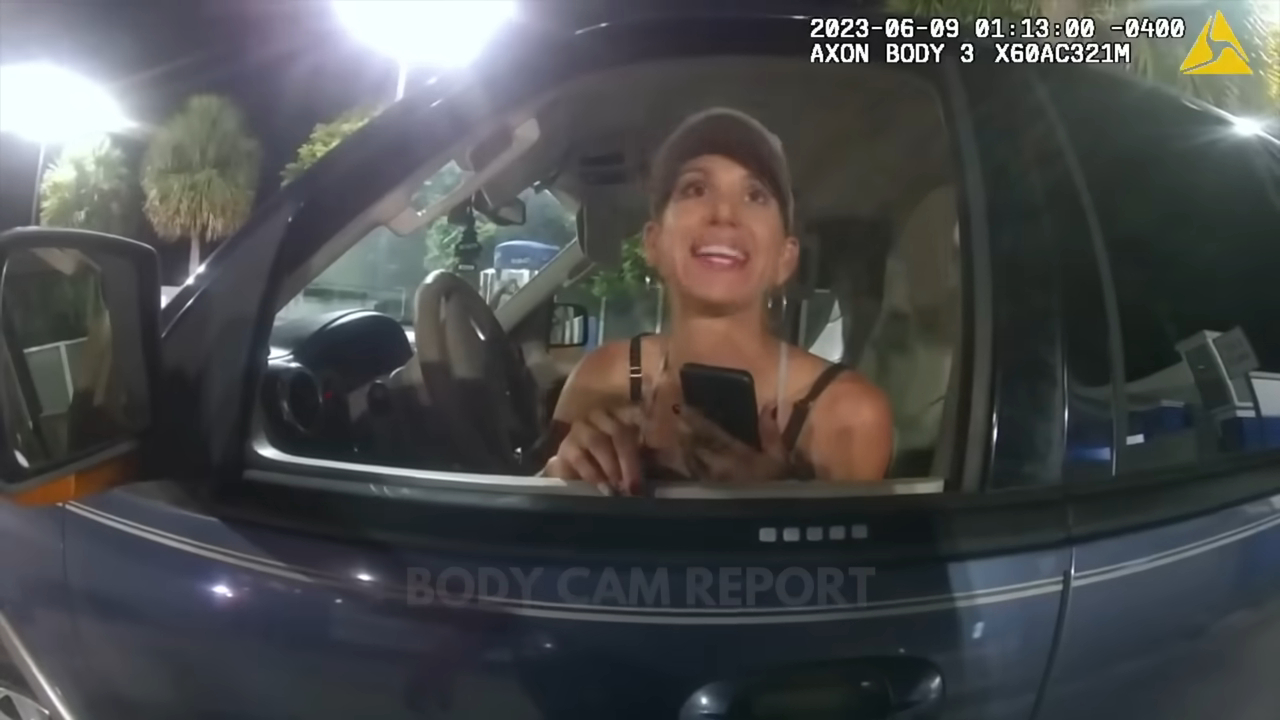
What began as a woman cleaning a recently purchased vehicle at a 24-hour car wash quickly turned into a tense dispute over one deceptively simple question:
If the business was open all night, why did she have to leave?
The answer came directly from the property owner.
On June 9, 2023, police were dispatched to a car wash after a report involving a suspicious vehicle. When an officer approached the woman, she explained that she had recently purchased the vehicle and was trying to clean it while figuring out where several loose pieces belonged. She insisted she had a legitimate reason for spending time there and repeatedly emphasized that the car wash operated 24 hours a day.
At first, the encounter appeared relatively straightforward.
The officer told her that the owner had apparently noticed she had been at the property for an extended period. The woman responded that the vehicle was dirty, that she had sprayed cleaner on greasy areas and that she was working through the loose parts inside the vehicle.
She also said a man she knew was familiar with the owner and had told her everything was fine.
But rather than rely on either side’s understanding of the situation, the officer decided to contact the owner directly.
That phone call would change the direction of the encounter.
The Owner Makes His Position Clear
At approximately 2:05 into the footage, the officer reached the owner of the car wash by phone.
He explained what the woman was doing — using the vacuum and cleaning the vehicle — before asking what the owner wanted police to do.
The response was direct.
According to the owner, the group had been there since about 9:45, roughly three hours.
“I just want them gone,” he told the officer.
The owner said they had occupied the car wash for too long and that he wanted them to leave the property. He then went a step further, telling police that if necessary, they could trespass them because the business already had an authorization arrangement with the department.
The woman overheard enough of the conversation to realize what was happening.
“Trespass for what?” she asked.
That question would become the central conflict of the encounter.
From her perspective, she was at a business that advertised itself as open 24 hours a day. She was cleaning a vehicle, using the property for its apparent intended purpose and believed she had done nothing wrong.
From the owner’s perspective, however, the issue was no longer whether the business was open.
He simply wanted her off the property.
And the officer now had to communicate that message.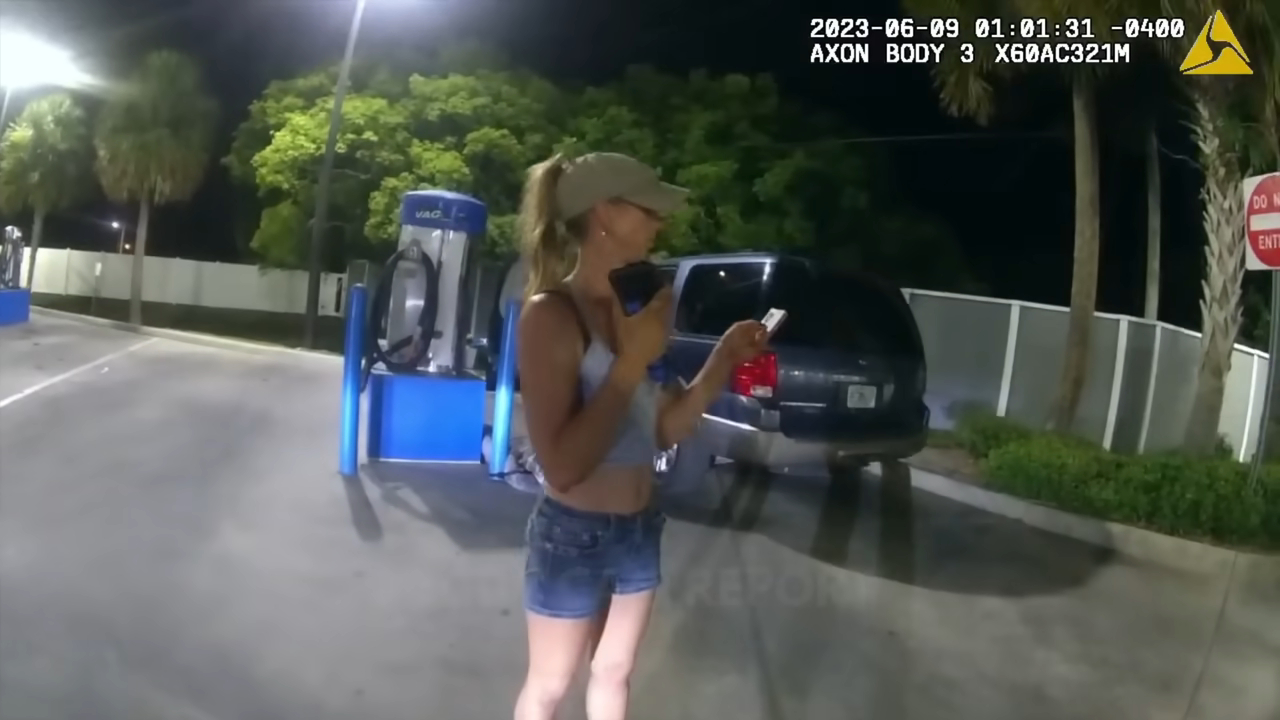
“He Wants You to Leave”
Once the phone call ended, the officer approached the woman again.
“I just spoke to the owner on the phone,” he told her, explaining that the owner wanted her to leave because she had reportedly been there for approximately three hours.
The woman immediately returned to the reason she had already given.
She had just purchased the vehicle, she said, and was trying to determine where numerous pieces belonged.
The officer acknowledged her explanation but repeated that the owner wanted her gone.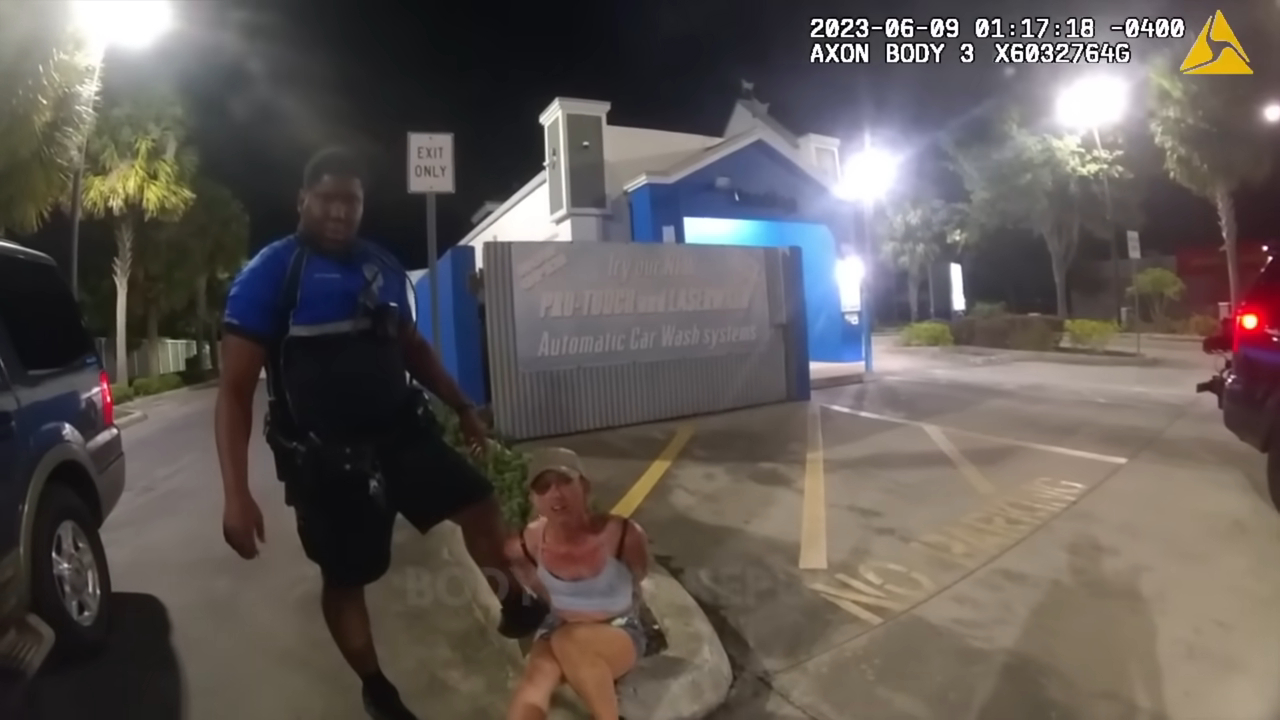
“He said if you refuse to leave, I should trespass you,” the officer told her.
The woman did not seem to view herself as refusing.
Instead, she wanted more information.
She said she intended to call someone who knew the owner and appeared to believe there might be some misunderstanding. The officer told her she could pack up, go across the street and make the call from there.
For the officer, the matter appeared settled: the owner had personally confirmed that he wanted her to leave.
For the woman, however, the fact that the car wash was open 24 hours remained difficult to reconcile with what she was being told.
As she continued gathering her belongings, she complained aloud that she was being treated as though she had done something wrong.
She described herself as someone simply trying to clean a vehicle she had recently acquired.
Then she summarized the situation as she understood it: she was being ordered to leave, and if she did not leave, she could be accused of trespassing.
The dispute was no longer only about the car wash.
It was beginning to become a dispute about whether she trusted what the officer was telling her.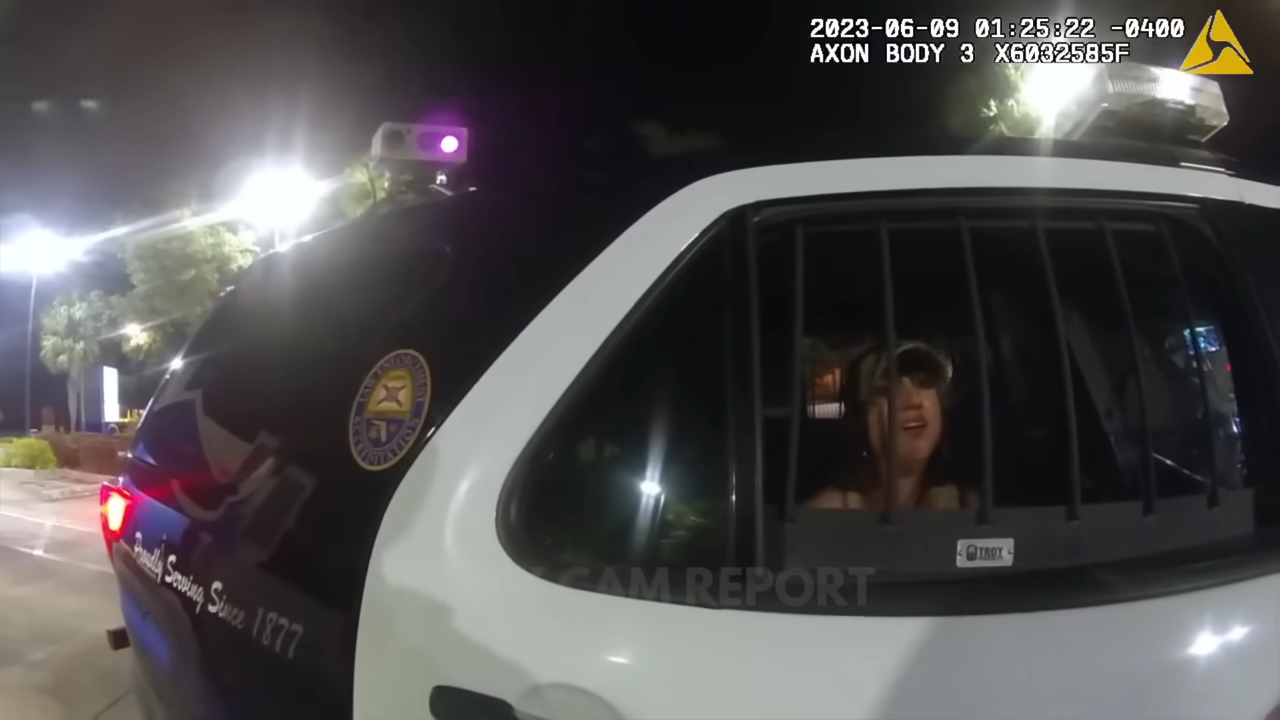
She Wants Proof
At approximately 4:20, that distrust became more visible.
The woman asked the officer to write down the owner’s name, saying she wanted proof of what she had been told.
The officer responded with another question:
“Are you refusing to leave?”
“I’m not refusing,” she answered.
She said she simply wanted something documenting the information.
The officer told her that he did not have to provide the owner’s name and suggested that she could search for the business ownership information herself.
That was when her focus shifted.
Instead of continuing to press only for the owner’s identity, she began asking for the officer’s information.
“I want your badge number and your name,” she said.
The officer provided both.
“My badge number is 294. Officer Hamilton.”
He then repeated the instruction that she needed to leave and offered to provide her with a business card containing his information.
Yet even that did not immediately satisfy her.
She continued questioning what information the card actually proved.
What had begun as a disagreement over how long someone could remain at a car wash was now developing into something more serious: a growing challenge over authority and identity.
The officer had contacted the owner.
The owner had explicitly said he wanted the woman gone.
The officer had communicated that instruction multiple times.
And the woman, while saying she was not refusing to leave, was increasingly focused on verifying the people giving her those orders.
That distinction would soon become critical.
Because as the encounter continued, her concern would move beyond the business owner entirely.
She would begin openly questioning whether the man standing in front of her was actually a police officer at all — and what happened next would turn a property dispute into a far more dramatic confrontation.