Traffic Stop Escalates After Miranda Warning, Alleged Cocaine Test and Firearm Discovery
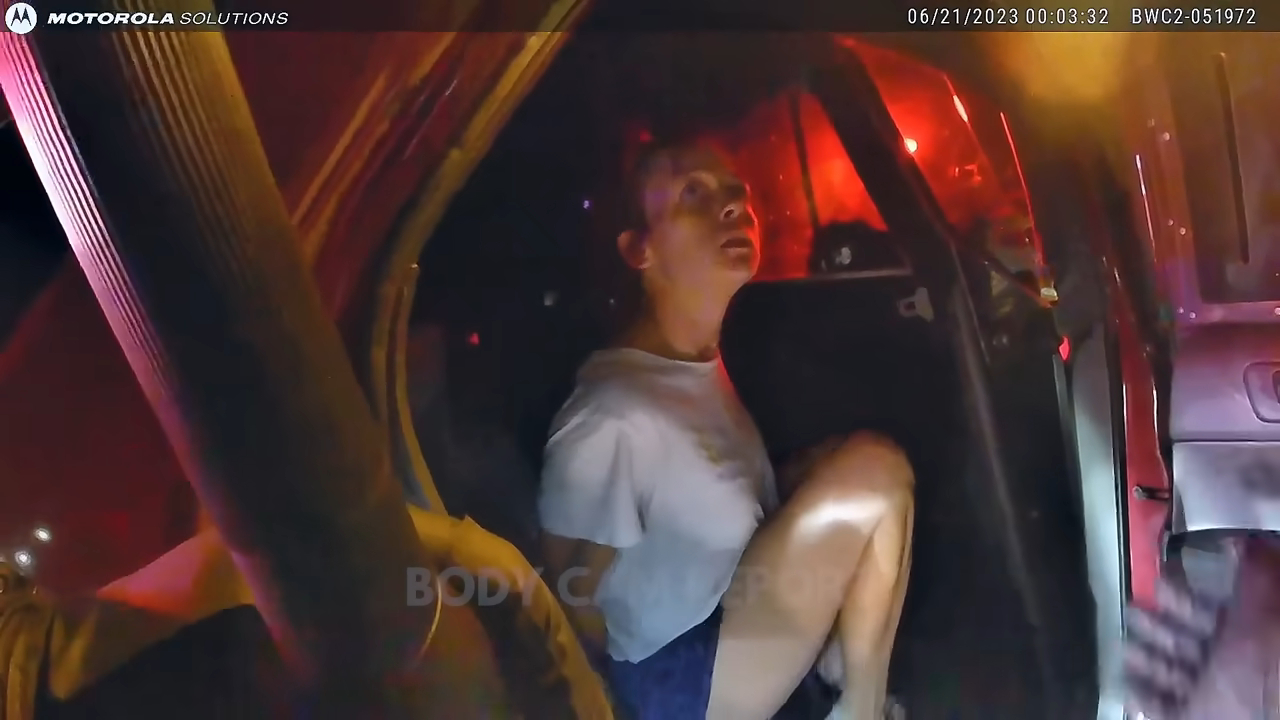
What began as a routine traffic stop had already become tense.
But around the 10-minute mark, the encounter entered an entirely different phase.
By then, officers had already detained the occupants of the truck and were investigating items they believed could be connected to drug use. The man had become increasingly confrontational, while the woman was facing questions about objects officers said had been found on or near her.
Then an officer issued a warning that made the seriousness of the situation unmistakable.
“You’re getting another felony charge.”
The remark came as officers tried to control the man’s behavior and prevent the confrontation from escalating further. He continued arguing, while police warned that continuing to act out could only make matters worse.
Within moments, however, the focus shifted back to the woman.
This time, the officer was no longer asking informal questions.
He was preparing to advise her of her rights.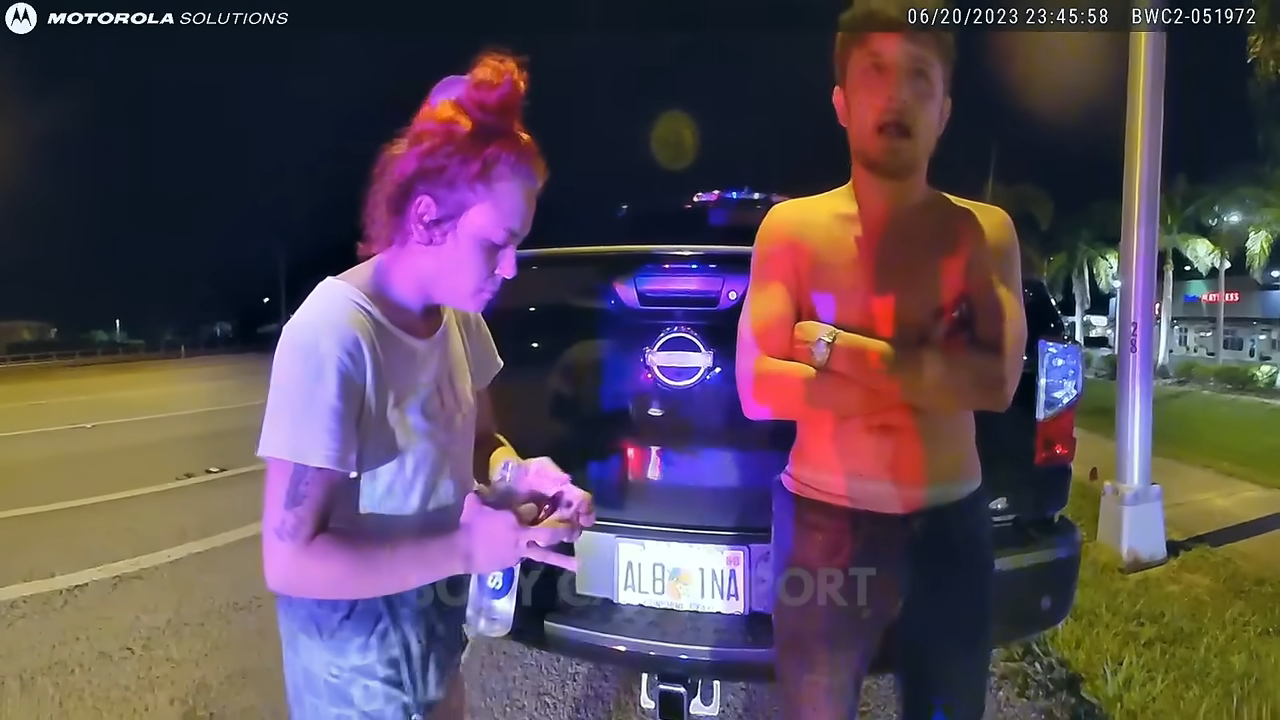
The Officer Reads Her Miranda Rights
At approximately 10 minutes into the encounter, the officer acknowledged that the interaction had gotten off to a difficult start.
He told the woman that she appeared nervous and said he wanted to proceed differently before asking further questions.
Then he began reading her Miranda rights.
She was told that she had the right to remain silent, that anything she said could be used against her in court and that she had the right to speak with an attorney. The officer also explained that if she could not afford a lawyer, one could be appointed for her.
He further told her that even if she chose to answer questions without a lawyer present, she could stop the questioning at any time.
After finishing, the officer asked whether she understood.
He then asked if she was willing to speak with him.
Her answer opened the door to one of the most significant moments of the encounter.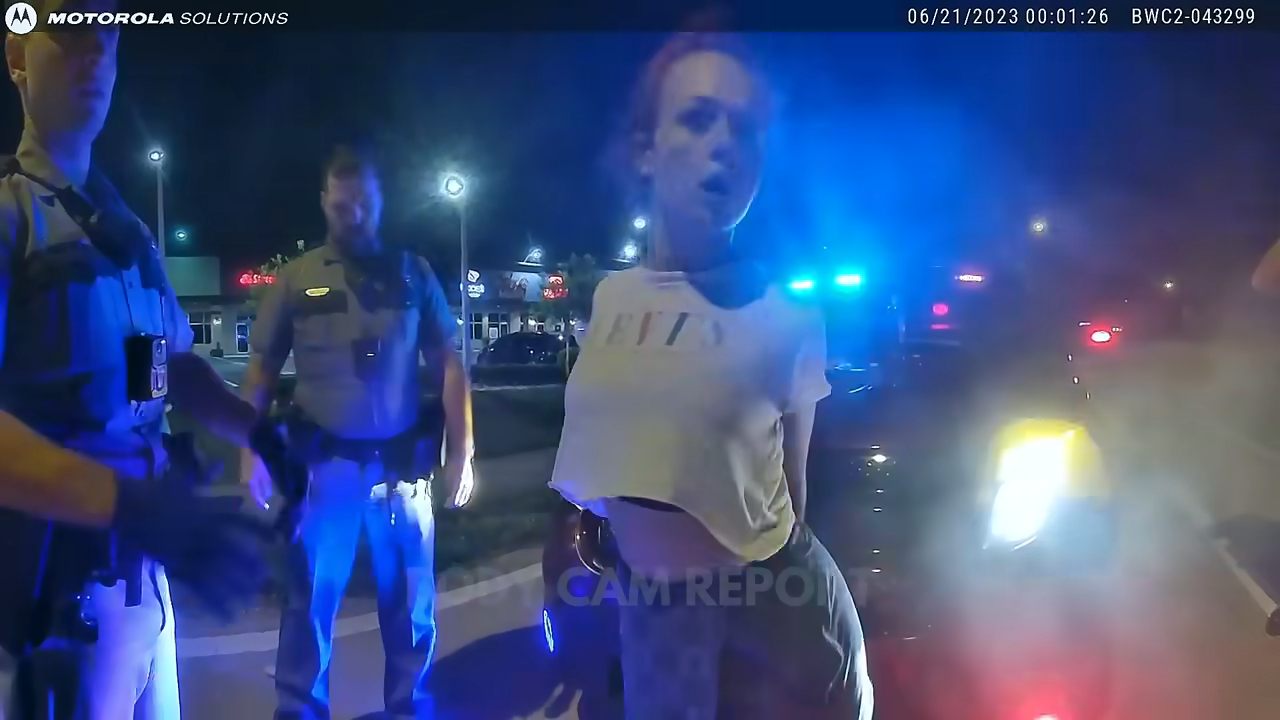
Police Say a Substance Tested Positive
The conversation immediately turned toward a substance police had apparently tested.
The woman asked why officers were so certain it was cocaine.
An officer responded:
“I’m positive. I just tested it.”
He added that he believed additional testing could also reveal cocaine and possibly fentanyl, though the transcript does not provide laboratory confirmation at that point.
The woman then questioned why the man would have the substance.
The officer turned the question back on her.
“I don’t know. You tell me.”
He then asked whether police would find anything else inside her purse — or anything else concealed on her that jail staff might later discover.
The officer made clear that, at minimum, she was already facing arrest over suspected paraphernalia.
What followed dramatically changed the story she had previously given police.
“As Soon as You Turn Away, I Put It in My Pants”
Earlier in the stop, the woman had disputed the officer’s suspicion that she was trying to conceal an object.
Now, after the Miranda warning, she began acknowledging much more.
The officer referred to an item that appeared to have fallen from her clothing and asked whether she had been trying to hide something as he approached.
Her answer was hesitant at first.
Then she admitted that she had seen the object on the seat.
“I seen it and I knew it was in the seat,” she said.
And then came the key admission:
“As soon as you turn away, I put it in my pants.”
She said she knew the object was there and acknowledged concealing it when the officer’s attention shifted.
She also described trying to hide another item with her pants while getting out of the vehicle.
That admission was significant because the officer had accused her much earlier of trying to conceal evidence.
Now, in her own words, she was confirming that she had deliberately moved at least one object from the seat into her clothing.
But there was another complication.
Police believed something was still hidden.
“It’s Inside Your Underwear”
As a female officer prepared to conduct a search, officers questioned the woman about whether she had anything else on her.
The answer quickly became clear.
“It’s inside your underwear,” an officer said.
The woman acknowledged that something was concealed there.
Rather than immediately attempting to retrieve it, officers discussed how the item would ultimately be removed, including the possibility that jail personnel would handle it later.
The woman appeared worried about additional charges.
“I’m not trying to get any more charges,” she said.
The officer responded that failing to disclose concealed contraband would not necessarily protect her.
“If I don’t find it, the jail will,” he warned, adding that she could still be charged when it was discovered.
The exchange placed the woman in a difficult position.
Continuing to conceal the object could create another legal problem.
Admitting its existence, however, meant acknowledging that she had been hiding something from police.
She chose the latter.
And that decision appeared to matter.
Officer Says Her Honesty Made a Difference
After the search continued, officers prepared to place the woman in a patrol vehicle.
But before doing so, one officer addressed the concealed item again.
He told her that because she had been honest about having something hidden, he would not add another charge specifically for that circumstance.
“We just can’t get it out right now,” he explained.
He said that charging her after she voluntarily disclosed the concealed object would be “completely unfair.”
The woman thanked him.
It was a rare moment of relative calm in an encounter that had become increasingly chaotic.
But it lasted only briefly.
Officers were still searching the truck.
And the search was about to produce another major discovery.
Officers Smell Marijuana — Then Find a Gun
As officers moved through the vehicle, one remarked that it smelled like marijuana.
Then came another instruction:
“Check for a firearm. If you see one, let me know.”
Within seconds, another officer responded.
“I got the firearm right here.”
The discovery immediately added a new layer to the investigation.
Police began examining the weapon and discussing other items inside the vehicle, including what appeared to be oil in a bag.
Their attention soon turned to the gun’s identifying markings.
One officer asked about the serial number.
Another appeared uncertain about what he was seeing, remarking that the number seemed unusually short for a serial number located on the firearm.
At that point, the stop had moved far beyond its original traffic-related purpose.
Police were now dealing with a suspected controlled substance, alleged attempts to conceal evidence, suspected drug paraphernalia, an item hidden inside the woman’s clothing and a firearm discovered during the vehicle search.
And officers were still not finished looking.
What remained inside the truck — and what the investigation would ultimately mean for both occupants — was about to determine how a roadside encounter turned into a criminal case with far more serious consequences.