MIDDLESBROUGH SCHOOLS SHUT EARLY FOR A66 FUNERAL — HEADTEACHERS ACCUSED OF “GIVING IN TO THUGS”
MIDDLESBROUGH SCHOOLS SHUT EARLY FOR A66 FUNERAL — HEADTEACHERS ACCUSED OF “GIVING IN TO THUGS”
Schools across Middlesbrough were forced to shut their doors early as hundreds of mourners prepared to attend a funeral linked to the deadly A66 crash — triggering a fierce political row over safety, disorder and whether children’s education is being disrupted by fear.
At least six schools in the South Bank area closed early on Friday, September 4, ahead of the funeral of Jakub Matusiak, 23, one of five young men who died in the August 22 crash.
The decision was made after local headteachers and Redcar & Cleveland Borough Council discussed concerns about large crowds, traffic congestion and transport disruption around the funeral route.
But the move immediately attracted criticism.
 “ARE WE LETTING THEM DICTATE OUR LIVES?”
The funeral was expected to draw hundreds of people, with motorbikes and quad bikes also anticipated in the South Bank area.
That raised concerns because previous gatherings connected to the crash had descended into disorder.
Conservative politicians accused authorities of allowing criminality and intimidation to dictate normal life.
Shadow Education Secretary Laura Trott argued that children should not lose classroom time because of the behaviour of people causing disruption.
Her criticism was echoed by others who questioned why schools — rather than those responsible for disorder — should bear the consequences.
The political argument was blunt:
Should schools really have to close because a funeral might attract trouble?
 SCHOOLS SAY SAFETY CAME FIRST
Headteachers defended the decision as a practical safety measure rather than a surrender to criminality.
South Bank Primary School said it would close at midday to ensure the safety and wellbeing of pupils, staff and families.
The council said the decision followed discussions with headteachers and was based on the anticipated impact on school transport and the movement of children and families leaving the schools.
In other words, officials said the decision was about managing a potentially dangerous and congested area — not about endorsing the behaviour of anyone who might cause trouble.
THEN HUNDREDS FLOODED THE STREETS
When the funeral procession arrived, the scale of the gathering became clear.
Around 300 people followed the cortege through Middlesbrough, with some wearing balaclavas.
Luxury vehicles, including a Lamborghini, Rolls-Royce and Aston Martin, were also seen in the procession.
Normanby Road was closed and businesses also shut early as the crowd moved toward St John the Evangelist Church.
Despite the fears surrounding the event, the funeral itself was largely peaceful.
But the scenes reinforced why authorities had been concerned about congestion and public safety.
THE A66 CRASH THAT SHOCKED THE TOWN
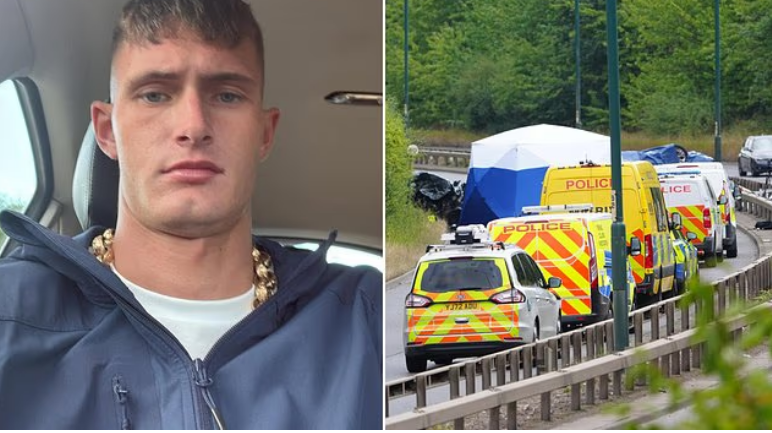
Matusiak was one of five occupants of a Volkswagen Passat involved in the fatal August 22 collision.
Police said the Passat was travelling the wrong way along the A66 when it collided head-on with a marked police vehicle.
Matusiak, Cole Worthy, 17; Theo Rae, 17; Makai Saddington, 18; and Michael Cahill, 23, all died.
So did two police officers, PC Matthew Blades, 37, and PC Tom Clough, 38.
The tragedy was followed by unrest, additional arrests and heightened police activity across the region.
Cleveland Police brought in around 200 officers from neighbouring areas during the period of disorder.
AND THE CONTROVERSY DIDN’T END THERE
Just days later, schools again faced early closures ahead of the funeral of Theo Rae, 17, another of the young men who died in the A66 crash.
Cleveland Police warned residents about potential traffic disruption as the cortege travelled through Middlesbrough.
Several schools again announced early closures, with one saying the decision was intended to ensure pupils could travel home safely.
That second round of closures intensified the debate.
Critics argued that repeatedly shutting schools sends the wrong message.
Supporters countered that schools have a duty to protect children when large crowds and significant disruption are expected.
WHO SHOULD BEAR THE COST?
That is now the uncomfortable question facing Middlesbrough.
The families of those who died want to mourn.
Schools want to protect children.
Police want to prevent further disorder.
And politicians are arguing over whether the response should be more policing — or simply keeping schools open and refusing to let fear dictate everyday life.
For parents, however, the calculation is much simpler.
They want their children home safely.
And after a tragedy that has already claimed seven lives, few school leaders appear willing to take chances.
The funerals were meant to be moments of grief.
Instead, they have become another flashpoint in Middlesbrough’s growing debate over crime, policing, public safety — and how much disruption a community should be expected to tolerate.