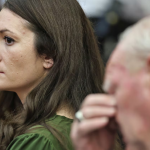
“HE SAID HE HAD DOUBT — BUT STILL WOULDN’T ACQUIT”: LINDSAY CLANCY’S ATTORNEY REVEALS WHY ONE JUROR CHANGED EVERYTHING

“HE SAID HE HAD DOUBT — BUT STILL WOULDN’T ACQUIT”: LINDSAY CLANCY’S ATTORNEY REVEALS WHY ONE JUROR CHANGED EVERYTHING
For seven days, 12 jurors wrestled with one of the most emotionally charged questions in the Lindsay Clancy case.
Then the trial ended without an answer.
A mistrial was declared after the jury failed to reach a unanimous verdict in the case against Clancy, the Massachusetts mother accused of killing her three young children in January 2023.
According to the jury foreperson and other jurors who later spoke publicly, the panel was divided 11–1.
Now Clancy’s attorney, Kevin Reddington, is explaining why he was so frustrated with the lone holdout — and why he believes that juror’s position prevented the case from reaching a verdict.
 “THAT’S NOT RIGHT”
Appearing on Good Morning America on September 8, Reddington said his frustration was not simply because one juror disagreed with the other 11.
He said he respected the juror’s right to hold a different opinion.
What troubled him, he explained, was the claim that the juror acknowledged having doubt but still refused to apply the legal standard of reasonable doubt.
“What I was upset about,” Reddington said, was that after a lengthy trial, one juror “had doubt but he would not apply the law of reasonable doubt as presented by the judge.”
“That’s not right and that’s why I was upset,” he said.
Reddington’s comments were noticeably more measured than those he made immediately after the mistrial was declared.
On Friday, he accused the holdout of having “robbed” his client and described the juror as having taken away seven weeks of the other jurors’ lives.
But on Tuesday, he emphasized that he still respected the juror’s legal right to disagree.
 THE 11–1 DEADLOCK
The jury consisted of nine women and three men.
After more than 38 hours of deliberations, jurors repeatedly told Judge William Sullivan they could not reach an agreement.
A note from the foreperson appeared to indicate an 11–1 split.
The defense then asked the judge to remove the holdout juror, arguing that he was refusing to follow the court’s instructions regarding reasonable doubt.
The judge rejected the request.
The jury was given additional instructions and sent back to deliberate.
But the disagreement remained.
Eventually, Judge Sullivan declared a mistrial.
One juror could not agree with the other 11.
And in a case requiring unanimity, that was enough to prevent a verdict.
WHAT WAS THE JURY ACTUALLY DECIDING?
The central issue was not whether Clancy had caused the deaths of her three children.
Her defense acknowledged that she was responsible for their deaths.
The battle in court was over criminal responsibility.
Clancy’s attorneys argued that she was experiencing severe postpartum psychosis and other serious mental-health problems at the time.
They maintained that her psychiatric condition prevented her from understanding the wrongfulness of her actions.
Prosecutors argued that Clancy was not legally insane and that her actions were deliberate.
The jury was allowed to consider several possible outcomes, including first-degree murder, second-degree murder and manslaughter, as well as a finding that Clancy was not criminally responsible because of mental illness.
That legal question ultimately divided the jury.
A CASE THAT HAS DIVIDED THE PUBLIC
The Lindsay Clancy case has generated intense debate since the deaths of her children in January 2023.
Her supporters have pointed to evidence of a devastating psychiatric decline and have argued that the medical system failed her.
Prosecutors have presented a fundamentally different interpretation, arguing that Clancy’s actions demonstrated intent and that mental illness did not remove her criminal responsibility.
The trial brought psychiatrists, medical professionals, family members and other witnesses to the stand.
Jurors later described the evidence as emotionally difficult, with some saying they believed the prosecution had failed to adequately account for the severity of Clancy’s mental-health condition.
But despite the apparent 11–1 division, there was never a final verdict.
NOW, EVEN A PLEA DEAL IS ON THE TABLE
Following the mistrial, Reddington has signaled that the defense is willing to consider options beyond another full trial.
Speaking publicly, he suggested that he hopes Plymouth County District Attorney Timothy Cruz might reconsider the case and negotiate an outcome acceptable to both sides.
That represents a notable shift after Reddington had previously celebrated what he considered a strong defense presentation.
Prosecutors, however, have not announced whether they will retry Clancy.
The case remains open, and the parties are scheduled to return to court on September 29.
AND CLANCY REMAINS IN CUSTODY
Clancy remains at Tewksbury Hospital while the legal process continues.
She is paralyzed and uses a wheelchair after surviving a suicide attempt following the deaths of her children.
The three children at the center of the case were Cora, 5, Dawson, 3, and Callan, who was eight months old.
Their deaths remain the devastating foundation of a case that has now produced no conviction and no acquittal.
The mistrial does not mean Clancy has been found innocent.
It means the jury could not reach the unanimous decision required to resolve the criminal charges.
And now prosecutors face a difficult choice: try the case again, negotiate a resolution or take another legal path.
For the Clancy family, and for the families and communities affected by the tragedy, the uncertainty continues.
Seven days of deliberations produced no verdict.
One juror stood apart from the other 11.
And now, after more than three years, the Lindsay Clancy case is still not over.