Woman’s Medical Call Turns Into DUI Arrest After Police Say She Refused to Exit Vehicle
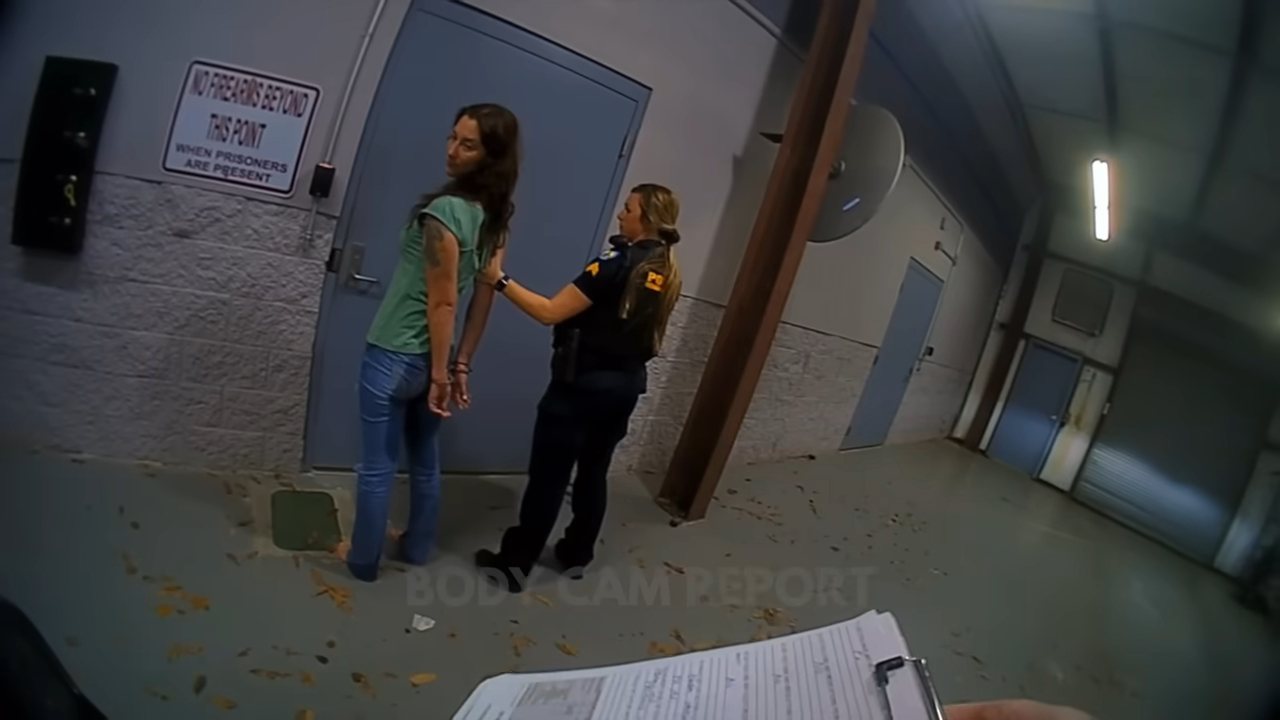
What began as a possible medical emergency behind the wheel ultimately developed into a DUI investigation, an arrest and a dispute over whether a woman had repeatedly refused lawful police commands.
On March 25, 2024, officers responded after a caller reported a woman apparently passed out inside a vehicle. Police initially struggled to wake her, while relatives told officers that she had a history of seizures.
But as the encounter continued, officers began questioning whether a medical episode fully explained what they were seeing.
By the time the woman finally opened the vehicle, one officer said she appeared heavily intoxicated. He ordered her to step outside, but she refused.
That refusal quickly became the central issue.
And within minutes, the confrontation escalated from repeated verbal commands to a physical arrest.
“You’re Both Going Down”
The tension became especially intense around the nine-minute mark.
The officer continued telling the woman to get out of the vehicle while she repeatedly demanded that police not touch her.
A family member was also nearby and appeared to become involved in the confrontation.
As voices overlapped and the situation became increasingly chaotic, the officer warned:
“You’re both going down.”
He then explained why he believed the woman’s condition was more than a medical concern.
According to the officer, she was visibly intoxicated.
He also suggested that the behavior of her relative supported that conclusion, arguing that the family member had been trying to get her inside the house quickly because she knew the woman was impaired.
“She’s intoxicated. You know she is,” the officer said. “That’s why you came out here trying to get her inside.”
The woman continued resisting the officer’s efforts to remove her.
Police had already warned her that refusing a lawful order to exit the car could constitute obstruction or resisting.
Now the encounter had moved beyond warnings.
Officers began taking control of her physically.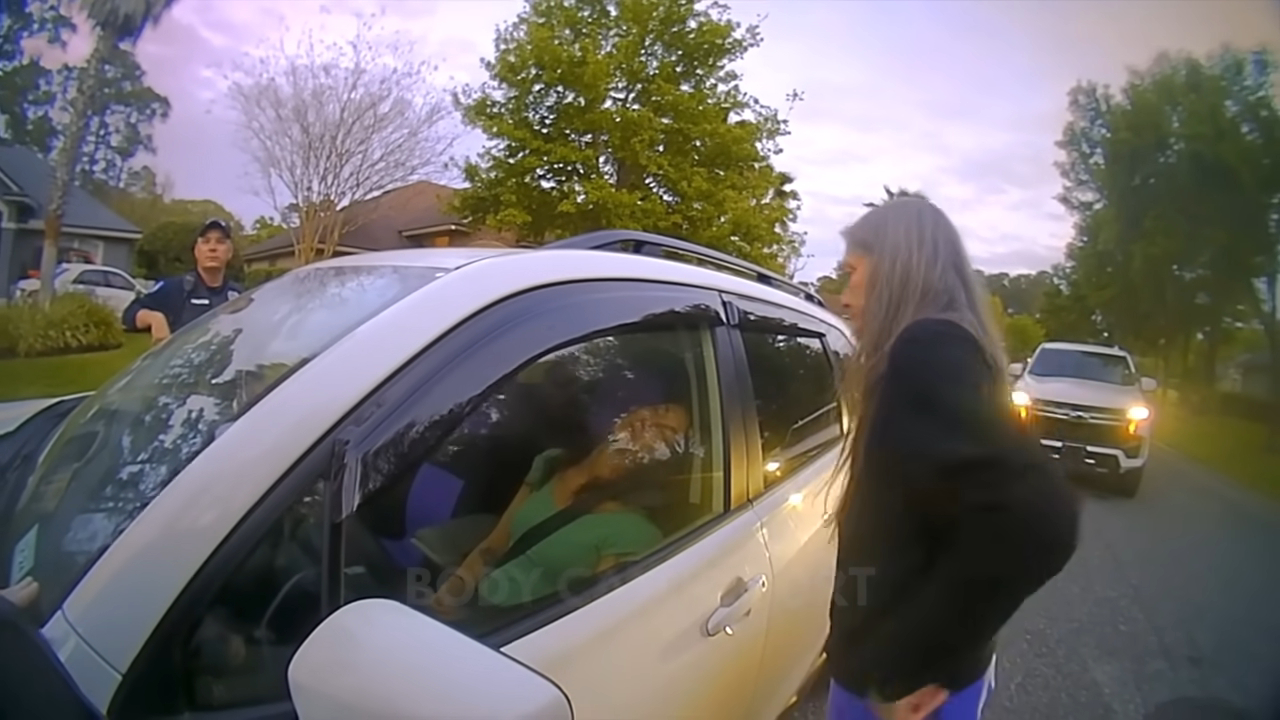
A Warning About a Possible Felony Charge
Once officers started moving the woman toward a patrol vehicle, the struggle did not immediately end.
She remained verbally combative and continued reacting to officers as they attempted to position her inside the car.
At one point, an officer told her to sit down.
Then, while trying to get her legs inside, he issued another blunt warning.
“Go ahead. Kick me.”
Immediately afterward, he warned that doing so could result in another felony charge.
The exchange reflected how quickly the situation had shifted.
Minutes earlier, officers had been debating whether the woman might be experiencing a seizure.
Now she was in police custody, with officers warning that any additional physical confrontation could expose her to more serious charges.
But the family still appeared confused about how the situation had reached this point.
Eventually, one officer explained the entire sequence.
Officer Reconstructs What Happened Before Police Arrived
Around 12:49 in the footage, the officer spoke directly to a family member and laid out the reason police had become suspicious in the first place.
According to the officer, the original complainant said the woman had nearly crashed into another vehicle.
The other driver reportedly had to swerve off the road to avoid being struck.
Afterward, the woman was found parked in what the officer described as a “heavy stupor,” barely responding to people trying to wake her.
The officer said the complainant had attempted to get a response before police were called.
When officers arrived, they also had difficulty waking her.
Once she became responsive, the officer said he believed she was “obviously impaired.”
That led him to try to remove her from the vehicle in order to conduct a DUI investigation.
“She refuses,” he said.
The officer then explained his legal reasoning for the obstruction allegation: he said he had issued a lawful order for her to exit the vehicle, and she had refused to comply.
From the officer’s perspective, the arrest was not based solely on intoxication.
It was also based on what he described as her refusal to cooperate with the investigation.
The family member disputed parts of that interpretation, but the officer continued to explain that the situation could have unfolded differently if she had simply stepped out when ordered.
“You’re Under Arrest Right Now”
Later in the encounter, the woman again questioned what was happening.
An officer told her to step out.
She asked why.
Then came the direct answer:
“You’re under arrest right now.”
When she asked for what, the officer said:
“Obstruction.”
She immediately challenged the accusation.
“Obstruction of what?”
The officer repeated that he had given her a lawful order to exit the vehicle and that she had refused.
But the encounter still had another important element.
Police had not abandoned the DUI investigation.
The officer explained that he was conducting an investigation into possible impaired driving and asked whether she would perform field sobriety exercises.
Her answer was immediate.
“Absolutely not.”
The officer then warned her that refusing the exercises could potentially be used against her.
She said she understood.
“Absolutely. Yes.”
He asked again whether she understood that the refusal could be used against her.
“Yes, I do,” she answered.
The exchange was significant because it showed the investigation formally moving beyond the earlier dispute over whether she would get out of the car.
Police were now documenting her refusal to participate in field sobriety testing as part of the DUI case.
The Medical Concern Becomes a Criminal Case
By the final minutes of the footage, the original medical explanation had largely disappeared from the center of the investigation.
Officers had started the night trying to wake someone they believed might be unconscious or suffering from a medical problem.
The family had raised the possibility of a seizure.
But police ultimately came to a different conclusion.
They believed the woman had been driving while impaired.
They also believed she had resisted the investigation by refusing to exit the vehicle when ordered.
According to the transcript, the woman was ultimately charged with driving under the influence and resisting an officer without violence.
The case did not end with the arrest.
The transcript states that she was later sentenced to 12 months of probation, required to complete DUI school and ordered to pay fines and court costs.
The outcome highlighted how dramatically the encounter had changed over a relatively short period of time.
Police arrived because someone appeared unresponsive behind the wheel.
A possible seizure was initially discussed.
Then officers learned of an alleged near-collision, began questioning whether the woman was impaired and tried to conduct a DUI investigation.
When she refused to step out of the vehicle, the situation escalated again.
By the end of the encounter, the question was no longer whether police needed to help wake her.
It was how a possible medical call had transformed into an arrest — and whether her refusal to cooperate had turned an already serious situation into a much more consequential one.