LUCY LETBY CASE: TWO EXPERTS QUIT DEFENCE TEAM AS FRESH QUESTIONS SURROUND CONVICTIONS
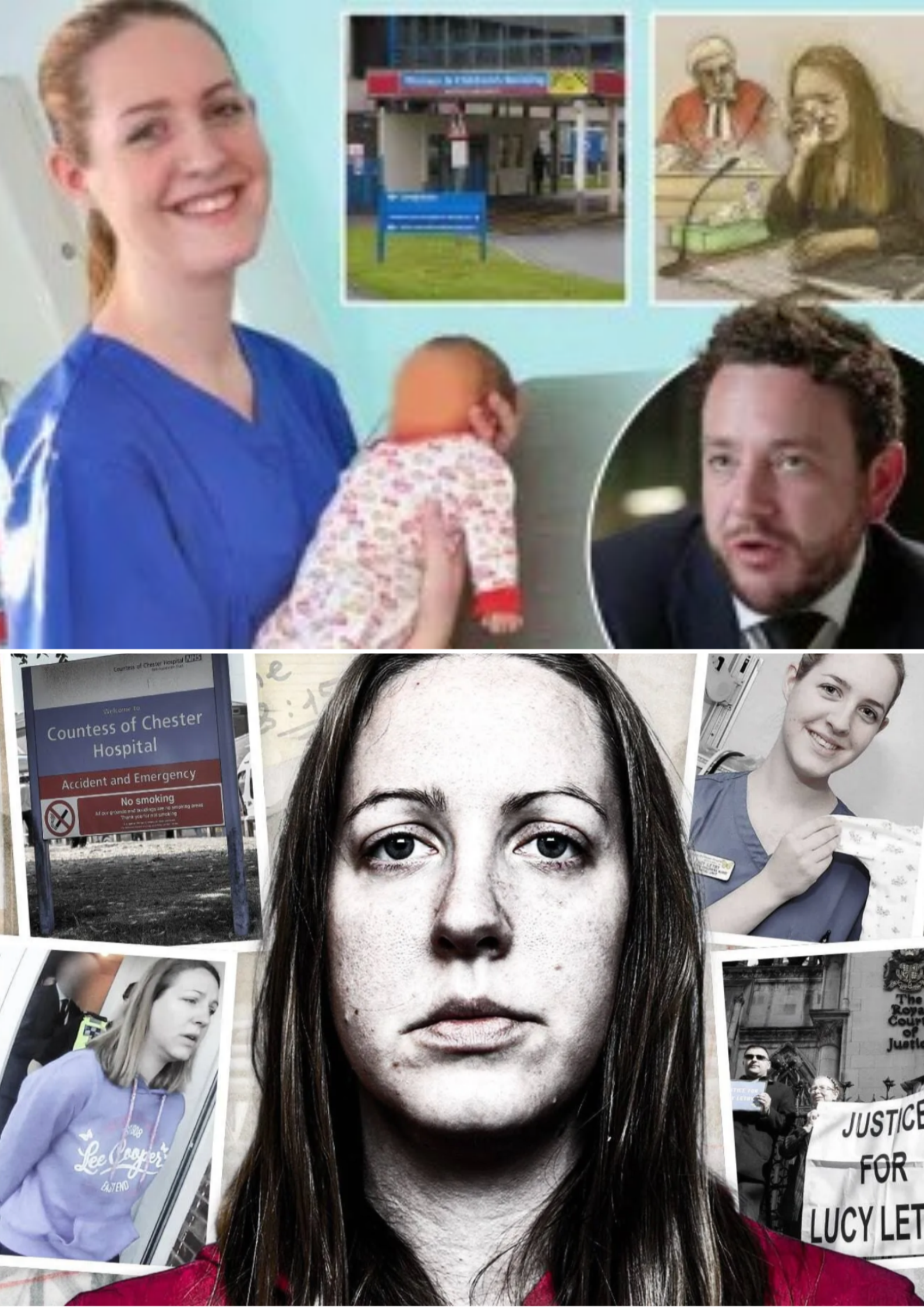
LUCY LETBY CASE: TWO EXPERTS QUIT DEFENCE TEAM AS FRESH QUESTIONS SURROUND CONVICTIONS
The case of former neonatal nurse Lucy Letby has returned to the spotlight after two experts withdrew from her defence team, raising new questions about the scientific arguments being used to challenge her convictions. The development came as a major public inquiry exposed serious management and safeguarding failures at the hospital where Letby worked.
Letby, 36, is serving 15 whole-life prison sentences after being convicted in two trials at Manchester Crown Court of murdering seven babies and attempting to murder seven others at the Countess of Chester Hospital in northwest England. She continues to deny the allegations.
The latest developments have renewed public debate about the medical evidence presented at trial, the hospital’s response to concerns raised by clinicians and whether new material could lead to further legal scrutiny.
However, the withdrawal of the experts does not establish that Letby was wrongfully convicted, just as the hospital’s failures do not independently prove the criminal allegations against her.
 TWO EXPERTS WITHDRAW FROM THE DEFENCE TEAM
Engineering expert Helen Shannon and bioengineering professor Geoff Chase withdrew from Letby’s defence team in September 2026, citing concerns about some of the arguments being advanced on her behalf.
The pair had previously produced a report questioning the scientific evidence used in relation to two babies whom prosecutors said Letby had attempted to poison with insulin.
Although the experts maintained their concerns about those particular convictions, they said they could not support other arguments being presented by the defence because they believed those arguments were inconsistent with the available evidence, scientific principles and established physiology.
Their decision created a significant development in the ongoing effort to challenge Letby’s convictions.
Letby’s barrister, Mark McDonald, rejected the suggestion that their departure undermined the wider defence case. He maintained that evidence from a range of international specialists raised serious questions about the scientific basis of the prosecution’s case involving insulin.
The disagreement highlights the complexity of the medical evidence at the centre of the case. It also demonstrates why the experts’ decision should not be interpreted as a blanket endorsement or rejection of Letby’s convictions.
The two experts’ withdrawal concerns the arguments they were prepared to support. It is not a judicial finding about whether Letby is guilty or innocent.
 PUBLIC INQUIRY EXPOSES SERIOUS HOSPITAL FAILURES
The developments came as the Thirlwall Inquiry published its long-awaited report on September 15, 2026.
The independent inquiry examined events at the Countess of Chester Hospital between 2015 and 2018, including how hospital leaders responded to concerns about the deaths and serious collapses of babies on the neonatal unit.
Its report identified profound failures in management, governance and safeguarding. It examined missed opportunities to respond appropriately to concerns, weaknesses in communication between clinicians and hospital leadership, and failures to put safeguarding procedures into effect.
The findings have intensified scrutiny of the hospital’s leadership and the institutional response to warnings raised during the period under investigation.
For affected families, the inquiry was an important opportunity to examine how events unfolded and why concerns were not acted upon more effectively.
But the inquiry had a specific remit: it was established to investigate the hospital’s conduct, the experiences of families and the wider systems intended to protect babies. It was not tasked with deciding whether Letby’s criminal convictions were correct.
That distinction is essential. Evidence of institutional failure can be important to understanding the circumstances surrounding a case, but it does not automatically settle questions about an individual’s criminal responsibility.
COULD NEW MEDICAL EVIDENCE CHANGE THE CASE?
The Criminal Cases Review Commission (CCRC), the independent body responsible for investigating potential miscarriages of justice in England, is reviewing material submitted on Letby’s behalf.
The commission received an initial application in February 2025 and subsequently received further submissions and expert reports. In February 2026, it clarified that its review was ongoing and that its role was to determine whether a case should be referred to the appeal courts because of a real possibility that a conviction would not be upheld.
The CCRC does not decide guilt or innocence itself. Any decision to overturn a conviction rests with the courts.
The review is therefore an important part of the legal process, but it should not be confused with a decision that the convictions have been overturned or that a new trial has been ordered.
For Letby’s supporters, the medical evidence and the experts’ concerns are reasons to seek further examination. For those who accept the verdicts, the convictions remain the outcome of two criminal trials unless and until a court changes them.
The central legal question is whether the material submitted to the commission meets the threshold for referral to an appeal court.
WHAT ABOUT THE QUESTIONS THAT REMAIN UNANSWERED?
The combination of the inquiry’s findings, the dispute over expert evidence and the ongoing CCRC review has created renewed interest in the case.
Online discussions have raised questions about medical records, the reliability of expert interpretations and whether the available evidence has been fully examined. However, claims that files are deliberately being concealed or that officials are hiding a particular explanation should not be treated as established facts without supporting evidence.
A responsible assessment requires a distinction between documented findings, arguments made by the prosecution or defence, and speculation circulating on social media.
The public inquiry has documented serious failings in the hospital’s systems. The experts have publicly disagreed with aspects of the defence arguments. The CCRC is reviewing material submitted on Letby’s behalf. These are separate developments, and none should be used as a substitute for the others.
Any new evidence must be evaluated on its merits, including its reliability, scientific basis and relevance to the convictions.
A CASE STILL UNDER INTENSE SCRUTINY
The Letby case has had a profound impact on the families involved and has raised wider questions about patient safety, hospital accountability and the role of medical experts in criminal proceedings.
The Thirlwall Inquiry has set out failures that require serious attention. Meanwhile, the legal challenge to Letby’s convictions continues through a separate process.
For now, the convictions remain in force, and Letby continues to deny guilt. The withdrawal of two experts has added another layer to the public debate, but it has not resolved the central dispute.
The next significant development will depend on the ongoing review and whether the CCRC concludes that the case should be referred to the appeal courts.
Until then, the distinction between established findings and unresolved legal arguments remains crucial.
The question is not simply what people believe about Lucy Letby. It is whether the available evidence, examined through the proper legal process, supports any change to the convictions.