🚨 WADE WILSON: “SHE LOOKED LIKE SPAGHETTI” — THE CONFESSION THAT SHOCKED INVESTIGATORS AND THE STRANGE FAME THAT FOLLOWED HIM TO DEATH ROW
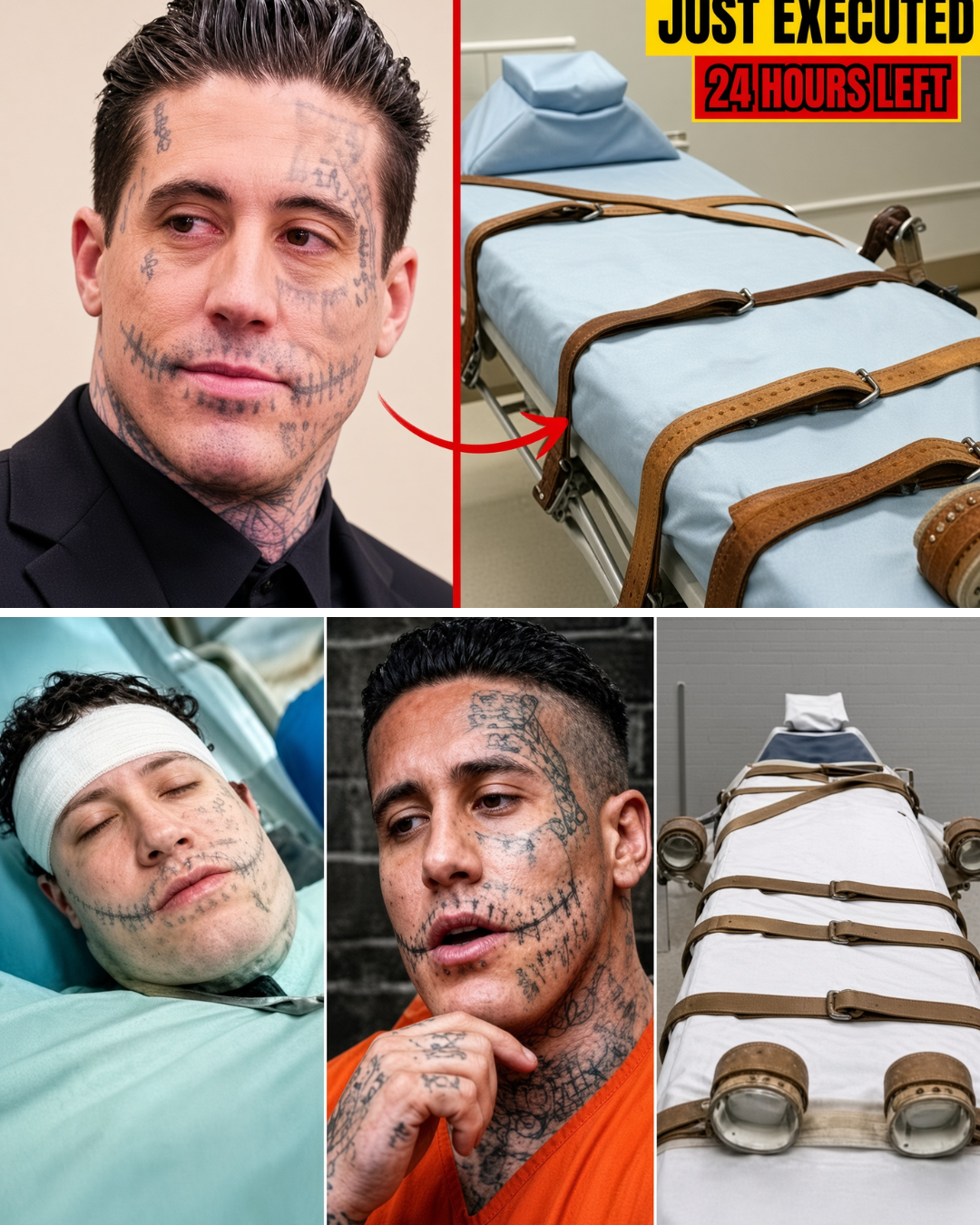
🚨 WADE WILSON: “SHE LOOKED LIKE SPAGHETTI” — THE CONFESSION THAT SHOCKED INVESTIGATORS AND THE STRANGE FAME THAT FOLLOWED HIM TO DEATH ROW
He was convicted of murdering two women.
He was sentenced to death.
And yet, years later, Wade Wilson’s name continues to spread across the internet — not only because of the crimes themselves, but because thousands of strangers became fascinated with the man behind them.
Some sent letters.
Some sent photographs.
Some publicly described themselves as fans.
And in 2026, documentaries and renewed media coverage have pushed the case back into the spotlight.
But behind the viral photographs and online fascination is a disturbing record of what happened on October 7, 2019.
And some of the most chilling details came from Wilson’s own words.
IT STARTED WITH TWO WOMEN WHO NEVER MADE IT HOME
Kristine Melton was 35.
Diane Ruiz was 43.
They were killed separately in Cape Coral, Florida, on the same day.
According to evidence presented at trial, Wilson met Melton at a bar in Fort Myers before going with her to her home.
Prosecutors said Melton was later killed and Wilson took her vehicle.
Hours later, Wilson encountered Ruiz while she was walking to work.
Investigators said he persuaded her to get into the vehicle by asking for directions.
What happened afterward became one of the most disturbing parts of the entire case.
Wilson eventually admitted that he attacked Ruiz.
He told investigators that he had choked her while driving and later removed her from the vehicle.
When he realized she was still alive, he said he drove over her repeatedly.
His father, Steven Testasecca, later testified about Wilson’s account.
According to the court record, Wilson said he ran Ruiz over until she “looked like spaghetti.”
The phrase became one of the most widely repeated details from the case.
But behind those words was a real victim whose family would spend years waiting for justice.
THEN CAME THE PHONE CALL
One of the major breaks in the investigation came through Wilson’s own family.
Wilson called his biological father, Steven Testasecca, after the killings.
Instead of protecting his son, Testasecca cooperated with authorities.
His information helped investigators understand what Wilson had allegedly done and where they needed to look.
The investigation eventually led police to Wilson.
His own statements would later become part of the prosecution’s case.
That made the story especially disturbing.
Investigators weren’t simply trying to reconstruct the events from physical evidence.
They were also hearing the story from the person accused of carrying them out.
THE BURGER AND FRENCH FRIES
Perhaps one of the strangest details to emerge from the case was what Wilson allegedly wanted in exchange for information.
According to later reporting and documentary footage, Wilson attempted to bargain with investigators.
He offered to reveal information about the location of a body in exchange for a burger and French fries.
The bizarre exchange became part of the public record surrounding the case.
LADbible reported in 2026 that documentary footage showed Wilson attempting to make that deal with investigators.
The contrast was difficult to ignore.
Investigators were searching for a missing woman.
Wilson was asking for food.
And the case was becoming something much darker than an ordinary murder investigation.
“I JUST WANTED TO KILL SOMEBODY”
Another disturbing element of the case was the language attributed to Wilson during interviews.
He reportedly described thoughts about killing and spoke about the rage he experienced while using drugs.
He also told investigators that he had used his appearance to attract women.
Those statements later became part of the broader public fascination with the case.
Because Wilson’s story wasn’t only about violence.
It was also about how he perceived himself.
And that would become particularly significant after his arrest.
THE VERDICT
In June 2024, a jury found Wilson guilty of two counts of first-degree murder.
The case then moved into the penalty phase.
Jurors recommended death for both murders.
The recommendation was 9–3 for Melton and 10–2 for Ruiz.
Judge Nicholas Thompson later imposed two death sentences in August 2024.
Wilson was subsequently transferred to Florida’s death row.
The convictions and sentences became the foundation of the legal battle that continues today.
THEN SOMETHING STRANGE HAPPENED
The murder case should have been remembered primarily for its victims.
Instead, Wilson himself became an internet phenomenon.
Photographs of him circulated widely.
His tattoos became part of his public image.
His courtroom appearances were clipped and reposted.
And some women began contacting him.
The phenomenon became so pronounced that the phrase “Wade’s Wives” began appearing in online discussions about the people attracted to him.
A 2026 podcast episode specifically examined the phenomenon of women becoming fascinated with Wilson after photographs of him went viral.
That transformed the case into something far beyond a conventional criminal proceeding.
A convicted murderer had developed a fan base.
THOUSANDS OF MESSAGES
Reports have described large numbers of letters and messages sent to Wilson while incarcerated.
Some women reportedly expressed romantic interest.
Others defended him or pleaded for mercy.
The phenomenon attracted widespread attention during his sentencing.
It also created a disturbing question:
Why would someone become romantically fascinated with a person convicted of killing two women?
There isn’t one simple answer.
Some researchers have used the term hybristophilia to describe attraction toward people who have committed crimes, although individual motivations can vary considerably.
The internet can also amplify unusual behavior.
One person posts a photograph.
Another comments.
A community forms.
And suddenly a criminal case becomes a fandom.
THE DOCUMENTARIES MADE THE PHENOMENON EVEN BIGGER
The fascination didn’t disappear after Wilson was sentenced.
In 2026, new documentary coverage brought the case to another generation of true-crime viewers.
LADbible reported on the Netflix documentary coverage of Wilson, including footage involving his conversations with investigators and his attempts to bargain for food in exchange for information.
A separate 2026 podcast episode discussed the “homicidal heartthrob” phenomenon surrounding Wilson and the women who became fascinated with him.
The result was a second wave of attention.
People who had never followed the 2019 investigation suddenly discovered the case.
And once again, Wilson’s face was everywhere.
BUT THE INTERNET’S VERSION OF WADE WILSON IS NOT THE WHOLE STORY
This is where the case becomes uncomfortable.
Online discussions can reduce complicated criminal cases to a photograph.
A tattoo.
A facial expression.
A nickname.
A viral quote.
But none of those things should eclipse the two women at the center of the case.
Kristine Melton had a family.
Diane Ruiz had a family.
They had ordinary lives before October 7, 2019.
Then those lives ended.
While Wilson’s photographs continue circulating, their families have had to live with the consequences of their deaths.
That contrast is one of the most troubling aspects of the case.
HIS LEGAL STORY IS STILL NOT FINISHED
A death sentence does not automatically mean an immediate execution.
Wilson’s case remains in the appeals process.
Florida court records show an active death-penalty appeal, and the available docket does not list an execution date. A recent report on the case likewise states that Wilson remains on death row while his legal proceedings continue.
That means the legal story is still developing.
The convictions have been entered.
The death sentences have been imposed.
But the appeals process continues.
And that process could determine what happens next.
THE MOST DISTURBING LEGACY MAY NOT BE THE CONFESSION
The phrase “she looked like spaghetti” shocked the public because of its graphic nature.
But perhaps the more disturbing part of the story is what happened afterward.
The killings made Wilson notorious.
The notoriety made his photographs famous.
The photographs attracted attention.
The attention created an online following.
And the following helped turn a convicted murderer into a recognizable internet personality.
That cycle is not unique to Wilson.
True crime has always created fascination with notorious criminals.
But social media has dramatically accelerated it.
A person doesn’t need to be physically near a courtroom to become part of the spectacle.
A photograph can travel around the world in minutes.
THE QUESTION THAT REMAINS
Wade Wilson’s case now exists in two very different worlds.
In one world, there are court transcripts, evidence, convictions, death sentences and appeals.
In the other, there are viral photographs, documentaries, social-media posts and fans.
Those two worlds rarely tell the same story.
One focuses on what happened to Kristine Melton and Diane Ruiz.
The other focuses on Wade Wilson.
And that difference matters.
Because the more famous the killer becomes, the easier it can be for the victims to disappear from the conversation.
TWO NAMES THAT SHOULD NEVER BE FORGOTTEN
Kristine Melton.
Diane Ruiz.
Those are the names at the heart of this case.
The viral nickname may be “Deadpool Killer.”
The photographs may continue circulating.
The documentaries may continue attracting viewers.
And Wilson’s appeals may continue through the courts.
But none of that changes the starting point of this story:
Two women were killed.
And years later, the man convicted of those murders has become famous for reasons that have little to do with the lives those women lived.
That may be the strangest and most uncomfortable chapter of the entire Wade Wilson story.
Not that the world remembers his name.
But that some people became fascinated with the killer — while the women he killed risk becoming nothing more than names in the background of his legend.